
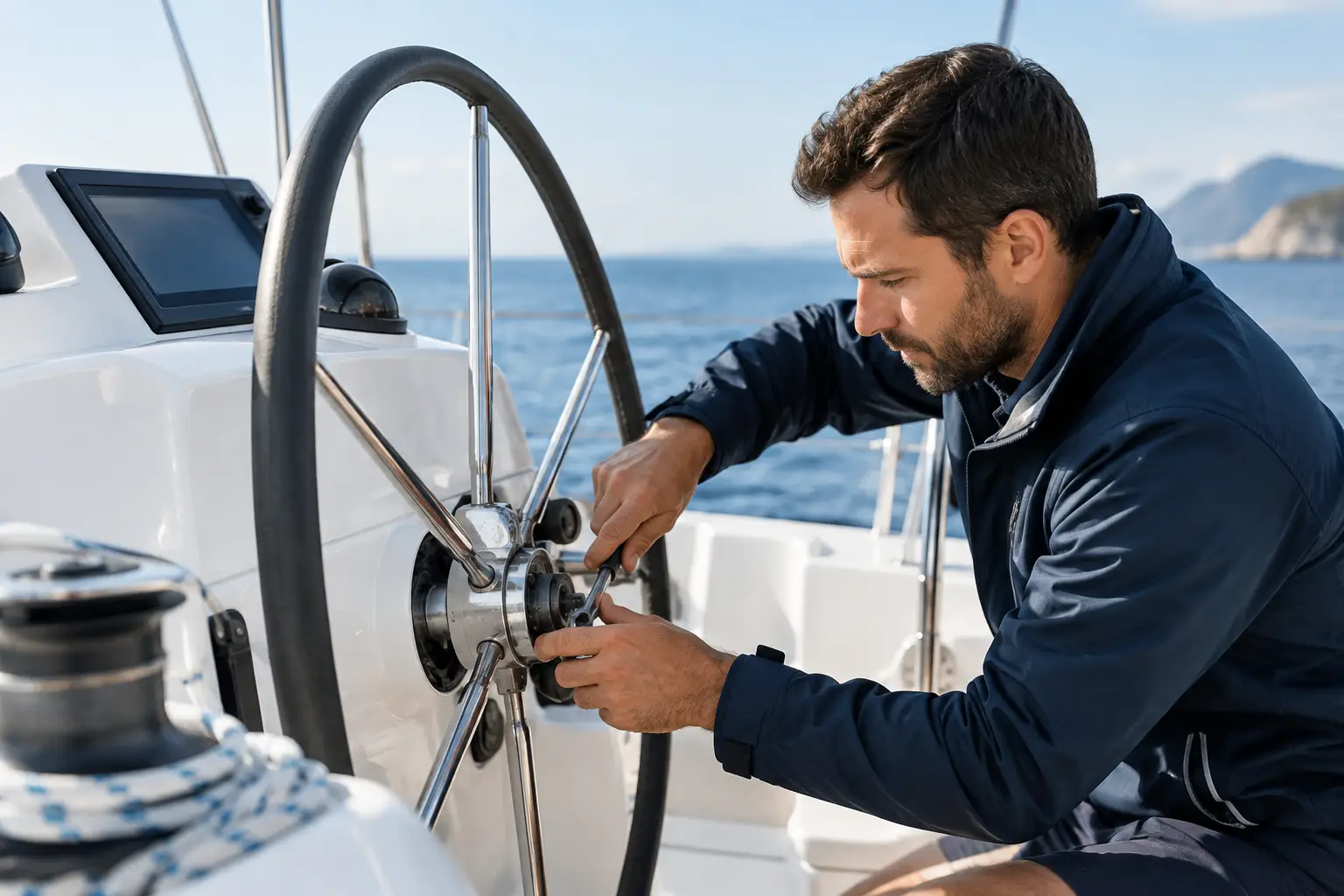
A steering wheel that suddenly turns too easily, locks up, or produces no response at the rudders is not a problem to “test one more time” while underway. To troubleshoot yacht steering failure safely, first reduce speed, maintain a safe distance from traffic and hazards, and shift control to an alternate steering station if your vessel has one. Notify everyone on board, use your horn or radio as needed, and prepare to anchor or request a tow before the situation becomes a collision or grounding.
On a 50-foot sportfish or a 300-foot yacht, the steering system may be hydraulic, mechanical, electronic, or a combination of all three. The symptoms can look similar, but the cause and proper repair can be very different. A loose fitting may create a hydraulic fluid leak, while a failed pump, damaged hose, seized rudder gear, low battery voltage, or control-system fault can all leave the helm unresponsive.
Start With Safety, Not the Repair
If steering response is reduced but not completely lost, avoid sharp turns and excessive throttle. Move only as much as necessary to reach protected water. Running at speed with uncertain steering places enormous loads on rudders, linkages, hydraulic lines, and the vessel itself.
Do not send an untrained person into a machinery space while the boat is moving unless there is a clear, safe way to do so. Keep hands, clothing, and tools away from moving machinery, belts, shafts, and hot exhaust components. Hydraulic steering systems can also remain pressurized, so never loosen a fitting simply to see whether fluid is present.
If you are docked, shut down the affected steering system and inspect it methodically. A calm visual inspection can often give a captain or owner useful information before a marine technician arrives. It should not become a substitute for diagnosis when the cause is unclear.
How to Troubleshoot Yacht Steering Failure at the Helm
Begin with what the wheel or control lever is telling you. A wheel that spins freely with little resistance often points to low hydraulic fluid, air in the system, a failed helm pump, or a disconnected mechanical component. A wheel that is stiff or will not turn may indicate a seized rudder, binding linkage, damaged cable, restricted hydraulic line, or a problem in the power-assist system.
Check whether the problem exists at every steering station. If the lower helm works but the flybridge station does not, the issue may be isolated to that helm pump, selector valve, electronic control, or wiring connection. If neither station works, look for a system-wide cause such as a low reservoir, failed hydraulic power pack, electrical supply problem, or rudder gear failure.
On electronically controlled yachts, look at the display and alarm panel before cycling power. Record any fault messages, warning lights, or unusual readings. Taking a photo of the screen can save time during professional diagnostics. Repeatedly shutting systems off and on may clear information a technician needs to identify an intermittent fault.
Also pay attention to sound. A hydraulic power unit that runs constantly, changes pitch, or fails to run when commanded provides a valuable clue. Grinding, knocking, or metallic scraping near the rudder compartment calls for an immediate stop and inspection. Those sounds can indicate a mechanical issue that may worsen quickly if the steering is forced.
Inspect the Hydraulic System for Visible Clues
Hydraulic steering is common on larger yachts because it provides the force needed to control substantial rudders. It also depends on clean fluid, correct pressure, sealed lines, and properly functioning pumps. Even a small leak can introduce air and reduce steering control.
With the vessel secure and the system shut down when appropriate, inspect the reservoir level. Use only the fluid specified for the steering system. Mixing fluids or topping off with an unknown product can damage seals and complicate repairs. If the reservoir is low, do not assume that adding fluid solves the problem. Fluid went somewhere, and the source of the loss must be found.
Look for fresh oil around helm pumps, hose fittings, steering cylinders, manifolds, and the rudder compartment. Check beneath hose runs as well. A leak may travel along a hose or drip far from its original source. Swollen hoses, corrosion around fittings, chafe marks, cracked hose coverings, and wet insulation near hydraulic components all deserve attention.
Air in the lines can make steering feel spongy, delayed, or inconsistent. Proper bleeding is a specific procedure that varies by system. On a larger vessel with multiple stations, autopilot integration, or power steering, bleeding the system incorrectly can trap more air or create a new problem. This is generally a job for a qualified marine steering technician.
Check Rudders, Linkages, and the Steering Gear
Not every steering failure starts at the helm. The wheel may be operating normally while the rudders cannot move as commanded. Access the rudder area only after confirming it is safe, well lit, and free of moving equipment.
Inspect the steering ram, tiller arms, tie bar, clevis pins, fasteners, and rudder stocks for visible damage or unusual movement. Leaking cylinder seals, bent components, loose hardware, or corrosion can cause poor response or complete loss of control. On vessels with twin rudders, compare both sides. Uneven movement can reveal a disconnected linkage or a cylinder problem.
Do not force a rudder by hand or with a tool. Rudder gear carries heavy loads, and an apparently stuck component may release suddenly. A rudder that binds only at certain angles may have a bent stock, bearing issue, obstruction, or misalignment that needs professional inspection.
Vibration after a grounding, line strike, propeller impact, or hard reverse maneuver should never be ignored. Damage below the waterline can affect more than the running gear. A compromised rudder or steering component may function temporarily before it fails under load.
Rule Out Electrical and Control-System Problems
Modern yachts often rely on electrical power for steering pumps, solenoids, electronic helms, joystick systems, autopilot interfaces, and alarms. Low voltage, weak batteries, failed breakers, corroded terminals, or a poor ground can create steering symptoms that appear mechanical.
Check the steering-system breaker, fuse, and control-panel indications without resetting a tripped breaker over and over. A breaker that trips again may be protecting the vessel from a short circuit, overloaded motor, or failing pump. Inspect accessible connections for heat discoloration, corrosion, loose terminals, or water intrusion. Keep in mind that a clean-looking connection can still fail under load.
If the yacht has an autopilot, disengage it and confirm that manual steering mode is selected. Autopilot pumps, feedback sensors, and control heads can affect system behavior, especially after electrical work, battery replacement, or a software-related fault. Electronic steering requires proper test equipment and manufacturer-compatible diagnostic knowledge, not guesswork.
When to Call for Mobile Marine Service
Call for professional help immediately if steering is completely lost, hydraulic fluid is leaking, the rudders bind, a steering motor overheats, alarms are active, or the problem follows a strike or grounding. These are not conditions to postpone until the next scheduled maintenance visit.
For yacht owners and captains along the South Florida coast, GTM International can come directly to the vessel for on-site steering and electrical diagnostics. Mobile service avoids the added cost and delay of moving an impaired yacht to a repair yard, while allowing technicians to inspect the actual system configuration where the failure occurred.
A qualified technician can pressure-test hydraulic circuits, inspect pumps and cylinders, evaluate electrical supply, diagnose control faults, and verify rudder movement under safe conditions. On larger yachts, that system-level approach matters. Replacing the first suspicious part without confirming the source of the fault can create more downtime and unnecessary expense.
Prevent the Next Steering Emergency
Steering systems deserve the same preventive attention as engines and generators. During routine service, have the reservoir level and fluid condition checked, hoses inspected for chafe and age, fittings examined for leaks, steering gear lubricated where specified, and electrical terminals tested. Captains should also confirm that each helm station, autopilot mode, alarm, and emergency steering arrangement operates as intended.
After any steering repair, test the system at the dock and then at low speed in open water before relying on the vessel for a longer run. Watch for delayed rudder response, uneven travel, unusual noise, or new leaks. The best time to find a small steering defect is when there is room to stop, inspect, and fix it without a crowded inlet, bad weather, or a tight marina fairway adding pressure.
When steering feedback changes, treat it like an early medical symptom rather than an inconvenience. Prompt diagnosis protects the people aboard, the yacht, and the schedule you planned to keep.
