
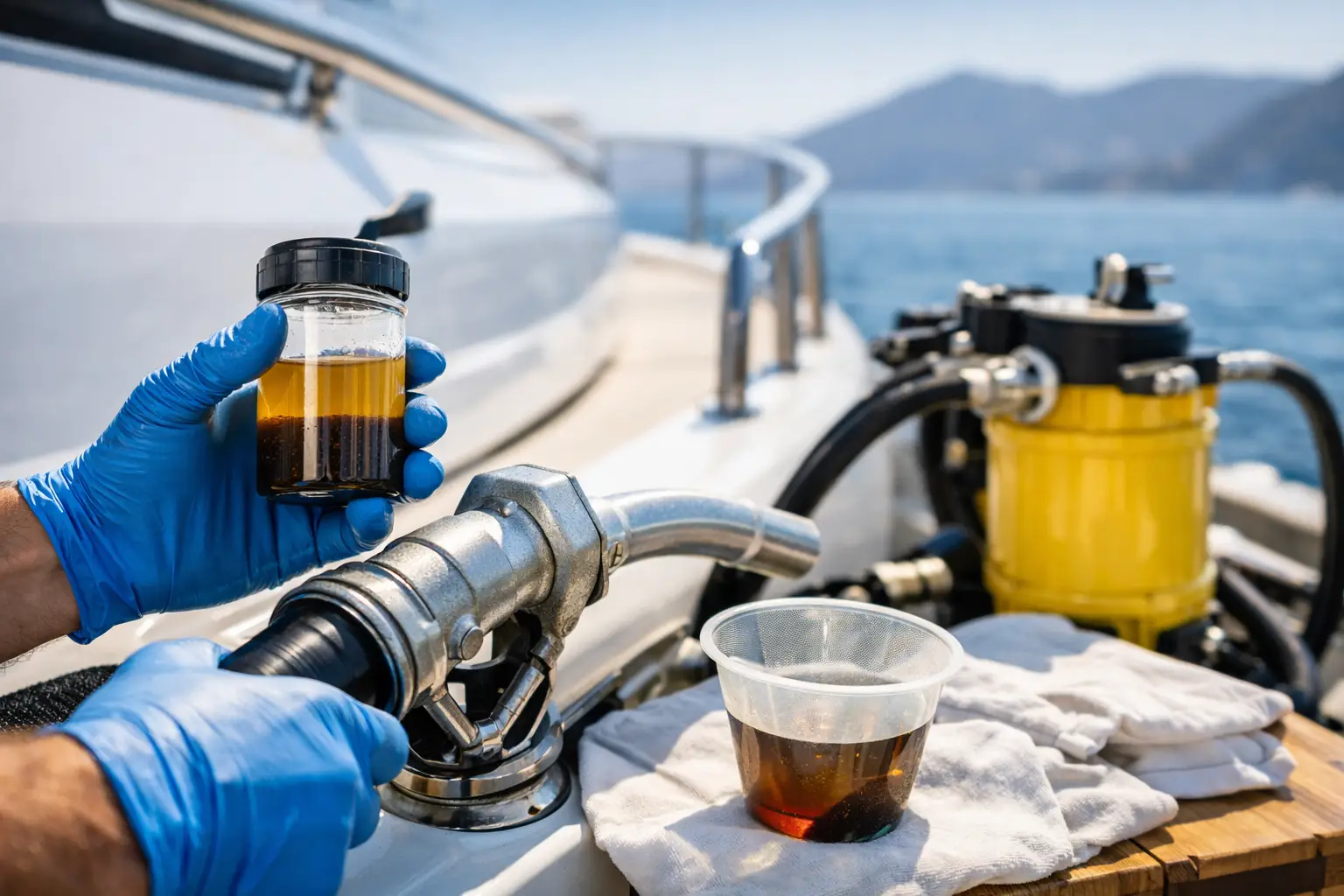
A yacht can have a well-maintained diesel engine, fresh oil, and a fully charged battery bank, then lose power because a few gallons of contaminated fuel reached the filters. To prevent diesel fuel contamination, owners and captains need to manage the entire fuel path – from the dockside fill to the day tank, primary filters, injectors, and return system. It is preventive care with a direct payoff: fewer no-start calls, less engine downtime, and a better chance of getting back out at sea on schedule.
For vessels operating in South Florida, fuel management deserves special attention. Heat, humidity, seasonal storage, heavy rain, and inconsistent fuel turnover create ideal conditions for water intrusion and microbial growth. The answer is not simply changing filters more often. It is finding the source, keeping it from returning, and having a qualified marine technician assess the system before a small fuel-quality issue becomes an expensive engine repair.
What Contaminates Marine Diesel Fuel?
Diesel contamination usually begins with water, sediment, or microbial growth. Water may enter through a loose deck fill cap, a cracked O-ring, a damaged vent, a leaking fuel tank fitting, or condensation inside a partially filled tank. Even a small amount of water can settle at the bottom of the tank, where diesel fuel naturally separates from it.
That water layer creates the conditions for microbes often called diesel bug. Bacteria and fungi live at the fuel-water interface, multiplying into dark sludge that can clog pickup tubes, filters, and fuel lines. The problem may show up as a sudden loss of RPM under load, repeated filter restriction alarms, hard starts, or an engine that runs normally at the dock but stumbles offshore.
Sediment is another concern. It can come from aging tank interiors, debris introduced during fueling, degraded hoses, or fuel that has sat long enough for particulates to settle. Modern diesel injection systems on engines from CAT, MAN, and MTU operate with tight tolerances. They are not designed to pass water, sludge, or abrasive debris. A contaminated tank can therefore become a fuel-system problem involving injectors, high-pressure pumps, and costly diagnostics.
Start With Clean, Reliable Fueling Practices
The most effective fuel maintenance program starts before fuel enters the boat. Buy fuel from high-turnover, reputable marine fuel docks whenever possible. Busy locations are not a guarantee of clean fuel, but frequent delivery and turnover generally reduce the chance that old fuel and settled water are sitting in a storage tank.
Before opening the deck fill, wipe the surrounding area clean. A dirty fill fitting is an easy path for salt, sand, and water to enter the tank. Confirm that the fuel cap seal is intact and that the cap tightens properly. If water pools around the fill, repair the drainage issue rather than assuming the cap will protect the tank indefinitely.
Captains should also pay attention to the fuel receipt and record each fill-up in the vessel log. Note the date, dock, gallons purchased, and any changes in engine performance afterward. This simple record helps isolate a potential bad-fuel event and gives a technician useful information if restrictions or alarms begin soon after fueling.
Avoid treating every tank as identical. A vessel with multiple tanks, transfer pumps, and a day tank requires a clear fueling and transfer routine. Filling the wrong tank, leaving a crossover valve open, or transferring from an older reserve tank without checking its condition can introduce contamination into a clean system.
Keep Water Out of the Tank
Water control is the foundation of fuel contamination prevention. Inspect deck fills, tank vents, vent hoses, and fuel fittings as part of regular vessel maintenance. A vent that takes spray or rainwater, or a fill cap with a flattened seal, can quietly introduce water for months before the engine gives you a warning.
Keeping tanks reasonably full during layup can reduce air space and condensation, especially during humid weather. However, there is a trade-off. Overfilling leaves little room for thermal expansion and can force fuel out through vents. Follow the vessel manufacturer’s capacity guidance and avoid topping off a tank until fuel spills or vents.
If the vessel has tank drains or accessible low points, have them checked periodically by a marine professional. Water settles below diesel, so a tank sample drawn from the bottom tells a much more useful story than a sample taken from the fill opening. Clear, bright fuel is encouraging, but it does not rule out water or sludge beneath the fuel level.
Watch for Early Warning Signs
Fuel contamination rarely announces itself at the most convenient time. A primary fuel filter that darkens unusually fast, a vacuum gauge reading that climbs under load, or repeated water-in-fuel alerts should be treated as diagnostic clues, not routine annoyances. Changing the filter may get the engine running again, but it will not solve the source of the contamination.
Other warning signs include fuel with a sour or unusual odor, visible haze, black or brown debris in a filter bowl, unstable idle, reduced acceleration, and generator shutdowns when the vessel is carrying a load. When more than one engine or generator shows filter restriction, suspect the shared fuel supply before assuming separate mechanical failures.
Use Filtration as Protection, Not a Cure
A properly maintained primary fuel-water separator is one of the best defenses between the tank and the engine. It catches free water and particulate matter before they reach the secondary filter and sensitive injection components. The separator must be correctly sized for the engine’s fuel demand and installed so it can be inspected and serviced without creating a mess or introducing air into the system.
Inspect filter bowls regularly for water and sediment. Drain water according to the equipment manufacturer’s procedure, and replace elements based on condition and service intervals. For a vessel that runs often in clean conditions, an interval-based replacement schedule may be appropriate. For a boat returning to service after storage, or one with known tank concerns, condition-based inspection is more valuable.
Do not keep changing clogged filters without investigating the tank. Repeated restriction means the filters are doing their job, but they are also warning you that contamination remains upstream. Eventually, the vessel can run out of clean spare elements or lose power at a time when maneuverability matters most.
Fuel polishing can be the right response when a tank contains water, sediment, or microbial debris. This process circulates fuel through specialized filtration equipment to remove contamination from the fuel itself. It is often less disruptive than removing large volumes of fuel, but it depends on the condition of the tank and the amount of sludge present. Heavy contamination may require tank cleaning, inspection of pickup tubes, and replacement of compromised filters and hoses.
Treat Microbial Growth Carefully
Biocide can help control microbial contamination, but it is not a substitute for removing water or cleaning a badly fouled tank. When biocide kills microbes, the remaining debris can still plug filters. Applying the wrong product, using an incorrect dose, or treating a severely contaminated system without planning for follow-up filtration can create an immediate restriction problem.
Use only marine-appropriate products compatible with the engine manufacturer’s recommendations and follow the label precisely. If there is evidence of significant growth, have the fuel sampled and the system evaluated first. The right plan may include water removal, polishing, tank cleaning, biocide treatment, and staged filter changes as the system clears.
Build Fuel Checks Into Preventive Maintenance
The practical way to prevent diesel fuel contamination is to make fuel-system checks part of the vessel’s normal preventive maintenance, not an emergency response after an engine stalls. Before extended trips, inspect filter bowls, check for leaks around fills and vents, confirm spare filters are aboard, and review any recent changes in engine performance.
For yachts and commercial vessels with complex diesel systems, the maintenance plan should also include periodic tank sampling, inspection of transfer equipment, and review of filter restriction trends. A technician should verify that fuel lines, valves, return systems, and separators are functioning as intended. These details matter because a clean tank does little good if a degraded hose or leaking fitting introduces debris downstream.
GTM International brings certified mobile marine technicians directly to vessels throughout the South Florida coastal corridor, helping owners diagnose fuel-system concerns without the delay and expense of hauling to a repair yard. For engines, generators, and supporting marine systems, the goal is the same: identify the cause, make the right repair, and protect your time on the water.
If your filters are loading up, your engine has lost power under load, or the vessel has been sitting through a long humid season, schedule a fuel-system inspection before the next offshore run. Clean fuel is not glamorous maintenance, but it is one of the simplest ways to protect the engines that carry you home.
