
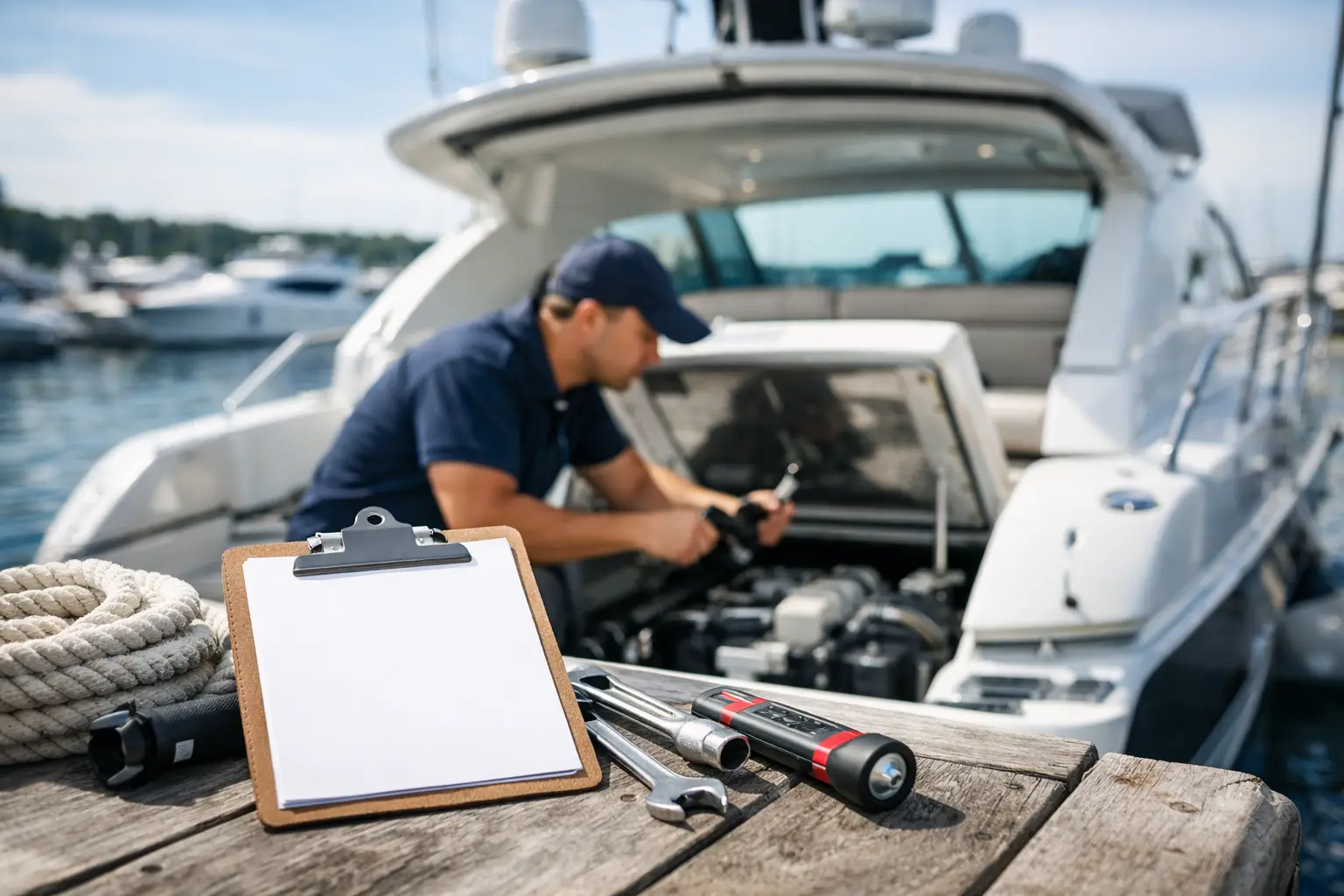
Marine Preventive Maintenance Schedule That Works

A missed oil-change interval rarely announces itself at the dock. It shows up later as a rising engine temperature off Palm Beach, a generator that will not start before guests arrive, or a coolant leak that turns a planned weekend into an expensive repair. A marine preventive maintenance schedule puts the right checks in front of those failures, while the repair is still smaller, faster, and less disruptive.

For yacht owners, captains, and fleet operators, the schedule is not paperwork for paperwork’s sake. It is a working record of what has been inspected, serviced, tested, and replaced across the propulsion, generator, electrical, cooling, and steering systems. On a vessel from 50 to 500 feet, a disciplined maintenance plan protects uptime, resale value, and the people who depend on the boat to perform.

Why a Marine Preventive Maintenance Schedule Pays Off

Marine engines and support systems operate in conditions that are hard on every component. Heat cycles, vibration, salt air, humidity, load changes, and long periods sitting idle can all create problems that are not obvious during a quick walk-through. A freshwater cooling circuit may look fine externally while a restricted heat exchanger quietly raises operating temperatures. Batteries can show voltage at rest but fail when a generator needs starting current.

Preventive service gives a qualified technician a chance to establish baselines. Fluid condition, pressure readings, charging output, engine temperature, hose condition, vibration, and fault history all tell part of the story. That diagnostic perspective matters because replacing parts on guesswork is costly. A technician should diagnose the cause, not simply treat the symptom.

The right interval depends on engine manufacturer requirements, vessel use, age, hours, and operating environment. A yacht that runs regularly between Fort Lauderdale and Fort Pierce has different needs than a seasonal vessel that spends long periods at the dock. Maintenance should follow both calendar time and engine hours, using whichever comes first. Time matters because fuel, oil, seals, impellers, batteries, and cooling-system components can deteriorate even when the engines are not running.

Start With a Complete Vessel Baseline

Before building intervals, begin with an inspection that identifies the vessel’s current condition. This is particularly valuable after purchasing a yacht, returning it to service after storage, inheriting incomplete records, or taking over management of a vessel.

A proper baseline should include main engines, transmissions, generators, fuel systems, raw-water and freshwater cooling components, exhaust, batteries and charging systems, steering, and visible electrical connections. Engine diagnostics should be performed where applicable, especially on major diesel platforms such as MTU, MAN, and Caterpillar. Fault codes are useful, but they must be interpreted alongside physical inspection and operating data.

Service records are just as important as the inspection itself. Record engine and generator hours, serial numbers, filter part numbers, fluid types, dates, readings, and work performed. Captains and owners should know what is due next without having to reconstruct the history from invoices or memory.

Build Service Around Hours and Calendar Dates

A practical schedule has layers. Pre-departure and monthly checks catch visible or developing issues. Seasonal and annual service handle the components that age with time. Hour-based intervals cover fluids, filters, adjustments, and manufacturer-specified work under operating load.

Before Departure and Monthly Checks

The person operating the vessel should look for abnormal conditions before they become an underway problem. Check engine oil, coolant, transmission fluid where applicable, fuel and water-separator condition, bilge areas, belts, hoses, clamps, raw-water strainers, and signs of leakage. Verify battery condition and charging performance, and listen for unusual cranking, vibration, alarms, or exhaust changes.

Monthly checks go further by exercising equipment that may otherwise sit unused. Run generators under appropriate load, inspect battery terminals for corrosion, test bilge pumps and high-water alarms, and check steering response. On vessels with electronic controls and complex electrical systems, a small warning or intermittent alert deserves attention early. Electrical issues rarely improve with exposure to salt and moisture.

Every 100 to 250 Hours

Exact intervals vary by manufacturer and application, but this range often includes engine and generator oil service, oil-filter replacement, fuel-filter inspection or replacement, and a close check of belt condition, hoses, clamps, leaks, mounts, and fluid levels. A technician should also review engine operating temperatures and pressure readings rather than relying on service hours alone.

Fuel quality deserves special attention in South Florida. Heat, humidity, and storage periods can contribute to water contamination and microbial growth in diesel fuel. Water separators should be monitored, and recurring contamination should lead to a fuel-system assessment rather than repeated filter changes alone.

Seasonal and Annual Service

Annual service is where hidden cooling and corrosion issues are often found. Raw-water pumps, impellers, strainers, coolers, heat exchangers, aftercoolers, and hoses should be inspected according to the engine manufacturer’s recommendations and the vessel’s use. On high-value diesel engines, cooler service is not an area to postpone. Restricted or corroded cooling passages can contribute to overheating, reduced performance, and serious engine damage.

Annual work should also cover generator service, battery testing, charging-system inspection, electrical connection checks, steering-system evaluation, and a review of safety-related components. If the vessel is hauled for other work, that may be the right time to inspect running gear and below-water components. But many engine, generator, electrical, and steering maintenance needs can be handled directly at the vessel, avoiding the cost and delay of a repair-yard trip.

Manufacturer Milestones

Larger hour milestones may call for valve adjustments, injector work, coolant replacement, transmission service, turbocharger inspection, or detailed cooler service. These tasks should be based on the specific MTU, MAN, CAT, or other manufacturer maintenance requirements for the installed model. One-size-fits-all service intervals can create false savings, especially when a vessel runs heavily, carries charter loads, or spends substantial time idling.

Do Not Treat Cooling Systems as an Afterthought

Cooling failures are among the most preventable causes of marine engine trouble. Saltwater cooling circuits collect scale, marine growth, debris, and corrosion. Freshwater circuits can lose coolant protection or develop leaks. A damaged impeller, collapsed hose, restricted strainer, or fouled heat exchanger can all raise temperatures quickly.

Watch for temperature changes, reduced water flow, steam, coolant odor, alarms, or discharge that looks different from normal. The best response is not to keep running and hope the temperature settles. Shut down as operating conditions require, document what happened, and have the system diagnosed. Continuing to run an overheating diesel can turn a service call into a major repair.

Give Generators the Same Attention as Main Engines

A generator is easy to overlook until shore power is unavailable or guests need air conditioning, refrigeration, charging, and onboard systems. Like main propulsion engines, generators need regular fluid and filter service, cooling-system inspection, battery support, and exercise under load.

Low-use generators present a special challenge. Short, no-load runs may not reveal problems and can contribute to incomplete combustion issues. Follow the manufacturer’s guidance on exercising the unit, and use the maintenance record to track both hours and calendar dates. A generator that starts reliably at the dock but trips under real load is not ready for service.

Make the Schedule Usable for the Whole Crew

A schedule only works if someone owns it. For a privately operated boat, that may be the owner with professional service support. For larger yachts, the captain or engineer may manage the log while coordinating approved technicians. Either way, keep the plan clear enough that upcoming work is visible at a glance.

Track due dates, due hours, completed work, abnormal findings, recommended repairs, and parts used. Separate routine service from corrective repairs so recurring concerns stand out. If a hose, battery, pump, alarm, or cooler repeatedly needs attention, the pattern may point to a deeper problem.

GTM International can bring certified, licensed, and insured marine technicians directly to vessels throughout the South Florida coastal corridor, helping owners avoid unnecessary hauling, reduce downtime, and keep maintenance on schedule. Mobile service is especially valuable when a vessel needs diagnostics or an urgent repair at its marina rather than after a costly move to a yard.

A well-maintained yacht should feel predictable: temperatures stay where they belong, generators carry their load, controls respond cleanly, and small issues are handled before they interrupt a trip. Put the next service date and hour target on the calendar now, then give a qualified marine technician the chance to find what the next outing should never have to reveal.

Marine Preventive Maintenance Schedule That Works

A missed oil-change interval rarely announces itself at the dock. It shows up later as a rising engine temperature off Palm Beach, a generator that will not start before guests arrive, or a coolant leak that turns a planned weekend into an expensive repair. A marine preventive maintenance schedule puts the right checks in front of those failures, while the repair is still smaller, faster, and less disruptive.

For yacht owners, captains, and fleet operators, the schedule is not paperwork for paperwork’s sake. It is a working record of what has been inspected, serviced, tested, and replaced across the propulsion, generator, electrical, cooling, and steering systems. On a vessel from 50 to 500 feet, a disciplined maintenance plan protects uptime, resale value, and the people who depend on the boat to perform.

Why a Marine Preventive Maintenance Schedule Pays Off

Marine engines and support systems operate in conditions that are hard on every component. Heat cycles, vibration, salt air, humidity, load changes, and long periods sitting idle can all create problems that are not obvious during a quick walk-through. A freshwater cooling circuit may look fine externally while a restricted heat exchanger quietly raises operating temperatures. Batteries can show voltage at rest but fail when a generator needs starting current.

Preventive service gives a qualified technician a chance to establish baselines. Fluid condition, pressure readings, charging output, engine temperature, hose condition, vibration, and fault history all tell part of the story. That diagnostic perspective matters because replacing parts on guesswork is costly. A technician should diagnose the cause, not simply treat the symptom.

The right interval depends on engine manufacturer requirements, vessel use, age, hours, and operating environment. A yacht that runs regularly between Fort Lauderdale and Fort Pierce has different needs than a seasonal vessel that spends long periods at the dock. Maintenance should follow both calendar time and engine hours, using whichever comes first. Time matters because fuel, oil, seals, impellers, batteries, and cooling-system components can deteriorate even when the engines are not running.

Start With a Complete Vessel Baseline

Before building intervals, begin with an inspection that identifies the vessel’s current condition. This is particularly valuable after purchasing a yacht, returning it to service after storage, inheriting incomplete records, or taking over management of a vessel.

A proper baseline should include main engines, transmissions, generators, fuel systems, raw-water and freshwater cooling components, exhaust, batteries and charging systems, steering, and visible electrical connections. Engine diagnostics should be performed where applicable, especially on major diesel platforms such as MTU, MAN, and Caterpillar. Fault codes are useful, but they must be interpreted alongside physical inspection and operating data.

Service records are just as important as the inspection itself. Record engine and generator hours, serial numbers, filter part numbers, fluid types, dates, readings, and work performed. Captains and owners should know what is due next without having to reconstruct the history from invoices or memory.

Build Service Around Hours and Calendar Dates

A practical schedule has layers. Pre-departure and monthly checks catch visible or developing issues. Seasonal and annual service handle the components that age with time. Hour-based intervals cover fluids, filters, adjustments, and manufacturer-specified work under operating load.

Before Departure and Monthly Checks

The person operating the vessel should look for abnormal conditions before they become an underway problem. Check engine oil, coolant, transmission fluid where applicable, fuel and water-separator condition, bilge areas, belts, hoses, clamps, raw-water strainers, and signs of leakage. Verify battery condition and charging performance, and listen for unusual cranking, vibration, alarms, or exhaust changes.

Monthly checks go further by exercising equipment that may otherwise sit unused. Run generators under appropriate load, inspect battery terminals for corrosion, test bilge pumps and high-water alarms, and check steering response. On vessels with electronic controls and complex electrical systems, a small warning or intermittent alert deserves attention early. Electrical issues rarely improve with exposure to salt and moisture.

Every 100 to 250 Hours

Exact intervals vary by manufacturer and application, but this range often includes engine and generator oil service, oil-filter replacement, fuel-filter inspection or replacement, and a close check of belt condition, hoses, clamps, leaks, mounts, and fluid levels. A technician should also review engine operating temperatures and pressure readings rather than relying on service hours alone.

Fuel quality deserves special attention in South Florida. Heat, humidity, and storage periods can contribute to water contamination and microbial growth in diesel fuel. Water separators should be monitored, and recurring contamination should lead to a fuel-system assessment rather than repeated filter changes alone.

Seasonal and Annual Service

Annual service is where hidden cooling and corrosion issues are often found. Raw-water pumps, impellers, strainers, coolers, heat exchangers, aftercoolers, and hoses should be inspected according to the engine manufacturer’s recommendations and the vessel’s use. On high-value diesel engines, cooler service is not an area to postpone. Restricted or corroded cooling passages can contribute to overheating, reduced performance, and serious engine damage.

Annual work should also cover generator service, battery testing, charging-system inspection, electrical connection checks, steering-system evaluation, and a review of safety-related components. If the vessel is hauled for other work, that may be the right time to inspect running gear and below-water components. But many engine, generator, electrical, and steering maintenance needs can be handled directly at the vessel, avoiding the cost and delay of a repair-yard trip.

Manufacturer Milestones

Larger hour milestones may call for valve adjustments, injector work, coolant replacement, transmission service, turbocharger inspection, or detailed cooler service. These tasks should be based on the specific MTU, MAN, CAT, or other manufacturer maintenance requirements for the installed model. One-size-fits-all service intervals can create false savings, especially when a vessel runs heavily, carries charter loads, or spends substantial time idling.

Do Not Treat Cooling Systems as an Afterthought

Cooling failures are among the most preventable causes of marine engine trouble. Saltwater cooling circuits collect scale, marine growth, debris, and corrosion. Freshwater circuits can lose coolant protection or develop leaks. A damaged impeller, collapsed hose, restricted strainer, or fouled heat exchanger can all raise temperatures quickly.

Watch for temperature changes, reduced water flow, steam, coolant odor, alarms, or discharge that looks different from normal. The best response is not to keep running and hope the temperature settles. Shut down as operating conditions require, document what happened, and have the system diagnosed. Continuing to run an overheating diesel can turn a service call into a major repair.

Give Generators the Same Attention as Main Engines

A generator is easy to overlook until shore power is unavailable or guests need air conditioning, refrigeration, charging, and onboard systems. Like main propulsion engines, generators need regular fluid and filter service, cooling-system inspection, battery support, and exercise under load.

Low-use generators present a special challenge. Short, no-load runs may not reveal problems and can contribute to incomplete combustion issues. Follow the manufacturer’s guidance on exercising the unit, and use the maintenance record to track both hours and calendar dates. A generator that starts reliably at the dock but trips under real load is not ready for service.

Make the Schedule Usable for the Whole Crew

A schedule only works if someone owns it. For a privately operated boat, that may be the owner with professional service support. For larger yachts, the captain or engineer may manage the log while coordinating approved technicians. Either way, keep the plan clear enough that upcoming work is visible at a glance.

Track due dates, due hours, completed work, abnormal findings, recommended repairs, and parts used. Separate routine service from corrective repairs so recurring concerns stand out. If a hose, battery, pump, alarm, or cooler repeatedly needs attention, the pattern may point to a deeper problem.

GTM International can bring certified, licensed, and insured marine technicians directly to vessels throughout the South Florida coastal corridor, helping owners avoid unnecessary hauling, reduce downtime, and keep maintenance on schedule. Mobile service is especially valuable when a vessel needs diagnostics or an urgent repair at its marina rather than after a costly move to a yard.

A well-maintained yacht should feel predictable: temperatures stay where they belong, generators carry their load, controls respond cleanly, and small issues are handled before they interrupt a trip. Put the next service date and hour target on the calendar now, then give a qualified marine technician the chance to find what the next outing should never have to reveal.

Call Today!