
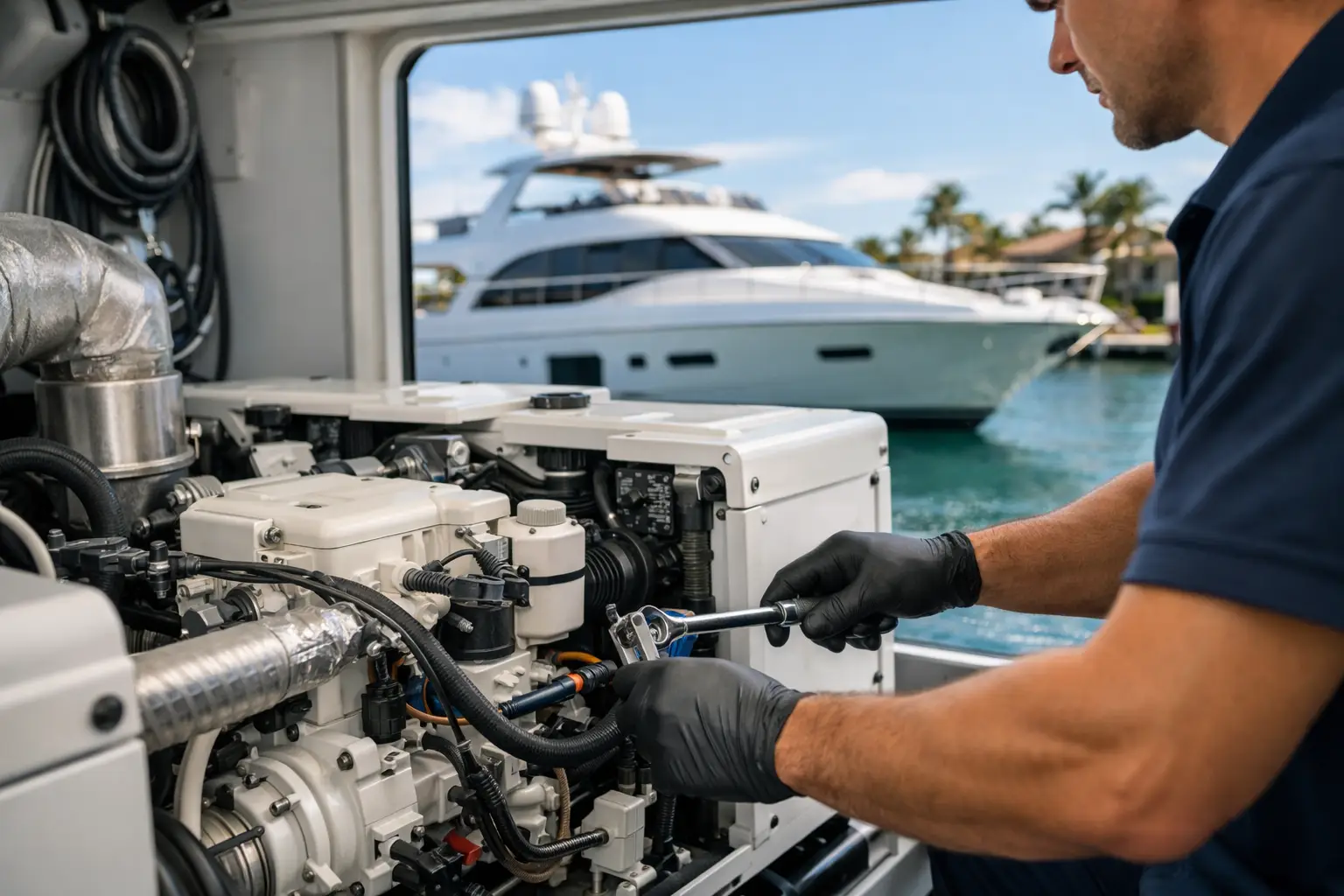
A generator that quits at anchor, during an overnight trip, or while guests are aboard is not a minor inconvenience. It can take down air conditioning, refrigeration, battery charging, galley equipment, and other systems owners rely on. Generator service costs are easier to manage when problems are found early, the technician can diagnose the actual cause, and the vessel does not have to make an expensive trip to a repair yard.
For yacht owners and captains in South Florida, the real question is not simply, “What does generator service cost?” It is what the service includes, how quickly the generator can be returned to dependable operation, and whether the work prevents a larger failure later.
What affects generator service costs?
Marine generator service pricing depends on the generator’s size, make, age, operating hours, access, maintenance history, and the condition of supporting systems. A routine service on a well-maintained unit is a very different job from diagnosing a generator that shuts down under load, overheats, smokes, or will not start.
Labor is one part of the equation. Parts can be another significant factor, especially when a problem involves a raw-water pump, heat exchanger, injector, fuel-system component, control module, exhaust elbow, or electrical fault. Larger yacht generators may also require more labor because access is limited, components are heavier, and the work must be coordinated around the vessel’s electrical and mechanical systems.
A mobile service call can often reduce the total cost of the repair process. Rather than arranging a haul-out or moving the vessel to a yard, a qualified marine technician comes to the dock, marina, or private residence. That saves time, avoids logistical delays, and helps get the diagnosis started where the generator operates.
Routine maintenance is usually the lowest-cost service
The most predictable generator expenses are scheduled maintenance items. Oil and filter changes, fuel-filter replacement, impeller inspections, belt checks, coolant checks, zinc replacement, battery and charging-system testing, and load testing are all intended to keep a small issue from turning into a shutdown.
Service intervals vary by manufacturer and operating conditions, but many marine generators need attention based on running hours rather than calendar time alone. A generator that sees frequent use for air conditioning, refrigeration, or extended cruising can reach its service interval quickly. Vessels that sit for long periods face a different set of risks, including stale fuel, corroded connections, weak batteries, and restricted cooling passages.
It may be tempting to delay a scheduled service when the unit seems to be running normally. That is where generator ownership can become expensive. A worn impeller, dirty heat exchanger, restricted fuel filter, or neglected coolant issue may not cause an immediate failure. Under a heavy electrical load, however, it can become the reason a generator overheats or shuts down when you need it most.
The cost difference between service and repair
Preventive service is planned work. Repair work is diagnostic work first, followed by correcting the failure. That distinction matters because an accurate diagnosis prevents owners from paying for parts that do not solve the problem.
For example, a no-start complaint may be caused by a weak battery, poor cable connection, failed starter, fuel delivery issue, safety shutdown, or control-system fault. Replacing the first part that seems likely is not a cost-saving strategy. A marine technician should test the system, identify the failure, and explain the recommended repair before unnecessary work begins.
Overheating is another common example. The source may be as simple as an impeller or as involved as a fouled cooler, compromised water flow, a damaged pump, or an exhaust restriction. The visible symptom is the same, but the repair cost changes substantially based on the source. Good diagnostics protect both the generator and the owner’s budget.
Common generator repairs that can raise the bill
Some repairs cost more because they involve specialized components, additional disassembly, or damage caused by continued operation after a warning sign. The following issues commonly move a job beyond routine maintenance:
- Cooling-system repairs involving raw-water pumps, heat exchangers, coolers, hoses, or exhaust components
- Fuel-system problems such as contaminated fuel, injector concerns, lift-pump failures, or air entering the system
- Electrical faults involving batteries, alternators, starters, relays, wiring, sensors, or control panels
- Major engine concerns, including low compression, oil contamination, damaged internal components, or a generator that has been repeatedly overheated
The most expensive repairs are often connected to a smaller problem that was ignored. A generator that is running hot, tripping breakers, producing unusual smoke, struggling to carry load, or requiring repeated resets should be inspected before the next trip. Continuing to operate it can turn a manageable repair into a major component replacement.
Why access and vessel logistics matter
A generator installed in an open, well-lit machinery space is generally faster to service than one located behind panels, beneath deck structures, or in a tight engine room. On larger yachts, technicians may need to work around propulsion engines, stabilizers, electrical equipment, sound shields, and other onboard systems.
That does not mean difficult access should prevent proper care. It means the labor estimate should account for it honestly. Owners should also consider the costs that do not appear on a repair invoice: coordinating dockage, relocating the vessel, losing a charter day, delaying a trip, or paying to have the boat moved to a yard.
GTM International brings certified, licensed, and insured marine technicians directly to vessels throughout the South Florida coastal corridor. For owners of 50- to 500-foot vessels, on-site service can eliminate much of the time, money, and stress tied to traditional yard logistics.
How to keep generator service costs under control
The practical way to lower long-term costs is not to choose the cheapest possible service visit. It is to avoid emergency repairs, repeat diagnostics, and preventable damage. Keep clear maintenance records, track generator hours, and note any changes in starting, exhaust, temperature, voltage, or load performance.
Captains and owners should also pay attention to the systems around the generator. Fuel quality, battery condition, shore-power operation, cooling-water flow, and ventilation can all influence reliability. A generator is not isolated from the rest of the vessel. When a problem appears, testing the related systems can save time and prevent the same issue from returning.
A recurring maintenance program is often a smart fit for yachts that operate regularly, are managed remotely, or support charter activity. Scheduled inspections create a baseline for the generator’s condition and give technicians the opportunity to catch wear before it becomes a no-start call on a Friday afternoon.
What to ask before approving generator work
Before authorizing service, ask whether the estimate covers diagnostics, routine maintenance, repair labor, parts, and testing under load. Ask what caused the issue, not just what component is being replaced. If parts are recommended, request a clear explanation of why they are needed and whether other related items should be addressed while the generator is accessible.
It is also reasonable to ask about technician qualifications and experience with marine diesel systems. Yacht generators operate in a demanding environment, and the right diagnosis requires more than general mechanical knowledge. Factory-compatible service practices, proper tools, and familiarity with marine electrical and cooling systems make a difference.
When your generator begins showing warning signs, a prompt mobile inspection is often the least disruptive decision. Addressing the cause while the problem is still small can protect your comfort onboard, your schedule, and your vessel’s value – and help get you back out at sea with confidence.
