
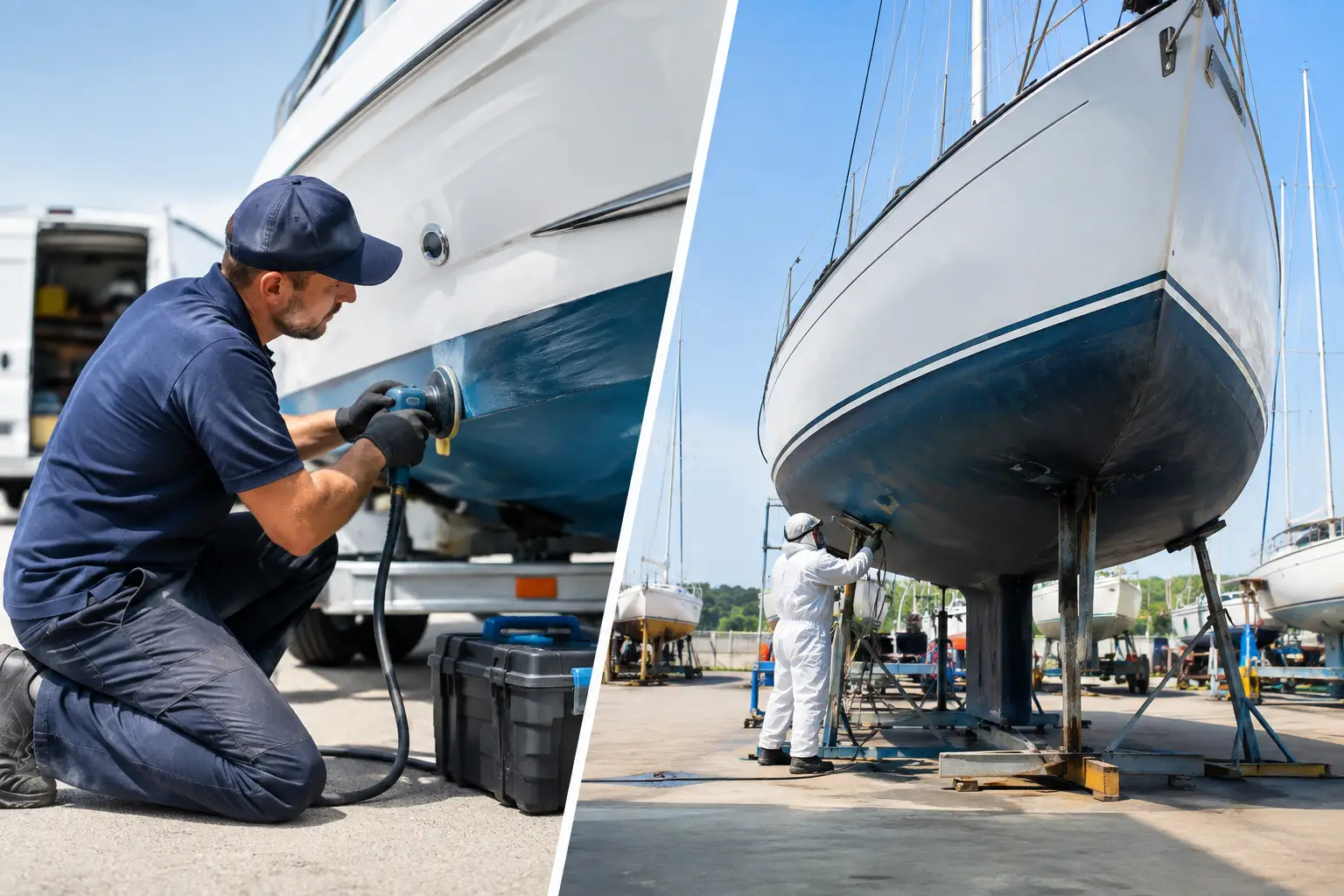
A no-start alarm at the dock, an overheating diesel before a charter, or a generator that quits during a weekend aboard creates the same immediate question: who can get the boat running without turning a repair into a major project? Mobile versus boatyard repairs is not simply a choice between two service locations. It affects your downtime, hauling expense, access to your vessel, and how quickly a qualified technician can identify the real problem.
For many engine, generator, electrical, and steering issues, having a marine technician come directly to the boat is the fastest, most cost-conscious path forward. But there are times when a boatyard is the right call. Knowing the difference helps owners, captains, and fleet managers make a better decision before a manageable repair becomes an extended stay ashore.
Mobile Versus Boatyard Repairs: Start With the Work Needed
The first question is not where the boat is located. It is what the repair actually requires.
Mobile marine service is well suited to mechanical and systems work that can be diagnosed and completed safely at the dock, at a marina, or at a private residence with proper access. This includes diesel and gas engine diagnostics, preventive maintenance, cooling-system service, generator repairs, battery and charging issues, electrical troubleshooting, steering-system repairs, inspections, and many fuel-system concerns.
A skilled mobile technician can arrive with diagnostic equipment, specialized tools, common replacement parts, and the experience to work through a problem where it happened. That matters because marine failures are often symptoms, not simple parts swaps. An overheating engine may involve a restricted cooler, failing impeller, airflow problem, sensor issue, or a condition deeper in the cooling system. The right diagnosis protects both your schedule and your budget.
Boatyard service becomes necessary when the work requires hauling the vessel, lifting equipment that cannot be handled aboard, extensive fabrication, dry access to the hull, or a controlled shop environment. Bottom work, running gear damage, major hull repairs, certain shaft and propeller issues, and structural projects generally belong in a yard. A boatyard can also be the practical choice for a large, multi-trade refit that needs several teams working in sequence.
The distinction is straightforward: if the repair is inside the vessel’s operating systems and can be completed safely where the boat sits, mobile service can avoid a great deal of disruption. If the work depends on access below the waterline or heavy facility equipment, plan for the yard.
The Cost Difference Is Bigger Than Labor Rates
Owners sometimes compare only the hourly labor rate when deciding between a mobile technician and a boatyard. That is understandable, but it leaves out the expenses that often make a repair costly.
Moving a vessel to a yard can mean arranging a captain or crew, coordinating a tow if the boat is disabled, reserving space, waiting for a haul-out, paying lifting and blocking charges, and potentially paying storage while parts are ordered. For a larger yacht, the logistics become even more involved. Every handoff creates another cost and another opportunity for delay.
Mobile service eliminates many of those line items. The technician comes to the vessel, evaluates the issue in its real operating environment, and can often complete repairs without interrupting your marina arrangement or travel plans. There is still a service call and labor involved, of course, but avoiding transport and yard-related charges can produce meaningful savings.
That does not mean mobile service is automatically less expensive in every situation. A repair requiring repeated visits, specialized shop machinery, or extensive disassembly may be more efficient in a boatyard. The practical goal is not to force every job into an on-site visit. It is to choose the setting that gets the work done correctly with the least total cost, not merely the lowest initial quote.
Downtime Is Often the Deciding Factor
A vessel in a boatyard may wait for intake, hauling, diagnosis, parts approval, technician availability, and launch scheduling. Even a relatively routine engine issue can take longer when it enters a busy yard workflow.
With mobile marine repair, the technician can meet the boat where it is. That shortens the path between the first call and the initial diagnosis. For owners preparing for a trip, captains managing charter schedules, or fleet operators trying to keep equipment available, that response time has real value.
South Florida boating does not always follow business hours. A warning light can appear on Friday afternoon. A generator problem can surface as guests arrive. A steering concern can make an otherwise perfect weather window unusable. Access to a 24-hour mobile-response team gives vessel owners a practical option when waiting until the next available yard appointment is not realistic.
GTM International provides mobile maintenance and repair throughout the coastal corridor from Fort Lauderdale to Fort Pierce, including West Palm Beach, helping owners address problems without adding unnecessary hauling and yard delays.
Why On-Site Diagnostics Can Be More Accurate
Marine systems do not operate in a vacuum. Voltage readings, engine temperatures, fuel delivery, load behavior, and intermittent alarms can change depending on shore power, battery condition, sea strainers, ambient heat, and equipment use aboard the boat.
Diagnosing the vessel where it normally lives allows the technician to see those conditions firsthand. A generator that fails under load, for example, may need to be tested with the electrical demands it sees during real operation. An engine alarm may be tied to a wiring connection that shifts with vibration. A steering problem may be easier to evaluate with the full system accessible on board.
This is where experienced marine technicians work much like doctors. A symptom matters, but the underlying cause matters more. Replacing a part without confirming why it failed can send you back to the dock with the same problem weeks later. Careful diagnostics, supported by manufacturer-compatible experience with platforms such as MTU, MAN, and Caterpillar, help prevent that cycle.
When a Boatyard Is Clearly the Better Choice
Mobile service has major advantages, but it should never be presented as a substitute for work that requires a yard. If you suspect underwater damage after a grounding, have propeller or shaft vibration, need bottom paint or hull work, or require a haul-out for inspection, a boatyard provides the access and equipment the job demands.
The same is true for substantial repowers, major structural repairs, or projects involving equipment removal through decks or bulkheads. In those cases, a capable mobile technician may still help with troubleshooting, planning, or coordinating the mechanical side of the project, but the vessel needs a facility designed for that level of work.
Owners should also consider safety and access. A marina may have restrictions on certain repairs, noise, fluid handling, or work hours. A professional mobile provider will work within marina rules, use proper practices, and tell you when the job should move to a controlled yard environment.
How to Make the Right Service Call
Before scheduling repairs, gather the information that helps a technician respond efficiently: the vessel’s make and model, engine or generator model, the exact alarm or symptom, when it occurs, recent service history, and whether the boat can be operated safely. Photos of displays, fluid leaks, or damaged components can also help narrow the first steps.
If the issue involves propulsion, cooling, electrical systems, steering, or generator performance and the vessel is safely docked, a mobile diagnostic visit is often the best first move. You receive a professional assessment without committing to the cost and delay of a haul-out. If the technician finds that yard work is necessary, you can make that decision with clearer information rather than guesswork.
For a high-value yacht or working vessel, preventive maintenance is equally valuable. Regular engine inspections, cooler service, fluid analysis, electrical checks, and generator care give technicians the chance to find developing problems before they become an emergency call. It is generally easier to schedule maintenance at your dock than to recover from a failure when the boat should be underway.
The next time your vessel needs attention, do not assume a boatyard is the only answer. Start with the repair itself, the access required, and the true cost of downtime. A qualified mobile technician can often bring the right diagnosis and repair directly to your boat, so you can make a confident decision and get back out at sea sooner.
