
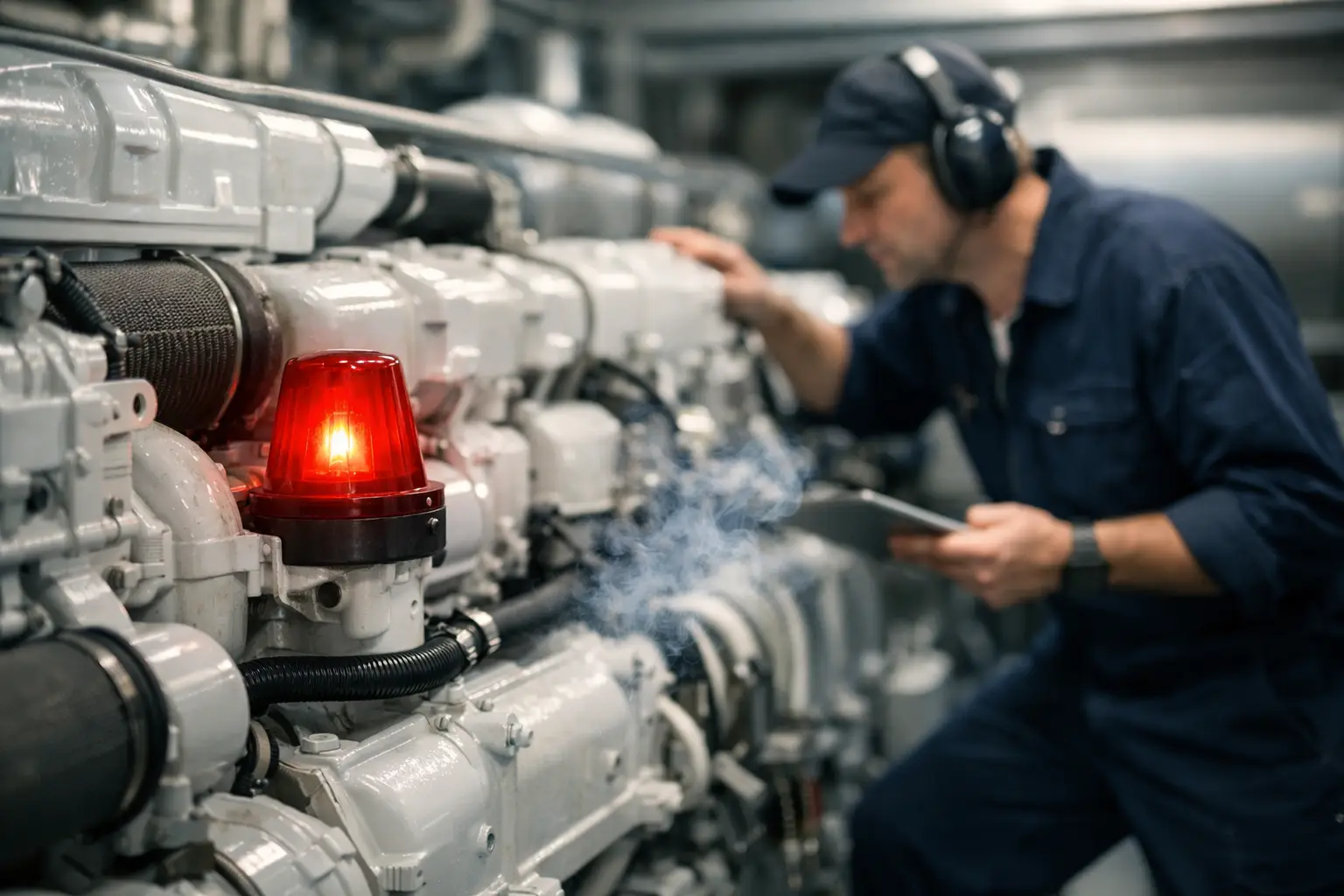
A MAN engine alarm at the dock is one thing. The same alarm when you are pushing offshore, managing a charter schedule, or trying to return before weather turns is another. MAN marine engine troubleshooting starts with protecting the engine and gathering the right information, not clearing a warning and hoping it does not return.
Modern MAN diesel engines are powerful, electronically managed systems. A small change in cooling-water flow, fuel quality, battery voltage, or sensor input can trigger a fault that affects power, RPM, or starting. Treat those messages as your engine asking for attention. Like a doctor evaluating symptoms before prescribing treatment, a qualified marine technician looks for the underlying cause rather than simply addressing the alarm.
Start With the Warning, Not the Guesswork
When a warning appears, record the exact message or fault code, engine hours, RPM, load, and the conditions at the time. Was the vessel accelerating? Had it been sitting for several weeks? Was one engine affected or both? These details can shorten diagnostic time and help prevent unnecessary parts replacement.
If the alarm involves high coolant temperature, low oil pressure, low gear oil pressure, smoke, fuel leakage, abnormal vibration, or a major loss of power, reduce load immediately and follow the engine manufacturer’s operating guidance. Continuing to run a diesel with a serious lubrication or cooling issue can turn a manageable repair into extensive engine damage.
Do not repeatedly cycle the ignition to make a fault disappear. An intermittent fault may remain stored in the engine control system, and the sequence of events matters to diagnosis. Clearing the evidence before it is read can make a technician’s job harder and increase your downtime.
Common MAN Marine Engine Troubleshooting Calls
Most service calls fall into a few familiar categories, but the same symptom can have several causes. That is why a proper inspection matters.
High Temperature or Cooling Alarms
Overheating is one of the most urgent complaints on a marine diesel engine. The cause may be as simple as restricted raw-water flow or as involved as a failing circulation component, heat exchanger restriction, coolant issue, sensor fault, or air trapped in the system.
Start with safe, basic observations. Check whether the raw-water discharge looks normal, inspect strainers only after the system is shut down and safe to open, and look for obvious coolant leaks or loose belts where applicable. Never remove a pressurized coolant cap from a hot engine. A technician should then verify actual operating temperatures, cooling-system pressure, raw-water flow, cooler condition, and fault data before recommending repairs.
South Florida’s warm water, marine growth, sand, and long idle periods make cooling-system service especially important. Coolers that look acceptable from the outside can have internal scaling or blockage that limits heat transfer under load.
Loss of Power, Reduced RPM, or Limp Mode
A MAN engine that will not reach normal RPM may be protecting itself. Reduced-power operation can be triggered by temperature, pressure, boost, fuel-delivery, exhaust, or electronic-control concerns. The engine may still run smoothly, which can tempt an owner to continue operating, but the reduced output is a warning that conditions are outside normal limits.
Fuel restrictions are a common starting point, particularly after contaminated fuel, rough conditions that stir tank debris, or overdue filter service. Air leaks, water in fuel, clogged filters, and low supply pressure can all affect performance. However, replacing filters without checking the full fuel system may only provide a temporary answer.
Turbocharger and charge-air issues also deserve attention. A leak in an air path, a fouled air filter, or a control problem can affect boost and performance. Digital diagnostics, pressure testing, visual inspection, and a sea trial when appropriate help separate a fuel problem from an air or control-system problem.
Hard Starting, No Start, or Uneven Running
Diesel engines need clean fuel, proper fuel pressure, adequate cranking speed, correct air supply, and reliable electrical signals to start correctly. A slow crank may point to batteries, cable connections, charging concerns, or starter issues. A crank-without-start condition may involve fuel supply, air intrusion, sensors, shutdown inputs, or stored electronic faults.
Before calling for service, note whether the engine cranks normally, whether it starts and stalls, whether there is smoke at startup, and whether the issue affects one engine or both. Do not use starting fluid unless the engine manufacturer specifically permits it. On sophisticated marine diesel platforms, improper starting aids can cause damage and complicate diagnosis.
Smoke, Vibration, and Unusual Sounds
Smoke color can offer clues, but it is not a diagnosis by itself. Black smoke can be associated with excess fuel, restricted air, heavy load, or turbocharging concerns. White or gray smoke may relate to unburned fuel, temperature, coolant, or other combustion issues. Blue smoke may indicate oil consumption. Conditions, engine temperature, and how long the smoke persists all matter.
A new vibration, rattle, whistle, or metallic sound should be checked promptly. The source may be on the engine, in the exhaust path, at an accessory drive, or in the running gear. A careful inspection protects both the engine and the people aboard. Avoid placing hands near belts, rotating machinery, hot exhaust components, or pressurized fuel lines while the engine is operating.
What a Proper Diagnostic Visit Should Include
Effective MAN marine engine troubleshooting is more than connecting a scan tool. Electronic fault data is valuable, but technicians need to compare it with the engine’s physical condition and operating history.
A thorough mobile diagnostic visit may include a visual inspection for leaks and damaged hoses, battery and charging-system checks, fluid-level and fluid-condition review, fuel and air-system evaluation, cooling-system checks, electronic fault-code retrieval, and verification of live operating data. Depending on the symptoms, the technician may recommend cooler service, fuel-system repairs, electrical testing, sensor replacement, preventive maintenance, or an on-water load test.
There is a trade-off between quick resets and complete diagnosis. Resetting a noncritical intermittent alert may get a vessel moving temporarily, but it does not answer why the alert occurred. For a yacht that must be reliable for family use, charter, or a scheduled trip, finding the cause is usually the less expensive decision.
Maintenance That Prevents Emergency Calls
The best troubleshooting visit is often the one avoided through planned service. Engine oil, filters, fuel filtration, impellers, belts, coolant condition, zincs where applicable, battery connections, and cooler maintenance all have service intervals for a reason. Those intervals should be adjusted for actual use, idle time, operating environment, and the vessel’s maintenance history.
Four habits make a meaningful difference:
- Log engine hours, fuel events, alarms, and completed service.
- Inspect engine spaces regularly for leaks, odors, loose connections, and abnormal fluid levels.
- Run the vessel long enough to reach proper operating temperature when practical, rather than relying only on short idle periods.
- Schedule preventive service before a busy season, long trip, or extended period away from the vessel.
A clean engine room also supports faster, more accurate work. When technicians can safely access filters, coolers, electrical connections, and service points, they spend less time working around avoidable obstacles and more time solving the problem.
When Mobile Service Makes Sense
Hauling a yacht to a repair yard for every warning light adds time, cost, and scheduling pressure. Many MAN engine issues can be inspected, diagnosed, and repaired where the vessel is docked. That is particularly useful for owners and captains along the South Florida coast who need a clear answer without losing days to transport and yard coordination.
GTM International brings licensed, insured marine technicians directly to vessels from Fort Lauderdale to Fort Pierce, including West Palm Beach. For engines, generators, coolers, electrical systems, and steering concerns, mobile service can reduce disruption while giving your vessel the focused attention it needs.
If a MAN alarm, performance change, or starting issue has you second-guessing the next trip, document what happened and arrange a professional inspection before it becomes a larger repair. A timely diagnosis protects the machinery, the schedule, and the confidence you should have every time you leave the dock.
