
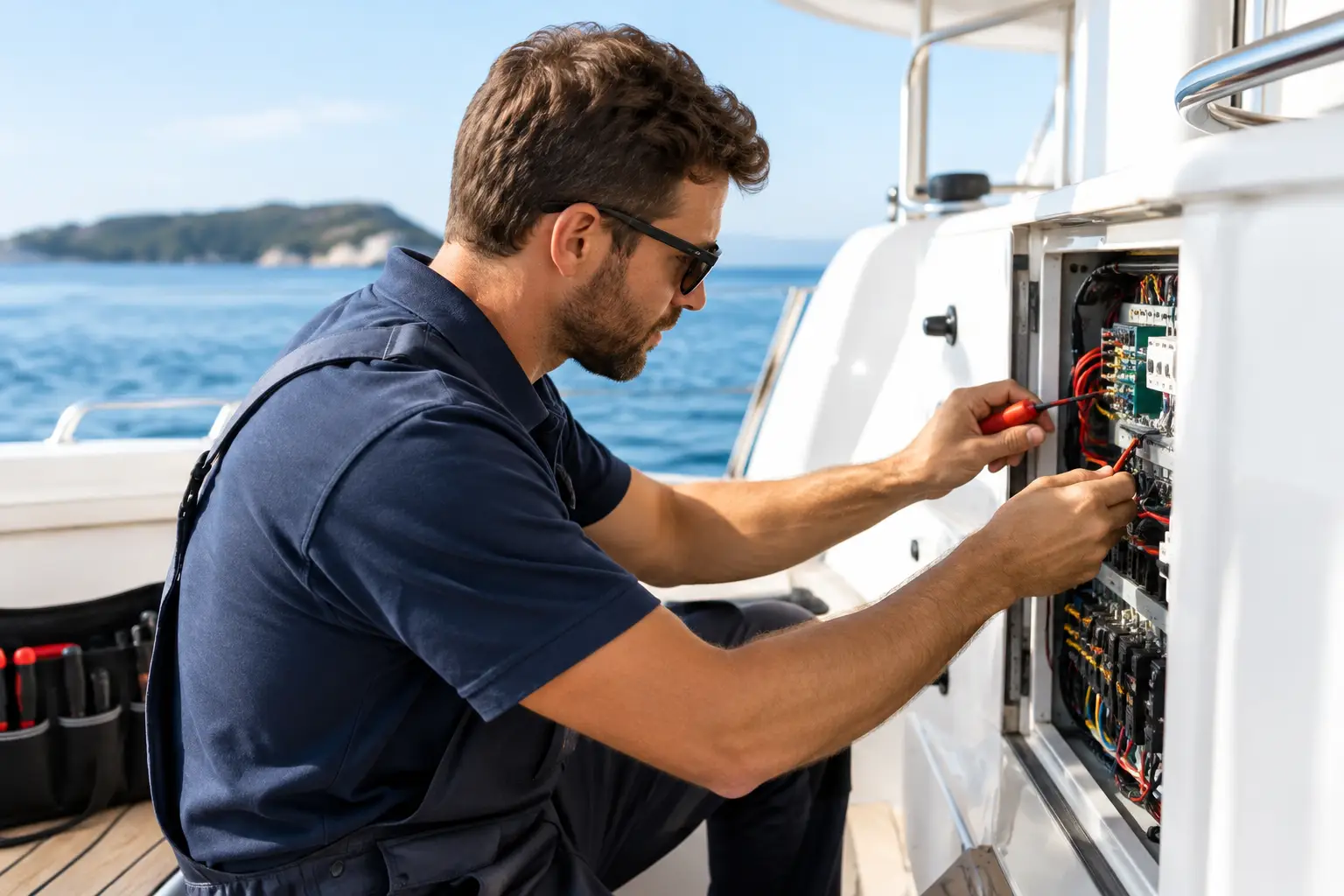
A dead battery bank before departure is frustrating. A failed bilge pump, overheated shore-power connection, or intermittent generator circuit can be far more serious. Professional marine electrical repair is not simply about restoring lights or replacing a breaker. It is about finding the real source of a fault, protecting critical onboard systems, and keeping your vessel ready to leave the dock when you are.
For yacht owners, captains, and fleet operators along the South Florida coast, electrical problems rarely arrive at a convenient time. Salt air, heat, vibration, moisture, and high onboard power demand create conditions that can turn a small wiring issue into lost cruising time, damaged equipment, or a safety concern. A qualified mobile marine technician can come directly to the vessel, diagnose the system properly, and help avoid the delay and expense of moving a boat to a repair yard.
Why Marine Electrical Repair Requires a Different Approach
A yacht’s electrical system is not the same as the electrical system in a home or automobile. It operates in an environment where corrosion is constant, components vibrate under way, and equipment may depend on both AC and DC power. Battery banks, chargers, inverters, generators, shore-power systems, navigation electronics, pumps, steering components, and engine controls must work together reliably.
That is why replacing the first failed-looking part is rarely a good repair strategy. A blown fuse may point to an overloaded circuit, damaged insulation, moisture intrusion, a poor ground, or a failing component farther down the line. Replacing the fuse without identifying the cause can leave the vessel exposed to the same failure – often when it matters most.
GTM International approaches electrical faults much like a doctor approaches a patient. The visible symptom matters, but a correct diagnosis matters more. Technicians test voltage, load, continuity, grounding, charging performance, connections, and related components before recommending repairs. This process helps prevent repeat failures and unnecessary parts replacement.
Common Signs Your Boat Needs Electrical Service
Electrical issues are not always dramatic. Many begin with small changes that are easy to dismiss until a system fails completely. A battery that will not hold a charge, electronics that reboot unexpectedly, a generator that struggles to start, or cabin lights that dim when a pump activates can all signal an underlying problem.
Pay close attention to burning odors, warm cables, corroded terminals, discoloration around shore-power connections, tripped breakers, or repeated fuse failures. These are not cosmetic concerns. Heat and corrosion increase resistance, and resistance can create more heat. On a vessel, that cycle can damage expensive equipment and create a serious fire risk.
Other warning signs include unreliable trim tabs, intermittent windlass operation, slow cranking, alarms that appear without an obvious cause, or steering systems that respond inconsistently. On larger yachts, the electrical issue may also affect engine monitoring, cooling equipment, communication systems, or generator controls. When a critical system acts unpredictably, it is best to schedule diagnostics before the next trip rather than hoping the issue disappears.
The Systems Behind Reliable Time on the Water
Electrical repair can involve a single corroded connector or a complex network of power, charging, monitoring, and control systems. The scope depends on the vessel, how it is used, and which equipment is affected.
Battery, Charging, and Starting Systems
Your batteries do much more than start the engines. They support pumps, electronics, lighting, safety equipment, and onboard comfort systems when shore power or a generator is not supplying the load. Weak batteries, incorrect charging voltage, loose connections, or undersized cables can lead to hard starts and unreliable power throughout the boat.
A proper service visit may include testing battery condition, alternator output, battery charger operation, cable integrity, terminal corrosion, and voltage drop under load. The right repair may be as straightforward as cleaning and protecting connections. In other cases, a failing charger, isolator, alternator, or battery bank may need attention. The goal is to confirm that the system charges correctly and delivers power when demanded.
Shore Power, AC Distribution, and Generator Circuits
Shore-power failures deserve prompt attention because AC systems carry significant power and can cause heat buildup when connections are loose or damaged. If a cord, inlet, breaker, or connection appears discolored or feels unusually warm, stop using it until it has been inspected. Continuing to run a compromised connection can damage the vessel’s electrical panel and connected equipment.
Generator problems can also have an electrical cause, even when the engine itself is mechanically sound. Faulty control wiring, weak starting circuits, failed sensors, charging issues, and damaged connections can prevent reliable operation. For a yacht that depends on generator power for air conditioning, refrigeration, and onboard systems, this is more than a convenience issue.
Pumps, Steering, and Engine Controls
Bilge pumps, freshwater pumps, livewell pumps, and washdown systems rely on dependable wiring and switching. A pump that does not activate may have a failed float switch, corroded connection, worn wiring, or an issue at the fuse panel. Because bilge systems are central to vessel safety, delayed repairs are a poor gamble.
Modern diesel vessels also rely on electrical signals for monitoring and control. Engine sensors, gauges, alarms, electronic controls, and digital displays help captains make sound decisions under way. On vessels powered by MTU, MAN, or Caterpillar engines, diagnostic experience with the engine platform and supporting electrical systems can save considerable time during troubleshooting.
What a Professional Marine Electrical Repair Visit Should Include
The best repair begins with clear communication. A technician should ask what happened, when it started, what equipment was operating at the time, and whether the issue is constant or intermittent. Those details can narrow the diagnostic process, especially when vibration, moisture, or load triggers the fault.
From there, the electrical system should be inspected methodically rather than guessed at. This can include visual checks for corrosion and heat damage, meter testing, connection testing, circuit tracing, charging-system evaluation, and operational testing after the repair. If additional work is recommended, the owner or captain should understand what failed, why it failed, and what can be done to reduce the chance of recurrence.
There is also a practical advantage to mobile service. Bringing qualified technicians to the dock or marina saves owners the cost and disruption of hauling a vessel to a yard for many electrical repairs. For boats from 50 to 500 feet, that convenience can make a major difference in downtime, scheduling, and total service expense. A 24-hour response option is especially valuable when a failure affects a scheduled departure, charter, generator, or safety-related system.
Preventing Electrical Failures Before They Interrupt a Trip
Marine electrical repair is often preventable, or at least less costly, when problems are found early. Preventive maintenance gives technicians an opportunity to inspect charging systems, battery connections, cables, panels, breakers, pumps, and generator circuits before an issue becomes an emergency.
The maintenance schedule should reflect how the vessel is used. A boat that sits on shore power for long periods has different risks than a yacht that runs frequently offshore or carries a heavy electrical load at anchor. Age matters too. Older vessels may have previous owner modifications, legacy wiring, or connections that no longer meet the demands of newer electronics and equipment.
Captains and owners can help by keeping battery compartments dry and ventilated, checking for visible corrosion, avoiding overloaded adapters, and reporting intermittent symptoms early. Do not ignore a breaker that trips repeatedly or assume that a battery is simply old without testing the charging system. Small observations give a technician valuable clues and can reduce diagnostic time.
Choose Repair Support That Comes to the Vessel
When electrical trouble affects your boat, the fastest path back to reliable operation is not always the nearest repair yard. Mobile marine service brings the diagnostic process to your vessel, where technicians can evaluate the actual shore-power setup, battery arrangement, generator connections, and affected equipment in place.
For owners and operators from Fort Lauderdale to Fort Pierce, certified, licensed, and insured technicians provide a practical way to address electrical concerns without adding unnecessary hauling, waiting, and stress. Whether the issue involves a starting circuit, corroded shore-power connection, generator control, pump, steering component, or engine-related electrical fault, timely professional attention protects both the vessel and the plans you made for it.
If something electrical is not operating as it should, schedule an inspection while the symptom is still giving useful clues. A focused repair today can help keep a dockside inconvenience from becoming the reason your next day on the water never starts.
