A diesel engine can be running perfectly at the dock, then lose RPMs, surge, or shut down when the boat meets rough water. Often, the issue is not the engine itself. It is restricted fuel flow. Knowing when to replace marine fuel filters helps protect the injectors, high-pressure fuel system, and reliability of the vessel when you need them most.
Marine fuel filters are small service items with a big job. They separate water, sediment, microbial growth, rust, and other contaminants from the fuel before those contaminants reach expensive engine components. On a yacht or larger diesel vessel, ignoring a filter can turn an affordable maintenance visit into a no-start condition, a missed trip, or a more involved fuel-system repair.
When to Replace Marine Fuel Filters: Start With the Schedule
The manufacturer’s maintenance interval is the starting point. Many diesel engines call for primary and secondary fuel-filter service at regular operating-hour intervals, often around 250 to 500 hours depending on the engine, filter arrangement, and operating conditions. Generator filters may have their own schedule and should not be overlooked simply because the main engines have been serviced.
Calendar time matters too. A vessel that sees limited use can still develop fuel problems. Condensation introduces water into a tank, while warm South Florida conditions can support microbial contamination where water and diesel meet. For boats that sit for months, an annual inspection and filter service is a sensible preventive measure even if engine hours are low.
That said, a service interval is not a guarantee that the filters will remain clean until the next date. Fuel quality, tank condition, recent fueling, weather, and vessel use all affect how quickly a filter loads up. Think of the scheduled interval as a routine checkup. The engine’s behavior tells you when it needs attention sooner.
Replace Filters Sooner When These Warning Signs Appear
A restricted fuel filter commonly causes trouble under load first. The engine may idle normally, but starve for fuel when accelerating, getting on plane, pushing against a current, or running at cruising RPM. Do not assume that a loss of power is only a propeller, turbocharger, or engine-control issue. Fuel delivery needs to be part of the diagnosis.
Watch for these four signs:
- A noticeable drop in RPM or speed at a throttle setting that normally performs well.
- Surging, hesitation, stumbling, or an engine that dies when load increases.
- Repeated water or debris visible in the primary filter bowl or water separator.
- Fuel-pressure alarms, engine fault codes, hard starting, or a generator that shuts down unexpectedly.
A filter that looks dark is not always blocked, and a filter that looks relatively clean is not always flowing properly. The better question is whether the engine can maintain fuel supply under demand. On electronically controlled engines from CAT, MAN, MTU, and other major platforms, fault information and live data can help separate a fuel restriction from an air leak, sensor problem, or another engine concern.
What Rough Water Can Reveal About Your Fuel System
Rough conditions frequently expose contamination that has been sitting quietly at the bottom of a fuel tank. As the boat moves, sediment and water are stirred into the pickup area and sent toward the primary filters. A vessel may run without issue for weeks in calm conditions, then suffer filter restriction after one offshore trip.
If this pattern occurs, changing filters alone may restore power temporarily, but it does not necessarily solve the underlying problem. The tank may need to be inspected, polished, cleaned, or evaluated for water intrusion and microbial growth. Replacing filters without addressing a contaminated fuel supply is like changing the air filter in a house while ignoring the source of smoke.
Captains and owners should also pay attention after refueling. A problem that begins soon after taking on diesel can indicate contaminated fuel, disturbed tank sediment, or water introduced during fueling. Keep fuel receipts, note the date and location, and record any symptoms. That information can make diagnosis faster and may help identify a recurring source.
Primary and Secondary Filters Need Different Attention
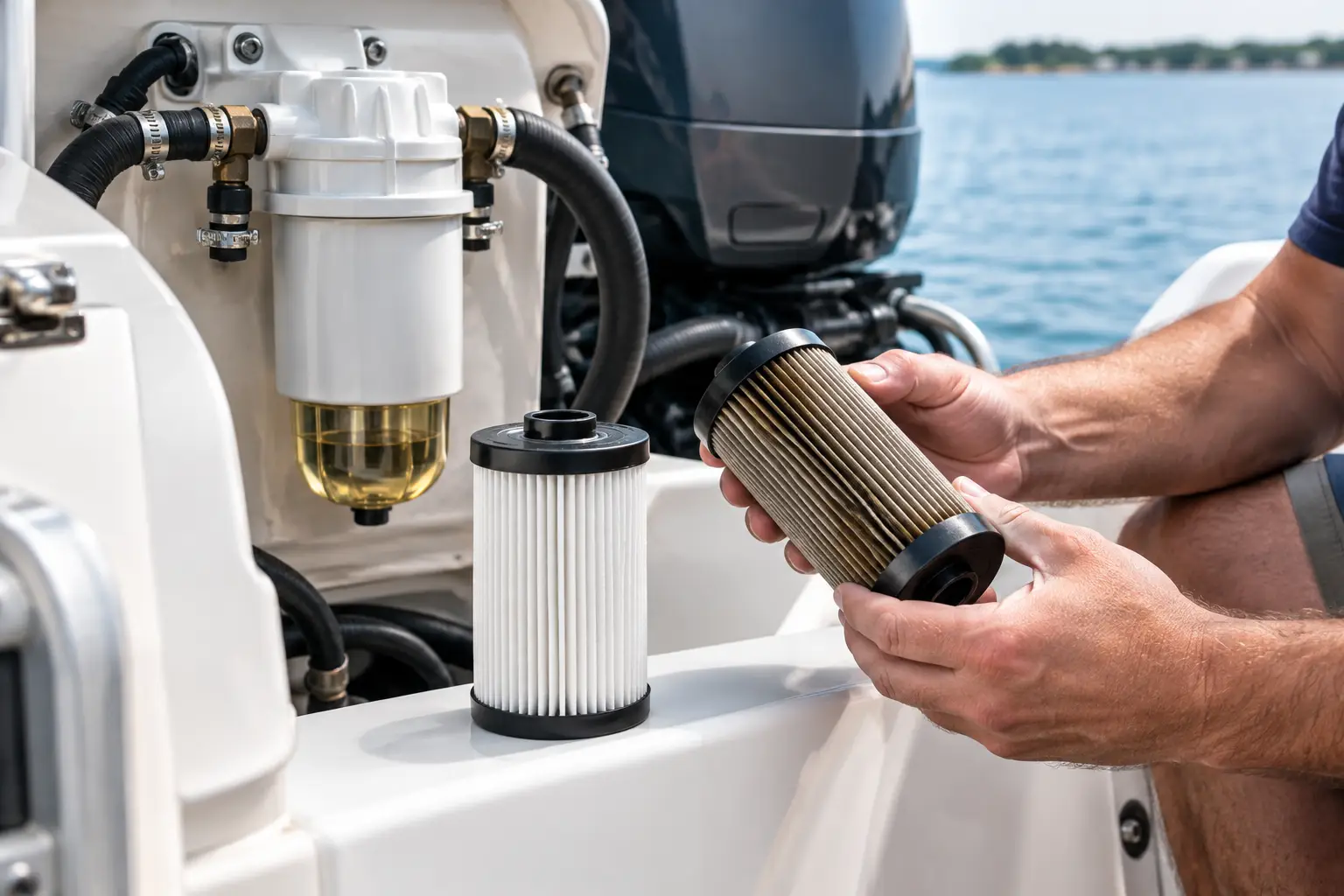
Most diesel systems use more than one level of filtration. The primary filter, often a Racor-style unit with a clear bowl, is typically positioned between the tank and engine. It removes larger particles and separates water before fuel reaches the engine-mounted secondary filter.
The secondary filter is usually finer and is designed to protect precision fuel-system components. Common-rail diesel engines operate with extremely tight tolerances and high fuel pressures. Contamination that slips through or bypasses filtration can damage injectors, pumps, and related components that cost far more than routine filter service.
Both filters should be serviced according to the engine manufacturer’s requirements. Changing only the easy-to-reach primary filter can leave a restricted secondary filter in place. Conversely, replacing an engine-mounted filter while overlooking water in the primary separator misses an early warning sign.
Filter micron ratings also matter. A finer filter is not automatically a better choice if it does not match the manufacturer’s approved specification. Incorrect elements can restrict flow, fit improperly, or fail to provide the intended level of protection. For high-value diesel engines, use manufacturer-compatible filters and correct replacement procedures rather than choosing parts based solely on appearance.
Why Repeated Filter Clogging Is a Diagnostic Issue
One dirty filter after a long operating period is normal maintenance. A new filter that clogs again after a few hours is a problem that needs investigation. Repeated restriction usually points to contamination in the tank, degraded hoses, failing fuel-system components, or an ongoing water source.
Diesel bug is another concern in humid marine environments. This microbial growth lives at the water-fuel interface and can create dark slime or debris that quickly blocks filters. Biocide treatment may be appropriate in certain cases, but it should be used as part of a planned fuel-cleaning approach, not as a substitute for removing water and contamination.
Do not keep running an engine that is clearly fuel-starved in the hope that it will clear itself. Low fuel supply can cause stalling at the worst possible time, and repeated crank attempts after a shutdown can introduce other complications. If a filter is replaced, the system must be correctly primed and checked for leaks before the vessel returns to service.
A Practical Maintenance Approach for South Florida Boaters
The best time to service filters is before they become an emergency. Include fuel-filter inspection in your regular engine-room checks, especially before a long run, a seasonal trip, hurricane-season preparation, or a period of heavy charter or fleet use. Drain water from serviceable primary separator bowls as required by the equipment manufacturer, and investigate where that water came from.
Keep a written maintenance record with engine hours, generator hours, filter part numbers, service dates, and any water or debris found. This gives a technician useful history when a performance issue appears. It also helps captains avoid scheduling errors when multiple engines and generators have different service intervals.
For larger vessels, maintenance should include the whole fuel path: tank condition, vents, fill caps, pickup tubes, hoses, valves, primary separators, secondary filters, and fuel pressure. A clean new filter cannot compensate for a compromised system upstream.
Call for Help Before a Small Restriction Becomes Downtime
Fuel-system symptoms overlap with many other marine engine issues, so replacing filters should not become guesswork. A professional inspection can verify fuel restriction, check for water and contamination, read engine fault data, and identify whether the tank or fuel supply needs attention. This is particularly valuable for vessels with multiple engines, generators, and complex transfer systems.
GTM International brings mobile marine diagnostics and diesel service directly to vessels from Fort Lauderdale to Fort Pierce, helping owners avoid the delay and expense of moving a boat to a repair yard. Certified technicians can service major diesel platforms, inspect the full fuel system, and help keep a preventable filter issue from becoming a lost weekend or an offshore concern.
If your engine has lost power under load, your separator bowl keeps collecting water, or you cannot remember the last filter service, schedule the check while the boat is safely at the dock. Fresh filters are inexpensive peace of mind, but clean fuel and a properly diagnosed system are what keep you confidently headed back out at sea.
