
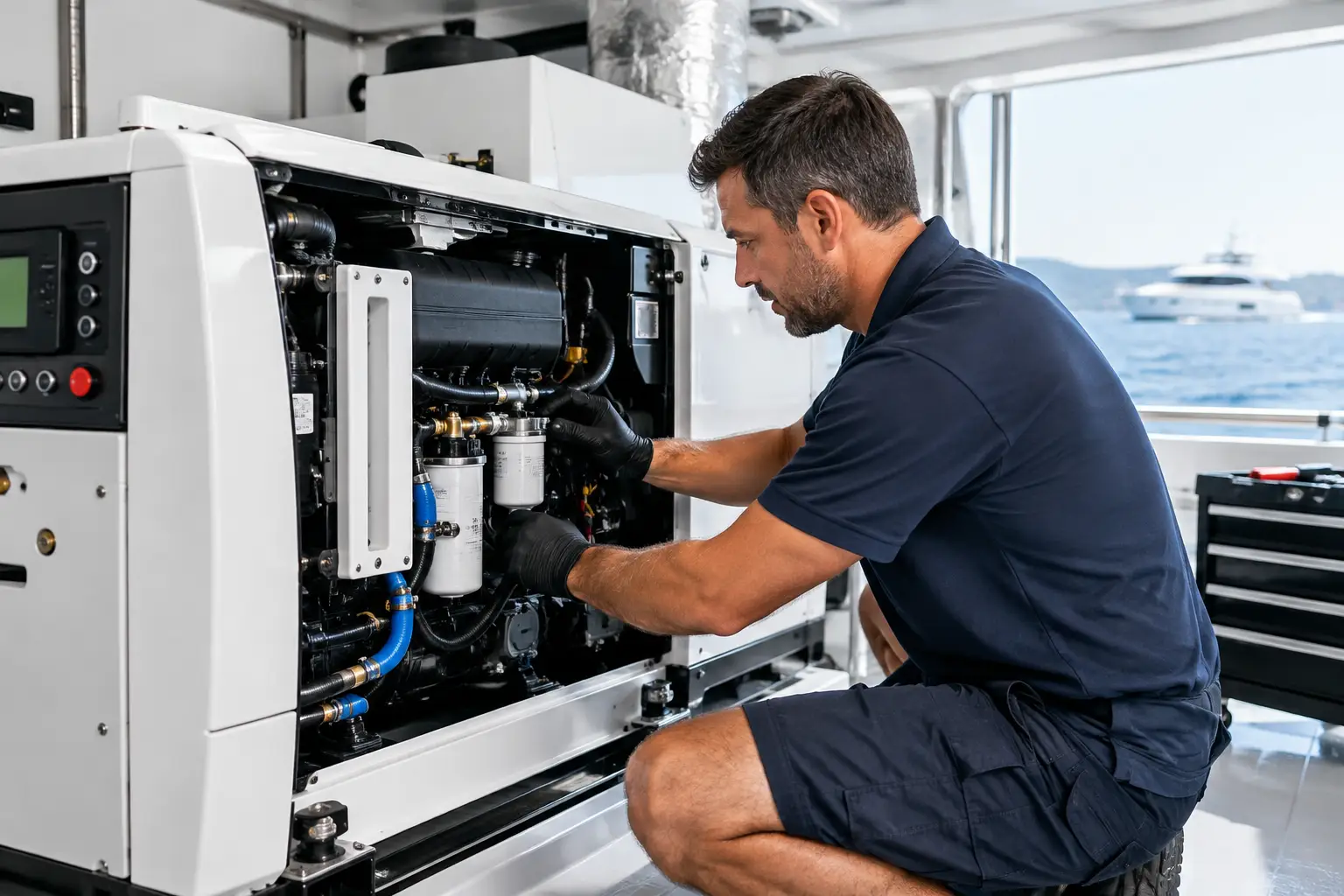
A yacht generator rarely chooses a convenient time to fail. It usually shows up as a dead air conditioner at the dock, a weak battery bank overnight, or an alarm while guests are aboard. Knowing how to service yacht generators helps protect the systems that make time on the water comfortable and safe, but it also helps owners spot issues before a small maintenance item becomes an expensive no-start call.
Generators operate in a demanding environment of heat, vibration, salt air, humidity, and changing electrical loads. The right service plan is not just an oil change. It is a disciplined inspection of the engine, cooling system, fuel supply, electrical output, exhaust, and safety equipment. For most yacht owners and captains, the smartest approach is to handle routine checks consistently and bring in a qualified marine technician for scheduled service, diagnostics, and any problem involving fuel, high-voltage output, overheating, or repeated shutdowns.
How to Service Yacht Generators Safely
Start with the manufacturer’s maintenance manual for your exact generator model. Service intervals vary by engine, operating hours, load profile, and whether the vessel runs primarily in South Florida heat or spends long periods stored at the dock. The hour meter is your baseline. Calendar time matters too, because oil, fuel, belts, hoses, and electrical connections can deteriorate even when the generator is not running.
Before touching the unit, shut it down correctly and allow hot components to cool. Turn off the generator’s AC output breaker, isolate the battery power where appropriate, and make sure nobody can start the unit while it is being serviced. Ventilate the engine room. Diesel fuel, battery gases, rotating belts, hot exhaust parts, and 120/240-volt AC power all deserve respect.
A practical pre-service check should include these items:
- Record operating hours, alarm history, voltage, frequency, oil pressure, and coolant temperature.
- Look for oil, coolant, raw-water, or fuel leaks beneath and around the generator.
- Check the engine oil level, coolant level, and raw-water strainer before startup.
- Inspect belts, hoses, clamps, mounts, wiring, and battery terminals for wear or corrosion.
- Confirm the exhaust system, carbon monoxide detectors, and bilge area are clear and dry.
Documentation is part of preventive maintenance. A simple log lets a technician see patterns, such as a generator that gradually runs hotter, loses frequency under load, or needs more frequent coolant top-offs. Those details can reduce diagnostic time and prevent unnecessary parts replacement.
Service the Engine Before It Becomes a Power Problem
Change oil and filters on schedule
Engine oil protects bearings, pistons, and internal components, but marine generator oil works hard. Short run times, light loading, high ambient temperatures, and moisture can reduce its effectiveness. Change the oil and oil filter at the interval specified by the generator manufacturer, not simply when the oil looks dark.
Run the generator long enough to warm the oil before draining it, unless the manufacturer says otherwise. Warm oil flows more completely and carries suspended contaminants out with it. Use the specified oil grade and capacity, replace the filter, check for leaks after startup, and verify the oil level again after the engine has been shut down for a few minutes.
Fuel filters also need regular attention. Water or debris in diesel fuel can cause rough running, surging, hard starts, low power, and shutdowns. Drain water separators where equipped and replace primary and secondary filters at the recommended interval. If filters are changed, use the correct priming procedure. Improper bleeding can introduce air into the fuel system and create a no-start condition.
Protect the cooling system
Overheating is one of the most common generator problems on yachts, especially in warm coastal waters. Most marine generators use a closed freshwater cooling circuit and a separate raw-water circuit. Both must be healthy.
Inspect the raw-water strainer for grass, shells, plastic, and sediment. Make sure the seacock is open before operation and verify a strong discharge of cooling water at the exhaust outlet after startup. A weak or missing discharge can indicate a blocked strainer, closed valve, failed impeller, damaged hose, or restriction in the heat exchanger.
The raw-water pump impeller is a scheduled replacement item, not a part to run until it fails. An impeller can lose vanes gradually, and those broken pieces may lodge farther downstream in the cooling system. Replace it according to the manufacturer’s interval or sooner if the generator has overheated, sat unused for an extended period, or shows reduced water flow.
Coolant also needs more than an occasional top-off. Check the level only when the engine is cool, inspect hoses and clamps, and test the coolant condition during scheduled service. Heat exchangers, aftercoolers, and oil coolers may require removal and cleaning when salt, scale, or marine growth restricts flow. This is specialized work, but addressing it early can save a generator from severe heat damage.
Inspect belts, mounts, and air intake
A loose belt can reduce water-pump or alternator performance. A cracked belt can leave the generator without proper cooling or charging. Check belt condition and tension using the manufacturer’s specification rather than guessing by feel.
Look over engine mounts as well. Excess movement, flattened rubber, loose hardware, or unusual vibration can stress exhaust connections, wiring, and hoses. Inspect the air filter and intake path for contamination. Restricted airflow can reduce combustion quality, increase smoke, and affect generator performance under load.
Check Electrical Output Under a Real Load
A generator can start easily and still fail when the yacht demands power. After basic engine service is complete, run the unit and allow it to reach normal operating temperature. Check voltage and frequency at the panel, then observe performance as normal onboard loads come online.
On a typical 60 Hz system, frequency should remain stable near its rated setting. Voltage should also stay within the manufacturer’s acceptable range. Fluctuating frequency, dimming lights, tripped breakers, or a generator that bogs down when air conditioning starts may point to a fuel issue, governor problem, electrical connection concern, overloaded system, or alternator fault.
Avoid treating a quick no-load test as proof that everything is fine. A generator needs to be exercised under meaningful load, but the proper load depends on the generator rating and vessel equipment. Extended operation at very light load can be harmful to some diesel generators, while excessive loading can cause heat and wear. A qualified technician can use a controlled load test or load bank when needed to confirm performance without putting the vessel’s systems at risk.
Battery and starting circuits deserve equal attention. Clean and tighten battery terminals, inspect cables for corrosion or heat damage, and verify the charging system is working. A weak battery or poor connection can imitate a major generator problem, particularly after the vessel has been sitting.
Build a Generator Maintenance Schedule Around Hours and Use
For a yacht that runs frequently, routine visual checks should happen before use or at least weekly. Oil level, coolant level, raw-water strainer condition, leaks, and exhaust water flow are quick checks that can prevent a shutdown offshore.
Scheduled service should follow the generator manufacturer’s hourly requirements. Many units need oil and filter service at intervals around 100 to 250 hours, while fuel filters, impellers, valve adjustments, coolant service, and cooler maintenance follow their own schedules. The exact interval depends on the generator make, model, age, and operating conditions. Do not use a generic online schedule in place of factory guidance.
A generator that sits unused needs exercise, not neglect. Regular operation under appropriate load helps circulate fluids, maintain battery charge, reduce moisture buildup, and reveal issues while the vessel is still at the dock. If the yacht is being stored or prepared for a season away, proper layup and recommissioning service are worth the effort.
Know When to Call a Marine Generator Technician
Some generator work is well suited to an attentive owner or captain. Routine inspections, fluid checks, strainer cleaning, and maintenance logging are valuable first-line care. But repeated alarms, overheating, fuel leaks, electrical faults, exhaust problems, low output, coolant contamination, or a generator that will not hold frequency call for professional diagnosis.
Think of a qualified marine technician as the doctor for your yacht’s machinery. The goal is not just to replace the part that failed, but to identify why it failed and prevent the next breakdown. That may involve cooling-system pressure tests, electrical testing, injector or fuel-system diagnostics, vibration analysis, or cooler service that cannot be handled safely with basic onboard tools.
For owners and captains from Fort Lauderdale to Fort Pierce, GTM International brings licensed, insured mobile marine service directly to the vessel. On-site generator inspections and repairs can avoid the delay, cost, and stress of moving a yacht to a repair yard, particularly when a power problem needs prompt attention.
Your generator is easy to overlook when it starts every time. Give it consistent attention while it is healthy, and it is far more likely to keep the lights on, the cabins cool, and your plans moving when the dock is behind you.
