
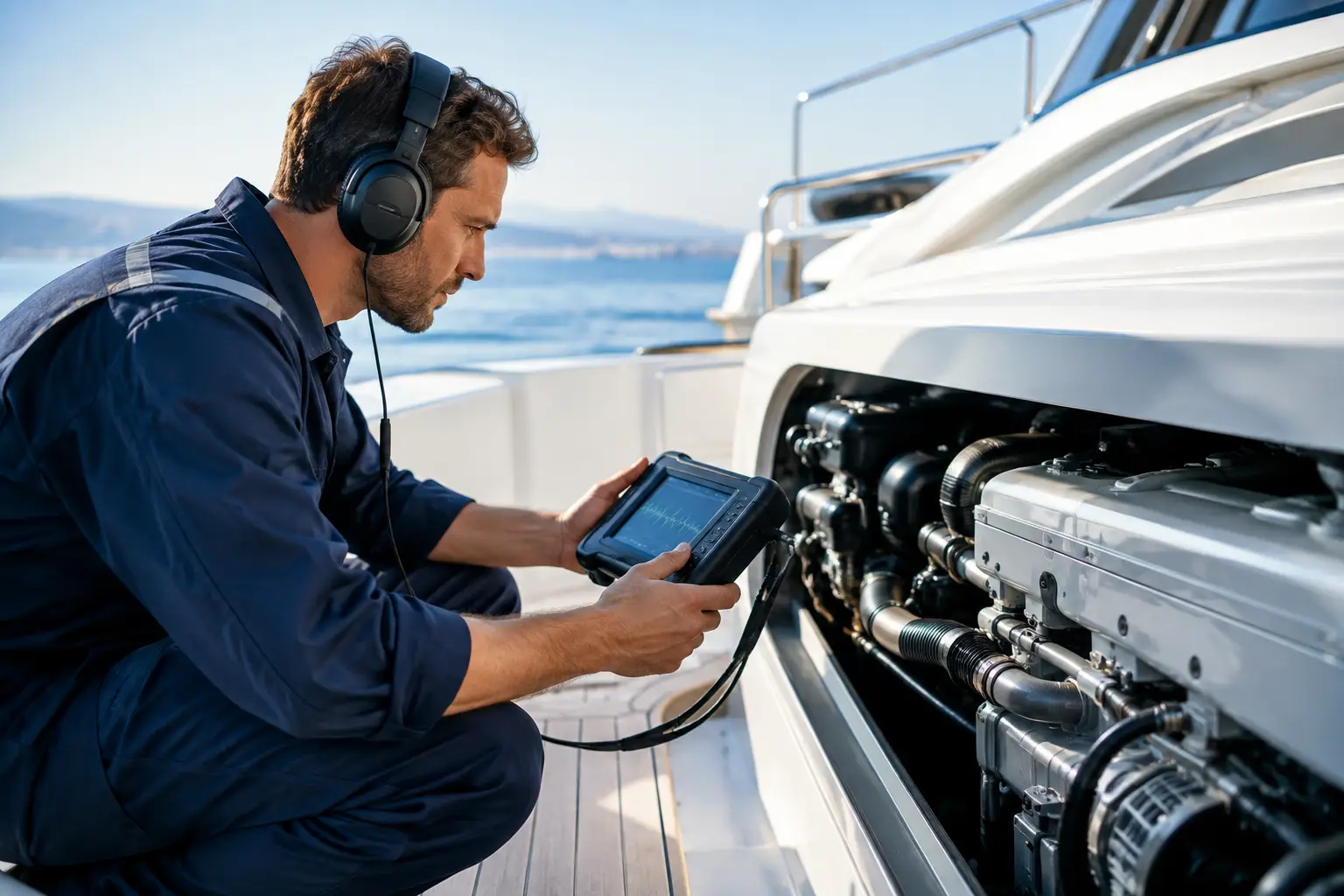
A new vibration at 1,800 RPM is not something to dismiss because the yacht still gets on plane. On a 50-foot sportfish or a larger motor yacht, a vibration can be the first symptom of a propulsion, engine, generator, shaft, or running-gear problem that becomes far more expensive when left alone. Knowing how to detect yacht vibration early gives owners and captains a better chance to protect equipment, avoid an unexpected loss of use, and schedule repairs before a minor issue creates damage across multiple systems.
The key is to notice when the vibration occurs, where it is felt, and what changes it. A trained marine technician uses those clues much like a doctor uses symptoms before ordering tests. You do not need to diagnose the failure yourself, but accurate observations can significantly shorten the diagnostic process.
How to Detect Yacht Vibration by Its Pattern
Start by separating vibration from normal operating feel. Every vessel has some movement from engines, propellers, hull slap, and sea conditions. The concern begins when there is a new buzz, shudder, rumble, or pulsing sensation that was not present before, or when a familiar vibration becomes stronger.
Run the vessel through its usual operating range when conditions are safe. Note whether the vibration appears at idle, while shifting into gear, during acceleration, at a certain engine speed, on plane, while turning, or only when backing down. A vibration that occurs at the same RPM in neutral often points toward an engine, generator, accessory, mount, or rotating component. A vibration that begins only when the vessel is in gear more often directs attention to the shafting, propellers, transmissions, couplings, struts, cutlass bearings, or underwater running gear.
Location matters just as much. A tremor concentrated at the helm may be transmitted through the structure or steering system. Vibration in the aft cabin, cockpit, or engine room may be closer to the source. If a glass rattles in one area, cabin doors chatter, or a particular deck panel suddenly hums, make a note of it. These details help a technician determine whether the problem is engine-related, propulsion-related, or structural.
Keep a simple log with engine RPM, vessel speed, sea state, trim condition, and whether the vibration changes in a port or starboard turn. A one-minute record on a phone can be more useful than trying to recall the symptom after returning to the dock.
Check the Difference Between RPM and Vessel Speed
One of the most useful ways to narrow the cause is to determine whether the vibration follows engine RPM or boat speed.
If the vibration rises and falls with RPM even while the boat is stationary or in neutral, look first at the engine and equipment driven by it. Possible causes include a misfire, failing injector, loose accessory, damaged pulley, worn engine mount, improper alignment, or generator issue. Diesel engines from MTU, MAN, and Caterpillar are designed to run with substantial power and controlled balance. A noticeable new shake deserves professional attention, especially if it comes with smoke, alarms, reduced power, unusual exhaust, or a change in fuel consumption.
If the vibration appears only as the vessel gains speed, the running gear becomes more likely. A bent or damaged propeller, fouled wheel, fishing line around a shaft, worn cutlass bearing, bent shaft, loose strut, or propeller imbalance can create a vibration that gets worse as speed increases. Even a small amount of propeller damage can place repeated stress on shafts, transmissions, seals, bearings, and mounts.
There are exceptions. An alignment issue may be mild at low RPM and become pronounced under load. A failing mount can allow an engine to move more as torque rises. That is why the goal is not to guess at a single cause. The goal is to give the diagnostic process a clear starting point.
Pay Attention to These Warning Signs
Vibration is rarely the only clue. It often arrives with other changes that help identify urgency. Watch for a new clunk when shifting, a rhythmic thump under the hull, steering that feels less precise, a hot shaft seal, increased engine-room movement, unusual transmission noise, or a change in exhaust tone.
Also look for signs of vibration damage during routine checks. Loose fasteners, chafed wiring, cracked hose supports, worn mounts, leaking fittings, and fretted metal around brackets can all result from repeated vibration. What starts as a slight buzz can eventually damage electrical connections, cooling hoses, fuel lines, exhaust components, and sensitive onboard equipment.
Do not overlook generator vibration. A generator that shakes more than usual may have an engine, mount, alignment, combustion, or load-related issue. Because generators support essential onboard systems, prompt diagnosis can prevent a small maintenance need from becoming a larger interruption to vessel operations.
Safe Checks You Can Make at the Dock
Before operating the yacht further, use a careful visual inspection. With engines off, look in the engine room for loose hardware, fluid leaks, shifted mounts, worn belts, damaged hoses, and anything that may be contacting a rotating component. Check that access panels, loose gear, and storage items are secured. Sometimes a simple loose panel is the noise source, but never assume that is the answer until more serious causes have been ruled out.
If safe and permitted by your vessel procedures, observe the engines at idle from a distance with all guards in place. Look for excessive movement, abnormal shaking, smoke, fluid leaks, or a component moving out of rhythm. Do not place hands near belts, shafts, couplings, or other rotating machinery. Never attempt to inspect propellers, shafts, or underwater gear in the water without proper safety procedures and qualified assistance.
A quick hull and running-gear inspection can be valuable after grounding, debris strikes, line entanglement, or a sudden onset of vibration. However, the absence of obvious propeller damage does not rule out a bent shaft, alignment concern, bearing wear, or an internal mechanical issue.
When Yacht Vibration Calls for Immediate Service
Reduce speed and arrange professional help if the vibration is sudden, severe, or accompanied by mechanical noise, heat, steering changes, warning alarms, smoke, fluid loss, or a loss of power. Continuing to run at the speed where a vibration is strongest can turn a repairable component into a shaft, transmission, engine-mount, or hull-related expense.
Captains managing charter, fleet, or owner-use schedules should treat new vibration as an uptime issue, not merely a comfort issue. The cost of an on-site inspection is often small compared with canceled trips, emergency towing, haul-out delays, or collateral damage from operating a vessel with a compromised propulsion system.
This is particularly true for yachts with high-output diesel engines and complex onboard systems. The bigger the vessel and the more power moving through the drivetrain, the less sense it makes to wait for a vibration to become undeniable.
Professional Diagnosis Finds the Cause, Not Just the Symptom
A proper vibration diagnosis may include an engine and transmission inspection, mount evaluation, alignment checks, shaft and coupling inspection, running-gear assessment, thermal readings, electronic diagnostics, and testing under load. The exact process depends on when the symptom occurs and the vessel’s configuration.
A technician may also distinguish between a frequency tied to engine revolutions and one tied to propeller shaft speed. That difference can quickly change the repair plan. Replacing a propeller will not correct a combustion-related engine shake, and adjusting an engine may not solve a damaged shaft or failing cutlass bearing.
For owners throughout the South Florida coast, GTM International brings certified mobile marine diagnostics directly to the vessel. That means less time coordinating a yard visit and a faster path to a clear recommendation for diesel engines, generators, electrical systems, steering components, and propulsion-related concerns.
If a vibration is new, worsening, or showing up with other warning signs, document what you feel, avoid pushing the yacht through the affected RPM range, and have a qualified marine technician evaluate it where it sits. Early attention can save time, money, and stress – and help keep your next day on the water from becoming a day spent waiting for repairs.
