
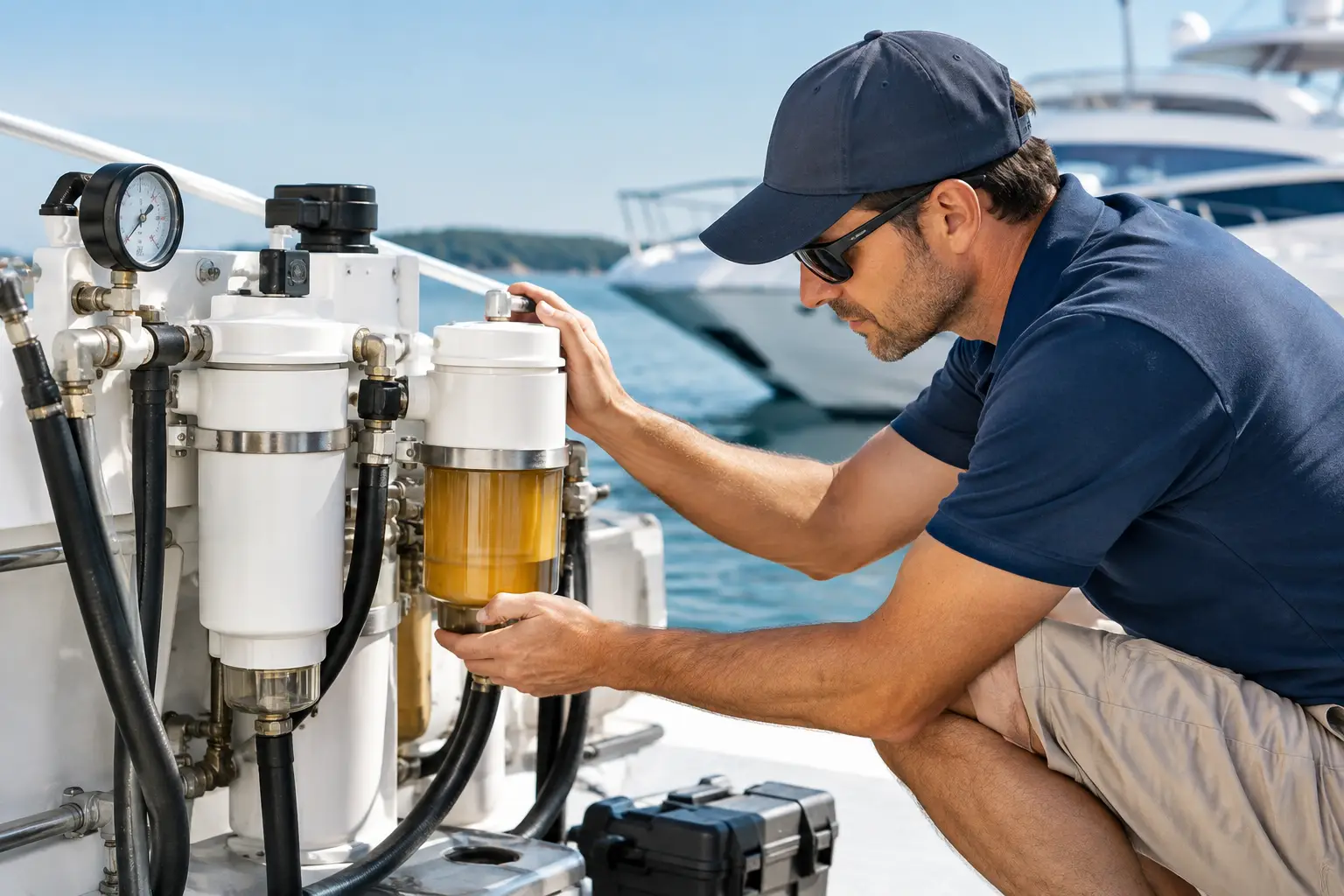
A yacht can have fresh filters, a well-maintained engine, and plenty of fuel in the tank, yet still lose power because contamination has been sitting below deck for months. This marine fuel polishing guide explains what fuel polishing does, when it makes sense, and why it can prevent the kind of no-start or power-loss call that ruins a day offshore.
For diesel-powered vessels, fuel is not just consumable inventory. It is part of the engine’s operating system. Water, sediment, microbial growth, and degraded fuel can restrict flow, damage sensitive fuel-system components, and leave a captain dealing with alarms or an engine that will not stay running. On a 50-foot sportfish or a 500-foot yacht, the stakes and tank capacities differ, but the basic risk is the same.
What Is Marine Fuel Polishing?
Marine fuel polishing is the process of circulating fuel from a vessel’s storage tank through dedicated filtration equipment and returning clean fuel to the tank. Unlike changing an engine-mounted fuel filter, polishing treats the fuel supply itself. A proper service removes suspended contaminants while the technician monitors filter loading, fuel clarity, water separation, and the condition of the tank system.
The process is especially valuable when a boat has been sitting, has taken on questionable fuel, or has experienced recurring clogged filters. It can also be part of a preventive maintenance plan for vessels that carry large quantities of diesel or operate seasonally.
Fuel polishing is not a cure for every fuel problem. If a tank contains heavy sludge, widespread microbial contamination, deteriorating hoses, or internal tank damage, the service may need to be paired with tank cleaning, biocide treatment, fuel removal, or repairs. The right answer depends on what the technician finds, not just on the appearance of a single filter.
Why Clean Diesel Matters to Yacht Engines
Modern marine diesel engines rely on precise fuel delivery. Systems on CAT, MAN, MTU, and other major platforms use close-tolerance components that do not tolerate water or abrasive debris well. Contaminated fuel can accelerate wear in injectors and pumps, reduce engine performance, and create intermittent problems that are difficult to diagnose once underway.
Water is one of the most common concerns. It can enter through condensation in partially filled tanks, compromised deck fills, damaged O-rings, poor fuel handling, or contaminated fuel purchased at the dock. Water supports microbial growth at the fuel-water interface. That growth, often called diesel bug, creates dark residue and debris that can quickly plug filters.
Sediment is another concern. It may come from aging fuel, corrosion, tank debris, or contamination introduced during fueling. When seas get rough, settled debris can be stirred up from the bottom of the tank and pulled toward the pickup tube. A boat may run normally at the dock, then begin losing RPMs after a rough crossing because the fuel system is suddenly seeing contamination.
That is why a fuel issue should not be treated as a minor inconvenience. Clean fuel protects uptime, helps avoid expensive component damage, and gives the engine the consistent supply it needs when the vessel is far from shore.
Signs Your Vessel May Need Fuel Polishing
A technician should evaluate the complete fuel system when warning signs appear. One dirty filter does not always mean the tank is contaminated, but repeated problems usually deserve a closer look.
Common signs include:
- Primary fuel filters clogging sooner than expected
- Loss of RPM, surging, or engine shutdown under load
- Water visible in a fuel-water separator
- Dark, hazy, or foul-smelling diesel samples
- Long periods of storage with partially filled fuel tanks
- Fueling from an unfamiliar or poorly maintained source
Captains should also pay attention to what happens after a fuel filter change. If the engine runs properly for a short time and then begins starving for fuel again, the new filter may simply be catching contamination from the tank. Replacing filters repeatedly without addressing the source can create downtime and unnecessary expense.
After a Storm, Storage Period, or Fueling Concern
South Florida vessels face conditions that make preventive attention worthwhile. Heat, humidity, summer storms, and long periods between trips can all contribute to fuel concerns. A boat that has sat through a season with low tank levels may have more condensation risk than one kept properly fueled and exercised.
A fuel polishing service is also a sensible precaution after suspected water intrusion or a fueling incident. It is generally less stressful and less costly to inspect and correct a fuel-quality problem at the dock than to troubleshoot a shutdown while headed through an inlet or preparing for a charter.
How Professional Fuel Polishing Is Performed
Professional work begins with an assessment, not a guess. The technician reviews the vessel’s fuel storage arrangement, supply and return lines, filters, tank access, and reported engine symptoms. Fuel samples may be taken from appropriate locations to check for water, sediment, discoloration, and microbial contamination.
A dedicated polishing unit is then connected so fuel can circulate through staged filtration and water separation. The filtration level must match the condition of the fuel and the vessel’s system. Starting too fine can clog filters immediately when contamination is heavy. Starting too coarse may fail to remove the debris causing the problem. Experienced technicians adjust the approach based on what the fuel and filters reveal.
During service, the technician watches for filter restriction, water accumulation, and recurring debris. The goal is not merely to make the fuel look clearer in a sample jar. The goal is to reduce contaminants throughout the usable fuel supply and identify whether the tank or related components require additional work.
After polishing, engine-side filters and fuel-water separators may need service as well. Depending on the vessel, the engines and generators should be run and monitored for stable fuel pressure, clean operation, and normal response under load. On larger yachts with multiple engines and generators, every supply path should be considered. A clean main-engine tank does not solve a separate generator day-tank issue.
Fuel Polishing vs. Replacing Filters
Replacing filters is routine maintenance. Fuel polishing is corrective or preventive treatment for the fuel inventory. Both matter, but they solve different problems.
An engine filter protects the engine by trapping contaminants before they reach sensitive components. Once it becomes restricted, it must be replaced. Fuel polishing helps reduce the contamination that keeps loading that filter in the first place.
If filters are changed on schedule and remain reasonably clean, polishing may not be necessary every year. If the vessel has chronic filter plugging, visible water, fuel instability, or a history of contamination, polishing becomes a more practical investment. There is no responsible one-size-fits-all interval because tank condition, fuel turnover, storage habits, and operating environment all matter.
Preventing Future Fuel Problems
Good fuel management lowers the chance of an unexpected service call. Keep tanks maintained according to the vessel manufacturer’s guidance, inspect deck-fill caps and seals, and avoid allowing fuel to sit untouched for extended periods. Use reputable fuel sources and keep service records so recurring issues can be tracked instead of guessed at.
For boats that sit for long stretches, a qualified technician can recommend an appropriate fuel-maintenance plan. That may include periodic sampling, filter inspections, water separation checks, and fuel polishing when conditions justify it. The best plan is based on how the vessel is actually used, not on a generic calendar reminder.
When to Call a Marine Diesel Technician
Call for professional help promptly if you see water in the separator, experience repeat filter blockage, lose power under load, or suspect contaminated fuel. Continuing to run with a restricted fuel supply can leave you stranded and may create a larger repair bill if the problem reaches injection components.
GTM International brings certified, licensed, and insured marine service directly to vessels throughout the West Palm Beach and South Florida coastal corridor. Mobile diagnostics can determine whether fuel polishing is the appropriate next step or whether the issue involves filters, tank contamination, fuel lines, engine controls, or another part of the system.
Clean fuel is quiet insurance for every trip. Addressing questionable diesel while the boat is safely docked gives your engines the best chance to do their job when you need them most: getting you and your guests back out at sea with confidence.
