
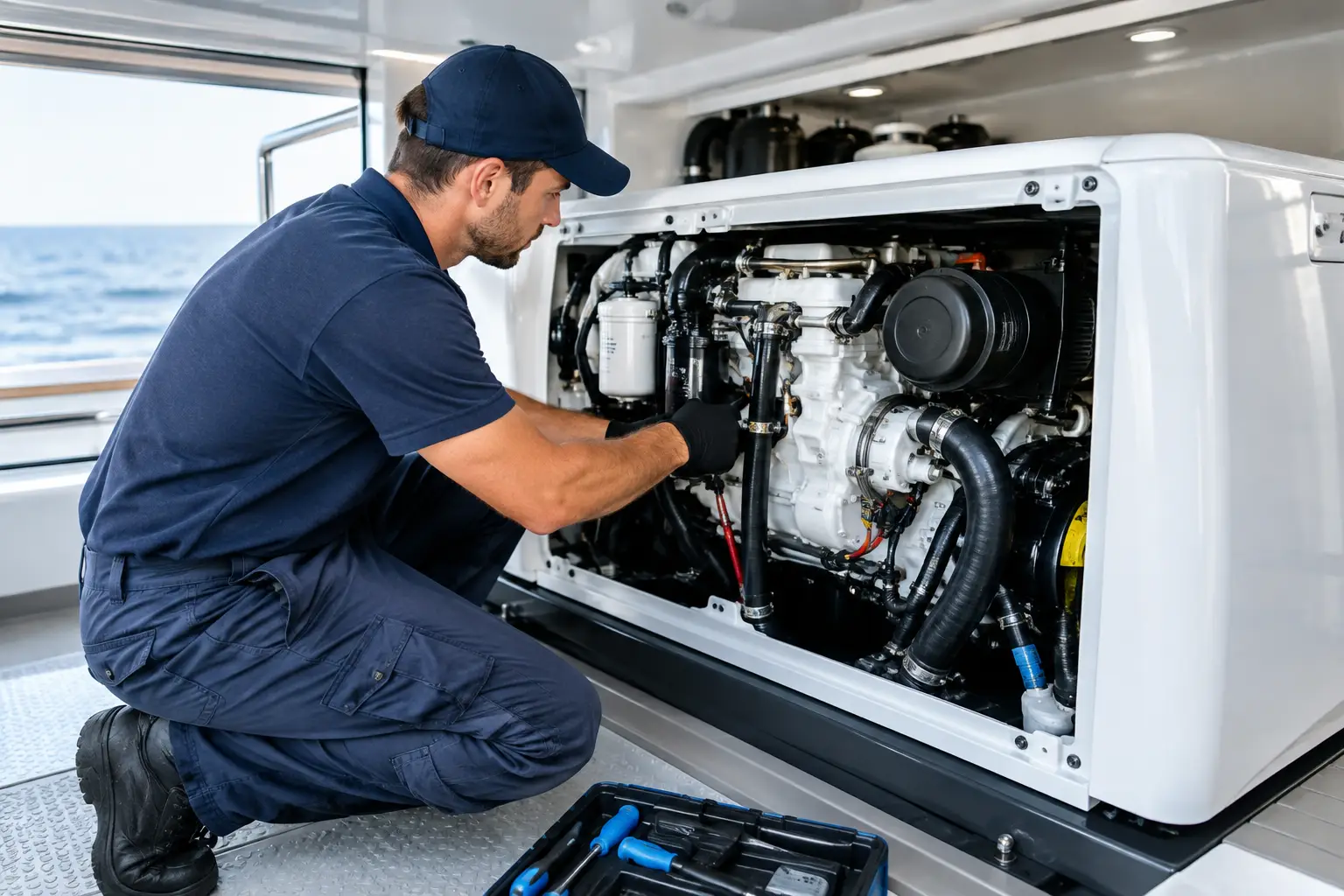
A generator failure rarely happens at a convenient time. It happens when guests are aboard, the air conditioning is carrying a heavy load, or a storm has turned a simple return to the dock into a long run. These top marine generator maintenance tips help yacht owners and captains avoid the costly chain reaction that starts with a small overlooked issue and ends with lost power, lost time, and an unexpected repair bill.
A marine generator is not just an auxiliary engine. It supports battery charging, refrigeration, galley equipment, navigation systems, comfort systems, and critical onboard operations. Like a doctor monitoring early warning signs before a condition becomes serious, a qualified marine technician looks for small changes in temperature, voltage, exhaust, vibration, and fluid condition before they become a shutdown.
Top Marine Generator Maintenance Tips That Matter Most
The best maintenance plan is based on operating hours, vessel use, generator model, and the environment around the boat. A lightly used generator on a docked yacht can still develop problems from humidity, stale fuel, corrosion, and lack of exercise. A hard-working unit on a charter vessel may need more frequent attention because heat cycles and load hours add up quickly.
Run the generator under a meaningful load
Starting the generator for a few minutes at the dock is better than letting it sit for months, but it is not enough to keep the system healthy. A generator needs to reach operating temperature and carry a reasonable electrical load. This helps reduce moisture in the engine and exhaust system, circulates oil, exercises the cooling circuit, and reveals problems that may not appear at idle.
The correct load depends on the manufacturer and generator size. In many cases, operating at a moderate load is preferable to long periods of very light loading. Underloading a diesel generator can contribute to carbon buildup, wet stacking, and poor combustion. On the other hand, consistently pushing a unit near maximum output leaves little margin and accelerates wear. Your technician can help determine an appropriate exercise schedule for your vessel’s equipment and normal electrical demand.
Treat fuel quality as a maintenance item
Fuel contamination is one of the most common reasons a dependable diesel generator becomes an unreliable one. Water, microbial growth, sediment, and degraded fuel can plug filters, damage injectors, and cause difficult starting or stalling. South Florida heat and humidity make fuel management especially important for vessels that sit between trips.
Check fuel filters on schedule and inspect the filter bowl for water or debris. If filters are repeatedly collecting contamination, replacing filters alone will not solve the source problem. The tank may need to be inspected, cleaned, or treated, and the fuel system may need professional diagnosis. Keep tanks managed according to your vessel’s operating pattern, and do not assume fuel is fine simply because the engine has not been run recently.
Watch raw-water flow and service the cooling system
Marine generators depend on clean raw-water flow to control temperature. A restricted seawater strainer, damaged impeller, collapsed hose, fouled intake, or scaled heat exchanger can turn into an overheat alarm quickly. Ignoring an intermittent high-temperature warning can lead to damaged hoses, warped components, exhaust-system problems, or a complete shutdown.
Before operation, verify that the seawater strainer is clean, properly seated, and free of air leaks. Inspect the raw-water discharge after startup. A weak discharge stream or a change in exhaust water flow deserves attention before heading offshore. Impellers should be replaced based on manufacturer guidance and condition, not only after they fail. A broken impeller can send rubber fragments deeper into the cooling circuit, turning a routine service call into a longer repair.
Heat exchangers and aftercoolers also need periodic cleaning and inspection. The right interval depends on the generator, water conditions, and run hours. Saltwater scale, debris, and internal corrosion reduce heat transfer gradually, so an owner may not notice the problem until the generator is already running hotter than normal.
Change oil and filters by hours, not guesswork
Engine oil is the generator’s first line of protection against internal wear. It carries contaminants away from moving parts, lubricates bearings and valvetrain components, and helps manage heat. Overextended oil intervals can leave the engine more vulnerable to wear, especially in generators that spend time idling, operate in high ambient temperatures, or see inconsistent loading.
Follow the manufacturer’s hour-based service interval for oil and filter changes, while also accounting for calendar time. An engine that runs very little can still accumulate moisture and acids in its oil. At each service, technicians should inspect the drained oil for unusual metal, fuel dilution, milky appearance, or heavy contamination. These clues can point to developing issues before they become major repairs.
Use the oil grade and filter specification approved for the generator. Marine equipment is too valuable to gamble on a filter that fits physically but does not meet the required performance standard.
Protect Electrical Connections From Marine Corrosion
A generator can have a healthy engine and still fail to produce dependable power. Salt air, humidity, vibration, and heat are hard on terminals, breakers, wiring connections, grounds, battery cables, and control panels. Corroded connections create resistance, and resistance creates heat. That can lead to low voltage, charging problems, nuisance alarms, damaged components, or a no-start condition.
Inspect battery terminals, cable ends, and ground connections for corrosion, looseness, discoloration, or damaged insulation. Battery condition matters just as much. A weak battery may crank the generator once at the dock but fail when the engine is hot or the vessel has been sitting for several weeks.
Pay attention to what the generator is telling you through its panel. Voltage and frequency that fluctuate under a normal load, repeated breaker trips, slow cranking, warning lights, or a new burning smell are not minor inconveniences. Shut the unit down if operation is unsafe and arrange a professional inspection. Electrical faults can worsen fast when high current is involved.
Inspect belts, hoses, mounts, and exhaust components
A quick visual inspection catches many problems that are inexpensive to address early. Look for belt dust, cracks, glazing, loose hardware, worn hoses, coolant staining, oil leaks, damaged engine mounts, and chafed wiring. Vibration that feels new or stronger than usual deserves investigation. It may be a simple mount or alignment issue, but it can also indicate a mechanical concern that should not be ignored.
Exhaust components deserve special attention because leaks can introduce heat, water, or exhaust gases where they do not belong. Check clamps, hoses, elbows, mufflers, and connections for corrosion or evidence of leakage. Any suspected exhaust leak should be handled promptly by a qualified marine technician.
Keep Accurate Generator Service Records
Good records save time and money during diagnostics. Log generator hours, oil changes, filter replacements, impeller service, alarm events, load behavior, fuel issues, and any parts replaced. Include dates and observations, even if they seem minor. A note that the generator began running slightly hotter two months ago can help a technician pinpoint a restricted cooling component before unnecessary parts are replaced.
For captains and fleet operators, service records also make maintenance predictable. Rather than waiting for a failure, you can plan work around vessel schedules, crew availability, and upcoming trips. That is far less disruptive than losing generator power during a charter, delivery, or family weekend on the water.
Know When a Mobile Marine Technician Should Step In
Owners can handle basic checks, but diagnosis should go beyond visual inspection when a generator has recurring alarms, hard starts, overheating, excessive smoke, unusual vibration, oil pressure concerns, charging faults, or unstable output. Modern marine generators often require proper test equipment, manufacturer-compatible parts, and experience with interconnected diesel, cooling, and electrical systems.
For yachts throughout the West Palm Beach and South Florida coastal corridor, GTM International can bring certified, licensed, and insured marine service directly to the vessel. Mobile generator service avoids the delay and expense of hauling a boat to a yard while giving owners practical guidance on repairs, preventive maintenance, and the condition of the entire system.
The best time to schedule generator service is before the next long run, busy season, or offshore trip. A clean strainer, fresh oil, sound electrical connections, and a properly inspected cooling system may not be glamorous, but they are what keep the lights on and the boat ready when you want to get back out at sea.
