

When you’re out on the water and need help now, the search for a reliable diesel generator repair near me becomes the only thing that matters. In South Florida, getting the right certified, mobile technician to your vessel is the difference between a minor hiccup and a catastrophic, wallet-draining haul-out. The goal is simple: get your power back on, fast.
What To Do The Moment Your Generator Fails
That sudden, deafening silence when your yacht's generator cuts out is a sound every owner dreads. It’s not just an inconvenience; it’s a critical system failure. Before you even think about picking up the phone, a few calm, methodical checks can ensure everyone's safety, maybe even reveal a simple fix, and will definitely give you the right information to pass along to a technician. This isn't about doing a full diagnostic yourself—it's about ruling out the obvious and knowing what you're dealing with.
The first move, always, is safety.
Secure the area immediately. Look for any signs of fuel or coolant leaks around the generator. A quick visual sweep can stop a small problem from turning into a truly dangerous one. You'll also want to make sure the generator's main breaker is switched off. This prevents any chance of it unexpectedly trying to restart while you or a technician are looking things over.
Onboard Emergency Generator Checklist
Once you've confirmed the area is safe, you can run through a few basic checks. This isn't a deep dive, just a way to spot the common culprits that often get missed in the heat of the moment. The table below is your quick-reference guide.
| Check | What to Look For | Action to Take |
|---|---|---|
| Raw Water Intake | Seaweed, plastic bags, or any marine growth blocking the seacock or strainer. | Clear any visible blockage. Ensure the seacock is fully open. |
| Fuel System | Water or sludge in the primary fuel filter's sight bowl. The fuel level in the tank. | If you see contaminants, note it for the technician. Confirm you have adequate fuel. |
| Battery Connections | White or greenish powder (corrosion) on the terminals. Loose clamps. | Carefully check if connections are snug. Avoid touching heavy corrosion without gloves. |
| Exhaust System | Water flow from the exhaust when cranking (if safe to do so). | A lack of water indicates a cooling system problem, likely a failed impeller or blockage. |
| Fluid Levels | Low oil or coolant levels on the dipstick or in the expansion tank. | Top off if low, but also look for signs of a leak. |
Running through these steps methodically will either solve your problem or give you critical information for the repair call.
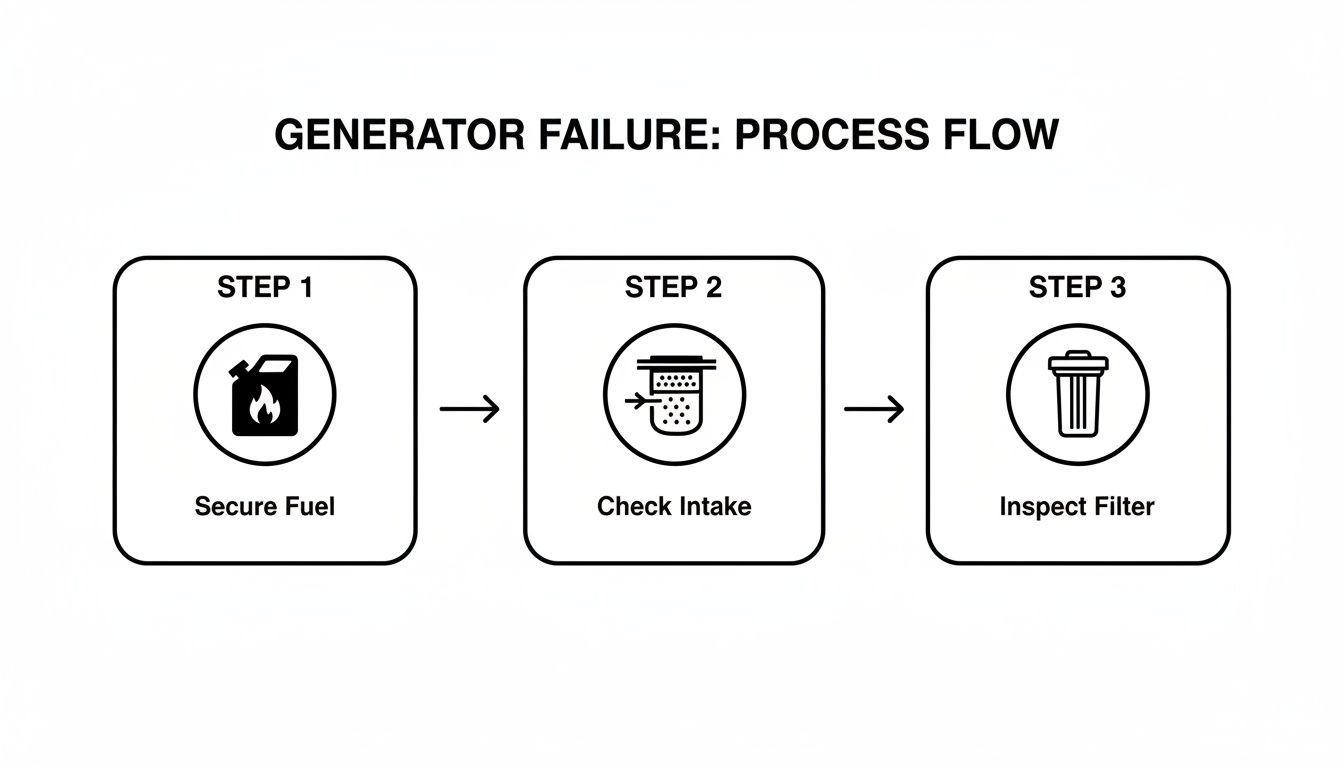
Following a simple sequence like this helps you narrow down the possibilities before you even have to make a call.
By running through these checks, you arm yourself with invaluable information. Telling a technician, "The generator won't start, and I see water in the fuel filter," is worlds more helpful than a vague, "It's broken." That small bit of detail can cut diagnostic time in half.
The stakes are incredibly high in the marine world. It's a sobering fact, but industry reports show that 35% of used yachts have undetected generator faults. These issues can easily spiral into repairs costing well over $10,000.
For a charter business, the math is even harsher—generator downtime can mean losing $5,000 in revenue every single day the boat is out of commission. It’s why having a plan and knowing who to call for fast, on-site diagnostics is so essential.
Mastering these basic checks is the first step in taking control of your diesel marine repair needs and keeping your vessel where it belongs: on the water.
How To Find and Vet the Right Mobile Repair Technician
When your generator suddenly dies, grabbing your phone and searching for "diesel generator repair near me" feels like the only option. But that search result page is a minefield. It's filled with options, and frankly, choosing the wrong one can take a simple problem and turn it into a drawn-out, expensive disaster. You don't just need a mechanic; you need a specialist who lives and breathes marine diesel systems.
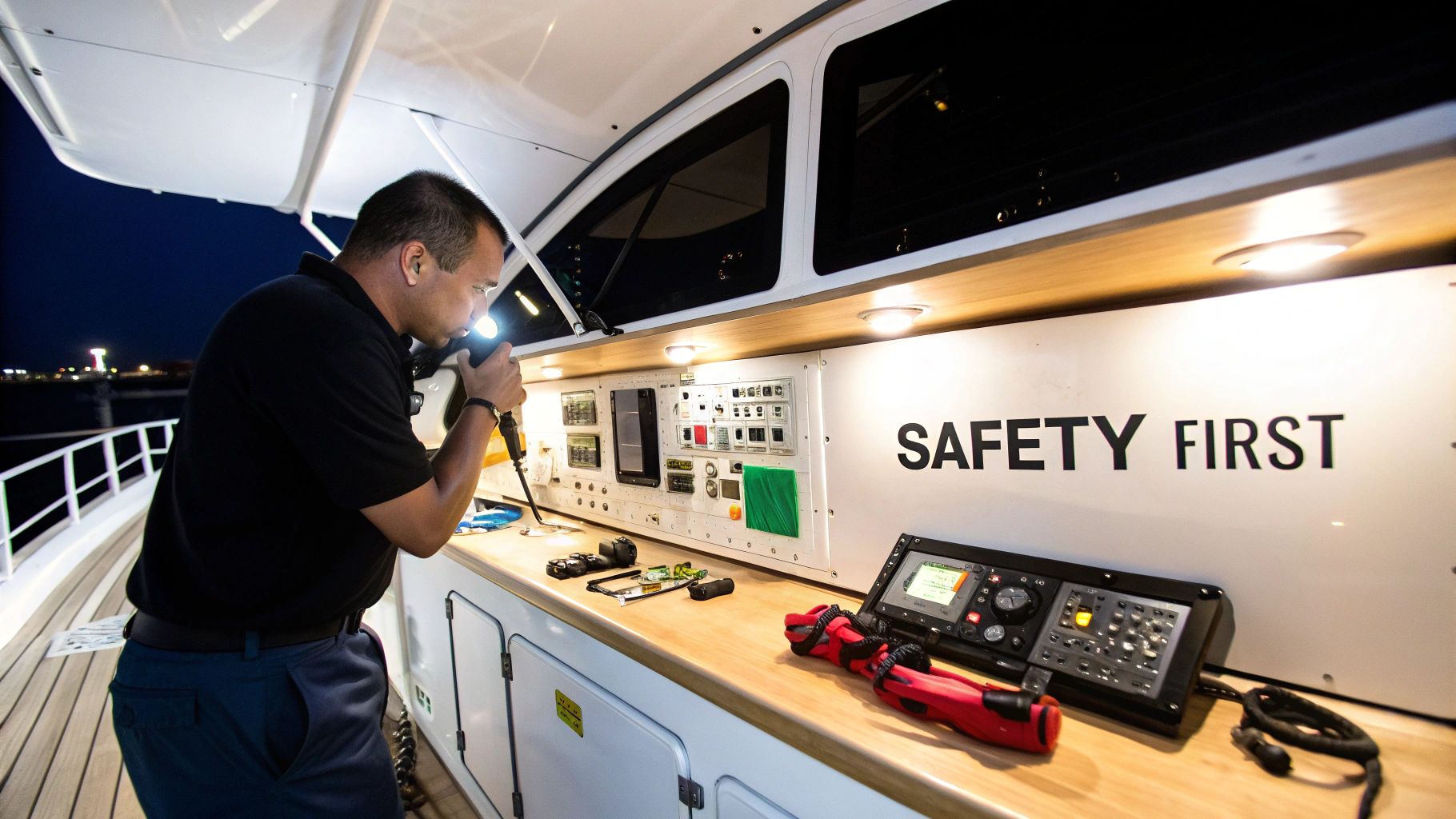
That first phone call isn't just a service request—it's your interview. Don't ever feel hesitant to ask tough, specific questions before letting anyone set foot on your vessel. This conversation is your single best tool for sniffing out a real pro from a pretender, and it can save you a world of hurt later on.
Key Vetting Questions for That First Call
Think of this as your pre-flight checklist. A true professional will not only expect these questions but will have solid, confident answers. If you get vague replies or a lot of hemming and hawing, consider it a bright red flag.
"Are you factory-certified for my specific generator brand?"
This is the big one—it's non-negotiable. Whether you're running an MTU, MAN, CAT, or another top-tier brand, you need someone who has been formally trained on that equipment. A "general diesel guy" just won't have the specialized knowledge of the complex electronics and proprietary software that control these modern generators."Are you fully licensed and insured to work in South Florida marinas?"
Every marina from Ft. Lauderdale up to Ft. Pierce has its own strict rules for outside vendors. Bringing in an uninsured tech is a huge liability you don't want. Confirming they have the right paperwork means they can get past the gate and get to work without any delays."Is mobile marine repair your specialty?"
There's a massive difference between working in a climate-controlled shop and working in the tight confines of an engine room on the water. A mobile marine specialist gets it. They show up with the right tools, the right parts, and an understanding of the unique challenges, which often saves you from a costly and time-consuming haul-out.
The real benefit of a mobile marine expert isn't just the convenience. It’s their efficiency. They can diagnose issues much faster in situ, seeing exactly how the generator interacts with your vessel's other systems, from the electrical panel to the plumbing.
Spotting a Specialist vs. a Generalist
So, what's the real difference? A general mechanic might be fine for a simple fuel leak, but they often lack the diagnostic depth for trickier issues.
Let’s say your generator keeps shutting down under a heavy load. A generalist might swap the fuel filter, pat themselves on the back, and hand you a bill—only for the problem to pop up again on your next trip out.
A true specialist, on the other hand, thinks bigger. They'll immediately start digging deeper. Is the raw water pump providing adequate flow? Is the heat exchanger clogged? What's the voltage regulator's output look like? They see the whole picture. You can learn more about why it's so critical to work with genuine diesel engine specialists who bring this level of forensic detail to every job.
This is what separates a band-aid fix from a real solution. Your goal isn't just to get the generator running again today. It's to know, with confidence, that it will stay running reliably tomorrow and for the rest of the season. Choosing the right mobile technician from the very beginning is the most critical decision you'll make.
What to Expect: The Repair Process, Timeline, and Costs
Alright, you've made the call and a certified technician is on their way. Now for the two biggest questions on every boat owner's mind: how long will this take, and what’s it going to cost me? Knowing how a professional repair unfolds can take a lot of the stress and guesswork out of the situation, giving you a clear picture of what's happening in your engine room.
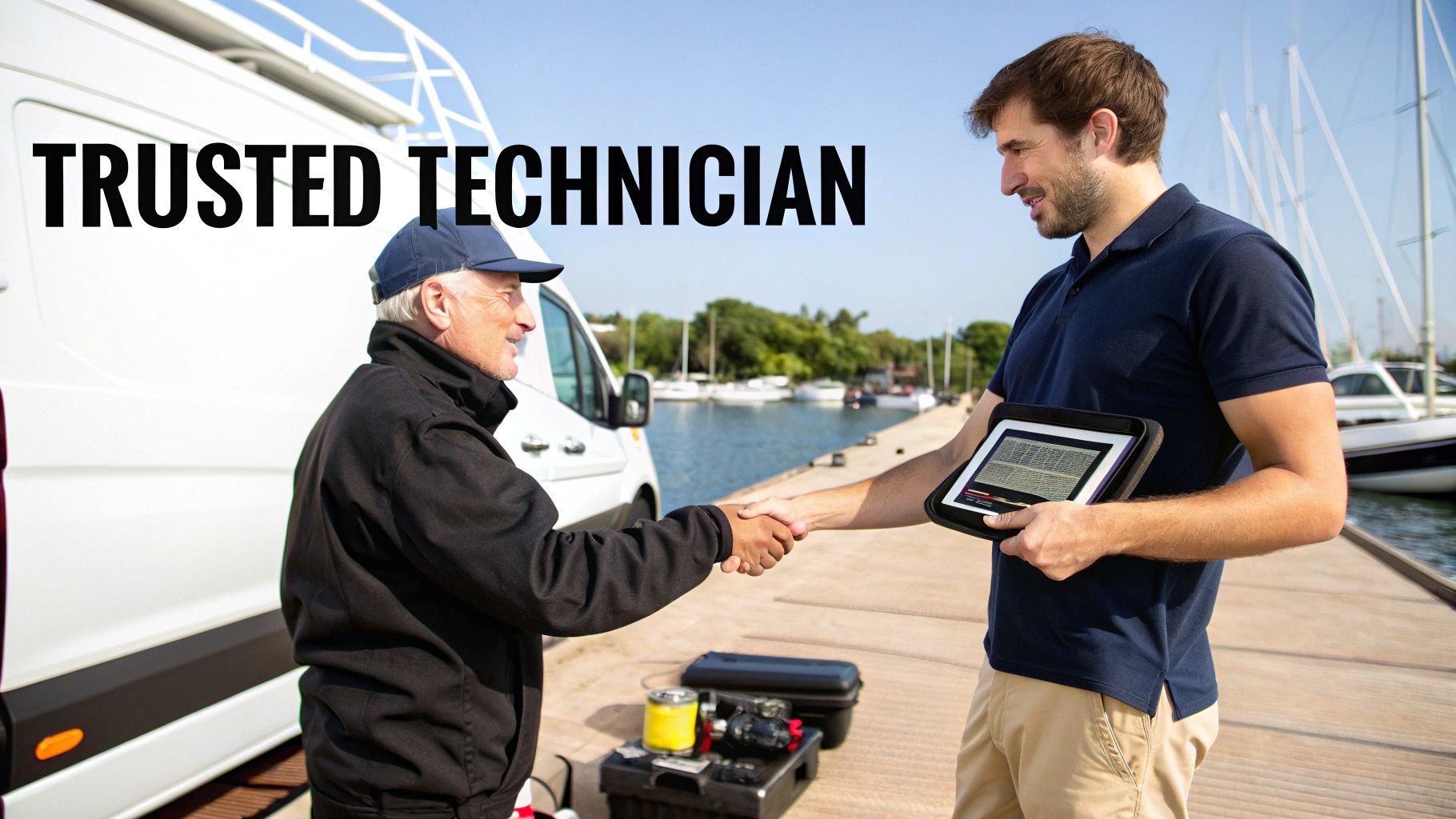
It all starts with the on-site diagnostic. This isn't just a quick peek—it's a deep dive. A seasoned technician will typically spend 1-2 hours methodically investigating the problem. They'll hook up diagnostic tools, check every electrical output, and meticulously inspect the cooling and fuel systems to pinpoint the true source of the failure.
From Diagnosis To Dollars
Once the assessment is complete, the tech can lay out a solid repair plan and give you a detailed cost estimate. I know the financial side of things can be intimidating, but transparency is everything. For most common repairs here in the West Palm Beach area, we have a good handle on predictable cost ranges.
A fuel injector replacement, for example, is often a fairly straightforward job. Servicing a clogged heat exchanger, on the other hand, is a much more labor-intensive process. A trustworthy technician will always give you a broken-down estimate, separating the cost of parts from labor, so you never have to deal with surprises. To get a clearer idea of potential costs, check out our guide on diesel engine repair costs.
This is where calling a certified service provider really pays off. Did you know that neglecting regular maintenance can cut a generator's lifespan by a staggering 40%? And with manufacturing backlogs and tariffs pushing parts costs up by 12%, you need an expert in your corner. A certified team with strong supplier relationships can often get genuine OEM parts for up to 25% less—a savings that gets passed directly to you.
Think of a certified technician not as an expense, but as a cost-saving strategy. They have the expertise to fix it right the first time, saving you from the expensive, frustrating cycle of repeat repairs that often comes from a less-qualified opinion.
Ultimately, the repair timeline hinges entirely on the diagnosis.
- Simple Fixes: Problems like a bad sensor or a clogged fuel filter can often be sorted out in a few hours, sometimes right there on the initial visit.
- Complex Repairs: A faulty voltage regulator or a full cooling system flush might mean a return trip with specific parts, extending the job to a day or two.
- Major Overhauls: In rare situations involving serious internal engine damage, the repair will require a much more extensive plan and a longer timeline.
Our goal is always to give you a clear, honest picture of both the time and cost involved right from the start. It's about empowering you to make informed decisions and getting your vessel back to 100% with total confidence.
Proactive Maintenance: Your Best Defense Against Future Breakdowns
Getting your generator fixed brings immediate relief, but true peace of mind comes from knowing it won’t fail you again. This is where we shift from a reactive, emergency-repair mindset to a proactive strategy that protects your investment and, just as importantly, your time on the water. A scheduled maintenance program isn't just a good idea; it's the single best defense against unexpected breakdowns, especially in the harsh saltwater environment we live in.
This goes way beyond a simple oil change. A proper maintenance plan gets into the nitty-gritty of what a marine generator endures. It’s a methodical process of checking every system component vulnerable to the corrosive, humid conditions we see every day from West Palm Beach down to Ft. Lauderdale.
The Real Cost of Putting It Off
Let's walk through a common scenario I see all the time. A routine maintenance visit might involve replacing a raw water impeller, flushing the coolant, and inspecting the electrical connections. It's a modest, predictable expense.
Now, let's contrast that with what happens when that same impeller fails 30 miles offshore. The initial failure is just the beginning of your problems. It can quickly lead to a catastrophic engine overheat, potentially warping cylinder heads or causing a complete seizure. All of a sudden, you're not looking at a simple fix. You're facing an emergency tow, a ruined trip, and a repair bill that can easily climb into the tens of thousands.
Savvy yacht owners don't see maintenance as an expense. They see it as the most effective insurance policy they can buy for their vessel's reliability and longevity. It’s a calculated investment in avoiding disaster.
Building Your Maintenance Shield
Think of a robust maintenance schedule as your shield against premature failure. We perform key tasks based on either hours of operation or time—whichever comes first—to keep your generator running exactly as it should.
- Cooling System Integrity: In Florida, this is priority number one. Regular inspection of the raw water pump, replacing the impeller (annually, no matter the hours), and servicing the heat exchanger are critical to preventing the clogs and corrosion that cause most overheat failures.
- Fuel System Purity: We inspect and replace fuel filters, check for any water contamination in the tank, and ensure fuel lines are free from cracks or wear. Clean fuel is absolutely essential for performance and prevents costly injector damage down the road.
- Electrical System Health: All electrical connections are inspected for the slightest sign of corrosion, then tightened and treated. We also test the output of the voltage regulator and check the battery's condition to make sure you never have a problem starting up.
This proactive approach pays for itself over and over. Industry data is pretty clear on this: unserviced marine generator units fail three times faster than properly maintained ones, costing them 20-30% of their operational lifespan.
On the flip side, implementing a targeted, preventative maintenance program can extend your equipment's life by as much as 50%. Since 2022 alone, the adoption of predictive maintenance has increased by 25%, a trend driven by yacht owners saving thousands by preventing breakdowns before they ever happen. You can explore more data on the generator market and its trends for yourself.
Here’s a look at what a typical preventative schedule includes. This isn't a one-size-fits-all list, but it covers the core tasks that keep a generator healthy.
Preventative Maintenance Schedule For Marine Generators
| Maintenance Task | Frequency (After X Hours/Months) | Why It's Critical |
|---|---|---|
| Check Oil & Coolant Levels | Before Every Use | Your first line of defense against low-fluid-related damage. Simple but vital. |
| Inspect Raw Water Strainer | Every 25 Hours / Weekly | A clogged strainer is the fastest way to an overheat. Keeps the cooling system breathing. |
| Change Engine Oil & Filter | Every 100-150 Hours / Annually | Removes contaminants and ensures proper lubrication, preventing premature engine wear. |
| Replace Fuel Filters | Every 200 Hours / Annually | Protects sensitive injectors from debris and water, ensuring reliable fuel delivery. |
| Replace Raw Water Impeller | Every 200 Hours / Annually | The heart of the cooling system. An impeller failure will cause an overheat. |
| Inspect/Tighten Belts | Every 250 Hours / Annually | Loose or worn belts can cause charging issues or stop the raw water pump from working. |
| Service Heat Exchanger | Every 500 Hours / Every 2 Years | Prevents internal blockages and corrosion, maintaining efficient heat transfer. |
| Test & Clean Electrical Connections | Annually | Prevents corrosion from causing starting problems or erratic voltage output. |
Following a schedule like this transforms your relationship with your generator. It stops being a source of anxiety and becomes the reliable workhorse you can count on every time you leave the dock. It’s simply the smartest way to protect your vessel and ensure every trip is a great one.
Choosing Your Marine Diesel Partner In South Florida
So, you’ve got the playbook for what to do when your generator quits. That’s a huge first step. But the real game-changer, the thing that lets you truly relax out on the water, is knowing exactly who to call when things go sideways.
When you’re searching for "diesel generator repair near me," you aren’t just looking for any mechanic. You need a seasoned marine specialist who gets what’s at stake. Having that number in your phone turns a potential weekend-ruining disaster into a manageable hiccup. It’s all about finding someone who moves with the same sense of urgency you feel when the lights go out.
Why GTM International Is The Right Call
We created GTM International specifically to be that partner for yacht owners. Our entire business is built around the very specific challenges you face here in South Florida, from Ft. Lauderdale all the way up to Ft. Pierce. We know your vessel is more than just a boat; it's a massive investment, and our job is to protect it.
You need more than just a repair; you need a resource. A trusted advisor who can offer honest diagnostics, expert advice, and a clear path forward, ensuring you feel in control every step of the way.
What really makes us different is our uncompromising focus on specialized, on-site service that comes to you.
- 24-Hour Mobile Service: Breakdowns don't care about business hours. Our techs are on standby to come directly to your marina, day or night, bringing the workshop with them. This saves you the headache and the staggering cost of an emergency haul-out.
- Factory-Certified Expertise: We live and breathe the big names: MTU, MAN, and CAT. That’s not just a talking point—it means we’ve invested in the same factory training and diagnostic tools the manufacturers use for their high-performance engines.
- A Complete Systems Approach: We never just look at the generator in isolation. Our team understands the complex dance between your engine, electrical systems, and cooling loops. This lets us hunt down the root cause of a problem instead of just slapping a bandage on the symptom.
Your Next Step To Total Confidence
You're now armed with a solid plan for handling emergencies and a smart strategy for preventing them. The only thing left is to put the right team in your corner.
Whether you're dealing with a dead generator right now, want to schedule a thorough diagnostic check-up, or you're ready to get ahead of problems with a preventative maintenance plan, we're here to help.
Don’t wait for the unsettling silence of a failed generator. Contact GTM International today and talk to a certified marine diesel expert. Let's make sure your vessel is always ready for whatever comes next.
Your Top Questions About Marine Generator Repair Answered
When your generator dies, questions start racing through your mind. You're stuck, and you need clear, no-nonsense answers to make the right call. I get it. Here are the questions I hear most often from yacht owners up and down the coast of South Florida.
How Fast Can a Mobile Tech Get to My Yacht in West Palm Beach?
When the power goes out, every minute counts. In an emergency, response time is everything. Because we run a 24-hour service, we can usually have a certified technician on their way to your marina in West Palm Beach, Ft. Lauderdale, or anywhere in between within just a few hours. Our entire operation is built around minimizing your downtime.
Of course, the best way to get a solid ETA is to just pick up the phone. A quick call will give you a real-time answer based on where you are and our tech's current location.
Is Mobile Marine Repair More Expensive Than a Haul-Out?
That’s probably the biggest myth in the industry. People assume having a technician come to them will cost a fortune, but it’s almost always the other way around when you look at the total bill.
Sure, there's a service call fee for on-site work, but you completely sidestep the massive expense and headache of a haul-out. That alone can set you back thousands before a single wrench is turned. Plus, you're not losing days—or even weeks—of precious time on the water.
Think about it: once you add up the haul-out fees, yard costs, and the value of your lost time, calling a mobile diesel generator specialist to your slip isn't just more convenient, it’s a smarter financial decision.
Bringing the expertise directly to your vessel saves you money, time, and a whole lot of frustration.
What Usually Causes a Marine Generator to Fail in Florida?
Down here in South Florida, the harsh saltwater environment really puts our equipment to the test. Over the years, I've seen it all, but most generator failures boil down to one of three things. Knowing what they are can help you catch a problem before it leaves you dead in the water.
- Cooling System Problems: This is, without a doubt, the number one culprit. I'm constantly dealing with raw water intakes clogged with marine growth, shredded rubber impellers, or heat exchangers so corroded on the inside they can't shed heat anymore.
- Bad Fuel: Contaminated diesel is a very close second. Water, sludge, or algae in the tank will clog your primary and secondary fuel filters in a heartbeat, starving the engine and shutting it down.
- Electrical Gremlins: The humid, salty air is just brutal on electrical systems. We see a ton of corroded battery terminals, failing starter motors, and fried voltage regulators that either prevent the generator from starting or keep it from producing any usable power.
Keeping an eye on these key areas is your best defense against unexpected breakdowns.
Don't let a generator problem ruin your plans and leave you stuck at the dock. For fast, on-site diagnostics and repairs from certified professionals, you can count on the team at GTM International. We'll get you powered up and back on the water where you belong.
Get in touch with us today at https://www.marinetechsvcs.com.
