
When someone talks about a diesel engine overhaul, they're not talking about a simple repair or a quick tune-up. This is a complete, top-to-bottom revitalization of your yacht's most critical asset. We're talking about a full disassembly to inspect, clean, and replace the core internal parts—pistons, bearings, seals, you name it—to bring the engine back to its original factory performance.
What an Overhaul Diesel Engine Really Means
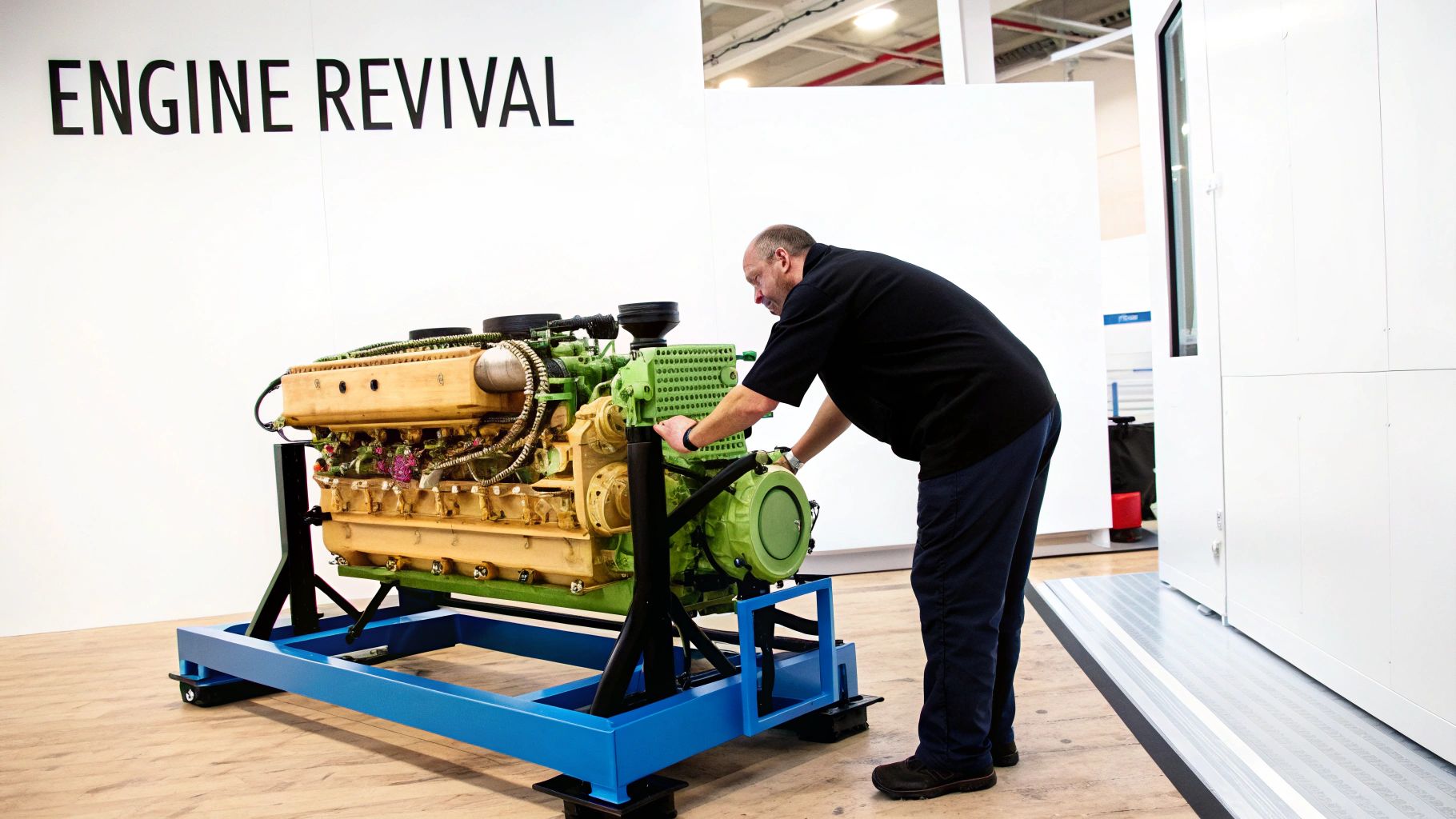
Think of a marine diesel engine overhaul as a 'factory reset' for your yacht's powerhouse. It's not about slapping a bandage on a problem. It’s an intensive, systematic teardown and rebuild designed to reset the clock on the thousands of hours of wear and tear your engine has endured.
This is worlds away from routine maintenance. Certified technicians will pull the engine, break it down piece by piece, and put every single component under the microscope. This is where you find the hidden issues that a surface-level inspection will never catch, like hairline fractures in the crankshaft or subtle wear on the cylinder liners.
Beyond Simple Repairs
An overhaul is a serious investment in your vessel's future reliability and longevity. It goes straight to the heart of your engine, ensuring it performs just like it did the day it left the factory. The process is incredibly thorough:
- Replacing Wear Items: Every part with a limited lifespan gets replaced. This means all new gaskets, seals, bearings, and piston rings, all built to strict OEM standards.
- Inspecting Core Components: The big-ticket items—the engine block, cylinder heads, crankshaft—are meticulously inspected for any signs of fatigue, warping, or damage.
- Restoring Factory Tolerances: Any component that's even slightly out of spec is either professionally machined back to perfection or replaced entirely. This ensures every part fits and functions exactly as designed, maximizing both power and efficiency.
It’s no surprise this strategic approach is catching on. The diesel engine refurbishment market was valued at USD 3.85 billion in 2024 and is on track to hit USD 6.08 billion by 2032. Why the boom? Tightening emissions regulations are pushing yacht owners to overhaul their trusted MTU, MAN, and CAT engines instead of footing the massive bill for brand-new ones.
When a proper overhaul can add 50-70% more life to your engine, it's an incredibly smart financial decision, especially when new engines can easily top $100,000 each. You can find more insights about diesel engine refurbishment trends and their market growth in recent industry reports.
An overhaul isn't just about fixing what's broken; it's about preventing what could break. By proactively replacing worn components, you're eliminating the risk of a catastrophic failure at sea, giving you the safety and peace of mind you need for every voyage.
Time for an Overhaul? How to Read Your Engine’s Warning Signs
Your yacht’s diesel engine is a marvel, built for power and endurance. But even the best-engineered machines have their limits. After thousands of hours at sea, the internal components start to show their age. The real skill is learning to listen to your engine—to catch the subtle whispers before they become a deafening roar. Ignoring these signs isn't just risky; it's a gamble with the heart of your vessel.
Think of it this way: these aren't just minor annoyances. They're direct messages from your engine room, an early warning system telling you that trouble is brewing. Recognizing them lets you take control, scheduling an overhaul diesel engine service on your own terms, not in a panic when you're miles from shore.
Your Engine's Smoke Signals
One of the most obvious clues about your engine's health is right there in the exhaust. The color and volume of the smoke it's producing tell a very specific story about what’s happening deep inside the combustion chamber.
Excessive Blue Smoke: This is the classic signature of burning oil. It’s a dead giveaway that your piston rings, valve seals, or cylinder liners have worn down. Their job is to keep oil where it belongs, and when they fail, oil creeps into the combustion chamber and burns with the fuel, creating that tell-tale blue haze.
Persistent White Smoke: A little white steam on a cold morning is one thing. But if you’re seeing thick, sweet-smelling white smoke long after the engine has warmed up, you’ve got a serious problem. This almost always means coolant is leaking into the cylinders, likely from a cracked cylinder head or a blown head gasket. It’s a critical issue that needs immediate attention to prevent catastrophic damage.
Performance and Consumption Red Flags
Beyond what you can see, you need to feel what the engine is doing. Any sudden shift in its behavior or its appetite for fuel and oil is a clear sign that internal wear is starting to win the battle.
A healthy engine feels strong and responsive. If your yacht is suddenly sluggish getting on plane, feels weak under load, or just can't seem to hit its top RPM anymore, that’s a huge red flag. This drop in power is often the direct result of lost compression—the very force that gives your engine its punch.
Think of compression as the engine's heartbeat. When components like piston rings and valves wear out, they no longer create a perfect seal, allowing that explosive pressure to escape. This "leak" directly translates to a loss of power and efficiency, signaling that a comprehensive overhaul may be needed to restore its strength.
Keep a close eye on consumption, too. Is your engine suddenly guzzling oil? If you’re constantly topping it off between changes, you're likely seeing the effects of the same issues causing blue smoke—worn-out seals letting oil get burned up. The same goes for fuel. If you notice you're burning more fuel for the same performance, it means the engine is having to work much harder to do its job, a classic symptom of internal fatigue.
Unusual Sounds and Starting Issues
Last but not least, trust your ears. You know the normal symphony of your engine room. Any new, persistent sound is a cry for help.
A deep, rhythmic "knocking" from the engine is especially worrying. This often points to worn-out rod bearings or main bearings. These are the critical cushions for the crankshaft's violent motion. When they wear down, the excess play creates a destructive metal-on-metal impact that can lead to total engine failure if ignored.
Likewise, if the engine suddenly becomes hard to start, particularly on a cold morning, it’s another potential sign of low compression. Diesels need immense pressure to ignite the fuel. If that compression has bled off due to wear, the engine will struggle to fire up. These aren't just quirks; they are your engine’s last calls for a professional diagnosis before a small problem becomes an expensive, voyage-ending disaster.
Engine Overhaul Signals vs. Routine Maintenance
It can sometimes be tricky to know if you're dealing with a simple maintenance item or the first sign of a major internal issue. This table breaks down common symptoms to help you make the call.
| Symptom | Potential Cause | Recommended Action |
|---|---|---|
| Black Smoke Under Load | Clogged air filter, dirty injectors, or overloading the engine. | Start with routine checks: replace filters, run a fuel system cleaner. If it persists, get a professional diagnosis. |
| Excessive Blue Smoke | Worn piston rings, valve seals, or cylinder liners. | Overhaul signal. This indicates internal wear that maintenance can't fix. Schedule a diagnostic immediately. |
| Slight Power Loss | Fouled propeller, dirty hull, or minor fuel system issues. | Check the running gear and fuel filters first. A good cleaning may be all that's needed. |
| Significant Power Loss | Loss of compression from worn rings, valves, or cylinders. | Overhaul signal. This points to deep internal wear. A compression test is needed to confirm. |
| Hard Starting (Cold) | Weak batteries, glow plug failure, or low compression. | Test batteries and glow plugs first. If they're good, it's likely a compression issue requiring professional analysis. |
| Engine "Knocking" | Worn connecting rod or main bearings. | CRITICAL OVERHAUL SIGNAL. Shut down the engine if possible and call for service immediately to avoid catastrophic failure. |
While routine maintenance can solve many performance issues, the key is recognizing when the symptoms point to something deeper. Blue smoke, major power loss, and internal knocking are not maintenance items—they are clear indicators that it's time to talk to an expert about an engine overhaul.
The Marine Diesel Overhaul Process Step by Step
So, what actually happens during a marine diesel overhaul? Think of it less like a repair and more like a complete rebirth for your engine. It's a meticulous, multi-stage journey where experience and precision are everything, transforming a tired, worn-out powerplant back into the reliable heart of your yacht. This isn't just about fixing what's broken; it's a full revitalization, following a strict protocol to ensure every single component meets—or even beats—the original factory standards.
Interestingly, the journey doesn't start in a workshop with wrenches flying. It starts right on your vessel, with a deep dive into diagnostics to confirm an overhaul is the right call and to map out exactly what needs to be done.
Step 1: On-Site Diagnostics
Before a single bolt is turned, certified technicians come aboard to run a series of critical tests. This isn't guesswork; it's a data-driven mission to understand the engine's internal health.
- Oil Analysis: We pull a sample of engine oil and send it to a lab. They're looking for microscopic metal particles, coolant, or fuel—tell-tale signs of abnormal wear on bearings, pistons, or liners.
- Compression Tests: This is a crucial one. It measures how well the piston rings and valves are sealing. If we see low or uneven readings across the cylinders, it's a dead giveaway that there's internal wear and you're losing power.
- Borescope Inspection: We feed a tiny camera into the cylinders for a direct look at the cylinder walls, piston tops, and valves. This lets us spot things like scoring or heavy carbon buildup that are otherwise completely invisible.
This initial phase is all about making sure that when we decide to overhaul diesel engine components, it's based on solid evidence. This avoids unnecessary work and gives us a clear roadmap for the project.
It’s no secret that reliable diesel power is in high demand; the global market was pegged at USD 213.72 billion in 2025 and is projected to hit USD 292.79 billion by 2032. Multi-cylinder engines, the kind powering most yachts, dominate the marine sector with an 86.2% market share. This makes expert overhauls for major brands like CAT and MAN absolutely essential for keeping these vessels efficient and compliant. Plus, modern overhauls often include low-NOx aftertreatment systems that can slash harmful emissions by 90%, keeping you in line with IMO Tier III standards and away from hefty fines. You can dig deeper into the growth and trends in the diesel engine market in recent industry reports.
This simple flowchart breaks down that initial decision-making process, guiding you from observing a problem to taking decisive action.
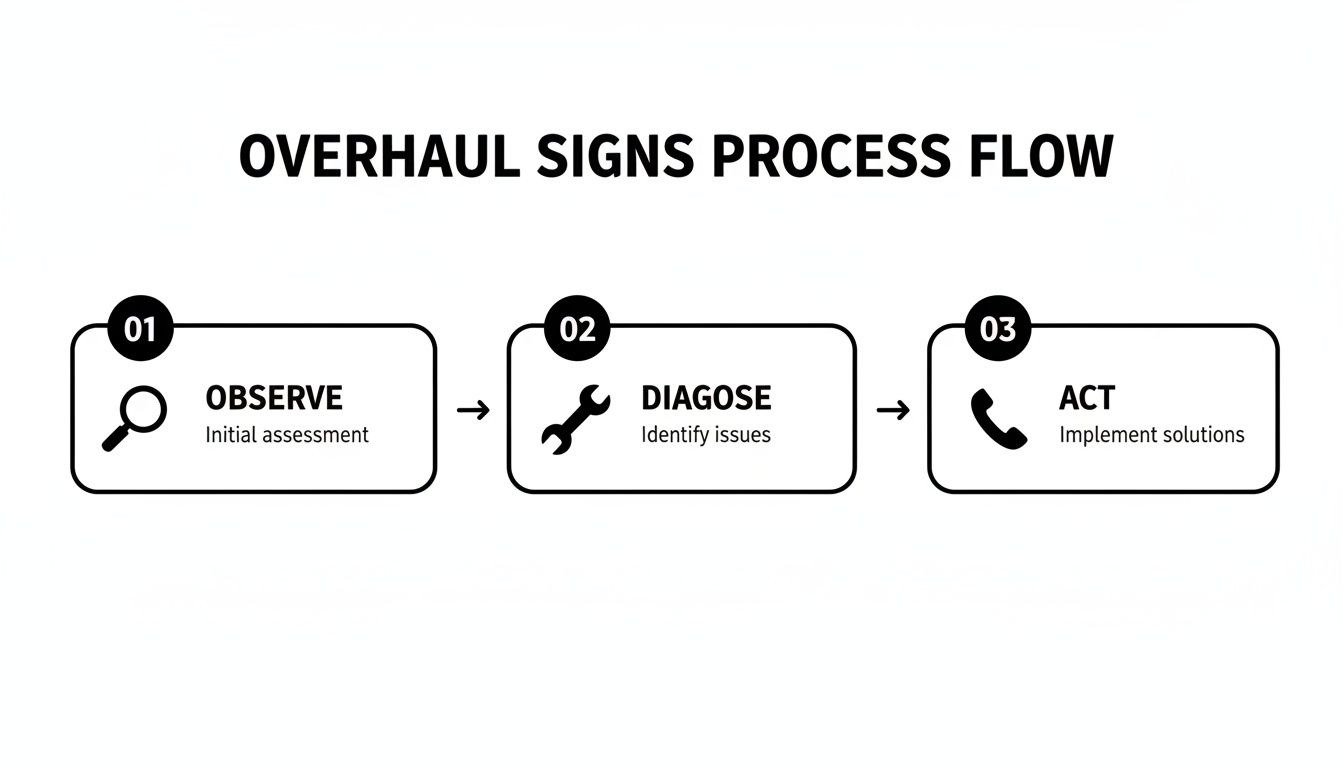
It’s a great visual reminder that acting on those warning signs by getting a professional diagnosis is the first and most important step toward a successful overhaul.
Step 2: Disassembly and Inspection
Once we’ve confirmed the overhaul is a go, the engine is carefully lifted from the vessel. This is a delicate operation in itself, requiring specialized equipment and a very experienced crew to prevent any damage to the engine or the yacht.
Back at the service center, the teardown begins. Every single part, from the largest casting to the smallest bolt, is systematically removed, cleaned, and labeled. You could almost call it an archeological dig into the engine's life story. Technicians meticulously inspect each component for cracks, warping, and wear, comparing them against the manufacturer’s exacting tolerances.
The inspection phase is where true expertise really comes into play. A seasoned technician can spot the subtle signs of stress fatigue on a crankshaft or uneven wear on a valve seat that a less experienced eye would easily miss. This level of detail is what separates a good overhaul from a great one.
Step 3: Machining and Precision Reassembly
With a full inventory of parts that need attention, the rebuilding process kicks off. Key components might head to a machine shop for precision resurfacing, balancing, or honing to bring them back to perfect factory specs. Every other part showing wear—pistons, rings, bearings, seals, and gaskets—is replaced with brand new, OEM-quality components.
Reassembly is a painstaking process guided by the manufacturer's manual. Every bolt is tightened to a precise torque specification using calibrated tools. This ensures perfect clamping force across all surfaces, which is critical for preventing leaks and ensuring the engine can handle the immense pressures of operation. It's a methodical, step-by-step reconstruction that brings the engine back to life.
Step 4: Reinstallation and Sea Trial
The newly rebuilt engine is then reinstalled in the vessel. All connections—fuel, electrical, cooling, and exhaust—are meticulously re-established and double-checked. But the job isn't over yet.
The final, and arguably most critical, step is the sea trial. We take the yacht out and run the engine under real-world load conditions. This allows technicians to monitor temperatures, pressures, and performance across the entire RPM range. This rigorous testing confirms the overhaul was a success and that the engine is ready to deliver thousands more hours of reliable, powerful service. It’s the ultimate quality check, giving you not just a rebuilt engine, but renewed peace of mind.
Decoding the Costs and Timelines of an Overhaul
Whenever an overhaul comes up, two questions always jump to mind: "How much is this going to set me back?" and "How long is my yacht going to be laid up?" These aren't small questions, and the honest answer is… it depends. Every engine, every situation is different, but understanding the variables will give you a realistic picture of what to expect.
The final bill for a diesel engine overhaul isn't some fixed price pulled out of a hat. It’s a sum of several moving parts, and any reputable service provider should be able to walk you through exactly what you're paying for.
Key Factors Influencing Overhaul Costs
The final cost really boils down to the size of your engine, what we find inside it, and the parts needed to get it back to factory-fresh condition.
Here’s what really drives the budget:
- Engine Manufacturer and Size: It’s simple physics. A massive V12 MTU or CAT engine is a different beast than a smaller inline-six MAN. Bigger engines mean more labor, more oil and coolant, and physically larger, more expensive components—pistons, liners, you name it.
- Extent of Internal Damage: This is the big wild card. If we're overhauling an engine as part of its scheduled maintenance, we're likely just replacing standard wear-and-tear items. But if the engine suffered a catastrophic failure? You could be looking at a new crankshaft or cylinder head, and that’s where the costs can really climb.
- OEM vs. Aftermarket Parts: You have a choice here. While there are some quality aftermarket options, sticking with Original Equipment Manufacturer (OEM) parts is the only way to guarantee a perfect fit and the performance and durability the engine builder intended.
- Labor Rates: You get what you pay for. Yes, certified, factory-trained technicians have higher rates, but that expertise is what saves you from a botched job and even costlier repairs down the road. It’s an investment in doing it right the first time.
This is why a thorough diagnostic at the beginning is so critical. Getting a borescope inside the cylinders and running an oil analysis gives us a clear picture of the engine’s health before we turn the first wrench. This allows for a much more accurate quote and fewer surprises along the way.
It's easy to get sticker shock from an overhaul quote, but you have to weigh it against the alternative. A complete engine replacement can cost 60-70% more. Suddenly, a professional overhaul that brings your engine back to a 'zero-hour' state looks like a very smart financial move.
Estimating Timelines for Your Engine Overhaul
Just like the cost, the timeline isn't set in stone. Our goal is always to get you back on the water as fast as humanly possible, but never by cutting corners. The time it takes is a mix of the hands-on work and logistical hurdles.
The actual wrench time—teardown, machining, reassembly, and testing—is fairly predictable. A top-end overhaul on a six-cylinder engine might take a few dedicated days, whereas a complete in-frame overhaul on a big V12 could easily take a week or more of solid work.
What often dictates the true timeline, however, are the things happening outside the engine bay.
- Parts Availability: Getting our hands on the right components, especially for high-performance or older models, can sometimes be a waiting game. A service team with solid supplier relationships can seriously cut down this lead time.
- Machine Shop Schedules: If major parts like the block or cylinder head need specialized machining, we're at the mercy of the machine shop's schedule. In peak season, this can add days or even weeks to the project.
- Technician Availability: Good, certified technicians are always in demand. If you can, scheduling an overhaul in the off-season often means a quicker turnaround.
At the end of the day, a professional diesel engine overhaul is a major investment in your yacht's reliability, performance, and future value. For a deeper dive into the numbers, check out our guide on diesel engine repair costs. Knowing what to expect makes the whole process smoother and helps you plan accordingly.
The Benefits of Mobile On-Site Overhaul Service
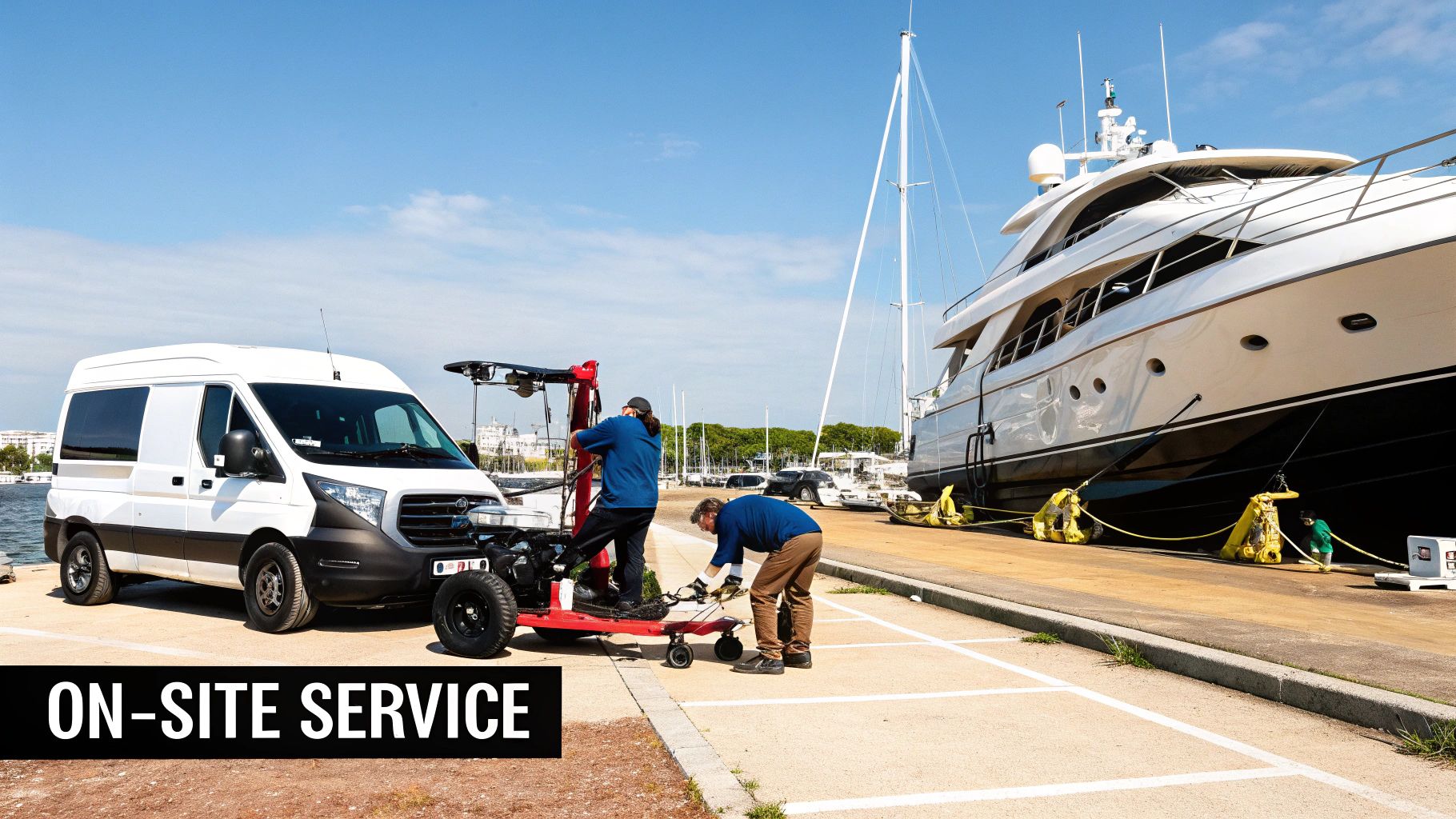
When it's time to overhaul a diesel engine, most yacht owners immediately picture the traditional, often painful, process. It used to be that your only option was the logistical headache of hauling the vessel to a crowded boatyard—a move fraught with risk, surprise costs, and frustrating delays. Thankfully, there’s a much smarter way to get the job done. Modern service brings the expertise directly to your dock, completely changing the game.
Mobile on-site service cuts out the most stressful and expensive steps of a major engine overhaul. Let’s talk about the direct savings first. Hauling a yacht out of the water isn’t just an inconvenience; it’s a serious expense. Depending on the size of your vessel, you could be looking at haul-out fees anywhere from $5,000 to $15,000 each time. With mobile service, that cost is simply gone.
Eliminate Risk and Downtime
Moving a yacht to a service yard always comes with a degree of risk you don't need to take. Every time your boat is lifted and transported, there's a chance of damage to the hull, running gear, or sensitive electronics. Keeping your vessel safely in its own slip sidesteps these dangers and protects your investment.
On top of that, boatyards are notorious for backed-up schedules, especially during peak season. It’s not uncommon for a yacht to sit for weeks just waiting its turn, all while racking up yard fees and keeping you off the water. Mobile service cuts right through that red tape. The project can start right away, getting you back to cruising much faster.
Gain Transparency and Control
Maybe the single biggest advantage of an on-site overhaul is the direct line of sight it gives you. When the work is happening right there on your vessel, you’re no longer a distant observer—you're an active participant.
With mobile service, your engine room becomes a transparent workshop. You can see the progress with your own eyes, ask the technicians questions as they come to mind, and build a level of trust that a busy boatyard just can’t offer. That direct involvement means no surprises, just total confidence in the quality of the work.
This modern approach is right in line with where the industry is heading. The diesel engine service market is expected to grow from USD 67.43 billion in 2024 to USD 110.11 billion by 2035, with a major focus on rebuilding existing engines. For specialized marine engines, predictive maintenance is already saving operators 25-35% on lifecycle costs. Mobile service is a huge part of this shift, offering responsive support that cuts out old-school expenses. You can read more about the growth of the diesel engine service market on sphericalinsights.com.
Choosing a mobile overhaul isn't just about fixing an engine; it's about opting for a smarter, more efficient experience that saves you time, money, and a whole lot of stress. This convenient and cost-effective solution is something we cover in more detail in our overview of diesel marine repair services. It’s the best way to ensure your engine gets the expert care it needs, right in the comfort of its home port.
Choosing the Right Certified Overhaul Partner
Picking the right team to overhaul your diesel engine is just as critical as the decision to do the overhaul in the first place. This isn't a task for your average mechanic. It's a highly specialized field where precision, deep experience, and the right certifications are everything.
Making the right choice means your investment brings your engine back to its prime. The wrong one? You're looking at expensive do-overs, extended downtime, and a world of frustration.
Think of it this way: you're hiring a heart surgeon for your yacht. You wouldn't just pick anyone. The same logic applies here. You need a team that doesn't just swap out parts, but truly understands the complex, interconnected systems of your specific engine, whether it’s an MTU, MAN, or CAT.
Your Vetting Checklist
To make a smart, confident decision, you need a clear set of criteria. This simple checklist will help you cut through the sales pitches and focus on what really counts for a successful overhaul.
- Factory Certifications: Is the team currently certified by your engine's manufacturer? This is non-negotiable. It's the only proof they have the factory-level training, specialized tools, and proprietary diagnostic software needed for your high-performance engine.
- Proof of License and Insurance: This is basic but essential. Proper licensing and full insurance coverage protect you from any liability and confirm you're dealing with a professional, legitimate business.
- Model-Specific Experience: Don't be shy about asking for case studies or references from owners with your exact engine model. A crew that has successfully performed an overhaul diesel engine service on dozens of engines just like yours will be worlds more efficient and effective.
The real game-changer is trust built on transparency. A top-tier partner will give you a detailed, itemized quote upfront, walking you through every line item and answering every question. You should feel like a partner in the process, not just another job ticket.
Making the Final Decision
At the end of the day, your decision comes down to a team that delivers technical mastery and gives you complete peace of mind. They shouldn't just restore your engine; they should stand behind their craftsmanship with a rock-solid warranty. A great partner gets what your vessel means to you and understands the urgency of getting you back on the water safely and quickly.
Don't gamble with the health of your yacht's most critical asset. If an overhaul is on your radar or you just need a professional opinion, finding a certified marine diesel mechanic near me is the only way to start. Reach out for a consultation to get an honest assessment of your engine's health and map out your best path forward.
Your Top Engine Overhaul Questions, Answered
Even after getting a handle on the basics, most yacht owners still have a few lingering questions. It's completely understandable—this is a major service for the heart of your vessel. Let's tackle some of the most common ones so you can move forward with confidence.
How Often Should a Marine Diesel Engine Be Overhauled?
There’s no magic number here. The need for an overhaul is driven by the engine's actual performance and health, not just a date on the calendar. While manufacturers like MTU and MAN might give a general guideline of 6,000 to 12,000 operating hours, that’s really just a starting point for the conversation.
What truly matters is your engine's story. How hard has it been run? Has maintenance been by-the-book or a bit more… relaxed? Where has it operated? A meticulously cared-for engine might cruise well past those suggested hours, while a neglected one could be crying out for help much sooner. The only way to know for sure is to get an expert diagnostic assessment.
Is It Better to Overhaul or Replace My Yacht's Engine?
For the vast majority of owners, overhauling is the clear winner from a financial standpoint. A certified overhaul typically costs 60-70% less than swapping in a brand-new engine. More importantly, it brings your existing engine back to its original factory-fresh specifications, effectively resetting its life to zero hours.
Replacement really only enters the picture in cases of catastrophic failure—think a cracked engine block or something else that’s simply beyond repair. Plus, an overhaul keeps the yacht's original, numbers-matching engine in place, which is a huge deal for protecting its long-term resale value.
A professional overhaul isn't just a repair; it's a complete restoration. You're bringing the heart of your vessel back to its peak, giving you brand-new performance and reliability without the brand-new price tag.
What Is the Difference Between a Top-End and a Major Overhaul?
These two terms get thrown around a lot, but they describe very different levels of work. Knowing the difference is crucial for making sure you’re getting the right service for your engine.
- Top-End Overhaul (or "In-Frame"): This is a more targeted procedure. The work focuses on the upper components of the engine—cylinder heads, valves, injectors, and so on. The key detail here is that the engine block itself stays right where it is, inside the yacht.
- Major Overhaul (or "Full"): This is the comprehensive, zero-hour restoration we've been discussing. The engine is physically removed from the vessel, completely stripped down to the bare block, and rebuilt from the crankshaft up with all-new core components like bearings, seals, and pistons.
When you need straight answers and expert service for your marine diesel engine, you need certified professionals you can trust. GTM International delivers mobile, on-site diagnostics and overhauls across South Florida, guaranteeing your vessel gets the absolute highest standard of care. Contact us today for a professional consultation.
