
When you’re a hundred miles offshore and an engine alarm screams, your world shrinks to a single, urgent thought: "I need a marine diesel mechanic now." That frantic Google search for a "marine diesel mechanic near me" feels a lot different when you’re tied up at the dock, but the stakes are just as high. In South Florida, the real solution isn't just finding any mechanic—it's about finding a factory-certified, mobile technician who brings the expertise right to your slip, and fast.
This isn't just about convenience; it's about avoiding costly yard haul-outs, slashing your downtime, and getting back on the water with total confidence in your machinery.
End Your Search for a Marine Diesel Mechanic
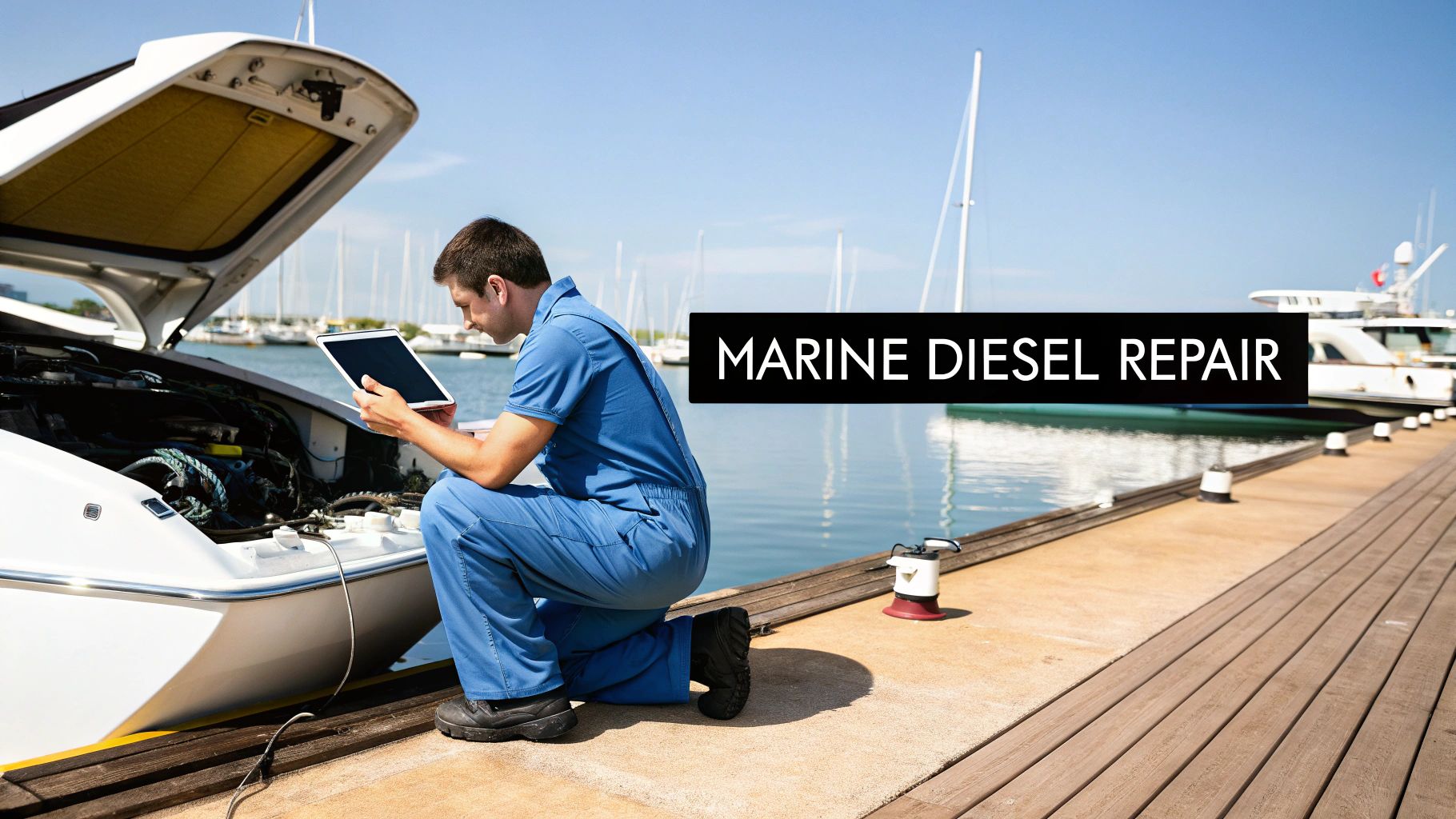
Nothing kills a perfect day—or a charter schedule—faster than an engine that won't cooperate. For yacht owners and captains anywhere between West Palm Beach and Fort Lauderdale, a breakdown isn't a minor hiccup. It’s a serious problem that demands an immediate, expert response.
For years, the default answer was to call a boatyard, schedule a haul-out, and wait. That old way is slow, incredibly expensive, and frankly, a logistical nightmare.
This guide is here to show you a better way. We’ll walk you through why a mobile, factory-certified technician is the smartest call you can make for both your vessel and your sanity. Forget the hassle of getting your yacht to a yard. Picture this instead: a seasoned specialist pulls up to your marina, tools in hand, ready to diagnose and fix the issue right where you are.
Choosing a mobile expert completely flips the script on marine engine repair. A responsive team that comes directly to you brings some serious advantages to the table:
- Slash Your Downtime: Why wait in a queue at the yard? A mobile tech gets you back on the water in a fraction of the time.
- Keep Your Money: You instantly eliminate the hefty fees for haul-outs, yard labor, and all the logistical costs that come with them.
- Get True Expertise: Factory certifications from major brands like MTU, MAN, and CAT aren't just pieces of paper. They guarantee the mechanic has the specific training, software, and tools to work on your engines correctly.
By shifting your focus to a mobile service, you transform a crisis into a manageable task. It’s all about having peace of mind, knowing that a qualified pro is just one phone call away, ready to keep you sea-ready.
Finding Trusted Mechanics in South Florida
Let's be honest, a quick Google search for a "marine diesel mechanic" in South Florida will throw a thousand names at you. In a market this packed, how do you cut through the noise and find a true professional? The secret isn't in the paid ads; it's in the local network. Your best information always comes from people whose boats—and often, their careers—depend on a perfectly running engine room.
Your first stop should be the dockmaster or marina manager. These folks see it all. They know which mechanics are called back time and time again for the tough jobs and which ones have a reputation for getting it right the first time. Yacht brokers are another goldmine of information, as they constantly rely on sharp mechanics for surveys and pre-purchase inspections. They can't afford to recommend anyone but the best.
Tapping Into Your Local Network
Don't underestimate the power of a good conversation at the fuel dock. Talk to other captains and seasoned yacht owners. This is where you'll get the real story—the unvarnished truth about a mechanic's skills, their response time, and how fairly they bill. You just can't find that kind of insight in an online review.
When you get a referral, dig a little deeper with some specific questions:
- Do they have real, hands-on experience with your specific engines, like MTU, MAN, or CAT?
- How did they troubleshoot a problem that wasn't straightforward?
- Did the final bill match the initial quote, or were there surprises?
Getting answers to these questions is how you start building a solid shortlist of mechanics you can actually trust.
Using Online Resources Strategically
While nothing beats a personal recommendation, online resources can help you cross-reference and verify your list. Check for affiliations with respected industry groups like the American Boat and Yacht Council (ABYC). When looking at reviews, ignore the generic five-star ratings and look for detailed testimonials that explain the problem, the mechanic's approach, and the final outcome.
The goal here isn't just finding someone who can turn a wrench. It's about finding a specialist with verifiable, factory-level certifications for your specific engines. This is the difference between a temporary patch and a long-term, reliable solution.
By blending word-of-mouth intel from the docks with a bit of smart online vetting, you can confidently find a top-tier mobile mechanic. You’ll have someone on your side who can cover the entire stretch from West Palm Beach to Ft. Pierce, giving your vessel the expert attention it needs.
Your Vetting Checklist for Hiring a Mechanic
Let's be blunt: choosing the wrong mechanic is a high-stakes gamble. It can lead to an engine that keeps failing, rework that costs a fortune, and potentially even a voided warranty. Before you let anyone near your engine room, you need a rock-solid vetting process. This isn't about finding the cheapest hourly rate; it’s about securing competence, accountability, and your own peace of mind.
The first step is verifying the absolute essentials: a current business license and comprehensive liability insurance. Any legitimate, professional operation will hand these documents over without a second thought. That insurance policy is crucial—it's what protects you and your multi-million dollar asset if a repair goes sideways.
This flowchart maps out a straightforward way to go from a wide search to a shortlist of vetted pros.
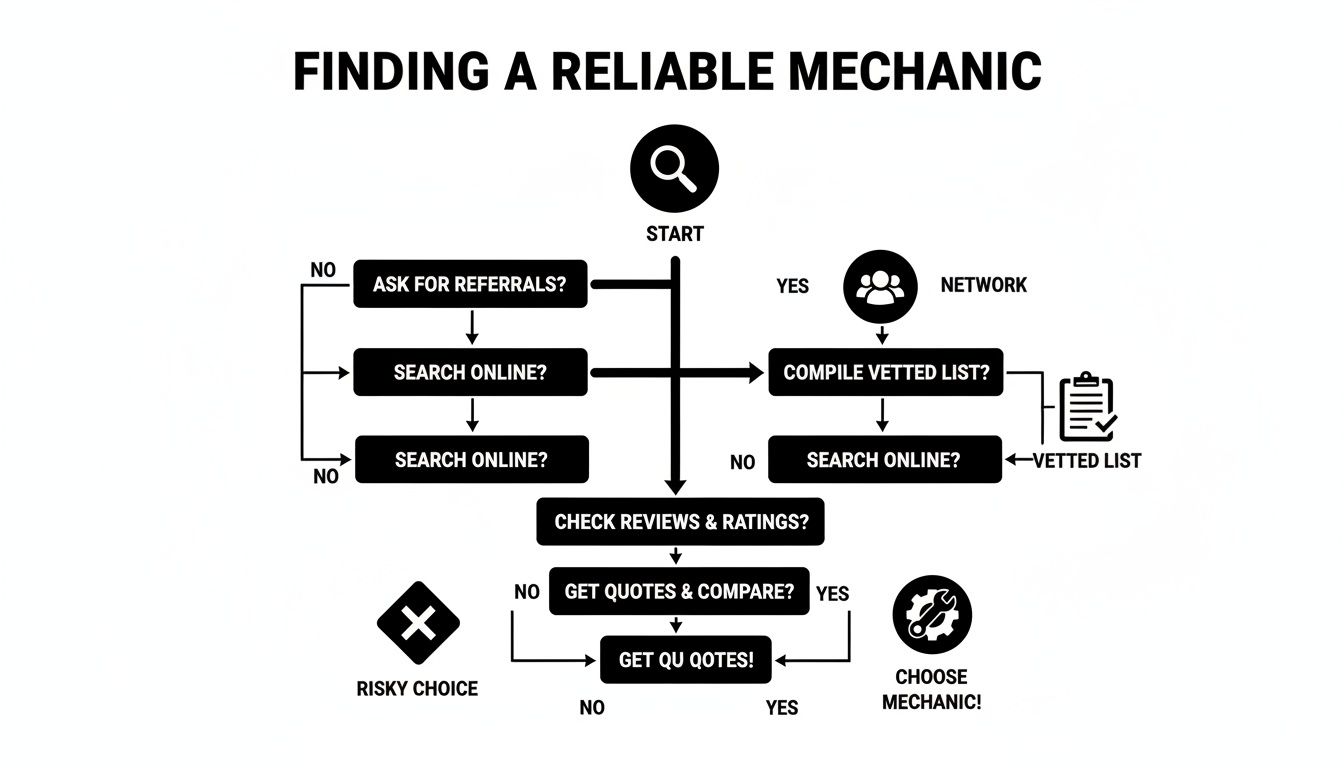
Starting with people you trust—your captain, your dockmaster—and then moving on to verification is the smartest way to find mechanics who have already earned their reputation in the local community.
Demand Factory Certifications
Beyond the basics, the single most important credential is a factory certification from your engine’s manufacturer. A general diesel mechanic just doesn't cut it with today's complex marine engines from brands like MTU, MAN, or Caterpillar.
These certifications are proof that the technician has:
- Specialized Training: They've completed rigorous, up-to-date training directly from the people who built your engine.
- Proprietary Tools: They have the specific diagnostic software and calibrated tools needed to actually know what’s going on.
- Warranty Compliance: Using a certified tech means the work is done to OEM standards, which is non-negotiable for protecting your warranty.
To help you keep track of these essential checks, here’s a quick-reference table you can use when comparing potential mechanics.
Marine Mechanic Vetting Checklist
| Credential | Why It Matters | How to Verify |
|---|---|---|
| Business License | Confirms they are a legitimate, registered business in your state or municipality. | Ask for a copy of their current license or look them up on the state's business registry. |
| Liability Insurance | Protects your vessel from accidental damage during repairs. This is a non-negotiable. | Request a Certificate of Insurance (COI) directly from their insurer. |
| Factory Certifications | Proves they have manufacturer-specific training for your engine (e.g., MTU, MAN, CAT). | Ask to see the physical certification documents or technician ID numbers. |
| Local References | Provides real-world feedback from other captains or yacht owners in your area. | Ask for 2-3 references from recent, similar jobs and actually call them. |
Running through this checklist ensures you’re not just hiring a wrench-turner, but a qualified professional who is accountable for their work.
Ask to see the actual certification documents. A true professional will be proud to show you their credentials for your specific engine brand. This simple step separates the real experts from the generalists.
Verifying these details might seem tedious upfront, but it’s the best investment you can make in your vessel’s reliability. Taking the time to confirm these qualifications also helps you get a clearer picture of the financial side of things, a topic we dive into in our guide on understanding diesel engine repair costs. It ensures the person you hire is a true expert, capable of delivering a lasting fix, not a temporary patch.
Critical Questions to Ask Before You Hire
You’ve checked their credentials and confirmed they’re legit. That’s a great start, but a certificate on the wall doesn’t tell you how a mechanic thinks under pressure. The next conversation is where you separate the real pros from the rest. This is your chance to gauge their actual, in-the-engine-room expertise.
Forget starting with, "What's your hourly rate?" We'll get to that. Instead, get right into the specifics of your boat. Be direct. Ask about their hands-on history with your exact engine model, not just the brand.
For instance, you could say, "How many CAT C32s have you actually put your hands on in the last year? What are the most common things you see go wrong with them?" This kind of specific question forces them to talk about real-world experience, not just textbook knowledge. Their answer will tell you everything you need to know about how well they know your machinery.
Digging Into Their Process and Logistics
Next, you want to get a feel for how they operate when things get complicated. Let’s face it, our engines love to throw us curveballs. An intermittent electrical gremlin is a classic headache for any marine diesel mechanic near me.
A great way to test their mettle is to ask, "Talk me through your diagnostic process for a tricky, intermittent issue that isn't throwing any clear fault codes."
A seasoned mechanic will start talking about a methodical process—isolating systems, checking grounds, load testing circuits. They won't just say they'll start swapping parts until it's fixed. Their answer shows you their technical depth and, just as importantly, their patience.
Logistics are just as critical. This is what defines the actual service you’ll get:
- Parts Sourcing: "Do you stick to OEM parts, or do you have aftermarket options you trust? How fast can you get your hands on them?" This tells you about their commitment to quality and their network.
- Emergency Response: "If I have an emergency at my slip in West Palm Beach, what's your realistic response time?" You need a firm commitment, not a vague "as soon as we can."
- Warranty: "What kind of warranty do you offer on your labor and the parts you install?" A true professional will always stand behind their work with a clear, written policy.
A mechanic’s hesitation or inability to give you straight, confident answers here is a massive red flag. Transparency isn't just a buzzword; it’s a direct indicator of the kind of service you’ll get when the pressure is on.
Finally, you need to understand how they approach the big stuff. Asking about their experience with major overhauls gives you insight into whether they can handle a worst-case scenario. To get a better sense of what these jobs entail, you can learn more about the complexities of a complete diesel engine rebuild and see why you absolutely need a specialist.
Having these conversations upfront builds the trust and confidence you need to make the right call.
Why Mobile Service and Maintenance Plans Are a Game-Changer
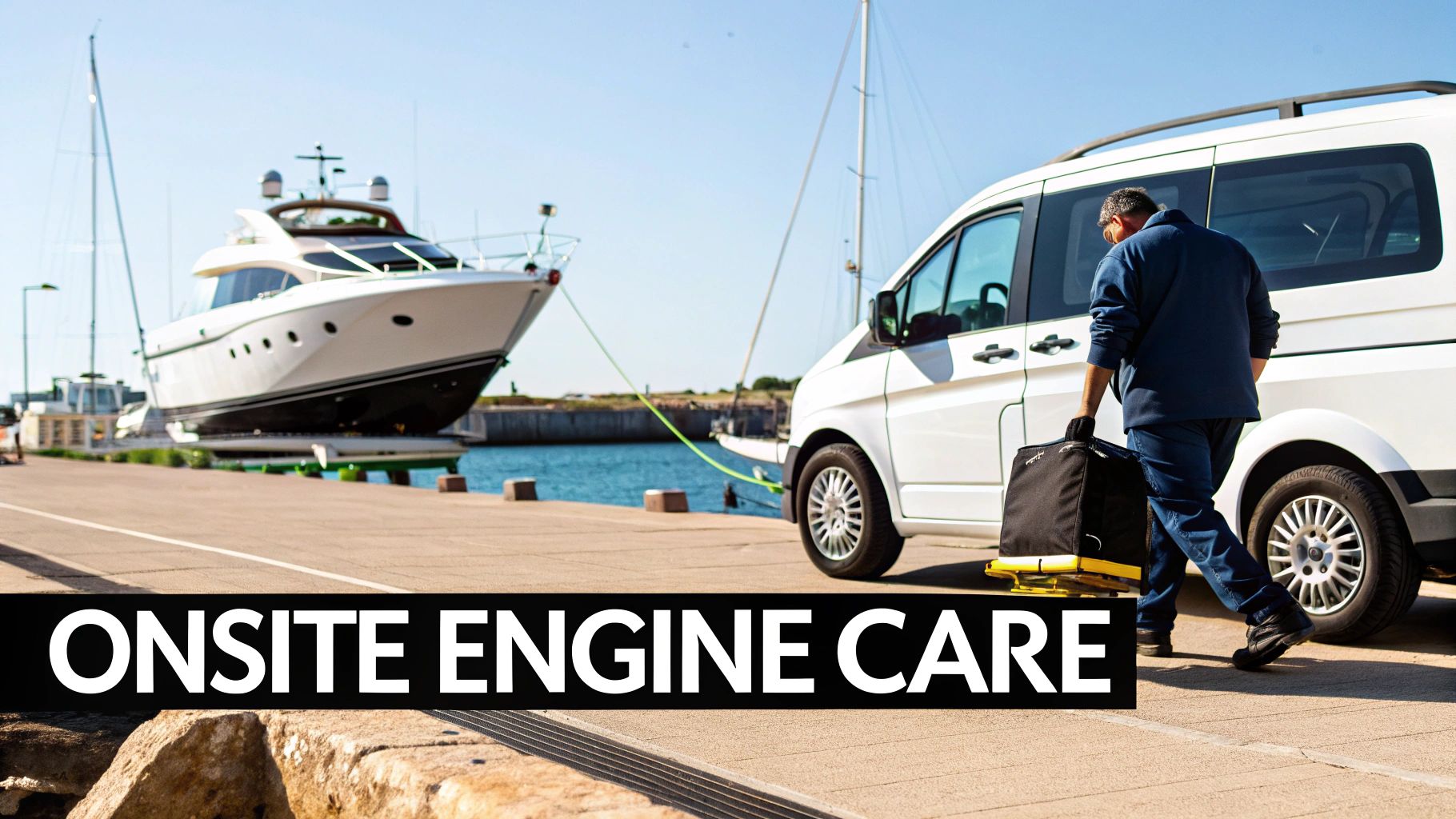
For anyone running a yacht in South Florida, mobile marine service isn't just a convenience—it's essential. The days of sacrificing weeks of your season for a trip to the boatyard are over, and frankly, they should be. A good mobile marine diesel mechanic near me brings the shop right to your slip, handling diagnostics, routine service, and even emergency repairs at your convenience.
This completely sidesteps the logistical nightmare and high costs of a haul-out. Instead of working around a yard's packed schedule, the expertise comes to you. That means less downtime and more time enjoying the water, which is the entire point. The best mobile outfits are equipped for everything from 24/7 emergency calls to routine generator and engine service.
The Power of Proactive Maintenance
While having a reliable mechanic for emergencies is critical, the smartest move you can make is investing in a proactive maintenance plan. This is your number one defense against a catastrophic failure when you're miles offshore. A proper service schedule is about a lot more than just changing the oil.
Think of it as a strategic partnership that accomplishes three key things:
- Extend Engine Life: Regular, professional attention catches the small stuff and prevents premature wear on your most expensive components.
- Improve Fuel Efficiency: A perfectly tuned engine doesn't just run better; it burns cleaner and more efficiently, which you'll notice at the fuel dock.
- Prevent Disasters at Sea: It’s about spotting a failing impeller or a cracking hose before it turns your engine room into a disaster zone.
This isn't just a local trend. As the global fleet gets older, owners and captains everywhere are seeing the value in paying for on-site technicians to slash downtime and avoid hauling expenses. You can dig into the data on marine engine repair market trends on archivemarketresearch.com to see for yourself.
A customized maintenance plan flips the script from reactive panic to proactive control. It's truly the best investment you can make in your vessel's reliability and your own peace of mind.
When you partner with a professional for your diesel marine repair and ongoing maintenance, you're taking intelligent command of your vessel's health. You can be confident that when you're ready to leave the dock, your engines are too.
Your Questions Answered: Navigating South Florida Marine Services
When your engines act up, you need answers fast. Here are some of the most common questions I hear from captains and yacht owners about getting service here in South Florida.
How Quickly Can a Mobile Mechanic Get Here in an Emergency?
In a true emergency, you need someone on the dock—fast. Most reputable 24/7 mobile outfits in the West Palm and Fort Lauderdale area will aim to be on-site within a few hours.
Of course, timing depends on where you are and what their current workload looks like. This is exactly why having a go-to mechanic in your phone is so critical. When they know you and your vessel, you become a priority. They get that every minute you're tied to the dock is costing you.
Is Mobile Diesel Repair Really Cheaper Than a Boatyard?
On paper, the hourly rate might look similar, but the total bill tells a different story. With a mobile mechanic, you're sidestepping a mountain of extra costs.
Think about it: no haul-out fees, no daily yard charges, no transport costs. Those line items alone can run into the thousands before a wrench is even turned. The real savings, though, come from getting back on the water sooner. For a charter operation or an owner with a tight schedule, minimizing downtime is everything.
The real savings from mobile service come from eliminating boatyard overhead and slashing downtime. It’s not just about the invoice; it’s about the value of your time and your vessel’s availability.
Why Is a Brand-Specific Certification So Important?
This one is simple: it's a deal-breaker. An engine from MTU, MAN, or CAT isn't just a block of steel anymore; it’s a sophisticated piece of technology run by proprietary software. A factory-certified technician has the specific training, the right diagnostic tools, and access to the latest service bulletins directly from the manufacturer.
Hiring someone without that certification is a huge gamble. You risk a bad diagnosis, potentially voiding your warranty, and turning a small issue into a catastrophic failure. It’s a corner you just can’t afford to cut with a high-performance engine.
When you need certified, on-site expertise without the boatyard hassle, GTM International is ready to respond. Contact us today for reliable mobile marine service you can count on.
