
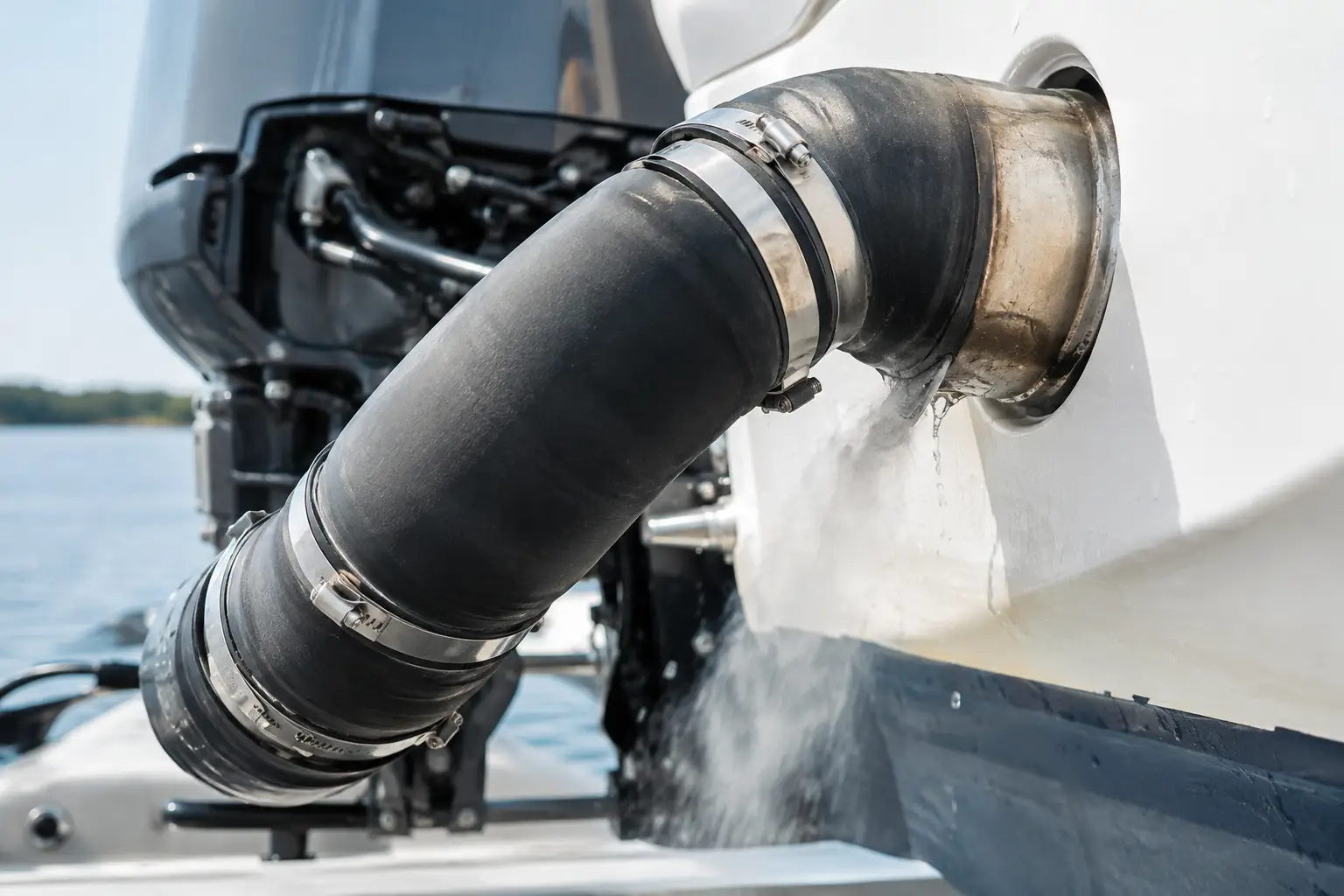
A hot exhaust smell in the engine room, an unfamiliar haze near the transom, or water where it should not be can turn a normal day aboard into a serious repair. Marine exhaust leaks are not just an inconvenience. Depending on their location and severity, they can expose people to carbon monoxide, overheat nearby components, allow water into the vessel, and cause expensive engine damage.
On a yacht or larger diesel vessel, the exhaust system works under heat, pressure, vibration, and constant exposure to saltwater. Hoses, clamps, elbows, risers, mufflers, gaskets, and fittings all have a job to do. A small failure at one connection can become a major downtime issue if it is ignored. The right response is a prompt inspection by a qualified marine technician, not a temporary patch that leaves the underlying cause unresolved.
Why marine exhaust leaks demand quick action
Most modern marine engines use a wet-exhaust system. Seawater is introduced into the exhaust stream after it leaves the engine, reducing exhaust temperature before the gases pass through rubber hose, mufflers, and out the stern. It is an effective system, but it creates two distinct risks: exhaust gases can escape where they do not belong, and cooling water can escape or travel in the wrong direction.
An exhaust-gas leak in an enclosed engine space can introduce carbon monoxide and other combustion gases into areas occupied by crew or guests. Carbon monoxide has no reliable warning smell, and its symptoms can be mistaken for heat exhaustion or seasickness. Headache, dizziness, nausea, confusion, and unusual fatigue should always be treated seriously, especially when the generator or main engines are running.
A water leak is no less urgent. Saltwater spraying from a failing hose, clamp, or fitting can damage electrical connections, corrode engine components, and soak sound insulation. On the wrong side of the system, water intrusion can also reach the engine cylinders. That can lead to hydrolock, bent connecting rods, or a complete engine failure. The repair bill can change dramatically depending on how soon the problem is found.
Warning signs of an exhaust leak on a boat
Some failures announce themselves clearly. Others only show up as a slight change in sound, odor, or engine-room condition. Captains and owners should pay attention to changes that occur after service, following an overheat event, or as a vessel ages.
Look for these warning signs during operation and routine checks:
- A sharp exhaust odor, diesel smell, or visible fumes in the engine room, cockpit, cabin, or near the transom
- Black soot, white residue, salt crystals, or streaking around exhaust joints, hoses, clamps, and the turbocharger area
- Dripping, spraying, or pooling water near the mixing elbow, exhaust hose, muffler, or through-hull connection
- A louder exhaust note, hissing sound, vibration, or a change in the water discharge at the stern
- Elevated engine-room temperatures, melted insulation, discolored hose, or nearby wiring that looks heat-damaged
- Repeated high-temperature alarms, reduced performance, or a generator that runs rough after startup
Do not assume a strong exhaust odor is normal for a diesel-powered vessel. A brief smell at startup may have an innocent explanation, but persistent odor or fumes inside the boat deserve immediate attention. Similarly, a hose that looks acceptable from above may have soft spots, internal delamination, or heat damage underneath.
When to stop the engine
If exhaust fumes enter occupied spaces, a carbon monoxide alarm activates, a hose is actively spraying water, or you see smoke, stop the affected engine or generator as soon as it is safe to do so. Ventilate the vessel, move people into fresh air, and avoid restarting until the source has been evaluated.
A minor drip at an accessible fitting may not always require an emergency shutdown, but it should not wait until the next scheduled haul-out. The practical decision depends on where the leak is, whether the system is hot, and whether water or exhaust gas can reach critical areas. When in doubt, treat the situation as urgent and get professional advice from the dock.
Common causes behind exhaust system failures
Heat and age are common contributors, but they are rarely the whole story. Marine exhaust components fail because of a combination of temperature, vibration, corrosion, poor water flow, and installation conditions.
Rubber exhaust hose can harden, crack, blister, or delaminate after years of heat cycles. Hoses installed too close to hot surfaces may deteriorate much sooner. Loose or corroded clamps can allow a connection to seep under load, while overtightened clamps can damage the hose and create the very leak they were meant to prevent.
On diesel engines, mixing elbows and risers require particular attention. These components manage extremely hot exhaust gases and cooling water. Internal corrosion can restrict water flow, raise exhaust temperatures, and eventually create pinholes or cracks. A restriction may also cause water to back up toward the turbocharger or engine, especially if the vessel is operated heavily, sits for extended periods, or has a neglected raw-water system.
Exhaust leaks can also follow a cooling-system problem. A failed impeller, clogged sea strainer, restricted cooler, or damaged raw-water pump can reduce water flow to the exhaust. The engine may alarm, but the exhaust hose and muffler can already be exposed to damaging heat before the cause is identified. Repairing only the burned hose without correcting the cooling fault invites a repeat failure.
Vibration deserves attention as well. Worn engine mounts, unsupported exhaust runs, misaligned connections, or a loose hanger can stress joints over time. On larger vessels, the exhaust system must accommodate movement without allowing components to rub, sag, or pull apart.
How a proper diagnosis protects your vessel
The visible leak is not always the starting point of the failure. A technician should inspect the entire related system, including hose condition, clamps, elbows, water injection points, raw-water flow, engine temperature history, and nearby electrical or structural damage. This is where a marine engine inspection should work like a medical exam: treat the symptom, then identify why it happened.
Diagnosis may include checking for soot trails and salt residue, inspecting hose interiors, verifying cooling-water discharge, testing temperature readings, and examining components under operating conditions. On engines from MTU, MAN, Caterpillar, and other major platforms, manufacturer-compatible procedures and parts matter. An incorrect hose rating, unsuitable clamp, or poorly matched fitting can create a false economy.
There is also a difference between a repair that gets a vessel moving and one that protects its reliability. Replacing a clamp may be appropriate if the hose and connection are sound. If the hose is heat-hardened, the elbow is corroded, or raw-water flow is restricted, a more complete repair is the cost-conscious choice because it reduces the risk of another breakdown offshore.
Prevention starts with routine engine-room checks
Owners and captains do not need to dismantle an exhaust system to catch trouble early. Before departure, look for water or soot around accessible exhaust components, check that clamps appear secure, and note whether the discharge at the stern looks and sounds normal. During a post-run walk-through, use sight and smell carefully. Never touch exhaust components while hot.
Scheduled preventive maintenance should include a closer review of exhaust hose condition, clamp integrity, support points, risers, mixing elbows, and the raw-water system that keeps the exhaust cool. Service intervals vary by engine, operating hours, age, and saltwater exposure. A lightly used yacht can still develop corrosion or hose deterioration while sitting at the dock, so calendar-based inspections matter as much as hour-based service.
For vessels operating from Fort Lauderdale to Fort Pierce, mobile service can prevent a small exhaust issue from becoming a yard delay. GTM International brings licensed, insured marine technicians directly to the vessel for diagnostics, diesel engine repairs, generator work, and preventive maintenance, helping owners avoid unnecessary hauling, towing, and lost time.
If something smells wrong, sounds different, or leaves a new trace of water or soot in the engine room, trust that observation. A timely inspection is usually far less costly than waiting for a hose, elbow, or cooling failure to make the decision for you.
