
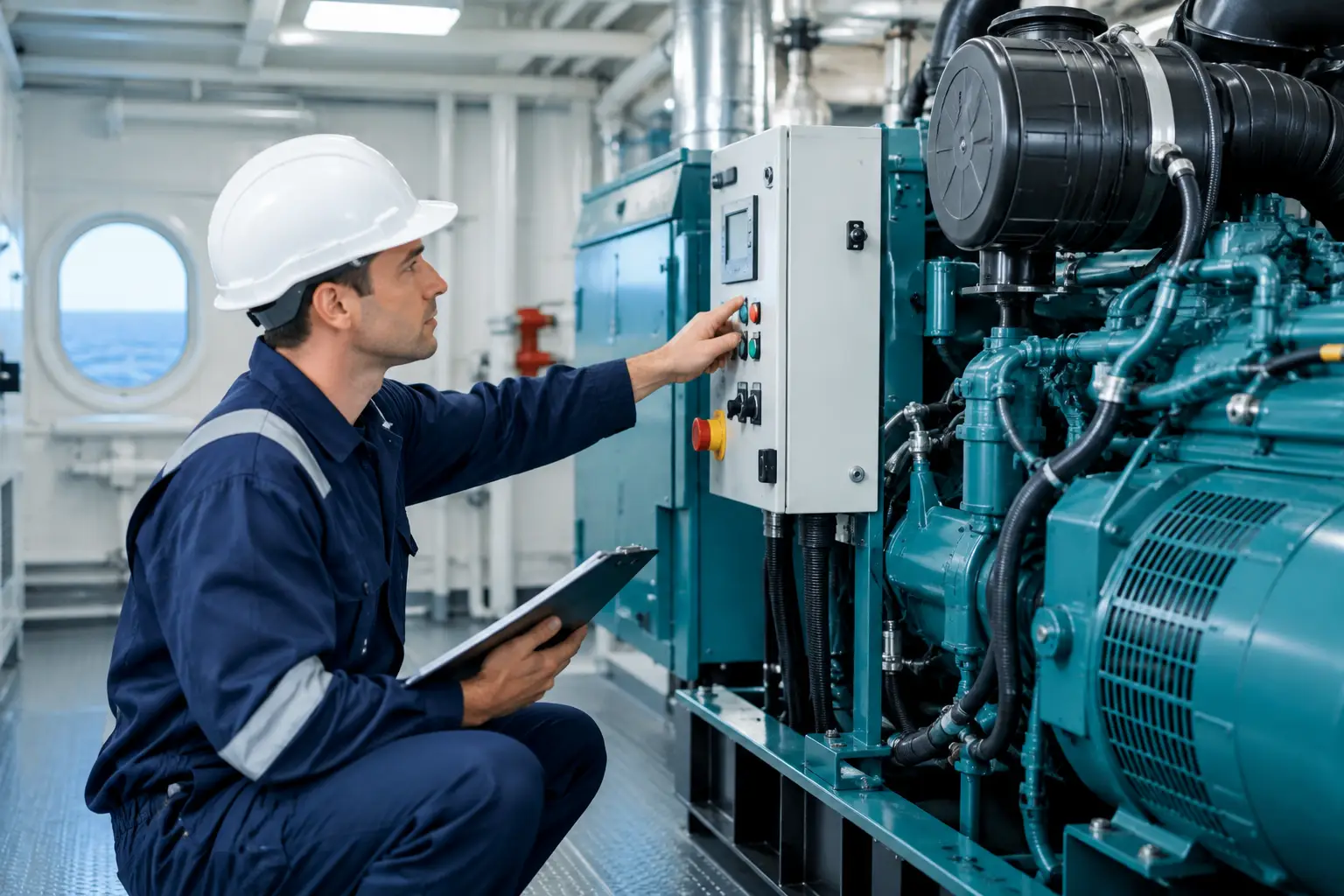
A generator that starts easily can still fail when the boat needs it most. Knowing how to test generator load helps you find problems that only appear under demand, such as voltage drop, overheating, unstable frequency, weak connections, or an engine that cannot maintain rated speed. For yachts and larger diesel vessels, a proper load test is less about proving the generator turns on and more about confirming it can safely carry the electrical systems you depend on offshore.
Why Generator Load Testing Matters
Your marine generator may run the air conditioning, refrigeration, battery chargers, galley equipment, pumps, navigation electronics, and entertainment systems. Each load places a different demand on the generator. A unit that sounds normal at idle or while powering a few cabin lights may struggle when multiple air-conditioning compressors cycle on.
Load testing gives the generator a controlled workload while a technician watches how the electrical and mechanical sides respond. The goal is to verify stable voltage and frequency, acceptable exhaust and coolant temperatures, proper oil pressure, and clean engine operation. It also helps identify light-load operating problems, including carbon buildup and wet stacking on diesel generators.
For an owner or captain, the value is straightforward: catch a developing issue at the dock instead of losing power during a trip, at anchor, or while guests are aboard.
Start With Safety and a Clear Test Plan
A generator load test involves live AC power, rotating machinery, hot exhaust components, fuel, and potentially dangerous carbon monoxide. It is not a casual do-it-yourself check, particularly on a 50- to 500-foot vessel with complex distribution panels, automatic transfer switches, parallel systems, or high-capacity generators.
Before testing, review the generator’s rated output in kilowatts or kilovolt-amperes, its voltage configuration, and the manufacturer’s operating limits. Confirm the vessel is properly ventilated, exhaust outlets are clear, cooling-water flow is normal, and fire suppression and bilge systems are in their expected operating condition. Keep people clear of electrical panels and moving components.
If the generator will power the vessel rather than a dedicated load bank, verify the shore-power and generator source arrangement before changing transfer-switch positions. Backfeeding power into shore connections or combining sources incorrectly can damage equipment and create a serious shock hazard. A qualified marine technician should manage switching on vessels with more involved electrical systems.
Inspect the Generator Before Applying Load
A useful load test begins with a visual and operational inspection. Think of this as the examination before the stress test. A marine technician checks the oil level and condition, coolant level, belts, hoses, raw-water strainer, fuel supply, battery connections, mounts, and visible wiring. Signs of corrosion, heat damage, chafing, leaks, loose terminals, or saltwater intrusion should be addressed before the generator is asked to work hard.
Start the generator with no significant electrical load and let it reach normal operating temperature. During warm-up, listen for unusual knocking, rattling, belt squeal, or exhaust changes. Check for a steady raw-water discharge and confirm that oil pressure, coolant temperature, AC voltage, and frequency are within the manufacturer’s normal range.
Many marine generators are designed to operate at 60 Hz in the United States. Frequency is directly related to engine speed, so a frequency that drifts under load can point to a governor, fuel-delivery, engine-speed, or control issue. Voltage instability may be related to the voltage regulator, alternator section, wiring, connections, or the load itself.
How to Test Generator Load in Stages
The safest and most accurate method is generally a controlled load-bank test. A load bank lets a technician apply a known electrical load in measured steps without relying on every onboard appliance to operate at the same time. It creates repeatable results and avoids putting unnecessary strain on sensitive vessel equipment.
When a load bank is not practical, testing can be performed with selected onboard loads, but it requires more planning. Air conditioning, water heaters, galley equipment, refrigeration, and battery charging can produce substantial demand. The actual load must be measured at the generator or distribution panel with properly rated diagnostic equipment, not guessed from appliance labels.
Apply Load Gradually
After warm-up, apply a modest load first, often around 25 percent of the generator’s rated capacity. Let the unit stabilize, then record voltage, frequency, amperage, oil pressure, coolant temperature, exhaust condition, and engine response. If readings remain stable, increase the load in steps, commonly to 50 percent, 75 percent, and the appropriate higher test level specified by the manufacturer.
At each stage, allow enough time for temperatures to stabilize. A generator that looks fine for two minutes may reveal a cooling, fuel, or electrical problem after 20 to 30 minutes of sustained demand. A professional test commonly includes a period at a meaningful working load, followed by a controlled reduction in load and cooldown.
Do not assume every generator should be held at 100 percent load for an extended period. The correct test level and duration depend on the generator’s rating, age, condition, manufacturer guidance, vessel electrical configuration, and whether the unit is supporting essential equipment. Running too lightly for long periods can be harmful for many diesel generators, but forcing an unknown or poorly maintained unit to maximum output can uncover a failure at the wrong time. That is why the test needs an informed plan.
Watch the Numbers, Not Just the Sound
A healthy generator should hold its specified voltage and frequency as load rises. Small, brief changes when a large motor starts may be normal. Continued voltage sag, frequency hunting, repeated breaker trips, smoke, rising temperature, or a burning electrical smell are not normal.
Pay attention to these warning signs during a test:
- Voltage or frequency that falls and does not recover after load is applied
- Black, white, or excessive blue exhaust smoke
- Coolant temperature that rises beyond the normal operating range
- Low oil pressure, alarms, or shutdowns
- Surging engine RPM, hard starting under load, or unusual vibration
- Hot electrical connections, tripped breakers, or discoloration at panels
A clamp meter, power analyzer, infrared temperature tool, and manufacturer-compatible diagnostic equipment can show whether the issue is in the generator, engine controls, alternator, distribution system, or a particular onboard circuit. On modern yacht systems, fault codes and operating history can add useful context, but they should support physical testing rather than replace it.
What a Failed Load Test Can Tell You
The pattern of failure often matters as much as the failure itself. If voltage is stable but frequency drops under load, the diesel engine may not be maintaining speed. Fuel restriction, governor adjustment, injector concerns, turbocharger performance, or an overloaded generator can all be part of the diagnosis.
If engine speed remains steady but voltage is low or unstable, the technician will look more closely at the generator end, automatic voltage regulator, excitation system, cables, grounds, and electrical connections. Heat at a terminal can indicate resistance caused by corrosion or looseness, a common concern in the South Florida marine environment.
If the generator runs cleanly at a moderate load but overheats at a higher load, the cooling system needs careful attention. Restricted raw-water flow, a fouled heat exchanger, a worn impeller, a failing pump, or internal coolant-side issues may only become obvious once the generator is producing real power.
A load test also reveals when the vessel’s expected demand exceeds generator capacity. Adding larger air-conditioning systems, chargers, cooking equipment, or electronics without reviewing the electrical load can leave an otherwise healthy generator consistently overloaded. In that case, the fix may involve load management or system changes, not simply generator repair.
Test Regularly, Not Only After a Problem
For vessels that sit for long periods, exercise alone is not enough. Starting the generator monthly can keep components moving, but a brief no-load run does not prove it can power the boat. Follow the generator manufacturer’s maintenance schedule and arrange periodic load testing based on operating hours, use patterns, vessel size, and how critical onboard power is to your operation.
Captains and owners should also keep a simple record of running hours, load-test readings, alarm events, maintenance performed, and any changes in electrical equipment. Trending a gradual drop in voltage, rising coolant temperature, or increased smoke can prevent a far more expensive repair later.
For yacht owners throughout the West Palm Beach, Fort Lauderdale, and Fort Pierce coastal corridor, GTM International can bring certified mobile marine diagnostics and generator service directly to the vessel. That avoids the time, cost, and disruption of moving a boat to a repair yard when a generator issue needs prompt attention.
A generator earns confidence by carrying the load, not by merely starting. Schedule testing before a long cruise, hurricane-season preparations, or a busy charter period, and give the technician the operating history needed to protect your time on the water.
