
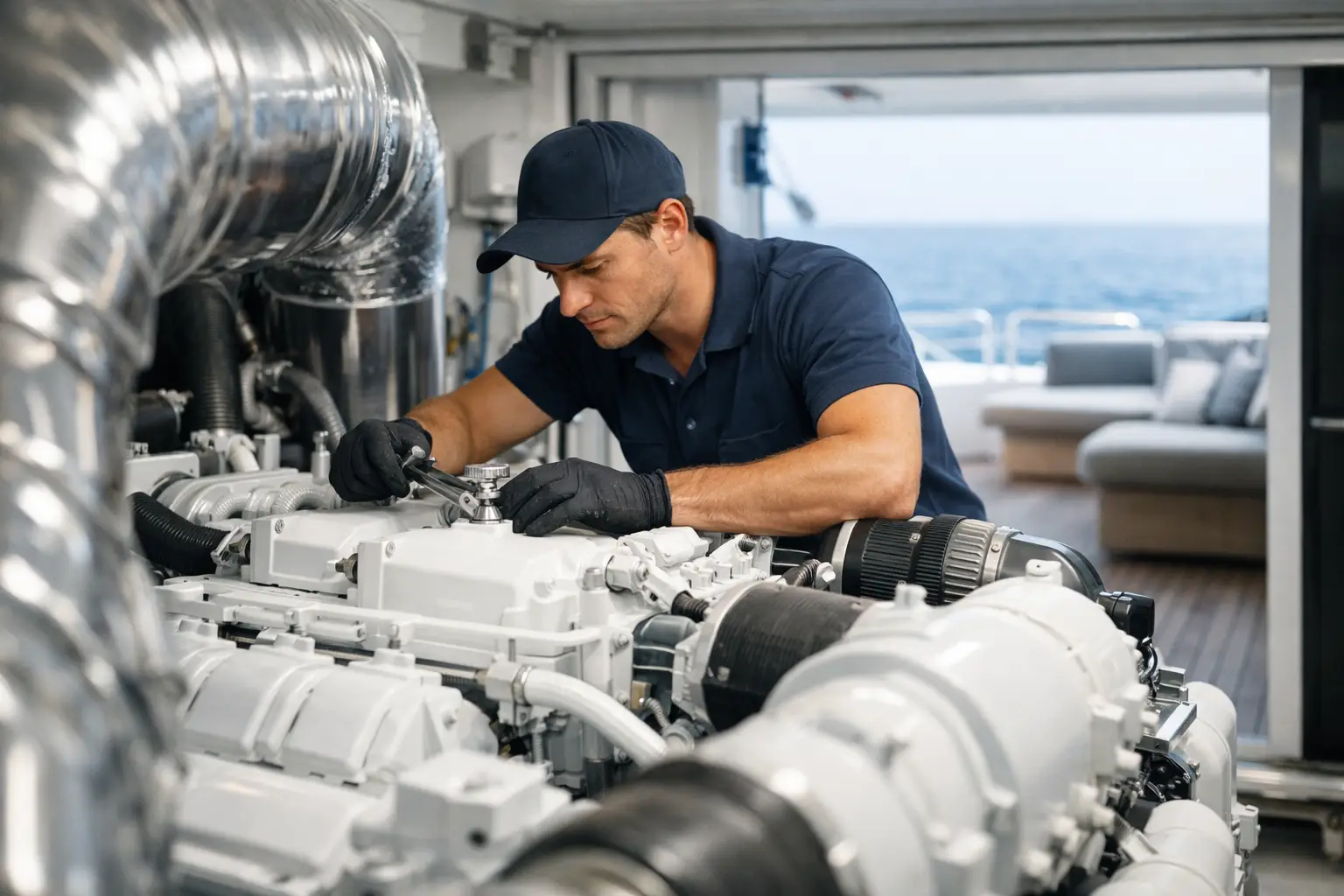
A delayed departure from Palm Beach, a warning light at the dock, or an unexplained temperature increase offshore can turn a good day on the water into an expensive interruption. Consistent MTU yacht engine maintenance is the best way to catch those issues while they are still manageable, rather than waiting for a failure that sidelines the vessel, disrupts a charter, or creates a much larger repair bill.
MTU engines are built for serious marine duty, but high performance does not make an engine immune to saltwater, heat cycles, vibration, fuel contamination, or long periods of inactivity. The right maintenance plan protects more than the engines themselves. It protects schedule reliability, fuel efficiency, resale value, and the confidence to run when conditions and commitments demand it.
Why MTU Yacht Engine Maintenance Requires a Plan
An MTU-powered yacht is a complex working system, not simply a pair of engines that need an occasional oil change. Cooling circuits, fuel delivery, electronic controls, turbochargers, exhaust components, transmissions, generators, batteries, and vessel systems all affect how reliably the propulsion package performs.
That is why maintenance should be based on engine hours, operating profile, age, and service history. A yacht that runs frequently at cruising speed has different needs than a vessel used seasonally or held at the dock through much of the summer. A captain managing a charter schedule may prioritize short service windows and planned inspections, while a private owner may need an assessment before taking the family offshore. Both need a clear picture of engine condition.
Think of a qualified marine technician as a doctor for your yacht’s machinery. Good service is not just replacing a failed part. It involves listening to the symptoms, reviewing the engine’s history, checking vital signs, and identifying the cause before a small condition develops into a major mechanical event.
Maintenance Is Cheaper Than Emergency Repair
Skipped service can look like a savings until a heat exchanger restriction raises operating temperatures, a worn impeller compromises cooling flow, or contaminated fuel affects injectors and performance. Marine failures rarely happen at a convenient time. They can lead to towing costs, missed trips, damaged connected components, and delays at a busy repair yard.
Preventive care does involve an upfront investment in labor, fluids, filters, inspections, and parts. The trade-off is straightforward: planned work gives the owner control over timing and budget, while emergency work is usually dictated by the failure. For a high-value yacht, avoiding one preventable breakdown can justify years of disciplined maintenance.
What a Professional MTU Service Visit Should Cover
The exact scope depends on the engine model and maintenance interval, but a professional visit should look beyond visible leaks and fluid levels. Technicians should assess how the engine is operating, not merely whether it starts.
Electronic diagnostics are a critical part of modern MTU service. Fault histories, sensor values, operating data, alarms, and other available engine information can help identify developing issues that are not obvious during a brief dockside run. Diagnostic results should be considered alongside a physical inspection, because a clean scan alone does not prove that cooling, fuel, electrical, or mechanical components are in good condition.
Fluid and filter service remains foundational. Correct oil selection, timely oil and filter changes, fuel filter replacement, and inspection for water or debris in the fuel system help preserve lubrication and combustion quality. Fuel quality deserves special attention in South Florida, where heat, humidity, storage time, and water intrusion can contribute to contamination.
Cooling-system care is equally important. Seawater pumps, impellers, strainers, hoses, clamps, coolers, and heat exchangers must be inspected on schedule. Restricted coolers and neglected raw-water components can cause temperature problems that place unnecessary stress on expensive engine parts. Cooler services are not cosmetic work – they are central to protecting engine temperature control.
A thorough service also includes visual inspection of belts, mounts, exhaust connections, wiring, batteries, charging systems, and fluid lines. On larger vessels, technicians should consider the relationship between main engines, generators, steering systems, and onboard electrical loads. A starting or charging issue can be mistaken for an engine problem when the real cause lies elsewhere in the vessel.
Watch for These Early Warning Signs
Yacht owners and captains do not need to diagnose an MTU engine themselves, but they should take changes in behavior seriously. A small change is useful information when reported early. Pay attention to repeated alarms, higher-than-normal temperature readings, smoke changes, hard starting, loss of power, unusual vibration, increased fuel consumption, fuel odor, oil sheen, or a new fluid leak.
Do not assume an intermittent warning can wait until the next scheduled haul-out. Some alerts are minor, while others point to cooling, fuel, sensor, or electrical issues that deserve prompt diagnosis. The answer depends on the engine data, the operating conditions, and what an experienced technician finds during inspection.
Keeping a simple engine log helps. Record hours, routine fluid additions, alarm messages, temperatures, service dates, and anything that feels different during operation. This information gives the technician a useful history and can reduce diagnostic time when an issue is difficult to reproduce.
Mobile Service Changes the Economics of Maintenance
For many owners, the biggest obstacle to preventive maintenance is logistics. Moving a yacht to a repair facility, arranging dockage, coordinating crew, and waiting for a service opening can consume days. If the work can be completed safely at the vessel, a qualified mobile team can remove much of that burden.
Mobile marine service is especially valuable along the South Florida coast, where owners may keep vessels in private slips, marinas, waterfront residences, or managed facilities. The technician comes to the boat, performs diagnostics and scheduled work where it sits, and helps avoid unnecessary hauling or transit time. That can save time, money, and stress without sacrificing technical attention.
GTM International provides mobile maintenance, diagnostics, repairs, cooler service, generator work, and related marine system support for vessels from 50 to 500 feet throughout the West Palm Beach and South Florida coastal corridor. For an MTU-powered yacht, that means owners can arrange professional help without automatically turning a maintenance need into a boatyard project.
Build a Schedule Around How You Actually Use the Yacht
Manufacturer interval guidance is the starting point, but the best schedule reflects real-world conditions. Engine hours matter, yet calendar time matters too. A low-hour yacht may still need service because oil ages, fuel degrades, corrosion develops, and rubber components deteriorate while the vessel is idle.
A practical program typically includes routine pre-departure checks, scheduled fluid and filter service, periodic cooling-system inspection, seasonal review, and a more detailed annual evaluation. Vessels that run hard, operate frequently, remain in warm saltwater, or support charter activity may require closer attention. Yachts that have sat through a long period of limited use should be inspected before returning to regular operation.
Do not overlook the generator. A generator failure can affect air conditioning, refrigeration, battery charging, navigation equipment, and onboard comfort even when the main engines are healthy. Coordinating generator service with engine maintenance is often more efficient and gives the technician a better view of the vessel’s overall mechanical condition.
Choose Experience Over Guesswork
MTU engines require technicians who understand marine diesel systems, appropriate service procedures, and the diagnostic process behind modern electronically controlled engines. The least expensive quote is not always the lowest-cost decision if incomplete troubleshooting leads to repeat visits, unnecessary parts replacement, or a missed underlying problem.
Ask what the service includes, how findings will be communicated, whether the technician can handle related cooling, electrical, generator, and steering issues, and what should be addressed now versus monitored. A professional recommendation should be clear about priorities. Not every observation requires immediate repair, but critical items should never be vague.
The most useful time to schedule service is before an alarm becomes a breakdown. If your MTU-powered yacht is due for maintenance, has changed performance, or is preparing for a busy season, arrange an on-site inspection while you still control the timeline.
