
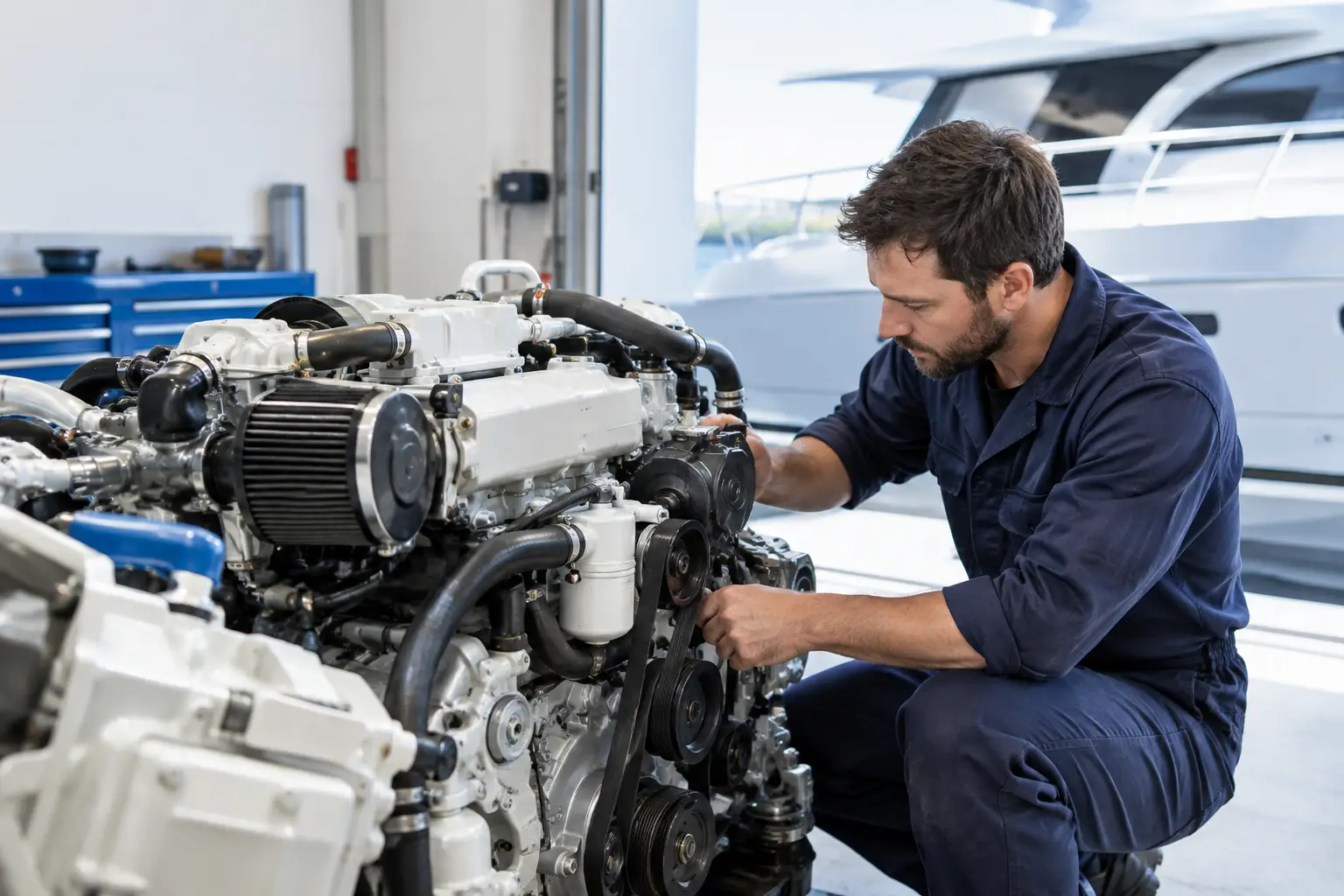
A yacht engine rarely fails without leaving clues. Hard starting, rising oil consumption, smoke that was not there last season, coolant loss, poor acceleration, or a steady increase in operating temperature can all point to internal wear. Engine rebuilders help owners determine whether those warning signs call for a targeted repair, a full rebuild, or a replacement engine – before a manageable issue becomes a lost season on the water.
For yacht owners, captains, and fleet operators along the South Florida coast, that decision is about more than horsepower. It affects reliability offshore, resale value, charter schedules, crew confidence, and the cost of getting a vessel back in service. The right diagnosis starts with facts, not assumptions.
When Engine Rebuilders Make Sense
A rebuild is not the automatic answer every time an engine develops a problem. Many performance issues originate outside the engine itself. A restricted fuel supply, fouled aftercooler, failing injector, damaged turbocharger, contaminated coolant system, weak battery bank, or improperly calibrated sensor can create symptoms that resemble major internal damage.
That is why a professional inspection should come first. Think of a marine technician like a doctor: symptoms matter, but they do not tell the whole story. The technician needs to check operating history, scan available fault codes, evaluate fluid condition, verify cooling performance, inspect the air and fuel systems, and test compression or crankcase pressure when appropriate. On electronically controlled marine diesels, diagnostic data can also reveal whether the engine is protecting itself through derate modes.
A rebuild becomes a serious consideration when testing confirms internal wear or damage that cannot be corrected economically from the outside. Common reasons include low compression, excessive blow-by, damaged pistons or liners, bearing wear, crankshaft damage, a failed head gasket, or repeated overheating that has compromised major components. An engine with high operating hours is not automatically a rebuild candidate. Service history, load profile, corrosion exposure, and the quality of past maintenance matter just as much as the hour meter.
For some vessels, a partial or in-frame rebuild is the practical route. This may involve servicing cylinder heads, replacing liners, pistons, rings, bearings, seals, and related components while the engine remains installed. In other cases, the engine must be removed for machine work and a more complete overhaul. The correct scope depends on the findings, the engine platform, available access aboard the vessel, and the owner’s plans for the boat.
Rebuild, Repair, or Replacement?
The choice is rarely as simple as choosing the lowest immediate invoice. A targeted repair can be the best value when one identifiable failure has not damaged the rest of the engine. Replacing a failed injector, repairing a cooling system issue, rebuilding a turbocharger, or correcting an oil leak may restore dependable operation without opening the engine.
A full rebuild can make sense when the engine’s core structure is sound but wear has reached the point where smaller repairs would only postpone another failure. Rebuilding allows the technician to measure critical components, identify hidden damage, and restore clearances to the manufacturer’s specifications. It can preserve an engine installation that is otherwise well suited to the vessel, avoiding the expense of redesigning mounts, exhaust, controls, shafting, or electrical connections for a repower.
Replacement may be the better decision when corrosion, cracking, catastrophic failure, unavailable parts, or repeated prior repairs have made rebuilding uncertain. A newer engine can offer improved efficiency and updated controls, but repowering is a project, not a simple engine swap. Owners should account for installation labor, supporting system upgrades, compatibility work, and the time a vessel may remain out of service.
The practical question is not, “Can this engine be rebuilt?” It is, “What option gives this vessel the most dependable service at a reasonable total cost?” A qualified marine technician should be willing to explain the trade-offs clearly, including what is known, what will require disassembly to confirm, and which related systems need attention before the engine returns to operation.
What Quality Engine Rebuilders Should Inspect
A proper marine engine rebuild is a measured process, not a parts-changing exercise. Before major work begins, the technician should establish the source of the failure. If an engine overheated because of a blocked cooler, failed raw-water pump, neglected heat exchanger, or exhaust restriction, rebuilding the engine without correcting that cause invites the same damage again.
During disassembly, components should be cleaned and inspected for wear, cracks, corrosion, scoring, distortion, and heat damage. Critical dimensions must be measured against manufacturer limits. Depending on the engine and the findings, work may include cylinder head service, valve work, liner inspection or replacement, piston and ring replacement, crankshaft measurement, bearing selection, injector testing, fuel system evaluation, and inspection of gears, seals, and oiling passages.
Marine applications add another layer of concern. Saltwater exposure, long idle periods, humid engine rooms, and inconsistent operating loads can affect an engine differently than the same model in a truck or industrial generator. Cooling systems deserve particular attention. Heat exchangers, aftercoolers, oil coolers, raw-water circuits, hoses, clamps, and sea strainers all play a role in protecting the engine from destructive heat.
The job should also include careful reassembly, correct torque procedures, clean fluids and filters, and verification after startup. Once the engine is running, technicians need to confirm oil pressure, temperature, charging performance, fuel delivery, exhaust condition, leak-free operation, and response under load. A dockside idle test alone does not prove that a yacht engine is ready for open-water duty.
Do Not Ignore the Systems Around the Engine
Engines depend on more than internal components. A damaged transmission cooler, deteriorated motor mount, weak engine-room blower, contaminated fuel tank, failing steering system, or generator problem can affect safe operation and create costly follow-up work. Addressing related concerns while the engine is accessible often saves labor and prevents a separate service interruption later.
This is especially relevant on larger yachts, where access can be limited and coordinating a yard visit may require moving the vessel, scheduling contractors, and interrupting crew operations. Mobile marine service reduces that burden by bringing diagnostic capability and experienced technicians directly to the dock or marina whenever the work can safely be completed on board.
Choosing Engine Rebuilders for a Yacht
Marine experience matters. A capable automotive or industrial shop may understand engines, but yachts have different cooling arrangements, load demands, corrosion risks, access limitations, and safety requirements. Look for technicians with experience in your engine platform and the ability to support the entire installation, not just the long block.
For owners of MTU, MAN, and Caterpillar marine diesels, platform familiarity is especially valuable. These engines require methodical diagnostics, manufacturer-compatible procedures, and an understanding of electronic controls and supporting systems. Ask direct questions about the proposed scope of work, the parts being used, what measurements will be checked, what caused the failure, and how the repair will be tested.
Communication is part of quality service. You should receive a clear explanation of the condition found, realistic options, and an estimate that separates urgent repairs from recommended preventive work. No one wants surprises after an engine is opened, but marine repairs sometimes reveal damage that could not be seen beforehand. A trustworthy service partner explains that possibility before work starts and keeps you informed as findings develop.
GTM International provides mobile marine diagnostics, repair, cooler service, generator work, and preventive maintenance for gas and diesel-powered vessels from 50 to 500 feet throughout the West Palm Beach and South Florida coastal corridor. Bringing certified, licensed, and insured technicians to the vessel can save the hauling costs, scheduling delays, and stress that often come with a traditional repair yard.
Prevent a Rebuild Before It Is Necessary
The best engine rebuild is the one you never need. Routine oil and filter changes, fuel quality management, cooling-system service, regular load checks, and attention to early warning signs can extend engine life substantially. Preventive maintenance is less dramatic than a major overhaul, but it is usually far less expensive.
Captains and owners should pay attention to changes rather than waiting for a complete failure. A small coolant leak, a new vibration, slower cranking, an unusual exhaust haze, or a temperature increase under the same load deserves prompt evaluation. Early diagnostics can identify a failing component before it damages pistons, bearings, cylinder heads, or other high-cost parts.
When your vessel tells you something has changed, treat it like a medical concern: get a qualified opinion while the symptoms are still small. That approach protects your engine, your schedule, and the confidence to leave the dock knowing your boat is ready for the water.
