
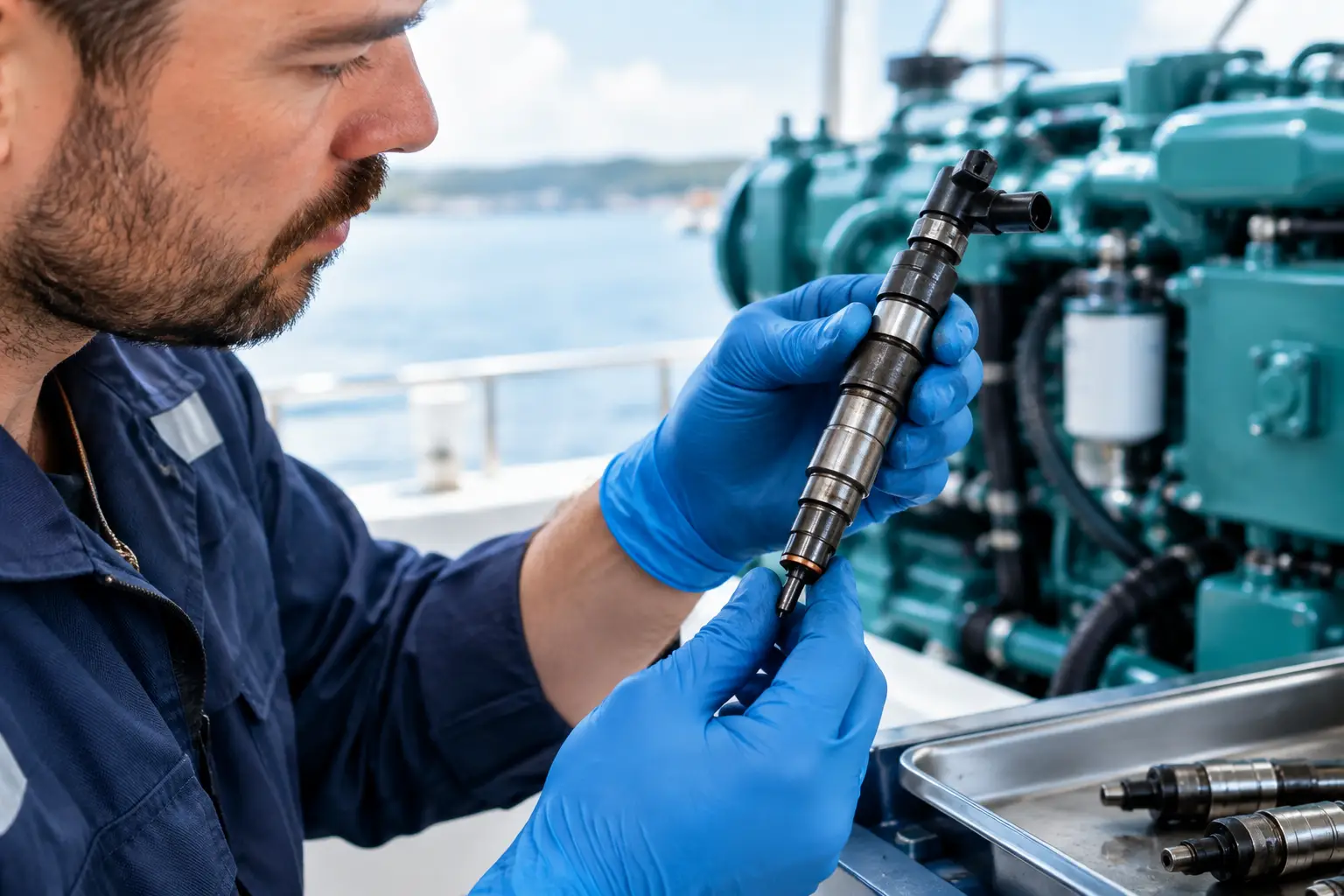
A diesel that starts normally at the dock can still tell a different story once the vessel is under load. A rough idle, a light haze behind the transom, rising fuel burn, or a vibration that was not there last season may all point toward injector trouble. Knowing how to identify injector wear early gives owners and captains time to schedule service before a fuel-system issue becomes lost cruising time, an expensive repair, or an unexpected call for help offshore.
Injectors are precision components. They deliver a carefully measured amount of fuel at the right pressure and at the right moment. When that spray pattern or delivery volume changes, combustion suffers. On a marine diesel, that can affect performance, economy, emissions, and the long-term health of pistons, valves, turbochargers, and aftercooler systems.
Why Injector Wear Matters on a Marine Diesel
Marine injectors work in a demanding environment. Hours at steady RPM, high engine loads, heat, vibration, moisture, and fuel contamination all take a toll. Even a well-maintained CAT, MAN, or MTU engine will eventually need fuel-system attention based on its service hours, operating history, and fuel quality.
Wear does not always mean an injector has failed completely. Internal components can gradually lose their ability to atomize fuel cleanly. Nozzle deposits can distort the spray pattern. Leakage can allow fuel to enter the cylinder when it should not. The engine may continue to run, but it is no longer running as efficiently or as cleanly as it should.
That gradual decline is why injector issues are often missed. A captain may compensate with more throttle. An owner may assume the engine is simply getting older. In reality, the engine is signaling that it needs the same measured attention you would expect from a doctor reviewing an early symptom before it develops into something more serious.
How to Identify Injector Wear Before It Gets Worse
The best first step is to pay attention to changes, not just outright failures. You know how your vessel normally starts, sounds, accelerates, and burns fuel. A change in any of those areas is worth documenting, especially if it appears on one engine but not the other.
Rough Idle, Misfire, or Uneven Running
An engine with a worn or sticking injector may idle roughly, shake more than usual, or feel as though one cylinder is not contributing evenly. On multi-engine vessels, one engine may sound noticeably different at idle or produce a different exhaust note.
Do not assume every rough idle is caused by an injector. Air in the fuel system, a restricted fuel filter, water contamination, low compression, valve issues, or electronic control problems can produce similar symptoms. The point is not to guess at the repair. It is to recognize that the fuel system deserves a proper diagnostic evaluation.
Smoke Color Can Offer a Useful Clue
Exhaust smoke is one of the most visible signs of poor combustion, but its color matters. Black smoke often indicates excess fuel, restricted air supply, a poor spray pattern, or an engine that is overloaded. A worn injector can contribute to black smoke by delivering fuel that does not burn completely.
White or gray smoke may point to unburned fuel, especially during cold starts or at idle. Blue smoke is more commonly associated with oil consumption, though severe combustion problems can complicate the picture. Smoke alone does not confirm injector wear, but smoke combined with rough running, fuel odor, and power loss makes professional testing more urgent.
Higher Fuel Consumption and Reduced Range
If fuel usage has increased without a meaningful change in load, route, speed, or sea conditions, injectors should be part of the inspection. Poor atomization means the engine must work harder to make the same power. Over time, that can reduce range and raise operating costs significantly for a yacht or commercial vessel.
Track fuel burn by engine hours whenever possible. One bad trip does not establish a trend. Several trips showing higher consumption under comparable conditions provide far more useful information to a technician.
Hard Starting or Extended Cranking
Healthy diesel engines generally start with confidence when their fuel, air, compression, and electrical systems are in order. Extended cranking, difficult restarting after a warm shutdown, or an engine that starts and then stumbles can indicate an injector issue.
However, batteries, starter performance, glow-plug systems where applicable, fuel supply restrictions, and air leaks must also be checked. This is why replacing injectors based on one symptom alone can waste time and money. Proper diagnosis separates a worn injector from the many other systems that influence starting.
Diesel Fuel Odor, Leaks, or Rising Oil Level
A strong fuel smell in the engine room is never something to ignore. Inspect visible fuel lines, injector connections, and surrounding areas for wetness or staining, but avoid loosening high-pressure fuel components yourself. Modern common-rail systems operate at pressures that can cause serious injury.
In some cases, an injector that leaks internally or externally can contribute to fuel dilution in engine oil. If the oil level rises unexpectedly or the oil smells strongly of diesel fuel, stop treating it as a minor maintenance item. Fuel-diluted oil can reduce lubrication and accelerate wear throughout the engine.
Loss of Power Under Load
A vessel may run acceptably at the dock yet fail to reach normal RPM under load. It may hesitate during acceleration or struggle to hold speed at a familiar throttle setting. Injector wear is one possible cause, particularly when the engine also smokes or runs unevenly.
Still, a loss of power can also come from a fouled hull, propeller damage, turbocharger trouble, restricted air intake, exhaust restriction, cooling problems, or an overloaded vessel. The right approach is a complete engine assessment rather than focusing on injectors in isolation.
What Professional Injector Diagnosis Looks Like
A qualified marine technician starts with the whole picture: service history, engine hours, fuel quality, recent filter changes, operating symptoms, and fault codes on electronically managed engines. Diagnostic software can reveal cylinder balance concerns, injector correction values, rail-pressure issues, and active or stored faults that are not obvious from the helm.
A visual inspection follows. Technicians check for fuel leaks, damaged wiring, loose connections, contaminated filters, and evidence of water in the fuel system. They may also inspect the air and exhaust sides of the engine because combustion depends on more than fuel delivery.
When injectors are suspected, testing may include cylinder cutout testing, return-flow testing, pressure checks, and removal for bench testing. Bench testing is valuable because it can measure opening pressure, fuel delivery, leakage, and spray quality under controlled conditions. The exact process depends on the engine platform and injector design.
For engines with electronic common-rail fuel systems, correct coding and calibration may be required after injector replacement. That is one reason injector work should be handled by technicians familiar with the manufacturer and equipped with the right diagnostic tools. Installing a part is only part of the job. Confirming that the engine is fueling correctly afterward is what protects the vessel.
Preventing Premature Injector Wear
Clean, dry fuel is the first line of defense. Water, microbial growth, dirt, and degraded fuel can damage precision injector components quickly. Keep up with fuel-filter intervals, drain water separators as recommended, and address tank contamination rather than repeatedly changing filters without finding the source.
Regular engine operation also matters. Long periods of light loading can contribute to deposit buildup on some diesel engines, while consistently pushing an engine beyond its intended load can create different problems. Follow the engine manufacturer’s operating and maintenance guidance, and record changes in exhaust, fuel burn, oil analysis, and starting behavior.
If an engine has reached its recommended injector service interval, proactive inspection may be less expensive than waiting for a failure. The right interval depends on the engine model, duty cycle, fuel condition, and maintenance history. A sportfish used hard offshore has different needs than a yacht that spends long periods at the dock.
When to Schedule Mobile Marine Service
Call for professional help promptly if you see black or white smoke that persists, feel a new vibration, notice fuel in the oil, smell diesel in the engine room, or lose power underway. If the engine is running severely rough, overheating, or producing excessive smoke, reduce load and avoid pushing it until the cause is identified.
For owners and captains from Fort Lauderdale to Fort Pierce, GTM International can come directly to the vessel for marine diesel diagnostics and repair. Mobile service avoids the delay and expense of moving a boat to a yard while allowing certified technicians to assess the engine in its real operating environment.
Your engine does not need to fail at sea to deserve attention. A timely inspection when the first symptoms appear can protect your schedule, your fuel budget, and the machinery that keeps your vessel moving with confidence.
