
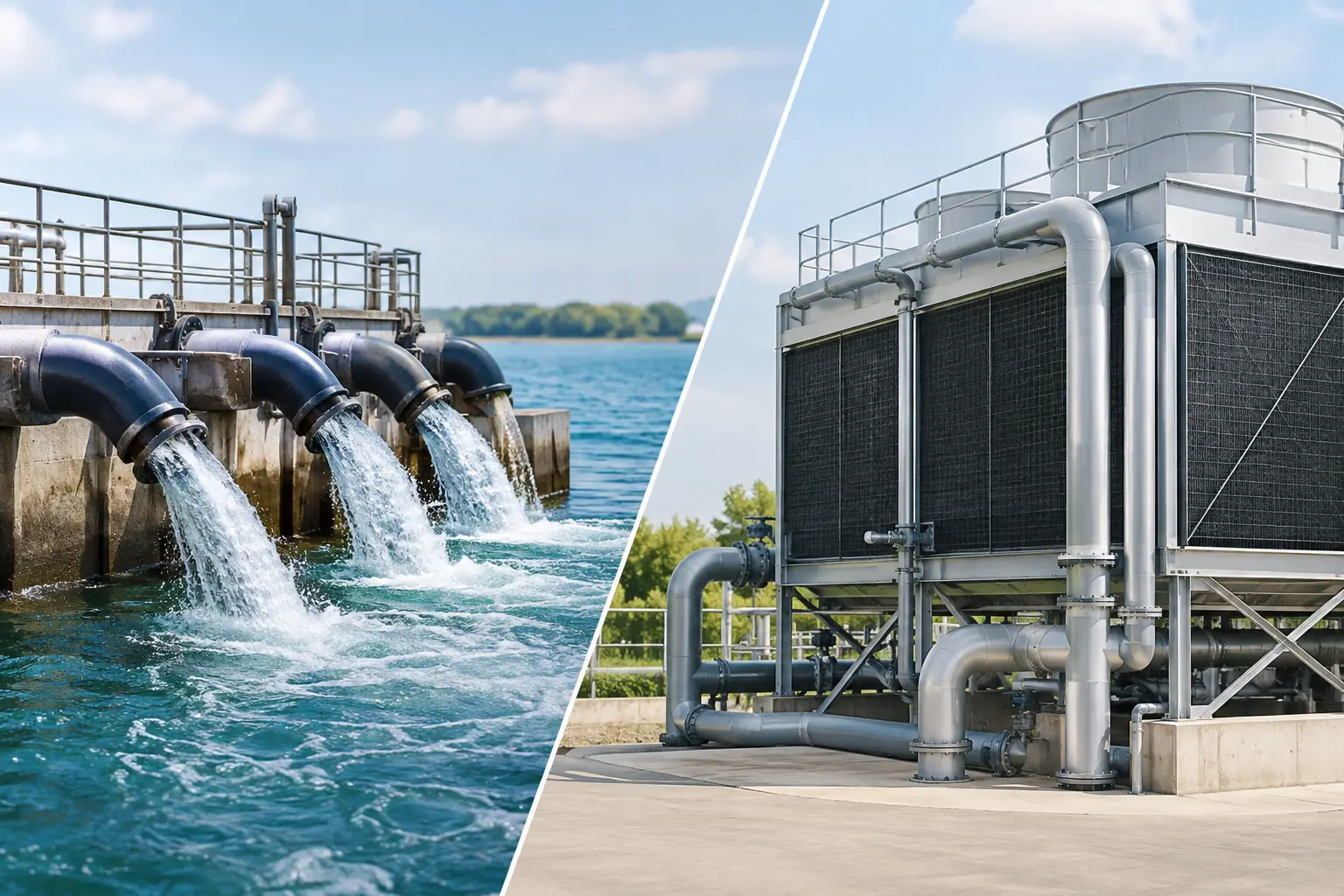
A cooling-system problem rarely starts with a dramatic alarm. More often, it starts with a temperature gauge that runs slightly higher than usual, a weak discharge at the exhaust, or rust-colored residue around a hose connection. Understanding raw water versus closed cooling helps you recognize what your engine needs before a small restriction, leak, or corrosion issue becomes an expensive day off the water.
For yacht owners, captains, and fleet operators in South Florida, cooling decisions carry extra weight. Warm water, salt exposure, long idle periods, and year-round operating hours all put pressure on marine engines. The right system is not simply the one that sounds more advanced. It is the one designed for your engine, your operating conditions, and the maintenance commitment you are prepared to make.
Raw Water Versus Closed Cooling: The Basic Difference
A raw-water-cooled engine pulls outside water through a seacock, strainer, hoses, and raw-water pump. That water moves through the engine’s cooling passages, absorbs heat, and is then discharged, usually through the exhaust system. It is a direct approach with fewer major components than a closed cooling system.
A closed cooling system uses treated coolant inside the engine, much like an automotive cooling system. The coolant circulates through the engine block and cylinder heads, then transfers its heat through a heat exchanger. Raw water still enters the boat, but it stays on the other side of the heat exchanger and is discharged after carrying heat away. On many marine diesel installations, raw water also cools other components such as charge-air coolers, transmission coolers, oil coolers, and exhaust equipment.
That distinction matters: a closed cooling system does not eliminate raw water from the vessel. It limits raw water’s contact with the engine’s internal cooling passages.
When Raw Water Cooling Makes Sense
Raw water cooling is common on certain smaller gasoline engines, older marine engines, and applications where the engine manufacturer designed the package around direct seawater circulation. Its simpler layout can mean fewer parts to inspect, and it may be practical for a boat operating primarily in fresh water.
In saltwater, however, direct raw water exposure can create a long-term corrosion concern. Salt, minerals, marine growth, and silt can collect inside cooling passages. Over time, that buildup reduces heat transfer and restricts water flow. The engine may run hotter even when the pump, thermostat, and gauge appear to be functioning normally.
For a vessel that is already equipped with raw water cooling, the best answer is not automatically a conversion. A properly maintained raw-water system can perform reliably. The key is staying ahead of impeller wear, clogged strainers, deteriorated hoses, corroded fittings, and internal scale. Skipping those checks because the boat is running normally is where owners get caught off guard.
Why Closed Cooling Is Common on Diesel Yachts
Closed cooling is often preferred for larger diesel engines because it protects expensive internal engine components from direct saltwater exposure. The engine operates with the correct coolant mixture, helping control corrosion inside the block and heads while maintaining stable operating temperatures.
That protection is especially valuable on high-value engines from manufacturers such as CAT, MAN, and MTU. Rebuilding or replacing heat-damaged diesel components is not a minor repair. A closed system helps reduce one source of risk, provided the system itself receives proper service.
The trade-off is complexity. Heat exchangers, expansion tanks, pressure caps, coolant hoses, circulation pumps, zinc anodes, and multiple auxiliary coolers all require inspection. If a heat exchanger becomes restricted or a cooler bundle corrodes, the engine can still overheat. Closed cooling gives you better engine protection, but it is not permission to ignore the raw-water side of the system.
The Heat Exchanger Is the Middleman
Think of the heat exchanger as a controlled transfer point between two separate systems. Engine coolant flows through one set of passages. Raw water flows through another. Heat moves across the metal walls without the two fluids mixing.
When the exchanger is clean and properly maintained, it efficiently removes engine heat. When tubes become blocked with scale, zinc debris, marine growth, or sediment, cooling capacity drops. A restriction may be difficult to see from the outside, which is why a proper cooler service can be more valuable than replacing parts based on guesswork.
Which System Is Better for Your Boat?
For a new installation or repower, follow the engine manufacturer’s approved cooling configuration. The system is engineered around water flow, operating temperature, exhaust design, and component materials. Changing that design without a complete plan can create new problems, including incorrect temperature control or insufficient exhaust cooling.
For an existing boat, the decision depends on the vessel’s engine, age, use, and operating environment. A saltwater boat with an engine designed for closed cooling generally benefits from keeping that system in top condition. A raw-water-cooled engine may remain the right fit when it is maintained correctly and the cost of conversion does not make practical sense.
A conversion from raw water to closed cooling can be worthwhile in certain applications, especially when protecting a serviceable engine from continued saltwater exposure. But it is not a one-size-fits-all upgrade. The project must account for heat-exchanger sizing, raw-water flow, hose routing, exhaust temperature, mounting space, and compatibility with the engine. A technician should inspect the complete installation before recommending it.
Warning Signs That Need Attention
Cooling problems tend to announce themselves before they cause major damage. Do not treat these symptoms as normal behavior, particularly on a diesel yacht that runs under load for extended periods:
- A rising temperature gauge or intermittent overheat alarm
- Reduced water flow at the exhaust discharge
- Steam, an unusual exhaust smell, or hot rubber odor
- Coolant loss, low expansion-tank level, or visible leaks
- Corrosion around coolers, hose connections, clamps, or fittings
- An engine that runs normally at idle but heats up at cruising RPM
An engine that overheats only at higher RPM often has a flow or heat-transfer problem that is not obvious at the dock. A damaged impeller, restricted intake, plugged exchanger, collapsing hose, or fouled cooler can all reduce cooling capacity when demand increases. Continuing to run the engine can turn a service call into a major repair.
Maintenance That Protects Both Systems
Whether your vessel uses raw water or closed cooling, the raw-water intake path deserves regular attention. Inspect the seacock, clean the strainer, check hose condition and clamps, and replace the impeller on the schedule appropriate for your engine and operating hours. An impeller can shed vanes without fully failing, sending rubber fragments downstream where they create hidden restrictions.
Closed systems also need coolant testing and replacement at the manufacturer-recommended interval. Correct coolant chemistry matters. Mixing incompatible coolant types, adding untreated water, or topping off with the wrong product can reduce corrosion protection and create deposits. Pressure caps, expansion tanks, and circulation pumps should be checked as part of the same preventive maintenance conversation.
Coolers and heat exchangers need periodic inspection, cleaning, and pressure testing based on the engine model, age, water conditions, and service history. Zinc anodes should be monitored closely. A depleted zinc no longer protects the cooler, while loose zinc material can lodge in passages and restrict flow.
Get the Diagnosis Before Replacing Parts
Cooling-system repairs are often misdiagnosed because several faults can produce the same symptom. Replacing a thermostat may not solve a restricted heat exchanger. Installing a new impeller may not restore flow if the intake is obstructed. Adding coolant does not address the reason coolant was lost.
The practical approach is a complete diagnosis: verify temperatures, inspect raw-water flow, evaluate the pump and impeller, check pressure, inspect coolers, and look for leaks or corrosion. That is how marine engine service should work – like a doctor identifying the cause before prescribing treatment.
GTM International brings certified mobile marine service directly to vessels throughout the West Palm Beach area and the South Florida coastal corridor. For engines and cooling systems on yachts from 50 to 500 feet, on-site diagnostics can save the time, hauling expense, and disruption of moving a boat to a repair yard.
Your cooling system does not need to fail to deserve attention. A scheduled inspection before a long run, an active season, or a period of heavy generator use can protect your engine, your plans, and your time on the water.
