
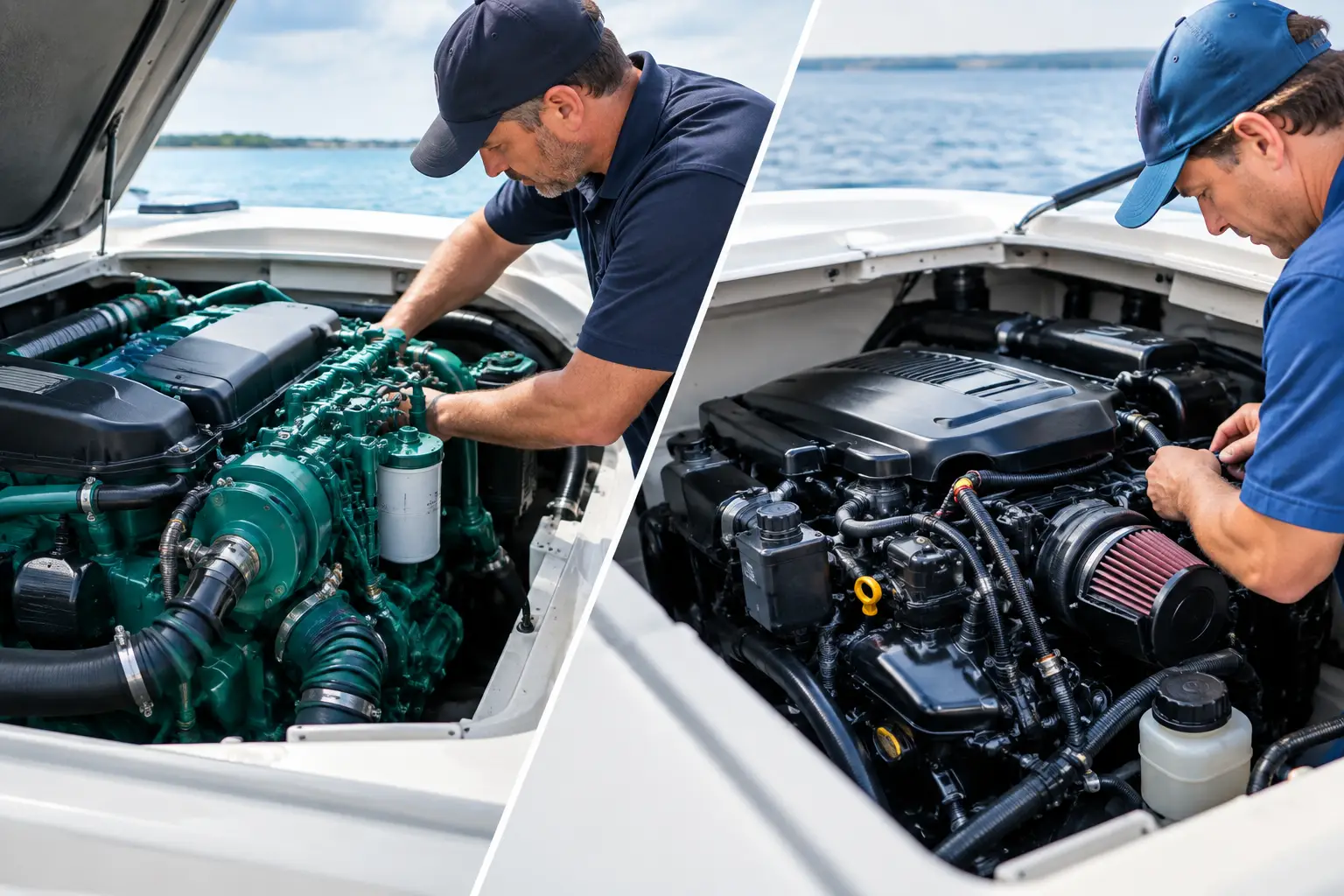
A stalled engine at the inlet is not the time to learn how diesel versus gasoline maintenance differs. Both engine types need disciplined care, but they age differently, fail differently, and call for different service priorities. For owners and captains, understanding those differences helps prevent expensive downtime and keeps a routine service visit from turning into a missed weekend or a disrupted charter.
On vessels from 50-foot sportfishers to larger yachts, diesel power is often chosen for torque, range, and long service life. Gasoline power remains common on smaller boats, tenders, center consoles, and certain performance applications. Neither is maintenance-free. The right choice is less about which engine is “better” and more about how the boat is used, where it is kept, and whether its maintenance schedule is followed without shortcuts.
Diesel Versus Gasoline Maintenance: The Core Difference
A gasoline engine relies on spark ignition. A diesel engine ignites fuel through high compression and heat. That basic difference affects nearly every maintenance decision, from fuel-system care to starting diagnostics.
Diesel engines generally operate at higher compression and depend on extremely clean fuel delivery. Their injectors, high-pressure pumps, turbochargers, charge-air coolers, aftercoolers, and exhaust components all require attention. A well-maintained marine diesel can provide thousands of hours of dependable service, but neglecting a restricted cooler or contaminated fuel system can become costly very quickly.
Gasoline engines usually have simpler low-pressure fuel systems, but they introduce their own priorities. Spark plugs, ignition coils, distributors on older engines, and flame arrestors require periodic inspection. Because gasoline vapors are highly flammable, bilge ventilation, fuel lines, fittings, and leak checks are especially critical. A minor fuel odor should never be treated as normal.
In practical terms, diesel maintenance tends to be more specialized and component-intensive. Gasoline maintenance can be less expensive for routine items, but safety inspections around fuel and vapor control carry greater urgency. Both benefit from trained marine technicians who understand the difference between an automotive-style repair and work performed in a saltwater environment.
Fuel Quality Is Not Optional
Fuel problems are one of the most common causes of avoidable engine trouble in South Florida. Heat, humidity, long periods at the dock, and inconsistent fuel turnover can create issues in either fuel type.
For diesel vessels, water contamination and microbial growth are major concerns. Diesel fuel can support microbial contamination at the fuel-water interface inside a tank. What owners often call “diesel algae” can clog filters, reduce fuel flow, and leave an engine without enough fuel under load. A boat may idle normally at the dock, then lose power when it needs fuel volume offshore.
Routine diesel service should include fuel-filter changes at the correct interval, inspection for water in the separators, and attention to fuel quality before a long run. If filters repeatedly load up, replacing filters alone is not a cure. The tank, pickup tubes, fuel lines, and contamination source need to be evaluated.
Gasoline systems also suffer when fuel sits too long. Ethanol-blended fuel can absorb moisture and may separate when conditions are poor, leaving fuel that does not burn correctly. Old gasoline can cause hard starts, rough running, injector deposits, and carburetor problems on older vessels. Keeping fuel fresh, using the correct treatment when appropriate, and avoiding long storage with neglected fuel are practical safeguards.
Cooling Systems Demand Different Attention
Marine engines live on cooling systems. Saltwater, mineral buildup, corrosion, and restricted flow can turn a small cooling issue into an overheating event that damages an engine.
Diesel engines commonly use raw-water pumps, heat exchangers, oil coolers, fuel coolers, transmission coolers, aftercoolers, and exhaust mixing components. These systems need scheduled inspection and cleaning based on engine manufacturer guidance, operating hours, and local water conditions. A restricted aftercooler or heat exchanger can raise operating temperatures, reduce performance, and contribute to serious internal damage over time.
Gasoline inboards and sterndrives also rely on sound raw-water flow, manifolds, risers, hoses, impellers, and circulating components. On saltwater boats, exhaust manifolds and risers deserve close attention because internal corrosion may not be obvious from the outside. A failure in this area can allow water into cylinders, creating a much larger repair than the original maintenance item.
The right service interval depends on the engine, its cooling design, usage pattern, and the water it operates in. A boat that runs hard year-round may need more frequent attention than one used lightly, but low hours do not eliminate corrosion risk. Time matters as much as engine hours in marine maintenance.
Oil, Filters, and the Value of Trend Monitoring
Both diesel and gasoline engines need regular oil and filter changes, but diesel oil service is often tied to heavier loads, higher soot levels, and larger oil capacities. The cost of a diesel oil change may be higher, yet it is minor compared with the cost of bearing damage, turbocharger problems, or internal wear caused by extended intervals.
A professional service visit should look beyond replacing fluids. Technicians should inspect oil condition, coolant level and quality, belts, hoses, mounts, fluid leaks, battery condition, charging output, and visible corrosion. On diesel yachts, oil analysis can add another layer of protection by identifying abnormal wear metals, fuel dilution, coolant contamination, or other developing concerns before symptoms become obvious.
Think of this process like a medical checkup. An engine may run well while an underlying issue is building. The goal is not to replace parts without reason. It is to establish a baseline, watch for changes, and address problems while they are manageable.
Electrical and Starting Issues Are Not Engine-Type Specific
Diesel owners sometimes assume a no-start condition is automatically a fuel issue. Gasoline owners may assume it is always ignition-related. In reality, marine electrical problems affect both.
Weak batteries, poor grounds, corroded terminals, faulty battery switches, charging-system failures, damaged wiring, and loose connections can all create unreliable starts or intermittent shutdowns. Salt air and bilge moisture accelerate corrosion, particularly on connections that appear fine during a quick visual check.
Diesel engines require strong cranking power to reach the compression and speed needed for starting. Gasoline engines depend on reliable voltage for ignition and fuel delivery. Either way, a proper diagnosis should test the system rather than guessing at parts. Replacing a battery when the alternator is undercharging, or changing fuel components when a connection is failing, wastes time and money.
Maintenance Costs: Where Owners Should Be Realistic
Diesel maintenance is typically more expensive per service event, especially on larger engines with multiple filters, significant oil capacity, specialized diagnostics, and cooling-system components. Parts for major marine diesel platforms such as MTU, MAN, and Caterpillar can also carry a substantial cost.
That does not mean gasoline is always the lower-cost option over the life of the boat. Gasoline engines may consume more fuel in comparable applications, have shorter useful lifespans in some heavy-duty marine uses, and require careful attention to ignition and vapor safety systems. The correct comparison depends on the vessel’s size, annual hours, load, cruising range, and resale considerations.
The most expensive maintenance approach for either engine is waiting until there is a failure. Deferred impeller replacement, ignored fuel-filter restrictions, neglected cooling components, and skipped inspections are rarely real savings. They simply move the bill to a less convenient day, often when the vessel is away from the dock.
A Practical Service Plan for Your Vessel
Owners should follow the engine manufacturer’s maintenance schedule, but that schedule should be adapted to real operating conditions. A boat used weekly in South Florida saltwater has different needs than a seasonal vessel that sits for long periods. Captains and fleet operators also need documented service history, especially when multiple people operate the vessel.
A sound maintenance plan tracks engine hours and calendar intervals, then includes routine fluid and filter service, fuel-system inspection, cooling-system service, battery and charging checks, belt and hose inspection, corrosion control, generator maintenance, and sea-trial verification when repairs affect performance. Larger yachts should also account for transmissions, steering systems, electrical equipment, and the engines that support onboard comfort and safety.
Mobile service can make that plan easier to maintain. Instead of arranging a haul-out or losing days to a repair-yard schedule for every issue, qualified technicians can come directly to the vessel for diagnostics, preventive care, and many repairs. GTM International provides mobile marine support throughout the West Palm Beach and South Florida coastal corridor, helping owners protect uptime without adding unnecessary logistics.
When an engine begins smoking, losing RPM, overheating, starting hard, showing alarm codes, or consuming more fuel than normal, do not wait for the next scheduled service. Those are the moments when a prompt inspection can protect the engine and get you back out at sea with less time, money, and stress.
