
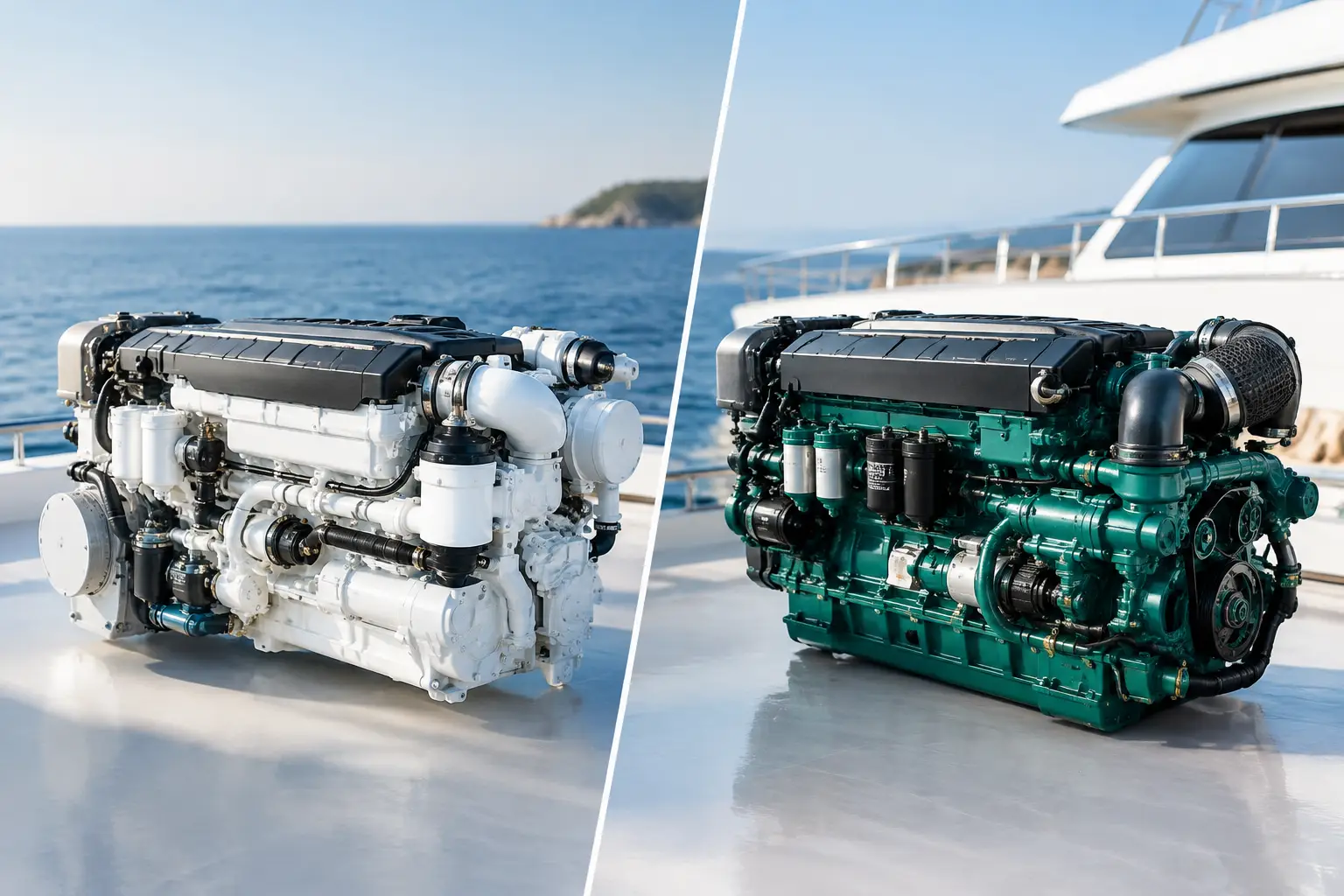
A choice between MTU versus MAN engines is rarely settled by horsepower alone. On a 50- to 500-foot yacht, the better fit comes down to the vessel’s intended use, engine-room layout, operating habits, service history, and the quality of support available when something needs attention. Both brands power serious yachts around South Florida, and both can deliver years of dependable operation when they receive the right care.
For an owner or captain, the practical question is not which nameplate is universally better. It is which engine package best supports safe, predictable operation and reasonable lifetime ownership costs for your boat.
MTU Versus MAN Engines: The Core Difference
MTU and MAN are both respected marine diesel manufacturers with strong roots in high-output yacht propulsion. Their engines are commonly found in premium sportfish boats, motor yachts, express cruisers, and larger custom vessels. Each brand offers modern electronic engine management, turbocharged diesel performance, and model ranges designed for demanding marine applications.
MTU is often associated with high-horsepower installations, refined running characteristics, and a substantial presence in larger yachts. Many owners value the brand’s engineering reputation and the widespread familiarity it has among captains, brokers, and yacht service professionals. Depending on the series and rating, MTU engines may be selected for vessels where sustained speed, smoothness, and high output are priorities.
MAN has earned a strong following for powerful, compact engine packages that can work particularly well where engine-room space is tight. MAN engines are common in performance-oriented yachts and sportfishing boats, where a favorable power-to-weight relationship can matter. The right MAN installation can provide impressive acceleration and cruise performance without requiring an oversized machinery space.
Those broad distinctions are useful, but they should never replace an inspection of the specific engines in question. A well-maintained older engine from either manufacturer can be a wiser purchase than a newer engine with incomplete records, poor cooling-system care, or repeated alarm history.
Performance Is More Than the Rated Horsepower
Horsepower gets attention because it is easy to compare on a specification sheet. In real operation, engine performance depends on how the engines, gears, props, hull, load, and operating profile work together.
An MTU-powered yacht may appeal to an owner who wants a proven high-output platform for a larger motor yacht or who values a particular cruising feel. A MAN-powered boat may be attractive where the builder has designed the vessel around a compact, high-power installation. Neither outcome is automatic. A poor propeller match, overloaded vessel, dirty running gear, or restricted exhaust can make even an excellent engine package feel underpowered.
Captains should also consider the way the boat will actually be used. A yacht that runs long distances at a consistent cruise has different needs than a boat used for short weekend runs, frequent high-speed operation, or extended idling at the dock. Diesel engines generally benefit from reaching proper operating temperature and carrying appropriate load. Engines that spend most of their lives lightly loaded or sitting unused can develop maintenance problems regardless of the badge on the valve cover.
When evaluating a boat, look beyond top speed. Ask about normal cruise rpm, fuel burn, loaded performance, vibration, smoke, engine temperature stability, and whether the engines reach rated rpm during a proper sea trial. These details tell a more useful story than a brochure number.
Maintenance Requirements Drive Ownership Costs
The cost difference between brands is often less about routine oil changes and more about the systems surrounding the engines. Coolers, aftercoolers, heat exchangers, raw-water pumps, injectors, turbos, sensors, exhaust components, and electronic controls all require attention over time.
Saltwater is the common enemy. In South Florida, neglected raw-water cooling circuits can turn a manageable service interval into an expensive repair. Restricted cooling passages may cause elevated temperatures, reduced performance, corrosion, or damage to more costly components. Whether a yacht has MTU or MAN engines, cooler service should be based on manufacturer guidance, engine hours, vessel use, water conditions, and inspection findings rather than guesswork.
Electronic diagnostics also matter. Modern marine diesels store fault information that can help identify issues early, but codes are only part of the diagnosis. A qualified technician still needs to verify pressures, temperatures, electrical supply, fuel delivery, cooling flow, and mechanical condition. Treating an alarm by replacing the first part mentioned by a scan tool is like prescribing medicine without examining the patient.
This is where preventive maintenance pays for itself. A documented maintenance plan helps catch leaking hoses, weakening belts, contaminated fuel, degraded mounts, failing batteries, and cooling-system issues before they create an offshore problem or a major downtime event.
Service Records Matter More Than Marketing Claims
For buyers comparing two similar yachts, service documentation deserves close attention. Look for regular oil and filter changes, cooling-system service, valve or injector work where applicable, diagnostic reports, repair invoices, and records of any major alarms or overheating events.
Ask whether repairs were performed to address the root cause. For example, a replaced raw-water pump is useful information, but it does not confirm that coolers were cleaned, intake restrictions were checked, or the system was tested afterward. Complete records show a pattern of care. Gaps in records create uncertainty, and uncertainty should affect the purchase decision and budget.
Parts, Service Access, and Downtime
Both MTU and MAN engines need technicians who understand the brand, have appropriate diagnostic capability, and know the vessel systems connected to the engine. That includes fuel, cooling, electrical, controls, exhaust, steering, and generator systems. An engine issue can sometimes begin outside the engine itself.
Parts pricing and availability vary by engine series, age, and component. High-performance marine diesel parts are not inexpensive, and a seemingly minor failure can become costly if it leads to overheating, water intrusion, or a missed maintenance interval. Owners should avoid assuming one brand will always be cheaper to repair. The specific model, local inventory, support network, and condition of the existing installation have more influence than a blanket brand comparison.
Mobile service can reduce a major source of expense: moving a disabled or inconveniently located vessel to a yard. For many routine inspections, diagnostics, maintenance tasks, cooler work, and repairs, an experienced marine technician can come directly to the dock. That saves time, reduces logistical stress, and allows the technician to see the engine in its normal operating environment.
GTM International provides mobile marine engine service throughout the South Florida coastal corridor, helping owners and captains address MTU, MAN, CAT, generator, electrical, and steering concerns where the vessel is located. For a boat that needs a prompt professional assessment, that can mean less downtime and fewer surprises.
Choosing the Right Engine Package for Your Yacht
If you are shopping for a yacht, do not choose solely because you have heard that MTU or MAN is the preferred brand. Start with the boat as a complete system. Confirm that the engines are appropriate for the hull, that the machinery space is accessible, and that the prior owner maintained the boat to a high standard.
A pre-purchase inspection should include more than a visual engine-room walkthrough. The engines should be evaluated cold and at operating temperature, ideally alongside a sea trial and a review of electronic diagnostic information. Inspectors should look for fluid leaks, corrosion, abnormal smoke, improper temperatures, charging problems, fuel-system concerns, cooling-system condition, and evidence of past overheating or water intrusion.
For current owners, the decision may be simpler. If your existing engines are healthy, properly maintained, and suited to your operating needs, the best investment is usually disciplined preventive care. Repowering is a major project that can affect mounts, gears, shafts, controls, exhaust, ventilation, weight distribution, electrical systems, and resale value. It should be considered only after a realistic assessment of repair cost, remaining engine life, and the boat’s overall condition.
The Better Choice Is the One You Can Maintain Properly
MTU and MAN both make capable marine engines, and either can be an excellent fit in the right yacht. The better choice depends on the specific engine series, the installation, how the vessel is run, and whether the owner keeps ahead of maintenance instead of reacting to breakdowns.
Before your next long run, schedule a professional engine evaluation if temperatures have changed, alarms are appearing, performance feels off, or service records are incomplete. Catching a cooling, fuel, or electrical issue at the dock is almost always easier on your schedule and your budget than discovering it when you are trying to get back out at sea.
