
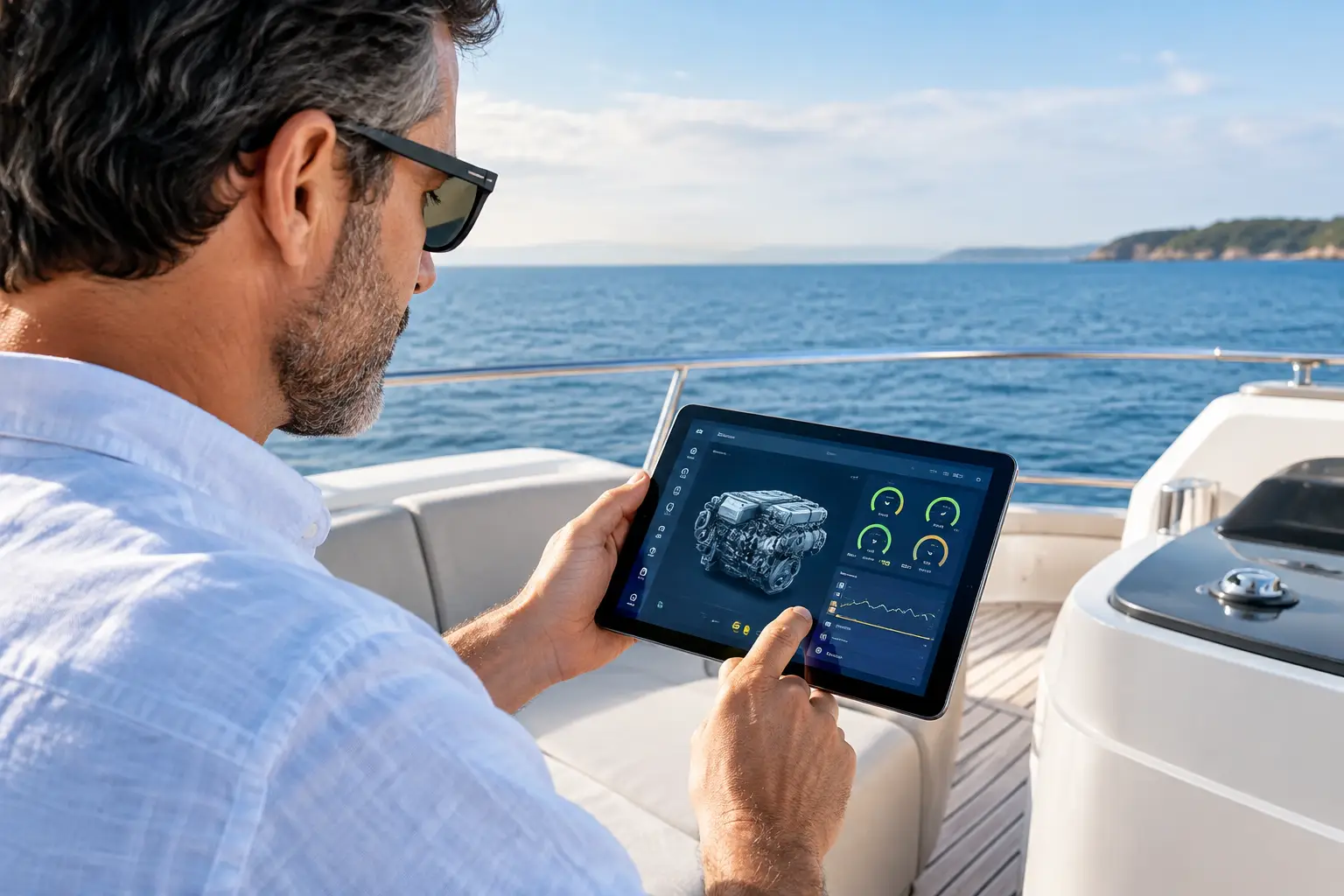
A high-temperature alarm is useful. Seeing the temperature rise gradually over several trips, before it reaches the alarm point, is far more useful. That is the real value behind remote engine monitoring trends: moving from reacting to a warning light to recognizing the early signs of a developing problem.
For yacht owners, captains, and fleet operators along the South Florida coast, the appeal is obvious. A vessel may sit at a dock for days, run hard during a weekend trip, or travel between marinas with limited time for inspection. Remote monitoring can keep key engine and onboard-system information visible between visits, helping owners make informed maintenance decisions before a small issue becomes a canceled trip, a tow, or an expensive repair.
What Remote Monitoring Is Changing
Remote monitoring uses sensors, onboard gateways, and cellular, satellite, or marina Wi-Fi connections to send vessel data to an app, dashboard, or service team. The equipment can report selected values while the boat is running, and in some cases while it is unattended at the dock.
The best systems are not simply adding more alarms. They are providing context. Instead of receiving a generic low-voltage notification, an owner can see whether battery voltage has been declining over several days, whether the charger is keeping up, or whether a bilge pump is cycling more often than usual. Instead of only learning that an engine overheated, a captain may be able to identify a trend in coolant temperature, raw-water flow, or load-related performance.
For vessels with MTU, MAN, Caterpillar, and other major diesel platforms, factory-supported electronic data can be especially valuable. It may reveal fault codes, engine hours, operating temperatures, pressures, RPM, load, and other parameters. The exact data available depends on the engine model, its electronic controls, and the monitoring system installed.
The Most Useful Remote Engine Monitoring Trends
The shift toward predictive maintenance is the trend that matters most. Traditional preventive maintenance still follows hour intervals, calendar schedules, and manufacturer recommendations. Those remain essential. But condition data can help a qualified technician decide when an inspection should happen sooner rather than later.
Trend Data Is More Valuable Than a Single Reading
An oil-pressure reading can look normal on one outing and still tell an important story when compared with prior runs at the same RPM and operating temperature. The same applies to coolant temperature, boost pressure, fuel consumption, voltage, and exhaust temperature where applicable.
A gradual departure from a vessel’s normal baseline may point to restricted cooling flow, a fouled heat exchanger, a weakening battery bank, a fuel-delivery concern, or an electrical issue. It does not automatically diagnose the failed part. It tells the owner and technician where to look first.
This distinction matters. Remote data can shorten diagnostic time, but it does not replace a hands-on inspection, fluid sampling, pressure testing, or manufacturer-level diagnostics. Think of it as the monitoring equipment that helps the doctor ask better questions before arriving at the patient.
More Attention to Dockside Systems
Engine information gets most of the attention, but many expensive vessel problems begin when the engines are off. Owners are increasingly monitoring shore power, AC and DC voltage, battery state, bilge activity, high-water sensors, cabin temperature, smoke detection, and generator status.
For a yacht left unattended during a summer storm or a period of heavy rain, an abnormal bilge-pump cycle is not a minor notification. It may be the first indication of water intrusion, a failed float switch, or a pump that is running without moving water. Shore-power loss can affect battery charging, climate control, refrigeration, and onboard electronics. A remote alert gives the owner a chance to arrange a response before secondary damage builds.
Generator Monitoring Is Becoming a Priority
A generator is often treated as a supporting system until it fails at the worst possible time. On larger yachts, it supports comfort, refrigeration, charging, navigation equipment, and critical onboard loads. Monitoring generator hours, run status, voltage, frequency, temperature, and fault conditions can make maintenance planning more precise.
It also helps identify questionable operating patterns. Frequent short runs, repeated overload conditions, or unexplained shutdowns deserve attention. A remote notification cannot repair a generator, but it can prevent the problem from being discovered only after guests arrive or a vessel is preparing to depart.
Better Alerts, Fewer False Emergencies
Early monitoring systems often created notification fatigue. If an owner gets an alert for every routine voltage fluctuation or brief connection interruption, the important alerts lose their impact.
Current systems are moving toward customizable thresholds, delayed alerts, and escalation rules. For example, a brief shore-power interruption may not require a callout. A prolonged loss combined with declining battery voltage may. A good setup reflects the vessel, how it is used, what systems remain active at the dock, and who is responsible for responding.
The goal is not constant surveillance. It is useful information that prompts the right action at the right time.
What Monitoring Cannot Do
Remote systems can create a false sense of security when owners assume a dashboard replaces regular service. It does not. A sensor only reports the condition it is designed to measure, and a reading is only as dependable as the sensor, wiring, calibration, network connection, and installation behind it.
A cooling restriction may develop before it produces a meaningful temperature change. A corroded connection may work intermittently. A fuel leak, belt condition, hose deterioration, or exhaust-system concern may need a trained set of eyes and hands to identify. That is why scheduled engine inspections, cooler service, fluid checks, and preventive maintenance remain the foundation of dependable operation.
There is also a practical privacy and security question. Monitoring systems collect vessel location, operating history, and system data. Owners should know who can access that information, how accounts are secured, whether software is kept current, and what happens if the system’s service plan ends. The lowest-cost device is not always the best choice if support, data access, or security is unclear.
Choosing the Right Setup for Your Vessel
The right monitoring package depends on the boat, not on the longest available feature list. A center-console with outboards has different priorities than a 90-foot diesel yacht with twin mains, generators, multiple battery banks, and shore-power equipment.
Start with the systems that can cause the greatest downtime or damage if they fail unnoticed. For many yacht owners, that means engine alarms and fault data, battery and shore-power status, bilge activity, high-water alerts, generator information, and location or security monitoring. A vessel that spends long stretches unattended may benefit from broader dockside coverage. A charter vessel or frequently operated yacht may place more value on engine trends, maintenance hours, and real-time operating data.
Installation quality is just as important as the hardware. Marine electrical systems operate in heat, vibration, moisture, and salt air. Wiring must be protected, connections must be properly made, sensors must be suitable for the system, and the installer must understand how new equipment interacts with existing electronics. Improperly added monitoring equipment can create nuisance alarms, drain batteries, interfere with data networks, or complicate future diagnostics.
Turning Data Into Faster Service
The greatest benefit comes when monitoring is tied to a clear response plan. Decide who receives alerts first, what conditions require an immediate call, and what information should be saved for the service technician. Screenshots, timestamps, engine hours, RPM, load, and the conditions under which an alert occurred can make a diagnostic visit more efficient.
For example, a captain who reports that a port engine showed rising temperature at cruise RPM after 45 minutes, along with the recorded readings and any alarms, provides a far stronger starting point than a general report that the engine “ran hot.” That can save time, reduce unnecessary parts replacement, and help a mobile technician arrive prepared.
GTM International can bring certified marine diagnostic and repair support directly to vessels throughout the West Palm Beach and South Florida coastal corridor. When remote data points to a concern, a qualified technician can verify the condition onboard and recommend the repair or maintenance that actually fits the vessel’s needs.
Remote monitoring works best when it supports experienced service rather than trying to replace it. Set meaningful alerts, keep up with manufacturer-recommended maintenance, and treat unusual trends as an early appointment request – not a reason to wait for a breakdown at sea.
