
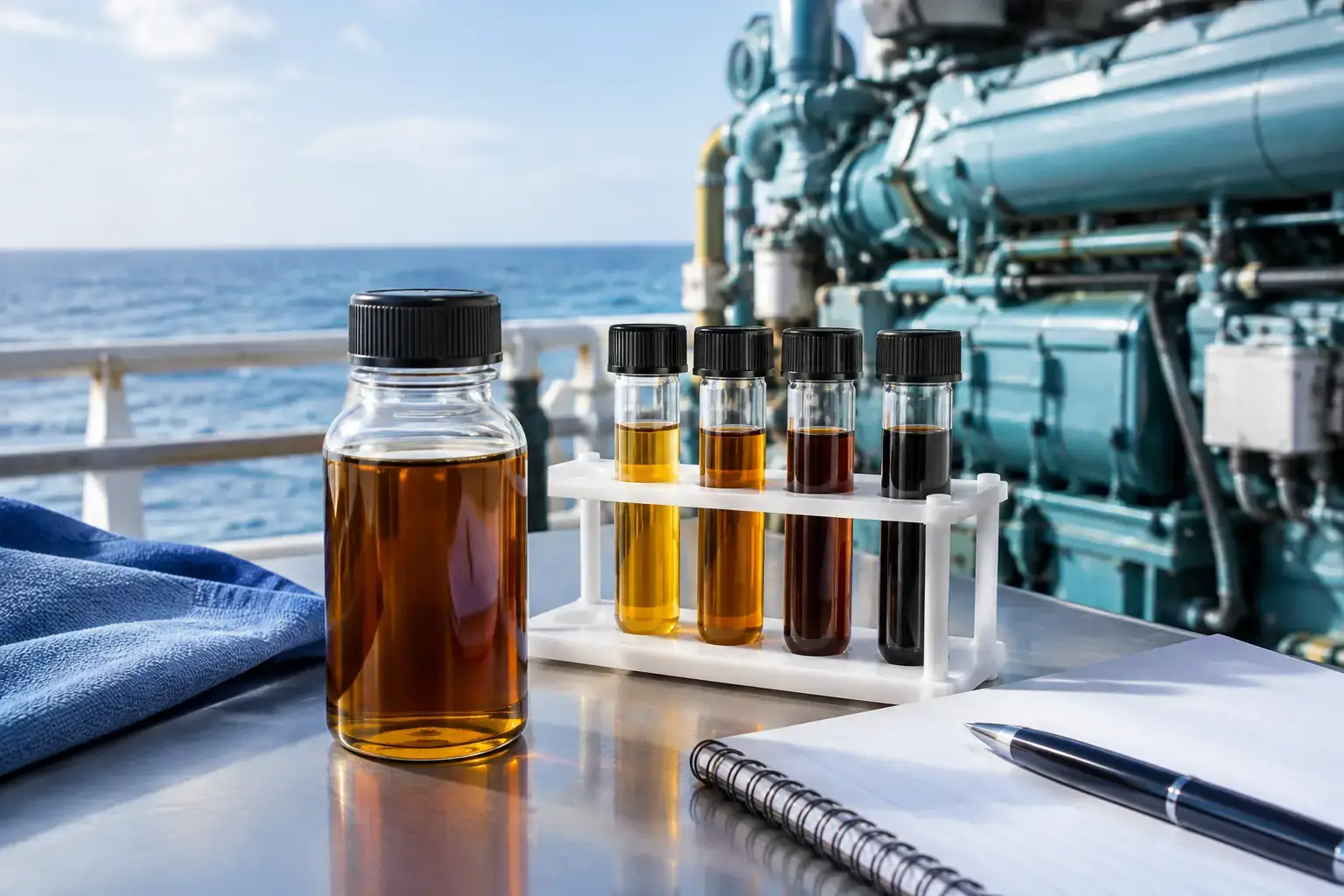
A clean-looking dipstick can hide a costly problem. Long before a marine diesel loses power, overheats, or leaves a captain with an alarm at the inlet, its oil may show early evidence of wear, contamination, or an internal fluid leak. Oil analysis gives owners and captains a practical way to see those warning signs while there is still time to plan a repair instead of react to a breakdown.
For yachts and commercial vessels operating along the South Florida coast, that matters. Heat, humidity, extended idling, short runs, heavy loads, and long periods at the dock all affect engine condition. A laboratory report is not a replacement for a qualified marine technician, but it is one of the most useful diagnostic tools available for protecting high-value diesel engines, generators, and certain transmissions.
What Oil Analysis Actually Tests
An oil sample is a small record of what is happening inside a machine. A qualified laboratory evaluates the lubricant for its condition and for materials suspended in it. The report typically measures wear metals, contamination, additive levels, viscosity, soot or oxidation, and water content.
The goal is not simply to decide whether the oil is “good” or “bad.” A meaningful report looks for changes that could point to developing trouble. Elevated iron may suggest cylinder, camshaft, or gear wear. Copper can come from bearings, bushings, oil coolers, or other components, depending on the engine and its service history. Aluminum, chromium, lead, tin, and silicon each add another piece to the diagnostic picture.
A single metal reading rarely proves a component has failed. Engine model, oil type, hours, recent repairs, break-in periods, and sample quality all matter. That is why experienced interpretation is as important as the laboratory numbers themselves.
Contamination Is Often the Bigger Story
Oil should lubricate and protect. When outside material gets into it, protection drops quickly. Fuel dilution can thin the oil and reduce its ability to protect bearings and other loaded surfaces. It may result from injector issues, excessive idling, incomplete combustion, or operating conditions that keep an engine from reaching normal temperature.
Coolant contamination deserves immediate attention. Glycol, sodium, potassium, or other markers can indicate a leaking oil cooler, head gasket issue, cracked component, or another path between cooling and lubrication systems. In a marine environment, a cooler problem should never be ignored. What begins as a small internal leak can turn into bearing damage and a much larger repair bill.
Saltwater intrusion and excess water are also serious concerns. Water can promote corrosion, compromise the oil film, and accelerate internal damage. The source may not always be obvious, which is why testing should lead to a targeted inspection rather than an assumption.
Why Trend Data Matters More Than One Report
The most valuable oil analysis program is consistent. Taking one sample after years without testing can still uncover a problem, but it does not establish what is normal for that specific engine. A trend built over several services gives technicians a far better view of whether wear is stable, improving, or moving in the wrong direction.
For example, a modest iron reading may be normal for an engine with a known operating history. If the next two samples show that iron climbing sharply, however, the change deserves attention even if the result has not reached a lab’s general alarm limit. The same is true for viscosity, fuel dilution, copper, and coolant markers.
This is especially useful for vessels with MTU, MAN, and Caterpillar diesel platforms. These engines are built for demanding service, but they also represent a major investment. Tracking oil condition and wear trends helps owners schedule inspections around a real concern rather than waiting for a fault code, lost performance, or an unexpected no-start situation.
When to Take an Oil Sample
Oil analysis works best when sampling follows a repeatable routine. For most engines, the sample should be taken while the oil is warm and well circulated, before an oil change, from a clean sampling port or during a controlled midstream drain. Pulling oil from the bottom of a dirty drain pan is not useful. It can introduce debris that was never circulating through the engine and produce misleading results.
Record the engine hours, oil hours, oil brand and grade, makeup oil added, recent maintenance, and any operating concerns. If an engine has been overheating, smoking, idling excessively, losing coolant, or showing a pressure change, include that information. Context helps a technician connect lab results to what is happening aboard the vessel.
The right interval depends on the engine, its duty cycle, manufacturer guidance, oil condition, and operating environment. Many owners sample at each scheduled oil service. Higher-hour vessels, charter operations, generators, or engines with a developing concern may justify more frequent testing. There is no value in testing on a calendar alone if the interval does not match how the vessel runs.
What an Abnormal Report Should Trigger
An abnormal oil report is a reason to investigate, not a reason to panic. First, confirm that the sample was collected correctly and compare it with prior results. A technician may recommend resampling to rule out contamination during collection, particularly when a result is unexpected and the engine shows no related symptoms.
If the findings are confirmed, the next step should be specific. Fuel dilution may call for checking injectors, combustion performance, operating temperature, and service practices. Coolant indicators may require pressure testing, cooler inspection, or a closer look at the cooling system. Elevated metals could lead to filter inspection, crankcase evaluation, borescope work, oil pressure checks, or further diagnostics based on the engine model.
This approach saves money because it narrows the search. Instead of replacing parts based on guesswork, the technician can focus on the systems most likely to be involved. It also gives the owner a chance to schedule work at the dock or marina before a minor concern becomes a service-yard emergency.
Oil Analysis Is Not a Standalone Diagnosis
A lab report cannot listen to an engine, check exhaust temperature, inspect a cooler, verify oil pressure, or identify a loose electrical connection. It is one diagnostic tool among several. The strongest maintenance decisions combine oil analysis with service records, manufacturer intervals, visual inspections, onboard alarms, engine data, and a technician’s experience.
There are trade-offs as well. Testing adds a small cost and requires consistency, but it can prevent a far more expensive failure. On the other hand, treating every elevated number as proof of a major internal problem can lead to unnecessary work. The practical answer is to use the report as evidence, then confirm the cause before committing to repairs.
For vessels from 50 to 500 feet, mobile support can make that process much easier. GTM International can come directly to the vessel for marine diesel diagnostics, preventive maintenance, cooler service, generator work, and repairs, helping owners avoid the delay and expense of moving a boat to a yard when on-site service is appropriate.
Build Oil Analysis Into Preventive Maintenance
The best time to think about an engine problem is before it affects a weekend departure, a charter schedule, or a trip offshore. Keep samples consistent, retain every report, and review changes instead of filing them away. If a trend changes or an engine begins showing symptoms, bring in a qualified marine technician while the vessel is still operating normally.
A small bottle of oil cannot predict every failure. It can, however, give your engine a voice before the problem becomes loud enough to stop the trip.
