
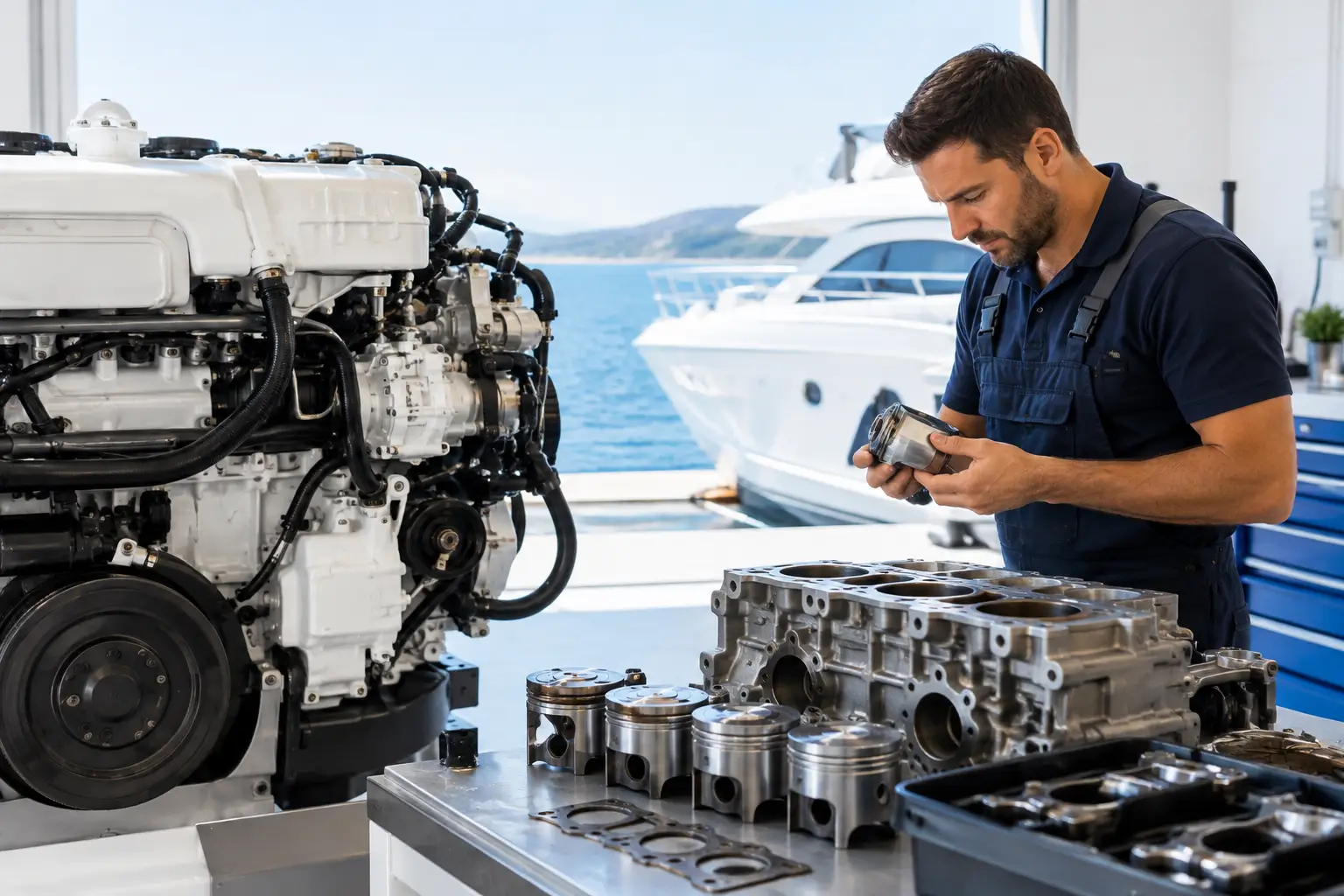
A major engine diagnosis does not automatically mean your yacht needs a full rebuild. The right engine rebuild alternatives can often correct the real failure, protect your budget, and get your vessel back out at sea without the downtime and expense of removing an otherwise serviceable engine.
For owners, captains, and fleet operators, the key is separating a confirmed internal engine problem from the symptoms that can look like one. Low power, smoke, high temperatures, oil loss, hard starts, and abnormal vibration all deserve immediate attention. But those symptoms can originate in fuel delivery, air systems, cooling components, controls, driveline issues, or a single failed cylinder component. A proper marine diagnosis should come before a rebuild decision.
Start With a Diagnosis, Not a Rebuild Quote
A diesel engine is not unlike a patient with several possible causes for the same complaint. A fever does not tell a doctor whether the problem is viral, bacterial, or something else entirely. Likewise, a high-temperature alarm does not prove that pistons, liners, or bearings have failed.
Before recommending major work, a qualified marine technician should review operating history, scan available engine data, inspect the installation, and perform targeted tests. Depending on the engine and symptoms, that can include compression or cylinder balance testing, crankcase pressure checks, oil and coolant analysis, fuel-pressure verification, turbocharger inspection, infrared temperature readings, and cooling-system evaluation.
This process matters on CAT, MAN, and MTU platforms, where accurate readings and manufacturer-compatible procedures help distinguish a worn engine from a repairable supporting-system fault. It also prevents the costly mistake of replacing major internal components when the actual issue is an aftercooler restriction, injector fault, failing sensor, contaminated fuel, or exhaust leak.
Targeted Repair: The Most Common Alternative
Targeted repair is often the best option when the engine has a specific, verified fault but its core rotating assembly remains healthy. Rather than disassembling the entire engine, the repair focuses on the component or system creating the problem.
A cylinder head repair, valve adjustment, injector service, turbocharger replacement, oil-cooler repair, or fuel-system correction can restore performance at a fraction of the cost of a full overhaul. The right repair depends on test results, not assumptions. For example, one low-performing cylinder may call for injector testing and cylinder inspection before anyone recommends rebuilding every cylinder.
Cooling work is another frequent example. Saltwater-side corrosion, scale, marine growth, or a restricted heat exchanger can create temperatures that owners understandably associate with internal engine damage. Cooler cleaning, pressure testing, and repair can sometimes eliminate the overheating condition before it causes more serious harm. Waiting through repeated alarms, however, can turn a manageable cooler service into an engine repair.
Targeted work has a clear advantage: less labor, fewer parts, and less downtime. Its limitation is equally clear. It is only a sound choice when diagnostic evidence shows the engine does not have broad internal wear or damage.
Repair the Supporting Systems That Affect Engine Health
Marine engines depend on more than fuel and oil. Electrical supply, bonding, exhaust routing, shaft alignment, steering loads, seawater flow, ventilation, and generator demand can all affect performance and reliability.
A weak charging system may create electronic fault codes or unreliable starting. A restricted exhaust path can reduce power and raise exhaust temperatures. Poor alignment or a driveline issue can feel like an engine vibration. Correcting these related systems may be one of the most cost-effective engine rebuild alternatives because it addresses the operating condition that is stressing the engine in the first place.
In-Frame Overhaul When the Block Is Still Sound
An in-frame overhaul falls between a limited repair and a full engine rebuild. It generally addresses accessible wear components while the engine remains installed, provided the block, crankshaft, and major structure are within specification.
For the right engine, this may involve servicing cylinder kits, pistons, rings, liners, bearings, cylinder heads, or related components without complete removal from the vessel. The exact scope varies by manufacturer, engine model, hours, inspection findings, and access in the engine room.
The appeal is practical. Avoiding engine removal can reduce yard handling, transport logistics, and the disruption that comes with opening a larger section of the vessel. On yachts, especially where access is tight, that can save meaningful time and money.
Still, an in-frame job is not a shortcut to be used without careful measurement. If oil analysis shows serious contamination, crankshaft damage is suspected, the block has failed testing, or corrosion has compromised critical areas, a more extensive repair may be necessary. The goal is not the smallest possible job. It is the repair that will be dependable after the boat leaves the dock.
Remanufactured Engine Replacement
When an existing engine has extensive internal damage, a remanufactured replacement can be a better financial decision than rebuilding it from the ground up. This route replaces the damaged engine with a professionally remanufactured unit, typically built to defined specifications and paired with appropriate supporting-component inspection.
This approach can offer more predictable scheduling than a custom rebuild requiring machine work, parts sourcing, and multiple inspection stages. It may also make sense when the original engine has a cracked block, severe corrosion, a damaged crankshaft, or an uncertain repair history.
However, replacement cost is not limited to the engine itself. Owners should account for removal and installation, mounts, plumbing, exhaust connections, electrical integration, controls, transmission compatibility, cooling components, and commissioning. A lower engine price does not always equal a lower completed-project price.
For commercial operators and owners who place a premium on schedule certainty, a remanufactured replacement can be the practical middle ground between rebuilding an unreliable core and committing to a complete repower.
Repowering: When a Fresh Start Makes Sense
Repowering means replacing the vessel’s propulsion package with new engines, or in some cases changing engine models and related equipment. It is usually the largest investment among engine rebuild alternatives, but it can be the right move for an aging vessel with repeated failures, obsolete parts, poor fuel economy, or engines that no longer match the owner’s operating needs.
A new propulsion package can improve reliability, diagnostics, emissions compliance, and parts availability. It may also reduce fuel burn, noise, and smoke, depending on the original equipment and how the yacht is used. For a vessel intended to remain in service for many years, those benefits can outweigh the upfront cost.
Repowering requires careful planning. Horsepower, torque curves, weight, gear ratios, shafting, propellers, cooling capacity, exhaust design, controls, and available engine-room space all matter. Choosing an engine based on horsepower alone can create poor performance or expensive installation changes. A professional evaluation should consider the entire vessel, not just the old engine’s rating plate.
How to Choose Between Engine Rebuild Alternatives
The best decision usually comes down to the condition of the engine, the vessel’s intended use, and the total cost of ownership. A well-maintained engine with a localized problem may justify targeted repair. An engine with normal structural condition but measurable wear may be a candidate for an in-frame overhaul. Severe damage or corrosion may point to replacement, while an older yacht with long-term plans may justify repowering.
Operating hours are useful, but they are not a verdict. A lightly used engine can suffer from corrosion, neglected cooling systems, or long periods of inactivity. A higher-hour diesel that has received consistent oil service, load management, cooling maintenance, and professional inspections may still have years of useful life left.
Ask for evidence behind the recommendation. That should include test results, inspection findings, the expected scope of work, supporting systems that need attention, and the risks of each option. A trustworthy technician should be able to explain why a repair is appropriate and where uncertainty remains.
Protect the Decision With Preventive Care
Whatever path you choose, preventive maintenance is what keeps a repair from becoming a repeat event. Regular fluid sampling, cooler service, fuel filtration, impeller and belt inspection, electrical checks, valve service when required, and periodic sea trials help identify small changes before they become expensive failures.
For yacht owners along the South Florida coast, mobile service can also reduce the friction of acting early. GTM International brings certified, licensed, and insured technicians directly to vessels from Fort Lauderdale to Fort Pierce, helping owners avoid unnecessary hauling, coordinate repairs where the boat is located, and make informed decisions before downtime grows.
When your engine shows a warning sign, do not assume a rebuild is inevitable or postpone the diagnosis until the next trip is canceled. A timely inspection can reveal a practical repair path and give you a clearer answer about what your engine truly needs.
