
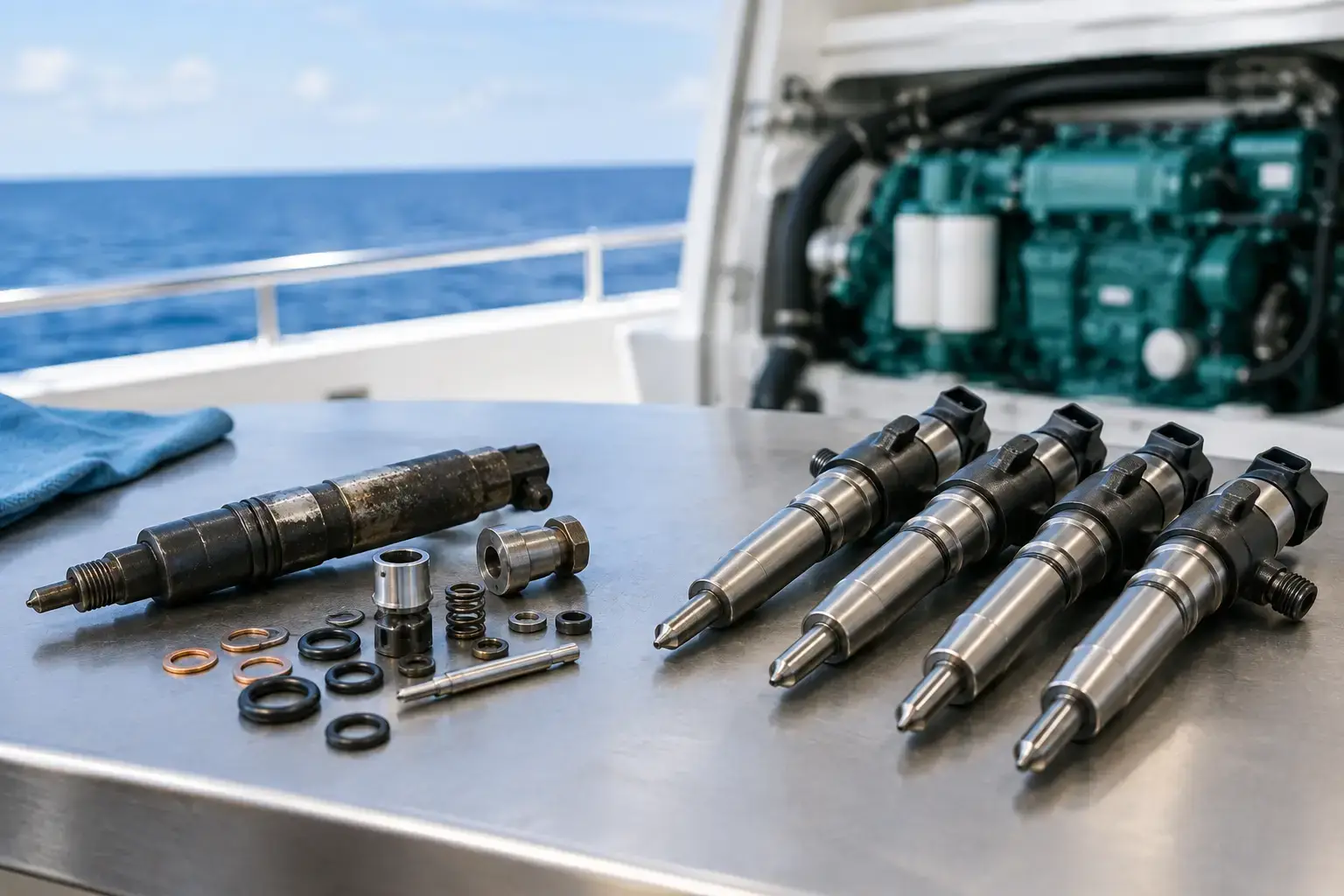
A diesel injector can look like a small component until it starts affecting a large vessel’s schedule. Rough idle, hard starts, smoke, fuel odor, rising fuel consumption, or a loss of power can all point toward an injector issue. The rebuild versus replace injectors decision is not one to make based on the part price alone. On a yacht or working vessel, the right answer depends on diagnosis, engine type, injector condition, contamination history, and how much reliability you need from the boat.
A qualified marine diesel technician approaches injectors much like a doctor approaches symptoms: confirm the cause before prescribing the treatment. Replacing injectors without testing may spend money without correcting the underlying problem. Rebuilding injectors that have reached the end of their service life can create a second repair visit when the vessel should be underway.
Rebuild Versus Replace Injectors: Start With Diagnosis
Injectors deliver fuel into each cylinder at extremely high pressure and at precisely timed intervals. When spray pattern, opening pressure, nozzle condition, or electronic control falls outside specification, combustion suffers. The symptoms can resemble other concerns, including restricted fuel supply, air leaks, turbocharger problems, valve-train faults, cooling issues, or electronic sensor failures.
Before recommending a rebuild or replacement, a technician should review the engine’s operating history and inspect the entire fuel system. That can include fuel-quality checks, filter inspection, pressure testing, cylinder balance information where applicable, visual inspection for leaks, and a scan of fault codes on electronically controlled engines. Removing and bench-testing suspect injectors may be necessary to confirm spray performance, leakage, and calibration.
This process matters especially on MAN, MTU, Caterpillar, and other modern marine diesel platforms. Many newer common-rail injectors are high-precision electronic components. A diagnosis that was appropriate for an older mechanical injector may not be sufficient for a current electronically controlled fuel system.
When Rebuilding an Injector Makes Sense
Rebuilding can be a practical, cost-conscious repair when the injector body and key internal components are serviceable. A proper rebuild is more than cleaning an injector and installing a seal kit. It may involve disassembly, ultrasonic cleaning, replacement of worn service parts, nozzle work where applicable, calibration, and bench testing to confirm that the injector meets the manufacturer’s required performance range.
For certain mechanical injectors, rebuilding is a well-established option. If contamination was caught early, the injector has not suffered severe corrosion or scoring, and quality components and calibration equipment are available, rebuilding can restore dependable operation at a lower cost than buying new injectors.
Rebuilding is often worth considering when the issue is isolated. For example, a single injector may be leaking or producing a poor spray pattern after a known fuel-quality event, while the rest of the set tests well. It may also be appropriate for older engines where new replacement injectors are expensive, difficult to source, or no longer manufactured.
The value of a rebuild comes down to workmanship and verification. An injector returned to service without correct testing is a gamble. On a marine diesel, poor injector performance can contribute to elevated exhaust temperatures, piston damage, cylinder washdown, excess smoke, and reduced engine life. Saving money on the first invoice is not a savings if the repair risks a much larger engine problem later.
When Replacement Is the Better Investment
Replacement is generally the better choice when an injector is cracked, heavily corroded, electrically compromised, severely worn, or unable to meet calibration specifications after service. It is also often the preferred path for common-rail injectors, particularly where manufacturer procedures call for new or factory-remanufactured units.
Electronic injectors can fail in ways that are not visible from the outside. Internal actuator faults, solenoid problems, damaged connectors, or calibration issues may make rebuilding impractical or unreliable. Some injectors also require coding or programming after installation so the engine control system can deliver fuel correctly. This is not a place for guesswork or generic parts.
Replacement may cost more upfront, but it can offer better confidence for vessels that run long distances, carry guests, support charter schedules, or operate commercially. A captain planning an offshore passage has different needs than an owner who uses the boat locally a few weekends each month. When downtime has a high cost, installing manufacturer-approved new or properly remanufactured injectors may be the most economical decision over the service life of the engine.
If multiple injectors are failing at similar engine hours, replacement as a set may also deserve consideration. A new injector beside several marginal ones can leave the vessel vulnerable to repeat service calls. That does not mean every injector must automatically be replaced. Test results, hours, engine condition, and budget should guide the recommendation.
The Fuel System Determines the Repair’s Success
An injector repair is only as good as the fuel system behind it. Water, microbial growth, sediment, degraded fuel, and metal debris can damage replacement or rebuilt injectors quickly. If the cause of contamination is not corrected, new parts may fail for the same reason the old parts did.
A complete repair plan may include fuel tank inspection, filter replacement, separator service, fuel polishing, line inspection, lift-pump checks, and cleaning of the fuel rail or supply system when contamination is present. On high-pressure systems, any evidence of metal can require a more extensive response. Metal debris may indicate a failing pump and can travel through the system, damaging injectors and other components.
This is where a lower parts quote can become misleading. Installing injectors without addressing dirty fuel or a failing supply component can postpone the real repair rather than complete it. The correct scope protects your engine, your schedule, and your investment in the parts being installed.
Cost, Downtime, and the Real Decision
The price difference between rebuilding and replacing injectors varies widely by engine manufacturer, injector design, availability, and the condition of the existing units. Mechanical injectors may be economical to rebuild. High-pressure common-rail units may favor replacement because of the precision involved and limited rebuild options.
Owners should also weigh labor, access, testing, and downtime. An injector installed deep in an engine room can require significant labor regardless of whether the part is rebuilt or replaced. A repair that has to be repeated weeks later is more expensive than the original invoice suggests, particularly if it interrupts a trip, charter, delivery, or maintenance window.
Ask your technician to explain three things clearly: what failed, what caused it to fail, and why the recommended repair offers the best balance of cost and reliability. You should know whether the quote includes testing, seals, coding or calibration, fuel-system cleanup, and post-repair verification. Clear answers help prevent surprise costs and give you confidence that the work is being done for the right reason.
Marine Injector Service Without the Yard Delay
Moving a yacht to a repair yard is not always practical when an engine problem appears. A mobile marine service team can inspect the vessel where it sits, evaluate the fuel system, perform diagnostics, and coordinate qualified injector testing or replacement without adding unnecessary hauling and logistics costs.
GTM International brings certified, licensed, and insured marine technicians directly to vessels throughout the South Florida coastal corridor. For diesel-powered boats and yachts from 50 to 500 feet, mobile service can reduce delay while keeping the repair focused on the full engine system, not just one suspected part.
Do not wait for a minor hard-start condition or haze of exhaust smoke to become a no-start event at the dock. Early testing gives you more repair options, while clean fuel and regular filter service give both rebuilt and replacement injectors the best chance to deliver the dependable performance your vessel needs.
