

The deep, steady hum of a high-performance diesel engine—that’s the true heartbeat of your yacht. For any yacht owner in South Florida, finding a top-tier diesel engine specialist isn’t just about routine maintenance; it's the most critical decision you'll make to protect your investment. Let's move past the generic advice and get into what it really takes to find a team that guarantees reliability when you're miles from shore.
Why Settling for a "Good Enough" Mechanic is a Gamble
That perfect weekend run over to the Bahamas can turn into a disaster in a heartbeat if your engine starts acting up. We’re not talking about finding just any mechanic with a wrench. This is about forging a partnership with a genuine expert who lives and breathes the immense pressures and precision required of high-performance marine diesels. The stakes are just too high for guesswork.
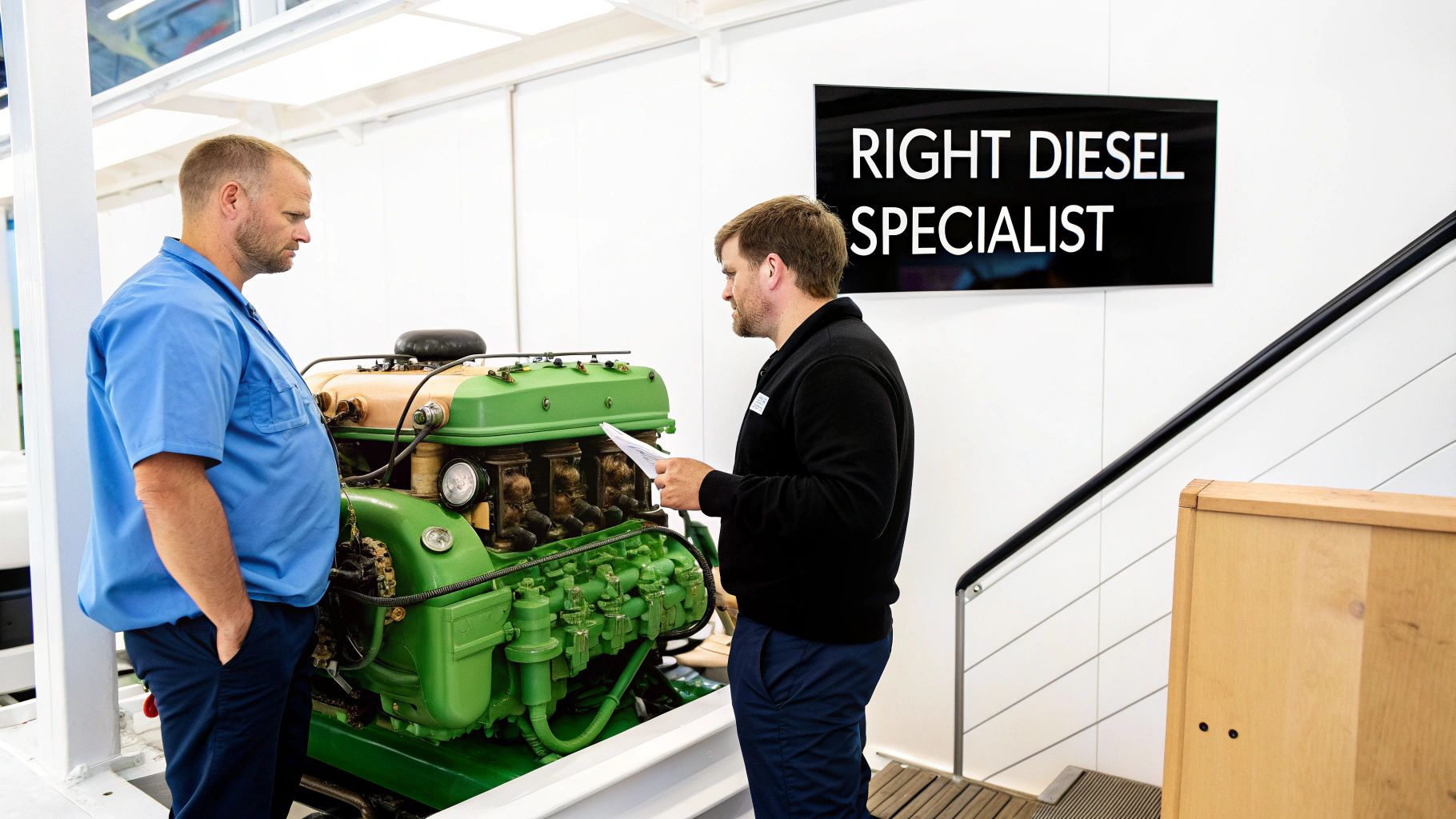
A Real-World Story: The $80,000 "Minor" Issue
Think this is an exaggeration? Let me tell you about a 70-foot sportfish that recently ran out of Fort Lauderdale. The owner noticed a slight lag in performance, so they called a general marine mechanic. The diagnosis? A simple clogged filter. Easy fix, right?
Wrong. Days later, well offshore, one of the engines suffered a catastrophic failure. A real specialist was finally brought in and quickly found the real culprit: a misdiagnosed fuel injector that had been slowly destroying a cylinder for weeks. The repair bill went from a few hundred dollars for a filter to over $80,000 for a partial rebuild.
That's the real price of cutting corners. An experienced, certified specialist would have used proprietary diagnostic software to immediately see the problematic injector data, heading off the disaster before it ever happened.
Your yacht’s engine is the last place you should ever try to save a buck. Investing in a true diesel engine specialist is the single most important decision you can make for your vessel’s longevity, safety, and resale value.
More Than a Repair: It's About Protecting Your Investment
Hiring the right team delivers something far more valuable than just a fix—it gives you peace of mind. You’re not just hiring a technician; you're gaining a partner who will:
- See problems coming: They use advanced diagnostics, not just a feeler gauge, to spot wear and tear long before it becomes a failure.
- Dial in performance: Expert tuning and maintenance mean your engines run at the peak efficiency they were designed for, saving fuel and delivering power when you need it.
- Boost your yacht's value: Nothing speaks louder to a potential buyer than a complete, documented service history from a well-respected specialist.
This guide is designed to give you the confidence and the checklist you need to choose a team that will keep your vessel—and your adventures—running without a hitch.
The Difference Between a Mechanic and a Master Specialist
Not every technician who can turn a wrench on a boat is qualified to work on the high-performance heart of your yacht. It's a critical distinction. While a general marine mechanic is often great for routine jobs, a true diesel engine specialist operates on a completely different level of expertise.
Understanding this difference is the single most important thing you can do to protect your investment and ensure your vessel is always ready for the water.
Why Manufacturer Certifications Are a Non-Negotiable
This is where factory certifications come in, and frankly, they’re everything. That plaque on the wall isn't just for show; it’s hard-earned proof that a technician has invested serious time and effort into mastering a specific manufacturer's technology—brands like MTU, MAN, or CAT.
These certifications aren't handed out lightly. They require rigorous, hands-on training directly with the engine makers themselves.
A factory-certified tech brings a toolkit to your engine room that a generalist simply can't match:
- Proprietary Diagnostic Software: They plug right into your engine’s Electronic Control Module (ECM) and see exactly what's going on—from fuel injector timing down to the millisecond to precise exhaust gas temperatures. Guesswork is eliminated.
- Specialized, Calibrated Tools: Modern marine diesels are built with incredible precision. They demand specific tools for jobs like setting valve lash or timing an injection pump. Using the wrong tool can cause thousands in damage, but a certified pro has the factory-approved equipment on their truck.
- Up-to-Date Service Bulletins: Engine manufacturers are constantly releasing technical updates. Certified specialists are on the inside track, getting critical information about potential issues or performance improvements long before anyone else.
Expert Tip: Don't ever feel shy about asking to see proof of a technician's current certification for your specific engine model. A real pro will be proud to show you their credentials. Settling for someone who just "has worked on these engines before" is a gamble you don't want to take.
This deep training translates directly into faster, more accurate work. A general mechanic might spend hours, and your money, chasing a symptom. A certified specialist, on the other hand, can often interpret the engine's own data and pinpoint the root cause in a fraction of the time.
The demand for these elite professionals is only growing. The global diesel engine market hit USD 236.5 billion and is on track to reach USD 315.3 billion by 2033. This boom underscores just how vital these specialists are. You can get a closer look at the numbers in this detailed diesel engine market report.
The Real-World Impact on Your Yacht
Let's put this into a real-world context. Imagine your MAN V12 engine develops a subtle but persistent vibration at cruising RPM. A general mechanic might start by checking the engine mounts or propeller alignment. Those are valid checks, but they could be sending them down a rabbit hole.
A MAN-certified specialist, however, will connect their diagnostic laptop first. They’ll immediately pull up the cylinder contribution data and might see that one injector is just slightly underperforming—creating an imbalance that only their proprietary software could ever detect.
This means they can replace a single, specific component instead of launching into a costly, time-consuming exploratory repair. It's the difference between a surgical strike and a blind guess. That, right there, is what defines elite service.
To make this crystal clear, let's break down the key differences.
Specialist vs. Generalist: What Yacht Owners Need to Know
This table breaks down the crucial differences between a certified diesel specialist and other mechanics, helping you make a more informed hiring decision.
| Attribute | Certified Marine Diesel Specialist | General Marine Mechanic | Standard Auto Diesel Mechanic |
|---|---|---|---|
| Primary Focus | Deep expertise in specific high-performance marine diesel brands (e.g., MTU, MAN, CAT). | Broad knowledge of various marine systems (gas, outboard, bilge, etc.). | Focused on on-road truck and automotive diesel engines. |
| Training | Rigorous, recurring factory training direct from the manufacturer. | General technical certifications (e.g., ABYC) or vocational training. | Certifications focused on automotive standards (e.g., ASE). |
| Diagnostic Tools | Manufacturer-specific software and proprietary diagnostic tools. | Generic, multi-brand scanners with limited capabilities. | Tools calibrated for highway vehicles, not marine environments. |
| Parts Access | Direct access to OEM parts, service bulletins, and factory support. | Relies on aftermarket suppliers or third-party parts distributors. | Sources parts for trucks and cars, often incompatible with marine engines. |
| Typical Scenario | Pinpoints a complex electronic fault in a MAN V12 in under an hour. | Handles routine oil changes, impeller swaps, and basic troubleshooting. | Excellent at rebuilding a Cummins for a pickup truck, but lost on a yacht. |
| Cost Structure | Higher hourly rate but often lower total cost due to speed and accuracy. | Lower hourly rate but can lead to higher costs from extended diagnostic time. | Varies, but their lack of marine-specific knowledge creates a high risk of error. |
Ultimately, choosing a certified specialist isn't just about getting a repair done. It's about protecting the heart of your vessel with the highest level of care available. For routine maintenance, a trusted general mechanic can be a great asset. But when performance, reliability, and complex diagnostics are on the line, a factory-certified specialist is the only choice.
What a Professional Engine Diagnosis Actually Looks Like
Knowing what to expect when a technician steps on board is your best defense against guesswork and surprise invoices. When you hire an elite diesel engine specialist, their process is methodical, data-driven, and transparent. It's not a quick once-over; it's a deep-dive investigation into the heart of your yacht.
The whole thing kicks off with a detailed conversation. A real pro acts like a detective, asking sharp questions about your engine's recent performance, its service history, and any little quirks you've noticed. Any odd vibrations? A new sound you can't place? A slight change in the exhaust smoke? This initial back-and-forth is crucial, giving them the clues they need to start their hunt.
The Tools of the Trade
After the chat, it’s time for the hands-on analysis, and this is where you can spot the difference between a generalist and a specialist. They'll hook up proprietary computer diagnostic software—think CAT ET for Caterpillars or MAN-cats® for MAN engines—directly to your engine’s ECU. This isn’t some off-the-shelf scanner; it's the factory-level software that sees everything, from injector performance metrics to hidden fault codes that standard tools would never find.
But it doesn't stop with the laptop. You should expect to see other high-tech gear come out. A thermal imaging camera can instantly spot heat discrepancies in the exhaust manifold or cooling system, pointing to blockages or components on the verge of failure. A borescope—a tiny camera on a flexible tube—lets them see inside the engine, inspecting cylinder walls and valve seats without a costly teardown.
This diagram shows how a technician climbs the ladder from being a general mechanic to a true, brand-certified specialist.
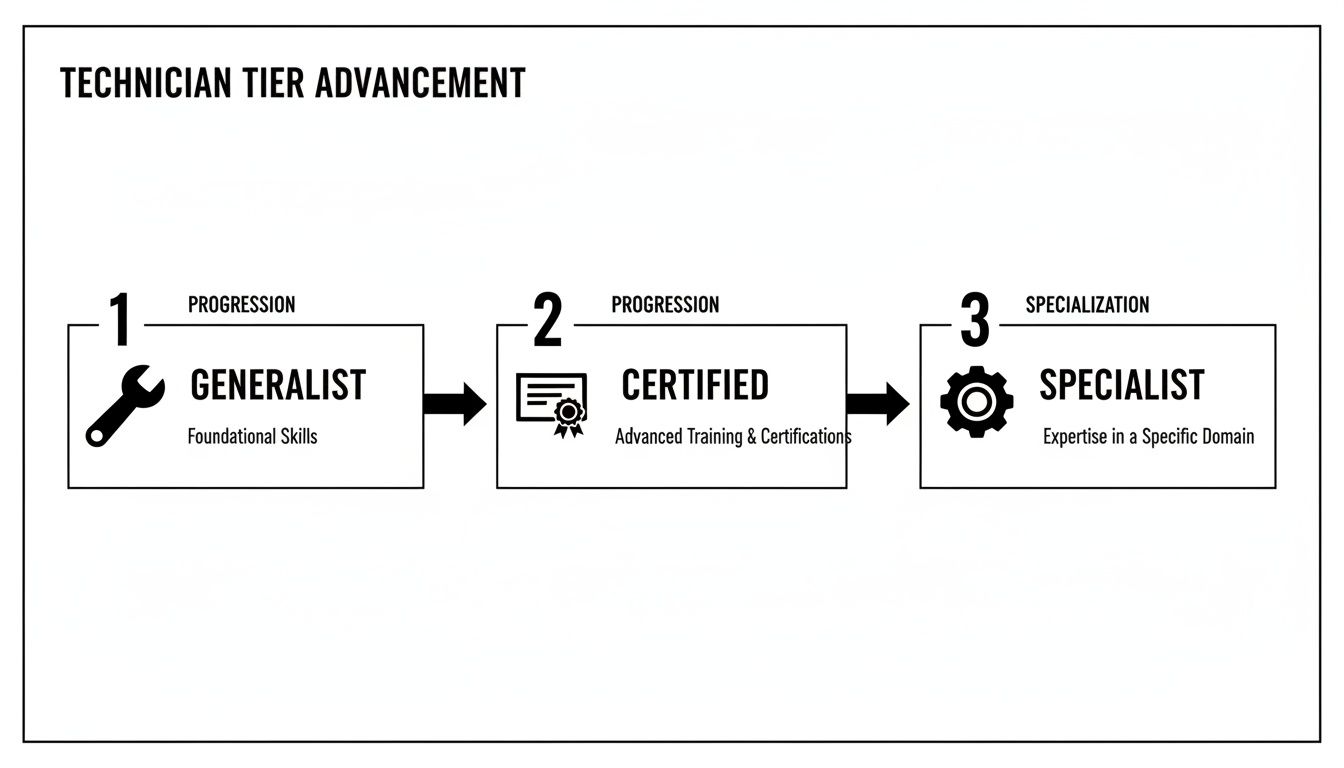
As you can see, becoming a specialist is a dedicated journey, moving from broad skills to deep, engine-specific mastery.
Transparency Is Everything
Here’s what really matters: communication. A top-tier specialist won't just disappear into the engine room and come back with a hefty quote. They’ll walk you through what they’re seeing. They'll show you the data on their laptop, point out the hot spots on the thermal images, and might even let you peek through the borescope.
They take the time to explain their findings in plain English so you know exactly why they’re recommending a specific repair. This open dialogue builds trust and puts you in the driver’s seat.
A professional diagnosis should feel like a partnership. The specialist brings the data and expertise, but you should feel like an active participant, not a bystander. If a technician can't—or won't—explain their findings clearly, that’s a massive red flag.
This level of detail is what separates the real pros from the rest. They aren't just looking for what’s already broken; they’re analyzing the data to head off future problems, making sure your engines aren't just running, but running right.
Building a Proactive Maintenance Partnership
The best way to deal with engine trouble is to make sure it never happens in the first place. This means you need to stop thinking about your marine diesel technician as just the person you call when something breaks. Instead, start seeing them as a genuine partner in your yacht’s long-term health and reliability.
This kind of partnership is built on a custom maintenance plan that goes way beyond the generic schedule in your owner's manual. A true specialist will sit down with you to map out a strategy that reflects how you actually use your boat. Are you making long hauls to the Bahamas every month, or is it mostly short trips up and down the Intracoastal? The answer completely changes what your engines need.
This isn't just about changing the oil. It’s about focusing on the critical services that prevent the most common—and costly—failures.
Beyond the Basic Oil Change
A forward-thinking maintenance schedule gets deep into the systems that keep your main engines running strong. Your specialist should be laying out a calendar for essential services that stop problems before they can start.
We’re talking about things like:
- Comprehensive Cooling System Flushes: Over time, marine growth, salt, and corrosion build up and clog the small, vital passages in your cooling system. A professional flush clears everything out, from the sea strainer to the heat exchanger, so your engines run cool under load.
- Aftercooler and Heat Exchanger Servicing: These are the lungs of your engine's cooling system. A specialist will periodically pull them, give them a deep clean, and pressure-test them to ensure they’re transferring heat perfectly and, more importantly, not at risk of catastrophic saltwater intrusion.
- Precise Fuel System Calibrations: Getting your fuel delivery dialed in isn't just about burning less fuel; it's about protecting your engine. Proper calibration prevents major headaches like injector failures and cylinder washing.
A proactive partnership means your diesel specialist knows your vessel almost as well as you do. They see what’s coming, schedule service before parts fail, and turn maintenance from a necessary evil into a strategic advantage.
The numbers back this up. The diesel power engine market is expected to explode from USD 9.7 billion to USD 19.4 billion by 2035. More telling is that specialists who use predictive maintenance have been shown to cut failure rates by 15-20%. It’s clear this kind of expertise is essential for protecting your investment. You can find more about these diesel market trends on futuremarketinsights.com.
Crafting a Robust Emergency Plan
A real partnership doesn't stop with scheduled maintenance. It has to include a rock-solid plan for when things go wrong. This is a conversation you need to have before you're stuck at the dock with an engine that won't start.
Ask them directly: What’s your guaranteed response time if I have an issue here in West Palm Beach? And just as important, what happens if I’m cruising in the Caribbean? Do you have a network?
An elite firm won’t just service you locally. They’ll have trusted relationships with other certified pros, so you can get reliable help no matter where you are. This is what turns your diesel engine specialists from just another vendor into a critical member of your crew—the one you trust to keep your adventures moving forward.
What to Expect: Costs, Timelines, and the All-Important Service Agreement
Let's talk about the two things that matter most in any major yacht repair: money and time. When you're dealing with high-performance diesel engines, navigating the financial side of things requires absolute transparency. Any true pro will give you a crystal-clear breakdown of costs before a single wrench is turned. This isn't just good business; it's about avoiding those frustrating surprise invoices and letting you budget with confidence.
In the South Florida market, you'll see a couple of common billing models. For troubleshooting or smaller, one-off repairs, it's typical to see an hourly rate plus a standard fee for travel time. But for the big, scheduled jobs—like a 1,000-hour service on a pair of MAN V12s—you should demand a comprehensive, flat-fee quote. This bundles everything—labor, standard parts, filters, fluids—into one predictable number. You know exactly what you're paying from day one.
Navigating Timelines and Parts Delays
Here’s a hard truth: good work takes time. A seasoned expert knows that a rushed job is a recipe for disaster down the line. They’ll take the time to do it right.
Sourcing genuine OEM parts can also test your patience, especially for less common or older engines. Even the best-connected specialists can face delays of days or sometimes weeks waiting for a critical component to arrive from Europe. A reputable shop will have a solid supply chain, but more importantly, they'll be upfront with you about any potential hold-ups.
The real sign of a professional is communication. You should be getting regular, unprompted updates on parts status, work progress, and any curveballs they uncover. You should never have to chase them down to find out what's happening with your yacht.
This Is Non-Negotiable: Before any technician steps aboard, you must verify their liability insurance. Ask them for a current Certificate of Insurance (COI). This is your only protection if something goes wrong in your engine room. A legitimate, professional outfit will have it ready and won't flinch when you ask.
Why You Need a Detailed Service Agreement
A handshake is a nice gesture, but a service agreement is your shield. This document is far more than just a quote; it’s a detailed contract that maps out the entire project. It should be specific, clear, and leave no room for interpretation.
Make sure your service agreement spells out these key items:
- Scope of Work: A detailed, line-by-line list of every single task they will perform.
- Parts Guarantee: A clear statement that only genuine OEM or manufacturer-approved parts will be used. No exceptions.
- Warranty Details: The specifics on the warranty covering both the new parts and their labor.
- Payment Schedule: A transparent breakdown of the deposit, any progress payments, and the final balance due.
This document is the foundation of a professional relationship. It protects you, holds the technician accountable, and turns a simple transaction into a partnership built on trust with your chosen diesel engine specialists.
Your Vetting Checklist for Hiring a Diesel Specialist
Here's where the rubber meets the road. This isn't just a list; it’s your roadmap to finding a true partner for your yacht's most critical asset. Keep these questions handy when you’re talking to potential diesel engine specialists to make sure you’re conducting a thorough, consistent interview every single time.
It’s no secret that finding top-tier talent is tough. The demand for genuinely skilled technicians is through the roof, with some forecasts showing the Asia Pacific region alone could command nearly 40% of the market share by 2032. Certified experts are the ones driving this—they’re the specialists who have put in the time to master complex systems and keep modern engines compliant with ever-stricter emissions standards. Their knowledge is what keeps vessels like yours running smoothly, a trend you can see in the latest diesel engine market analysis.
So, how do you separate the pros from the pretenders? Start by asking the right questions.
Certifications and Experience
- Can you show me proof of your current factory certification for my specific engine model? (Don't just take their word for it—ask to see the paperwork.)
- How many years have you specialized in this particular engine series? (You want someone who lives and breathes your brand, not a jack-of-all-trades.)
- Can you provide references from other yacht owners or captains with similar vessels? (The best techs have a trail of happy clients.)
Professionalism and Support
- What is your standard protocol for communicating progress or delays? (Look for clear, proactive communication—not radio silence.)
- Do you carry comprehensive liability insurance, and can I see your certificate? (This is non-negotiable. Protect your asset.)
- What is your emergency response time for an issue at my marina? (When something goes wrong, you need to know how quickly help will arrive.)
Your Top Questions Answered
When it comes to high-performance marine diesel engines, I hear the same questions time and again from captains and owners. Let's clear up some of the most common points so you can feel confident you're making the right calls for your vessel.
My Engines Run Great. How Often Do I Really Need a Specialist?
Even if your engines are purring like kittens, getting a specialist on board for a deep-dive inspection once a year is one of the smartest moves you can make. This isn't just about a quick look-over. A true specialist inspection goes much deeper.
We're talking about pulling fluid samples for lab analysis, meticulously checking engine mounts for wear and tear, and plugging in the laptop for a full computer diagnostic run. This is how you spot a tiny coolant leak or a sensor that's about to fail before it leaves you stranded 50 miles offshore. It’s preventative medicine for your most critical asset.
What's the Real Difference: Authorized Dealer vs. Certified Technician?
This one causes a lot of confusion, but it's actually pretty simple.
An "authorized dealer" is a business that has a formal agreement with a manufacturer like MTU or MAN to sell their engines and parts. A "certified technician," on the other hand, is the actual person who has gone through the rigorous, hands-on factory training for your specific engine series.
While dealers obviously have certified techs, so do many independent specialists. When you're hiring for service, the technician's specific, up-to-date certification is what matters most. The company name on the van is secondary to the expertise of the person turning the wrenches.
The single most important factor is the technician's individual, current certification for your exact engine model. That's the credential that counts when the work is being done.
Can I Save a Few Bucks Using Aftermarket Parts?
I get it, OEM parts can be pricey. But putting non-genuine parts into a high-performance marine diesel is a gamble I would never recommend. It’s a classic case of being penny-wise and pound-foolish.
Think about it: critical components like fuel injectors, turbos, and high-pressure pumps are engineered to microscopic tolerances. Aftermarket parts rarely hit that mark. The result? You could be looking at poor performance, reduced engine life, and a voided warranty. Stick with genuine OEM parts for anything that touches fuel, air, or oil—it’s the only way to truly protect your investment.
When you need certified, on-site expertise from dedicated diesel engine specialists in South Florida, trust the team at GTM International. We bring the solutions to you, ensuring your yacht is always ready for the water. Contact us today for fast, reliable service.
