
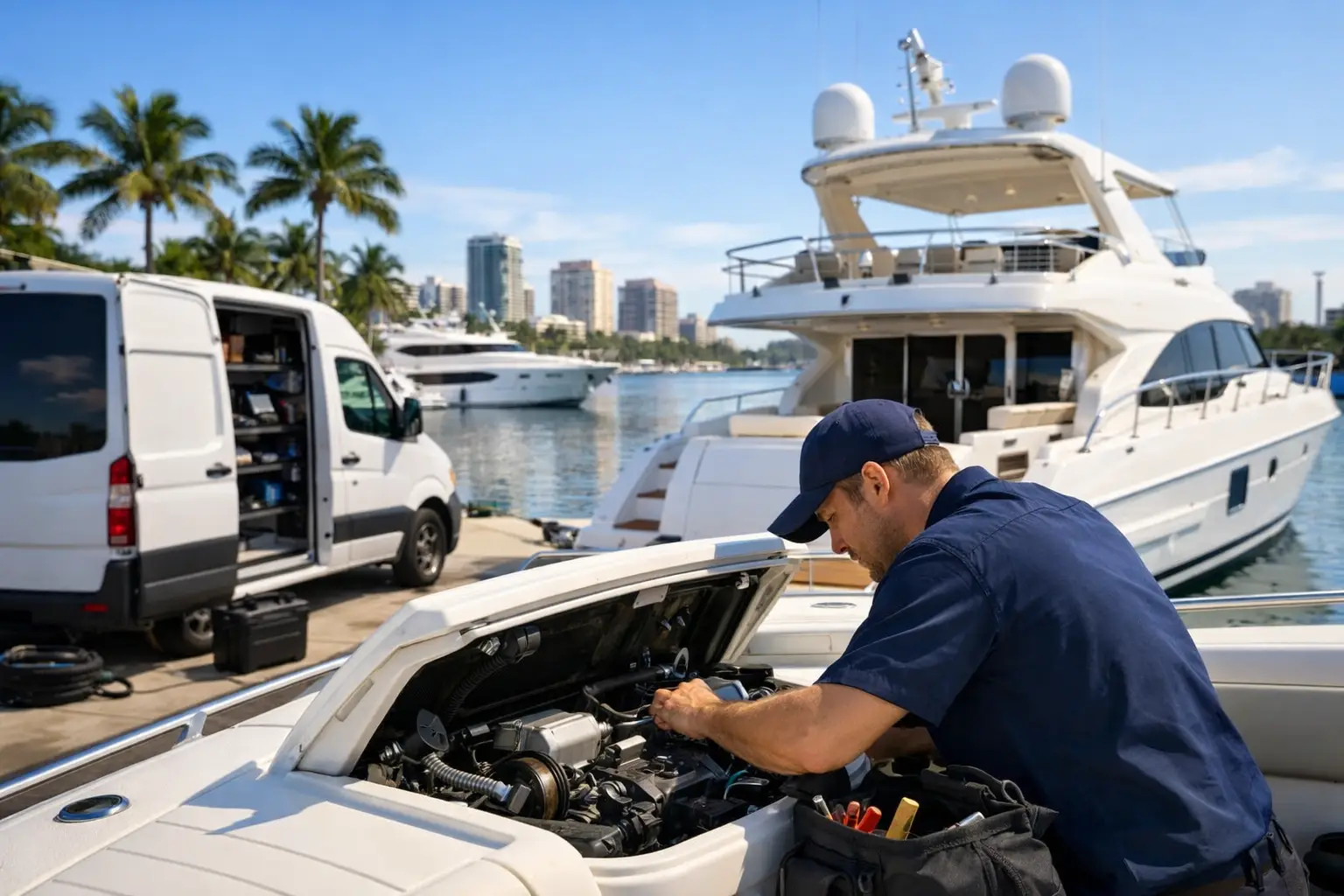
A failed generator before guests arrive, an engine alarm at the dock, or a steering issue before a run offshore can change the whole day fast. A mobile yacht mechanic West Palm Beach owners can call directly to their vessel helps turn that disruption into a focused repair plan, without adding the time and expense of moving a yacht to a service yard.
For yachts and larger recreational vessels, the right service decision is rarely about finding the lowest initial labor rate. It is about protecting uptime, identifying the real cause of a problem, and preventing a small warning sign from becoming an expensive engine-room event. Mobile service brings qualified marine technicians, diagnostic capability, and practical repair support to the marina, private dock, or vessel location.
When a Mobile Yacht Mechanic in West Palm Beach Makes Sense
Hauling or relocating a vessel for service can involve far more than the repair itself. There may be scheduling delays, transport arrangements, marina coordination, and lost days on the water. For a 50-foot sportfisher, a motor yacht, or a commercial vessel, those logistics can quickly become a significant cost.
Mobile marine service is particularly valuable when the vessel is safely accessible and the repair can be performed on site. Engine diagnostics, preventive maintenance, cooling-system work, generator service, electrical troubleshooting, and steering repairs are often handled where the boat is berthed. That means the technician can see the systems in their actual operating environment, including shore power connections, ventilation conditions, water supply, and the way equipment is installed.
It depends on the repair. Major structural work, some repower projects, or jobs requiring specialized lifting equipment may still call for a yard. But many of the problems that keep an owner or captain from using the boat do not require a haul-out. Bringing the mechanic to the vessel can save time, money, and stress while getting the repair moving sooner.
Start With Diagnosis, Not Guesswork
Marine engines are complex systems, and symptoms can point in more than one direction. High coolant temperature may be caused by a restricted cooler, impeller damage, a circulation issue, a sensor problem, or an underlying engine condition. A no-start issue might involve batteries, charging systems, fuel delivery, safety interlocks, wiring, or the engine itself.
That is why a qualified technician should approach a yacht engine like a doctor approaches a patient. The first step is a proper examination: listen to the concern, review the vessel’s service history, inspect the system, test components, and interpret diagnostic information. Replacing parts before confirming the cause can waste money and leave the real issue unresolved.
A thorough on-site inspection is especially useful when a problem is intermittent. If an engine alarm occurs only under load, a generator shuts down after warming up, or voltage drops when multiple systems are running, the vessel environment matters. A technician can test while equipment is operating and narrow the issue based on real conditions rather than assumptions.
Diesel Engine Service for High-Value Vessels
Diesel-powered yachts demand knowledgeable care because poor maintenance can affect performance, reliability, fuel economy, and long-term engine life. Owners and captains need service professionals who understand the requirements of major marine diesel platforms, including MTU, MAN, and Caterpillar.
Routine service may include fluid and filter changes, belt and hose inspections, fuel-system checks, cooling-system evaluation, battery and charging-system testing, and inspection of exhaust components. These tasks may sound basic, but they are the foundation of dependable operation. A missed service interval or neglected component can lead to an issue that is far more costly than the maintenance visit that could have prevented it.
For vessels ranging from 50 to 500 feet, service also needs to account for the full engine-room picture. Main engines, generators, battery banks, pumps, controls, and supporting systems all work together. A technician who understands that relationship can identify risks before they lead to downtime.
Cooling Systems Need Attention Before They Fail
South Florida’s heat, saltwater exposure, and frequent use put real pressure on marine cooling systems. Heat exchangers, aftercoolers, oil coolers, raw-water pumps, hoses, strainers, and related components need regular attention. A restricted cooler may not cause an immediate breakdown, but it can gradually raise operating temperatures and reduce the margin of safety under load.
Cooler service is one area where preventive maintenance pays for itself. Cleaning, inspection, pressure testing, and timely replacement of worn components can help protect expensive engines from overheating damage. The exact service schedule depends on the engine manufacturer, how the vessel is used, water conditions, and the condition of the existing system.
Do not wait until an alarm becomes a shutdown. If temperatures are climbing, raw-water flow looks reduced, or an engine has begun running differently, schedule an inspection before the next trip. Early action usually provides more repair options and better cost control.
Generator, Electrical, and Steering Problems Require Fast Action
A generator is more than a convenience on many yachts. It supports air conditioning, refrigeration, charging, lighting, communications, and other onboard essentials. When it will not start, runs roughly, overheats, or fails to produce stable power, the impact can reach well beyond the generator compartment.
Electrical issues deserve the same careful approach. Corrosion, loose connections, damaged wiring, charging faults, and overloaded circuits can create symptoms that appear unrelated. Flickering electronics, weak starting performance, tripped breakers, or unexplained battery drain should be inspected by a marine professional rather than treated as a minor annoyance.
Steering systems also need immediate attention. Stiff steering, fluid loss, unusual noise, delayed response, or inconsistent handling can turn a routine run into a safety concern. A mobile technician can inspect the system, diagnose the source of the issue, and recommend the appropriate repair based on the vessel’s setup and condition.
Why Preventive Maintenance Costs Less Than Emergency Repair
Emergency calls are sometimes unavoidable. Mechanical equipment can fail without warning, and vessels operate in a demanding environment. Still, many breakdowns begin as signs that were visible earlier: a minor leak, a recurring alarm, a vibration, an overdue cooler service, or a generator that takes longer to start than it used to.
A preventive maintenance program creates a documented schedule for inspecting and servicing the systems that matter most. It also gives technicians a baseline. When they know how the engines, generator, and electrical systems have performed over time, changes are easier to spot and address.
For captains and fleet operators, this planning supports better scheduling and fewer surprises. For private owners, it offers confidence that the vessel is being cared for between trips. The goal is not to perform unnecessary work. It is to complete the right work at the right interval, before a neglected item leads to a more serious repair.
Choose Mobile Marine Service Based on Capability
Not every mechanic who works on boats is equipped to handle the demands of a larger yacht. Before scheduling service, ask whether the provider is certified, licensed, and insured; whether they support your engine brand; whether they have experience with your vessel size; and whether they can address related systems beyond the immediate complaint.
Responsiveness matters as well. A service company that can come directly to the vessel and respond around the clock is better positioned to help when timing is critical. Competitive labor and parts pricing should be part of the conversation, but so should diagnostic skill, clear communication, and a repair recommendation that makes practical sense.
GTM International provides mobile marine maintenance and repair across the South Florida coastal corridor, with technicians prepared to service diesel and gas-powered vessels where they are located. The focus is straightforward: diagnose the issue correctly, perform dependable work, and help put the vessel back into service without unnecessary yard delays.
If your yacht has an active alarm, a performance change, an overdue service need, or a system that simply does not feel right, treat it early. A timely visit from a qualified mobile technician can protect your next trip, your engine investment, and the peace of mind that should come with owning a well-maintained vessel.
