
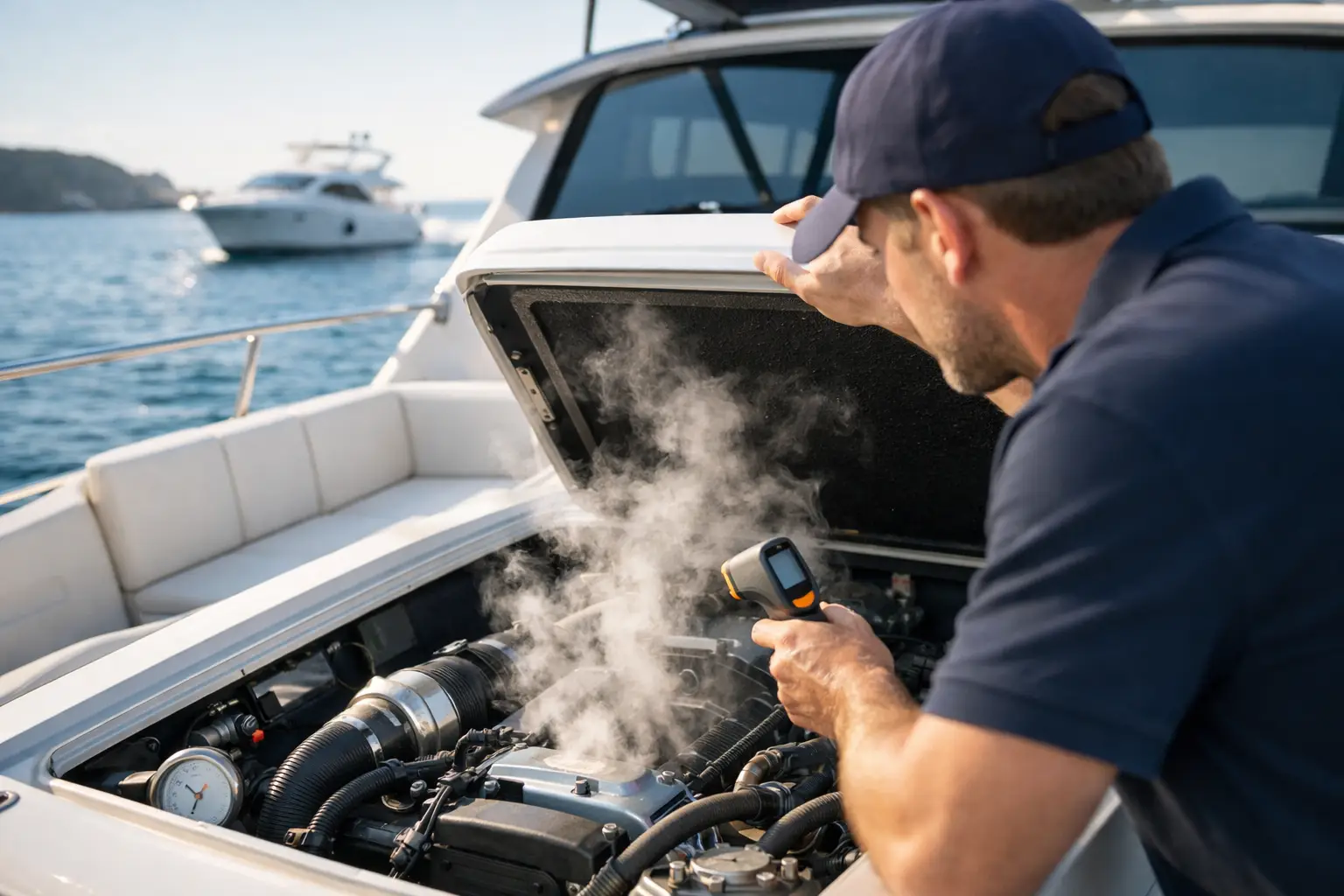
A high-temperature alarm is not a warning to finish the run and see what happens at the dock. To diagnose yacht overheating correctly, treat the alarm like a symptom in a high-value asset: reduce load, verify what the gauges are telling you, and find the cause before heat damages an engine, exhaust system, generator, or transmission cooler.
For yacht owners and captains, the goal is not simply to clear an alarm. It is to determine whether the engine is truly overheating, whether cooling water is restricted, and whether an underlying mechanical issue could turn a short interruption into an expensive repair. A qualified marine technician approaches the problem much like a doctor: confirm the symptom, rule out the obvious causes, then test the systems that support the engine.
Start Safely When a Yacht Engine Runs Hot
If the temperature climbs above its normal operating range, immediately bring the engine down to idle or neutral if conditions allow. Watch whether the temperature stabilizes or continues to rise. Do not remove a pressure cap, open a hot coolant reservoir, or put hands near belts, pulleys, or hot exhaust components.
A brief rise under heavy load is different from a temperature that keeps climbing at idle, but neither should be ignored. The correct next step depends on the engine, the cooling-system design, sea conditions, and how quickly the alarm appeared. On a large diesel yacht, continuing to run at speed can compound the problem quickly.
Shut down and arrange professional help if you see any of the following:
- Steam, smoke, a strong coolant smell, or visible coolant leaking into the bilge
- Little or no water leaving the wet exhaust discharge
- A temperature alarm that remains active after reducing RPM
- Milky oil, low coolant, repeated coolant loss, or an engine that will not hold normal temperature
Never assume an alarm is harmless because the boat still runs. Modern engine monitoring can identify a temperature problem before a gauge looks dramatic, and a failed sensor can also mask a real issue. Both situations deserve diagnosis.
How to Diagnose Yacht Overheating Step by Step
The first job is to separate a true heat event from an inaccurate reading. Compare the dash gauge, engine display, and any independent monitoring system. A technician may verify actual temperature with an infrared tool or diagnostic software, then inspect sensor wiring, connectors, and grounds. A corroded connection can produce misleading readings, but it should only be blamed after the engine’s actual condition is confirmed.
Check the raw-water side first
Most yacht overheating calls begin with restricted raw-water flow. Water must travel from the intake through the seacock, strainer, hoses, raw-water pump, coolers, and exhaust mixing point. Any restriction in that route reduces the system’s ability to remove heat.
A captain can safely check that the seacock is open and inspect the raw-water strainer for sea grass, plastic, jellyfish debris, shell fragments, or a loose lid gasket that lets the pump pull air. A clean-looking strainer does not prove the intake is clear. Marine growth or debris at the hull pickup can restrict flow before water ever reaches the basket.
The raw-water pump is another frequent source of trouble. A worn impeller can lose vanes, deform from running dry, or simply stop producing enough flow at higher RPM. When an impeller breaks apart, pieces can travel downstream and lodge in a cooler or hose. Replacing the impeller without finding those fragments may leave the overheating issue in place.
Inspect coolers, hoses, and exhaust flow
On diesel-powered yachts, heat exchangers, charge-air coolers, oil coolers, transmission coolers, and generator coolers need regular attention. Salt, sediment, scale, and biological growth can gradually reduce flow through the small passages inside these components. The boat may run normally at low RPM but overheat when the engines are loaded, which is a useful clue that cooling capacity has been reduced.
External inspection only tells part of the story. A hose can look acceptable while its inner liner has collapsed. A cooler can appear clean from the outside while the water passages are restricted internally. Proper cooler service involves the right inspection, cleaning method, pressure testing when appropriate, and replacement of worn seals or components.
Also observe exhaust water. On many vessels, weak water flow at the exhaust outlet points toward a raw-water problem, but exhaust appearance alone is not a complete diagnosis. Some cooling arrangements and operating conditions make the symptom less obvious. That is why the entire path must be checked rather than relying on one visual sign.
Evaluate the closed-cooling system
The fresh-water or closed side of the cooling system deserves equal attention. Low coolant, a failing thermostat, a weak circulation pump, a stuck pressure cap, internal corrosion, or air trapped in the system can all raise engine temperature. Coolant loss is especially significant because it may indicate a leak that needs to be located, not just topped off.
On a properly serviced engine, coolant type and concentration should match manufacturer specifications. Mixing incompatible coolants or adding ordinary tap water can contribute to corrosion and reduced heat transfer. For MTU, MAN, Caterpillar, and other major marine diesel platforms, maintenance procedures and approved fluids vary. Factory-compatible service matters because guessing at fluids, torque values, or diagnostic codes can create a second problem while trying to solve the first.
Look beyond the engine itself
Overheating can originate in systems that share the same cooling supply. A plugged transmission cooler, fouled generator intake, damaged sea chest, or restriction in a common raw-water manifold may affect more than one piece of equipment. If both the main engine and generator show elevated temperatures, that pattern helps narrow the search.
Load also matters. An overloaded vessel, fouled running gear, incorrect propeller pitch, or a turbocharger performance issue can make an engine work harder than expected. In those cases, the cooling system may be functioning but unable to keep up with an abnormal demand for power. This is why a diagnosis should include operating history: when the issue occurs, RPM, vessel load, recent bottom work, and whether the problem began after maintenance or after running through debris.
Why Guesswork Costs More Than a Mobile Diagnosis
It is tempting to replace the thermostat, impeller, or sensor that seems most likely. Sometimes that solves the issue. Often, it creates unnecessary parts costs and delays while the actual restriction remains hidden in a cooler, intake, or hose.
A professional diagnostic process saves time because it follows evidence. Certified technicians can inspect the vessel where it sits, test the cooling system, evaluate fault data, and identify whether the repair is immediate, preventive, or part of a larger maintenance need. That avoids the expense and downtime of hauling a yacht to a yard simply to begin troubleshooting.
GTM International provides mobile marine diagnostics and repair throughout the South Florida coastal corridor, bringing qualified service directly to vessels from Fort Lauderdale to Fort Pierce. For yachts ranging from 50 to 500 feet, that on-site response can mean less disruption for owners, captains, guests, and crew.
Prevent the Next High-Temperature Alarm
The best overheating repair is the one that never becomes an emergency. Raw-water strainers should be checked regularly, but they are only one part of the maintenance picture. Impellers need replacement on schedule or based on condition, coolers need periodic service, and coolant levels and chemistry need to be monitored as part of a broader engine-care program.
The service interval depends on how the vessel is used. A yacht that runs frequently in warm South Florida water, spends time near grass-heavy inlets, or operates long hours under load may need closer attention than a lightly used vessel kept in cleaner conditions. Older engines may also need more frequent inspection of hoses, clamps, gaskets, and cooler cores.
Keep a simple record of normal operating temperatures at cruise RPM, idle, and generator load. When a captain knows the vessel’s baseline, a small change becomes easier to catch before it becomes a shutdown. That kind of attention protects more than the engine – it protects scheduled trips, resale value, and confidence every time you leave the dock.
When temperature rises, act early and diagnose the cause instead of asking the engine to tolerate one more run. A prompt inspection at the vessel can turn a stressful alarm into a manageable repair and get you back out at sea with greater confidence.
