
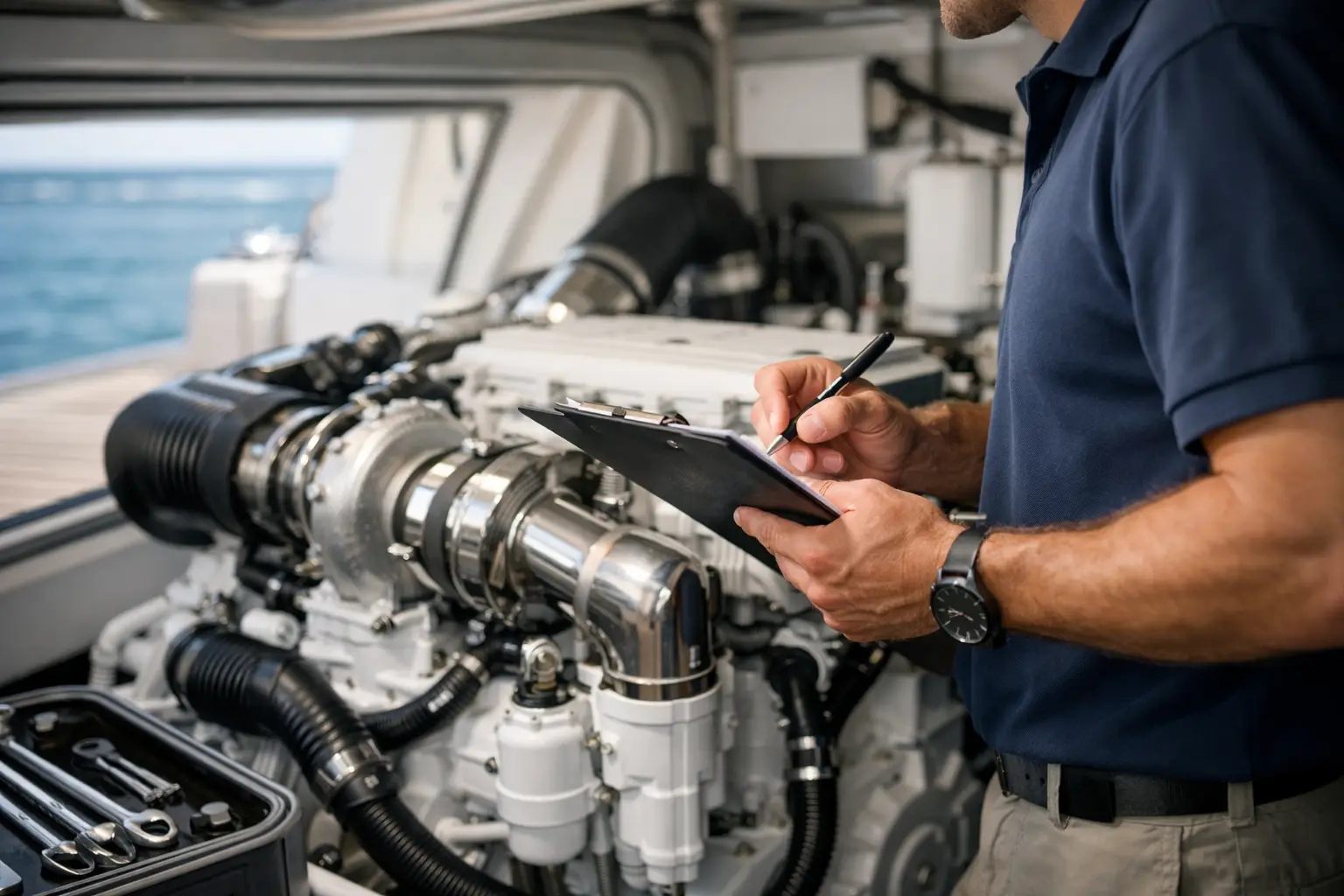
A yacht can leave the dock with a clean engine room, full tanks, and a confident captain, then lose a day on the water because of a hose clamp, coolant leak, weak battery connection, or warning alarm that was easy to catch earlier. The best yacht engine inspection checklist is not about turning every owner into a diesel technician. It is about recognizing what needs attention before a small issue becomes expensive downtime.
For yachts operating in the heat, humidity, salt air, and demanding cruising conditions of South Florida, routine checks protect more than the engine. They protect your schedule, your guests, your crew, and the value of a high-performance vessel. A proper inspection also gives a qualified marine technician the information needed to diagnose developing problems before they turn into a no-start condition, overheating event, or major repair.
Start With the Right Inspection Mindset
Think of engine inspection the way you would think of a medical exam. A doctor does not wait for a serious symptom before checking vital signs. The same principle applies to marine engines. Fluid condition, operating temperatures, charging voltage, belt wear, vibration, and exhaust appearance all tell part of the engine’s story.
The right depth of inspection depends on how the yacht is used. A vessel that runs weekly, travels long distances, charters, or carries generators under heavy load needs more frequent professional review than a lightly used boat that remains at the dock. Even then, low engine hours do not eliminate risk. Saltwater exposure, aging rubber components, fuel quality, and stagnant systems can create problems while the boat is sitting still.
Owners and captains should perform a basic visual and operational check before departure. A certified technician should handle scheduled preventive maintenance, diagnostics, and any finding involving fuel, cooling, electrical, steering, or internal engine performance.
Best Yacht Engine Inspection Checklist Before Departure
A pre-departure walkthrough should be deliberate, not rushed. Complete it with the engines off and cool whenever possible, then repeat key observations while the engines are running.
Check the engine room first
Start with the overall condition of the engine room. Look for standing water, an unusual fuel smell, oil residue, coolant stains, loose hardware, damaged insulation, or anything that was not present during the last visit. A clean, dry bilge makes leaks easier to identify. If the bilge is dirty or wet, find out why rather than assuming it is normal.
Inspect mounts, brackets, guards, and visible fasteners for corrosion or movement. Excessive rust, cracked paint around a mount, or a component that looks out of alignment can point to vibration or support issues. On larger yachts, also make sure access areas are clear so crew can reach shutoffs, fire systems, and electrical panels quickly if needed.
Verify fluid levels and fluid condition
Check engine oil, transmission fluid, coolant, and any manufacturer-specified hydraulic fluids using the correct procedure for that engine. Oil should be at the proper level, but the condition matters too. Milky oil may indicate water contamination, while a burnt odor or excessively dark fluid can justify further evaluation.
Coolant should be clean and at the proper level when the engine is cold. Never open a hot cooling-system cap. Watch for staining around hoses, heat exchangers, expansion tanks, and clamps. A slow coolant loss is not something to top off and forget. It is a symptom that needs a source.
Fuel filters and water separators deserve close attention, particularly after a long layup, heavy weather, or questionable fuel purchase. Water, sediment, or microbial growth in the fuel system can cause rough running, power loss, and injector damage. Drain water from separators only when your engine manufacturer’s procedure allows it and the vessel is set up for safe fuel handling.
Inspect belts, hoses, clamps, and wiring
Rubber and electrical components work hard in the marine environment. Look over belts for cracking, glazing, frayed edges, or improper tension. Check hoses for soft spots, swelling, surface cracks, chafe, corrosion at connections, and loose clamps. A hose may look acceptable from one angle while hiding damage beneath a clamp or where it rubs against another component.
Inspect visible wiring for loose terminals, green corrosion, melted insulation, unsupported runs, and signs of heat damage. Pay special attention to battery cables, grounding connections, starter wiring, alternator connections, and shore-power-related equipment. Electrical issues can appear intermittent until they leave the vessel without starting power or charging capability.
Examine seawater and cooling components
Overheating is one of the quickest ways to turn an enjoyable run into a repair event. Confirm that seawater strainers are clean, properly sealed, and free of damaged baskets or O-rings. Verify that seacocks are in the correct operating position and inspect hoses leading to raw-water pumps, coolers, and exhaust systems.
For diesel yachts, cooling-system health extends beyond the strainer. Heat exchangers, aftercoolers, transmission coolers, oil coolers, raw-water pumps, impellers, and exhaust elbows require service at intervals based on engine manufacturer guidance, condition, and operating environment. Skipping cooler service may save money in the short term, but restricted flow and corrosion can create far greater costs later.
Confirm batteries and charging performance
Check battery condition, terminal security, electrolyte requirements where applicable, and charger status. Corroded terminals or weak connections can cause voltage drop that looks like a starter, alternator, or engine-control issue. Make sure batteries are restrained properly and that there is no swelling, leaking, or unusual heat around a battery bank.
Once the engines are running, verify charging voltage against the vessel’s normal readings. An alarm, fluctuating voltage, or charging level outside the expected range deserves prompt attention. Do not assume the problem will correct itself underway.
What to Watch While the Engines Are Running
After the visual inspection, start the engines and allow them to reach normal operating temperature. Listen before you look at gauges. A new clicking sound, squeal, knocking, uneven idle, excessive vibration, or delayed crank can provide valuable diagnostic clues.
At the helm and in the engine room, confirm that oil pressure, coolant temperature, transmission pressure where displayed, and battery voltage rise and stabilize within the manufacturer’s normal range. Compare port and starboard readings on twin-engine yachts. A difference between engines may be more revealing than either number alone.
Check the exhaust discharge. Reduced water flow, steam, unusual smoke, or a change in exhaust odor requires investigation. White smoke can relate to unburned fuel, water intrusion, or cold operation depending on the engine and conditions. Blue smoke can suggest oil consumption. Black smoke under load may point to restricted air supply, fuel-delivery concerns, propeller load, turbocharger issues, or other causes. Smoke is a symptom, not a final diagnosis.
During the run, monitor steering response, controls, shifting, and vibration. An engine can sound healthy at idle yet reveal problems under load. Record anything unusual, including the engine hours, RPM, temperature, location, and sea conditions. Clear details help technicians diagnose efficiently when they arrive.
Items That Need a Professional Marine Inspection
A captain’s walkaround is valuable, but it cannot replace a detailed service inspection. Modern yacht engines, especially MTU, MAN, and Caterpillar platforms, depend on accurate electronic diagnostics, manufacturer-compatible procedures, and experienced interpretation of operating data.
A qualified marine technician should evaluate fault codes, engine histories, sensor readings, load performance, fuel pressure, cooling efficiency, turbocharger condition, mounts, alignment concerns, and the condition of critical systems that may not be obvious during a visual check. Oil analysis, coolant testing, infrared temperature checks, and pressure testing can identify developing trouble before it becomes visible.
Professional attention is especially warranted when you find recurring low coolant, fuel in the bilge, water in fuel, overheating, hard starts, power loss, alarms, abnormal smoke, excessive vibration, or unexplained battery drain. Continuing to run because the yacht still moves can turn a manageable service call into major engine damage.
Build a Schedule Around How Your Yacht Operates
The best yacht engine inspection checklist works only when it becomes a routine. Before each trip, complete the basic fluid, leak, cooling, battery, and gauge checks. After extended runs, rough conditions, or alarm events, inspect again while the observations are fresh.
For scheduled maintenance, follow the engine manufacturer’s requirements and adjust for actual use. High-hour yachts, charter vessels, and boats that spend long periods in tropical marina conditions may need closer attention. Generator inspections should be included as well. A generator failure can affect air conditioning, refrigeration, battery charging, and onboard comfort even when the main engines are operating properly.
Keep a simple service log with engine hours, fluid additions, filter changes, alarms, repairs, and technician findings. This record helps identify patterns, supports resale value, and prevents critical maintenance from being overlooked during a busy season.
When something does not look, sound, smell, or feel right, treat it early. GTM International can come directly to your vessel throughout the South Florida coastal corridor for professional diagnostics, repairs, and preventive engine service, helping you save time, money, and stress without the delay of moving the yacht to a repair yard. A timely inspection is often the easiest way to keep your next departure focused on the water ahead, not the engine room behind you.
