
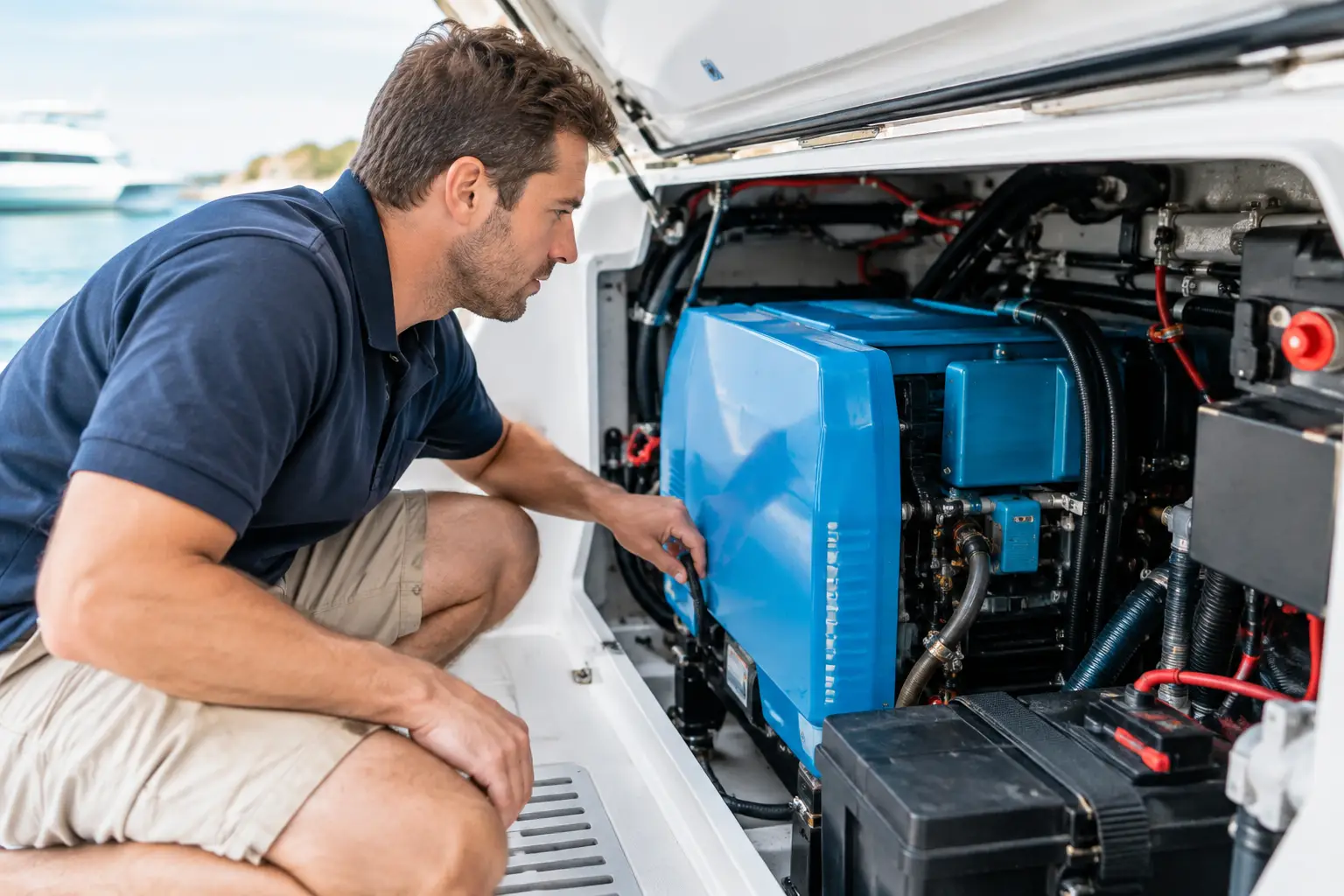
A generator that repeatedly rises and falls in sound, RPM, voltage, or frequency is giving you an early warning. Generator surge causes can range from a simple clogged fuel filter to a load-management problem or a failing governor component. On a yacht, that unstable output can affect air conditioning, battery chargers, galley equipment, navigation electronics, and other systems that depend on clean AC power.
The key is to separate a normal change in generator load from true surging. A brief change in engine note when an air-conditioning compressor starts may be expected. A generator that hunts continuously, dims lights, trips breakers, changes pitch every few seconds, or produces inconsistent voltage needs professional attention before it turns into a no-start situation or damages connected equipment.
Generator Surge Causes on Boats
Marine generators operate in a demanding environment. Heat, vibration, salt exposure, long periods at low load, and fuel that sits between trips can all contribute to performance issues. The most common causes usually fall into fuel delivery, engine speed control, electrical loading, air and exhaust restriction, or cooling-related problems.
Restricted fuel supply
A diesel generator needs a consistent supply of clean fuel at the correct pressure. When it cannot get that fuel, engine speed may rise and fall as the governor tries to compensate. This is one of the most common reasons a generator begins to hunt under load.
A partially blocked primary or secondary fuel filter is often the first item to inspect. Water in the fuel, algae growth in the tank, deteriorating fuel hoses, a restricted pickup tube, or an air leak on the suction side can create the same symptoms. Air leaks can be especially frustrating because they may not leave an obvious fuel drip. Instead, the generator may run unevenly, surge after several minutes, or stall when a larger load comes online.
Fuel quality matters more than many owners realize. A generator that runs only occasionally may draw from fuel that has collected moisture or contamination. Replacing filters without identifying the source of contamination can provide temporary relief, then leave the vessel with the same issue on the next outing.
Governor, actuator, or linkage problems
The governor controls engine speed. On most marine generators, it adjusts fuel delivery to hold the proper RPM and maintain a stable electrical frequency – typically 60 Hz on US vessels. If the governor, electronic actuator, speed sensor, or mechanical linkage is sticking, worn, incorrectly adjusted, or losing its signal, the engine can overcorrect repeatedly. That creates the familiar up-and-down surge.
This is not a component to guess at. Improper governor adjustments can make the condition worse and may lead to incorrect frequency, high voltage, low voltage, or excessive engine speed. A technician should verify actual RPM, frequency, voltage, and load response before recommending calibration, repair, or replacement.
Sudden, excessive, or uneven electrical loads
Not every apparent surge begins in the generator itself. A large electrical load can pull generator speed down momentarily, especially when multiple compressors, pumps, chargers, water heaters, or galley appliances start at once. The generator should recover quickly. If it cannot, the issue may be insufficient generator capacity, a weak engine, a governor response problem, or an appliance drawing more current than it should.
A failing air-conditioning compressor, refrigeration unit, water pump, or battery charger can create abnormal startup demand. Corroded electrical connections and weak transfer-switch contacts can also cause voltage drop or intermittent power that looks like a generator problem.
Load sequencing matters on larger yachts. Bringing several high-demand systems online at the same time can overload even a properly maintained unit. A qualified marine technician can test the generator under controlled loads and identify whether the source is the genset, the distribution system, or a specific onboard appliance.
Dirty air intake or exhaust restriction
Combustion requires air. A blocked air filter, collapsed intake hose, restricted crankcase ventilation component, or obstruction in the exhaust path can reduce engine performance and cause unstable speed. On a marine generator, exhaust concerns deserve prompt attention because cooling water injection, muffler condition, hose integrity, and back pressure all affect safe operation.
Excessive exhaust back pressure can keep the engine from responding properly to changing demand. It may also appear alongside overheating, reduced power, black smoke, or hard starting. Do not continue running a generator that is smoking heavily, overheating, or discharging an abnormal amount of water from the exhaust.
Cooling and temperature-related faults
A generator may seem to surge when it is actually reducing performance because it is running too hot. Restricted raw-water flow, a fouled sea strainer, worn impeller, scale in the heat exchanger, low coolant, or a failing thermostat can all push operating temperatures beyond their normal range.
Some units will alarm or shut down before serious damage occurs. Others may run poorly before an alarm becomes obvious. If the issue starts after the generator has been operating for a period of time, rather than immediately at startup, temperature and cooling system checks should be part of the diagnostic process.
What a Generator Surge Can Damage
Frequency and voltage instability are hard on sensitive electrical equipment. Electronics, chargers, control boards, refrigeration components, variable-speed drives, and air-conditioning equipment are not designed to operate on erratic power. Repeated breaker trips are inconvenient, but they can be preferable to allowing unstable power to continue feeding expensive onboard systems.
If you notice flickering lights, erratic charger behavior, display resets, changing generator sound, or AC units cycling abnormally, reduce nonessential load. Turn off high-demand equipment and observe whether the generator stabilizes. That observation can help a technician narrow the issue, but it should not replace a proper test.
Avoid repeatedly resetting breakers or bypassing alarms to keep the generator running. An alarm, shutdown, or breaker trip is often protecting a much larger investment.
A Practical First Check Before Calling for Service
Owners and captains can make a few safe observations without disassembling fuel or electrical systems. First, note whether the surge happens at no load, only under heavy load, or after the generator warms up. Listen for a consistent rise-and-fall pattern and watch the generator panel for changes in voltage, frequency, oil pressure, temperature, or fault codes.
Next, check straightforward service items: the fuel level, raw-water strainer condition, visible leaks, exhaust water discharge, and whether a recently added appliance or charging system was operating when the problem began. If the generator has reached its scheduled maintenance interval, restricted filters and overdue cooling service become more likely.
Do not open electrical panels while the generator is energized unless you are qualified to do so. Marine AC systems combine high current, moisture, vibration, and confined-space conditions. A loose connection can overheat long before it becomes visible from the outside.
Why Marine Diagnostics Matter
A generator can sound as though it has one problem while the actual cause is elsewhere. For example, a fuel restriction may mimic a governor fault. An overloaded generator may appear to have an engine issue. A weak battery charger or failing air-conditioning component may be the real source of repeated load swings.
That is why professional testing should include more than replacing parts. A proper diagnosis looks at fuel supply, engine performance, cooling, AC voltage, frequency, load percentage, transfer equipment, and connected appliances. On vessels from 50 to 500 feet, the consequences of guessing can include lost cruising time, damaged electrical equipment, and a repair bill that grows with every unnecessary replacement.
GTM International brings mobile marine diagnostics directly to vessels throughout the South Florida coastal corridor, helping owners avoid the time, expense, and disruption of moving a yacht to a repair yard. Certified technicians can evaluate generator performance where the problem occurs – under the vessel’s real operating conditions.
When to Shut It Down and Get Help
Shut the generator down and arrange service if it surges continuously, produces smoke, overheats, loses cooling-water discharge, trips breakers repeatedly, shows abnormal voltage or frequency, or triggers alarms. The same applies if you smell burning insulation, see fuel leakage, or hear severe knocking or grinding.
A minor change in engine note may be normal when a load starts. Persistent hunting is not. Treat it the way you would a medical symptom: catch it early, diagnose the cause, and correct it before it becomes an emergency at the dock or offshore.
Steady generator power is not just about comfort at anchor. It protects the systems that make your vessel safe, usable, and ready for the next trip. A timely inspection can save time, money, and stress long before a small surge becomes a major interruption.
