
A named storm does not leave much room for troubleshooting. Once watches are posted, marinas fill up, haul-out schedules disappear, and a small engine, battery, or bilge-pump issue can become an expensive problem. The best time to prepare yachts for hurricane season is well before the first serious forecast – when you still have choices, parts availability, and time for a technician to correct what is not right.
For yacht owners and captains from Fort Lauderdale to Fort Pierce, storm preparation is not only about lines, fenders, and shutters. It is also about making sure the vessel can generate power, move if conditions require it, keep water out, and recover safely after the storm passes. A well-planned approach protects the yacht, reduces downtime, and avoids rushed decisions when every marina and service provider is under pressure.
Start With the Hurricane Plan, Not the Forecast
Every vessel needs a written hurricane plan that matches its location, size, insurance requirements, and available options. A 50-foot sportfish in a protected canal has different needs than a 150-foot yacht in a marina slip or a vessel kept at a private dock. The plan should identify who has authority to move the yacht, where it can be relocated, what trigger will prompt action, and how the owner, captain, marina, and service providers will communicate.
Do not assume a marina is automatically the safest place. In some cases, a properly secured slip in a protected basin is the practical choice. In others, a haul-out, hurricane hole, or relocation to a more protected location makes better sense. Local marina rules, bridge restrictions, draft, surge exposure, and your insurance policy all matter. Make those decisions during calm weather, not while a storm track is shifting.
Keep current photographs of the yacht, inventory high-value equipment, and store insurance documents, registration, service records, and emergency contacts in a waterproof digital and physical format. Photos of the hull, deck hardware, electronics, engine room, and interior provide a useful baseline if you need to document storm damage later.
Prepare Yacht Engines and Generators Before Storm Season
Engines and generators are the yacht’s critical-care systems during hurricane preparation. They may be needed to relocate the vessel, charge batteries, run bilge pumps, operate communications equipment, or support recovery afterward. Treat an engine-room inspection the way you would a medical checkup: finding a weak point early is far less costly than responding to a failure when conditions are poor.
Schedule a professional inspection before the season reaches its busiest point. For diesel-powered yachts, this should include checking engine and generator starting performance, battery condition, charging systems, belts, hoses, raw-water pumps, filters, coolant levels, fuel-system integrity, and visible leaks. Technicians should also inspect cooling components for restriction or corrosion, particularly on vessels that have deferred cooler service or operate frequently in South Florida’s warm saltwater.
A generator that starts easily at the dock but overheats under load is not ready. Test it with the equipment it may need to support, including battery chargers, pumps, refrigeration, and essential electrical loads. Likewise, an engine with a marginal starting battery, water in a fuel separator, or an unresolved alarm deserves attention before a storm is on the horizon.
For MTU, MAN, Caterpillar, and other major marine diesel platforms, use manufacturer-compatible service practices and parts. An incorrect repair or overlooked fault can create more downtime than the original issue. Mobile diagnostics can often identify charging, fuel, cooling, and electrical concerns directly at the vessel, saving the delay and expense of moving a yacht to a repair yard.
Protect Electrical Power and Bilge Systems
Water intrusion and loss of power are a dangerous combination. Before hurricane season, test every bilge pump, high-water alarm, float switch, and automatic function. Confirm that discharge hoses are clear, properly secured, and routed so they will not allow water back into the bilge. Clean debris from bilges and strainers, because leaves, dirt, loose fasteners, and absorbent materials can block pump intakes at the worst time.
Check battery banks individually, not just by looking at a panel reading. A battery can show surface voltage and still fail under a real load. Inspect terminals for corrosion, confirm battery switches work correctly, and verify chargers are operating as intended. If shore power is lost, know which circuits remain supported and for how long.
Owners should also consider the trade-off between leaving shore power connected and disconnecting it before a storm. Marina guidance, vessel design, electrical condition, and expected surge all affect that decision. Follow marina requirements and consult a qualified marine technician if there are concerns about shore cords, inlets, chargers, or onboard electrical systems. Damaged cords and loose connections are not minor issues in wet, high-wind conditions.
Secure Fuel, Cooling, and Engine-Room Openings
Fuel contamination can turn a post-storm departure into a no-start situation. Keep tanks at an appropriate level to reduce condensation while allowing for safe expansion. Inspect fuel fills, vents, deck caps, and seals for a path where water could enter. Drain fuel-water separators as part of routine maintenance and carry properly rated spare filters if the vessel’s operating plan calls for them.
Engine-room hatches, vents, doors, lazarette seals, and access panels need equal attention. Water driven by wind can reach places that stay dry during normal rain. Confirm that drains are clear and that hatch dogs, gaskets, latches, and closures are in sound condition. Do not seal off ventilation in a way that conflicts with the vessel’s design or creates a fire-safety concern. The goal is controlled protection, not improvisation.
Inspect raw-water strainers and seacocks before the storm season. Make sure valves operate smoothly and that crew members know which through-hulls should be closed when the vessel is unattended. Labeling critical valves and breakers can save valuable time for a captain, dock manager, or technician responding after the storm.
Use a Professional Mooring Strategy
Lines are only as reliable as the cleats, pilings, chocks, and dock hardware supporting them. Inspect all attachment points for corrosion, cracks, loose fasteners, or movement. Use appropriately sized storm lines with chafe protection where they pass through chocks or rub against pilings. Arrange lines to account for tide and surge, and avoid relying on short, tight lines that may fail as water levels rise.
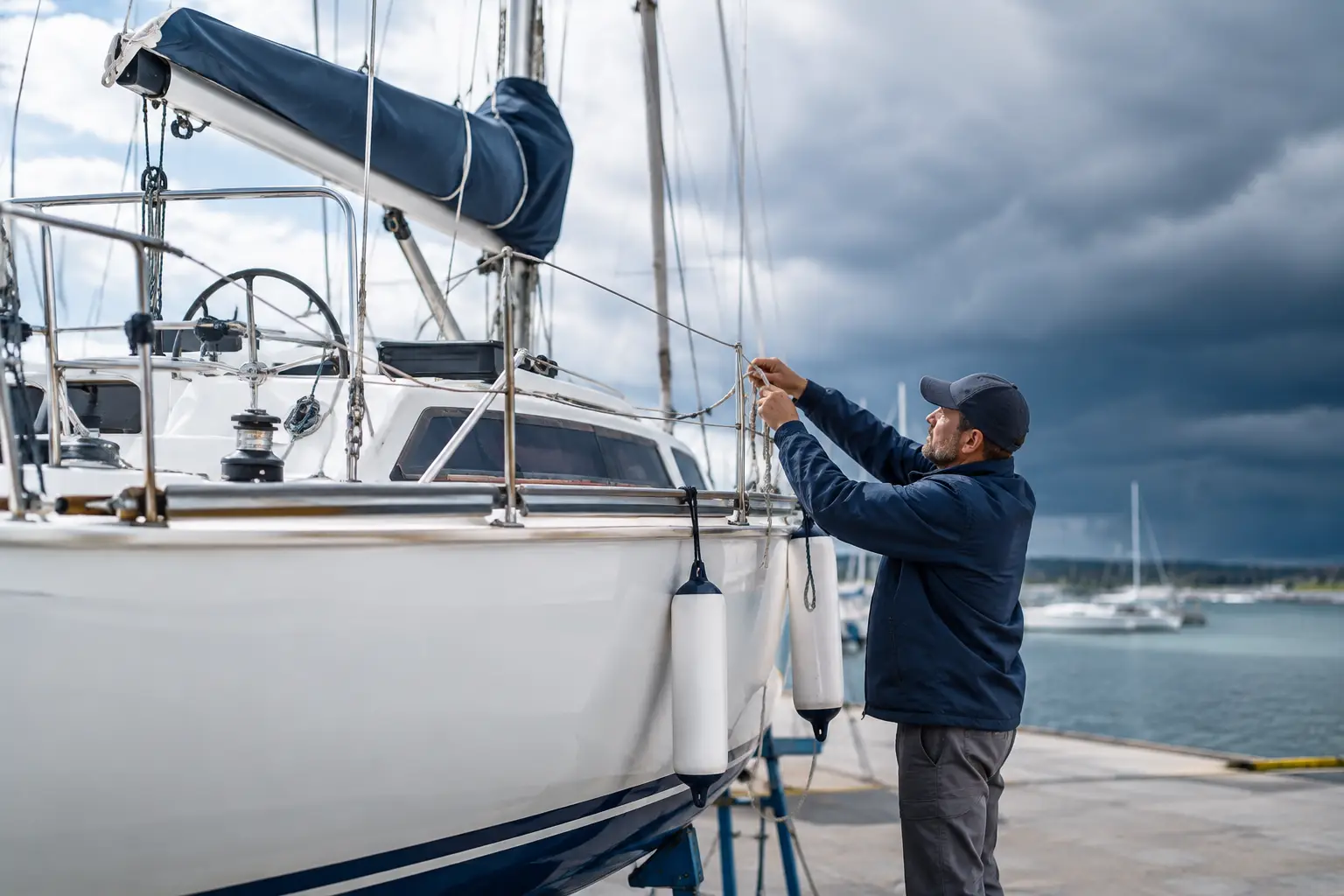
Remove canvas, loose cushions, antennas that can be safely lowered, deck furniture, dinghies, and other items that can catch wind or become projectiles. Secure outriggers, davits, booms, doors, hatches, and tender equipment according to the manufacturer’s guidance. Extra fenders can protect against contact, but they are not a substitute for properly engineered line arrangements.
If the yacht will remain in the water, assign a responsible person to complete and document the final securing procedure. If access is permitted after the storm, inspect the vessel cautiously. Downed power lines, unstable docks, hidden debris, contaminated water, and damaged shore power can create serious hazards.
Plan for the First 24 Hours After the Storm
Recovery begins with a careful assessment, not an immediate attempt to start engines. Check for water intrusion, fuel odor, damaged wiring, loose batteries, blocked exhaust outlets, shifted equipment, and compromised cooling or steering components. Look below decks and in the engine room before energizing systems.
If the yacht took on water, had a shore-power event, or shows any sign of electrical damage, bring in qualified marine support before operating equipment. Starting an engine with water where it does not belong, or restoring power to damaged circuits, can turn a repairable problem into major engine or electrical damage.
GTM International can come directly to vessels throughout the South Florida coastal corridor for mobile diagnostics, engine service, generator work, electrical repairs, steering-system concerns, and preventive maintenance. For owners managing high-value yachts, that means less time coordinating a haul-out and a faster path toward understanding what the vessel needs.
Hurricane preparation is best handled as a series of calm, practical decisions made early. Set the plan, inspect the systems that keep the yacht afloat and powered, and correct small faults while service access is still available. When the forecast changes, you will be protecting the vessel with preparation rather than hoping it holds together.
