
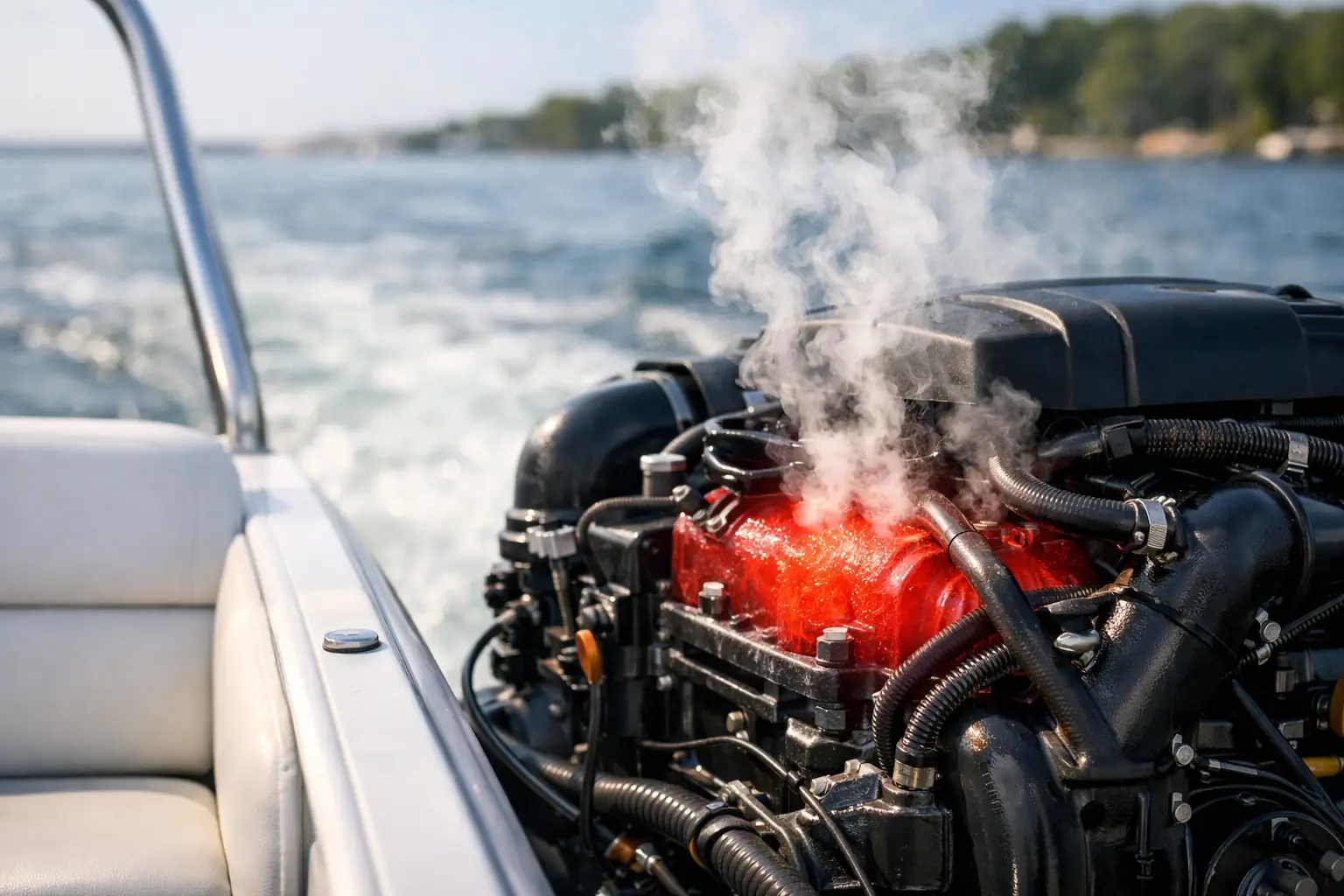
A temperature alarm at the helm is not a warning to push through until you reach the dock. It is the engine telling you that a system designed to carry heat away is no longer doing its job. If you are asking, why is boat engine overheating, the answer can range from a simple blocked sea strainer to a restricted heat exchanger, failed pump, exhaust problem, or internal engine issue. The right response protects your engine, your schedule, and your repair budget.
For yacht owners and captains, overheating deserves the same attention as a medical emergency. The visible symptom may be a rising gauge, steam, a high-temperature alarm, or reduced power. The underlying cause still needs a proper diagnosis. Running a diesel or gas engine hot can damage hoses, exhaust components, head gaskets, cylinder heads, turbochargers, and cooling-system hardware far beyond the original fault.
What to Do When a Boat Engine Starts Running Hot
Reduce throttle immediately and bring the engine load down. Do not keep running at cruise speed in hopes that the temperature will settle on its own. If the temperature continues to rise, shut the engine down as soon as you can do so safely.
Before opening anything, allow the engine to cool. Never remove a coolant cap or open a pressurized cooling system while it is hot. Hot coolant can spray out with enough force to cause serious burns. Check the engine room for smoke, a burning-rubber smell, coolant leaks, loose belts, or water where it should not be.
If your vessel has twin engines and one is overheating, avoid assuming the other engine can compensate without limits. Reduced-speed operation may be possible depending on the vessel, conditions, and manufacturer guidance, but it can also create handling and loading concerns. A captain should make that call based on safety, not convenience.
Why Is a Boat Engine Overheating? Start With Water Flow
Most marine engines depend on raw water from outside the vessel to remove heat. That water moves through the seacock, strainer, hoses, raw-water pump, coolers or heat exchangers, and exhaust system. A restriction anywhere in that path can cause temperature problems.
A closed seacock or blocked sea strainer
A closed seawater intake is one of the first items to check after an overheating event, particularly after service, launch, or a boat that has been sitting. Even when the seacock is open, the sea strainer can collect grass, plastic, jellyfish, silt, shells, and debris.
A strainer that looks only partly dirty can still restrict flow at higher RPM. This is why some engines stay cool at idle but overheat when the vessel comes on plane or operates under a heavier load. Clean the strainer only after confirming the seacock can be safely closed, then inspect the basket and sealing surfaces before restarting.
A damaged raw-water pump impeller
The flexible impeller inside the raw-water pump is a common failure point. Age, dry running, heat, and debris can crack or break its blades. When pieces of an impeller break off, they may travel downstream and lodge in a hose, cooler, or heat exchanger, creating a restriction even after a new impeller is installed.
This is one reason replacing the impeller is not always the complete repair. A technician should locate missing vane fragments, inspect the pump cover and cam, and verify water flow through the full cooling circuit.
Collapsed, leaking, or restricted hoses
Marine hoses work in a harsh environment of heat, vibration, salt exposure, and tight engine-room spaces. A soft hose can collapse under suction. A loose clamp can allow air into the raw-water side. Internal deterioration may restrict a hose even when its exterior looks acceptable.
Small leaks matter. An air leak before the raw-water pump can reduce cooling flow without producing an obvious puddle, while a coolant leak in the closed side of the system can lower coolant level and introduce air pockets around hot engine components.
Heat Exchangers and Coolers Can Restrict Cooling
On many diesel yachts, raw water does not circulate directly through the engine block. Instead, it passes through a heat exchanger that removes heat from the engine coolant. The same raw-water circuit may also cool charge air, transmission oil, fuel, engine oil, and generator components.
Over time, salt deposits, scale, zinc debris, marine growth, and impeller fragments can narrow passages inside these coolers. A restricted heat exchanger often creates a gradual problem rather than an instant failure. The engine may run normally at low load, then creep above normal temperature during a long run, in warm South Florida water, or under heavy vessel load.
Cooler service is not simply a matter of spraying the outside with water. It may require removal, cleaning, pressure testing, inspection of end caps and O-rings, and replacement of sacrificial zincs where applicable. On MTU, MAN, Caterpillar, and other major marine diesel platforms, the correct inspection intervals and service methods matter. Using the wrong chemical cleaner or reassembling components incorrectly can create new problems.
Exhaust Restrictions Can Raise Engine Temperature
Cooling water is commonly injected into the exhaust system to cool exhaust gases and protect hoses, elbows, and mufflers. If that water flow is low, the exhaust side can overheat even when the dashboard gauge has not yet reached an alarming reading.
Look for reduced water discharge at the exhaust outlet, a hot exhaust hose, steam, an unusual exhaust smell, or blackened rubber components. A blocked mixing elbow, damaged exhaust hose, collapsed water-lift muffler, or restriction in an exhaust outlet can affect both engine performance and safety.
Do not treat an overheated exhaust as a minor issue. Exhaust components can fail quickly when cooling water is absent, and a damaged hose or connection can introduce water where it does not belong.
Closed-Cooling Problems Need a Different Diagnosis
The freshwater or closed-cooling side of the engine is separate from the raw-water side. It relies on coolant, circulation, pressure, thermostats, belts, and a properly functioning heat exchanger. If raw-water flow appears normal but engine temperature remains high, the problem may be inside this circuit.
Low coolant level, an external coolant leak, a failed thermostat, a worn circulating pump, a slipping belt, or trapped air can all prevent proper heat transfer. In more serious cases, combustion gases entering the cooling system can point to a head-gasket or cylinder-head concern.
This is where guessing gets expensive. Adding coolant may appear to solve the immediate issue, but the real question is why the level was low. A pressure test, coolant analysis, infrared temperature readings, and manufacturer-compatible diagnostics can identify the actual fault before it becomes a major engine repair.
Engine Load and Operating Conditions Matter
Not every overheating event begins with a failed part. An overloaded vessel, fouled running gear, damaged propeller, improperly sized propeller, or excessive hull growth can force an engine to work harder than intended. A vessel that cannot reach its rated RPM at wide-open throttle may be over-propped, overloaded, or dealing with drivetrain resistance.
Warm water, high ambient temperatures, and extended low-speed operation can also reveal a marginal cooling system. These conditions do not cause a healthy engine to overheat, but they reduce the margin for a strainer, cooler, pump, or hose that is already losing efficiency.
Pay attention to the pattern. Does the engine overheat only at high RPM? Only after thirty minutes? Only on one engine? Does the generator show similar behavior? Those details help narrow the diagnosis and reduce unnecessary parts replacement.
Avoid These Costly Responses to Overheating
Do not keep resetting alarms, pouring cold water on a hot engine, or replacing parts based solely on what worked on another boat. Marine cooling systems vary by engine manufacturer, installation, vessel size, and whether the equipment is raw-water cooled or heat-exchanger cooled.
It is also risky to assume the gauge is wrong. A bad sender or gauge is possible, but that should be confirmed with independent temperature readings and diagnostics before dismissing the alarm. The opposite is true as well: an engine can develop localized hot spots before the helm gauge tells the full story.
For vessels from 50 to 500 feet, a professional inspection is often the fastest way to prevent repeat downtime. GTM International brings certified, licensed, and insured mobile marine technicians directly to vessels throughout the South Florida coastal corridor, helping owners avoid the delay and expense of sending a yacht to a repair yard.
Prevent the Next Overheating Alarm
A preventive maintenance plan should include routine sea strainer checks, scheduled impeller inspection or replacement, cooling-hose and belt inspections, coolant-level checks, and manufacturer-recommended heat exchanger and cooler service. Zinc condition, pump wear, exhaust-water flow, and engine operating temperatures should be documented over time, not inspected only after an alarm.
Keep a simple log of normal cruise temperature, RPM, fuel burn, boost where applicable, and any changes in water discharge. Your engine’s normal readings are useful diagnostic information. A small upward temperature trend caught at the dock is far less stressful than an alarm offshore.
If your engine has overheated, treat the next step as an opportunity to find the cause rather than just silence the symptom. A careful on-site diagnosis can protect the machinery that gets you back out at sea and help keep a manageable repair from turning into an engine-room emergency.
