
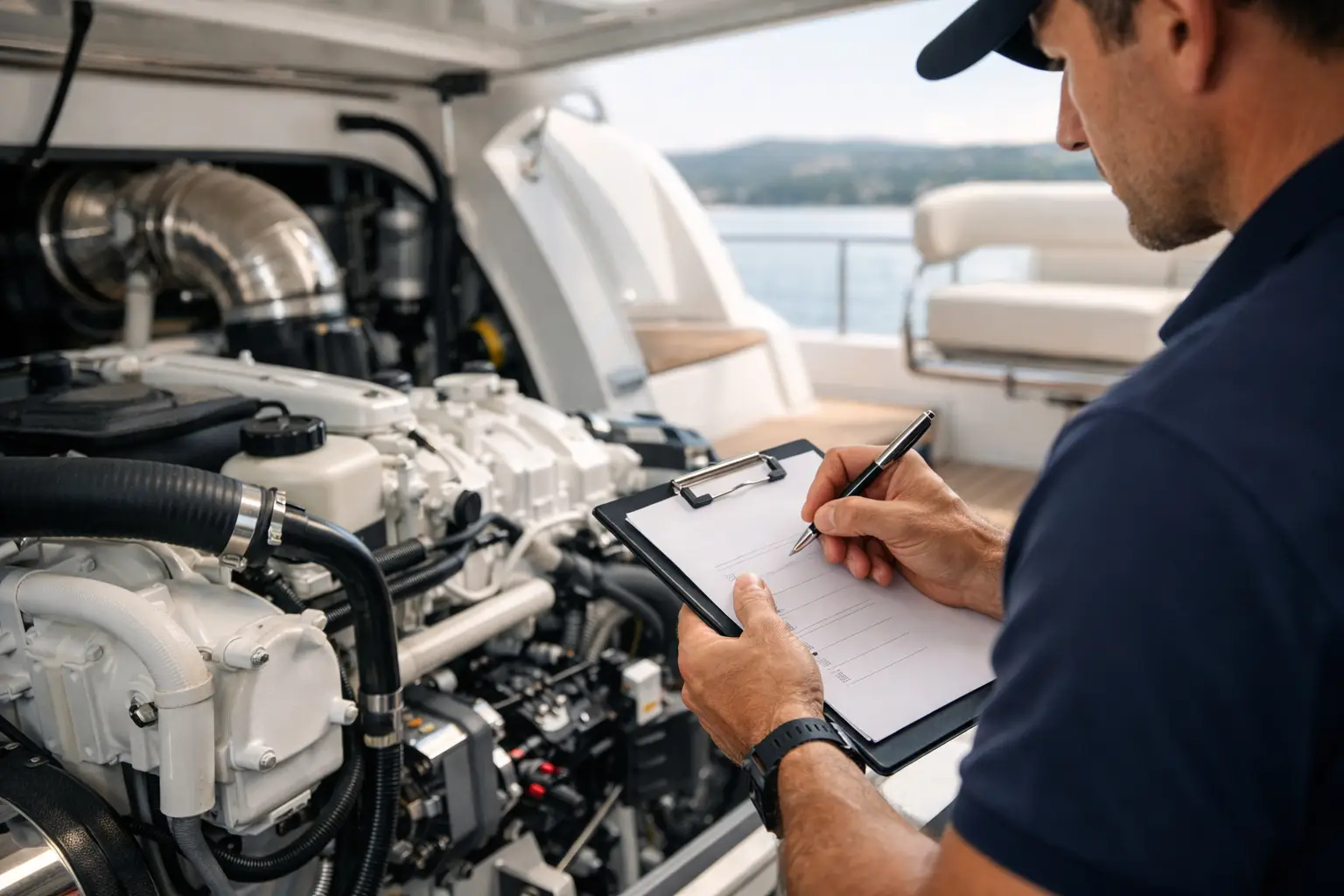
A yacht engine rarely fails without giving clues first. A faint coolant smell, a new vibration at cruise speed, a slow start, or a trace of fluid in the bilge can be the early signal of a much larger repair. This yacht engine inspection checklist helps owners, captains, and fleet managers recognize what deserves attention before a scheduled trip becomes an expensive service interruption.
For yachts from 50 to 500 feet, inspections should not be treated as a quick look under the hatch. Engines, generators, cooling systems, electrical components, and steering systems work together in a demanding saltwater environment. A proper inspection protects performance, resale value, and, most of all, confidence when you leave the dock.
Start With a Safe, Documented Inspection
Begin with the vessel secured, engines shut down and cooled when possible, and the engine room well ventilated. Keep a maintenance log nearby. A record of engine hours, prior repairs, fluid changes, alarms, and recurring concerns gives a technician valuable context. The same smoke pattern or temperature increase means something different on an engine with 200 hours since service than one with 2,000.
Before touching any component, look and listen. Check for standing water, fuel odor, oil sheen, loose gear, damaged insulation, and signs of corrosion around mounts, fittings, and electrical connections. Salt air does not need much time to create problems, particularly on vessels that sit unused or operate frequently in South Florida heat.
A visual inspection is useful, but it is not a substitute for qualified diagnostics. Think of a marine technician as a doctor for your yacht’s machinery: visible symptoms matter, but the diagnosis depends on readings, history, and knowing how the systems should perform together.
Yacht Engine Inspection Checklist: Fluids and Filters
Fluids offer some of the clearest evidence of engine health. Check levels only according to the engine manufacturer’s procedures, since overfilling can be as harmful as running low.
Engine oil should be at the proper level and free from an unusually milky appearance, metallic glitter, or a strong fuel smell. Milky oil can point to water intrusion, while fuel dilution may indicate an injector or combustion issue. Do not assume dark diesel oil automatically means trouble. Diesel oil can darken quickly in normal use, so condition, service interval, and laboratory analysis matter more than color alone.
Check coolant level and concentration, then inspect hoses, clamps, heat exchangers, expansion tanks, and fittings for seepage. A low coolant level may be a simple hose-clamp issue, but it can also signal a leak in a cooler, heat exchanger, or more serious internal component. On saltwater-cooled systems, neglected cooling service is one of the fastest paths to overheating and lost cruising time.
Inspect transmission fluid, hydraulic fluid, and power steering fluid where applicable. Look for leaks around shaft seals, hoses, pumps, and connections. Also inspect fuel filters and water separators for contamination or collected water. Water in diesel fuel can damage injectors, create hard starts, and leave a yacht unable to get on plane when it matters most.
Inspect the Cooling System Before It Inspects Your Wallet
Cooling problems are common, preventable, and often costly when ignored. Start with raw-water strainers. They should be clean, properly sealed, and free of cracked lids or worn gaskets that allow air into the system. Check the raw-water pump area for dripping and inspect accessible hoses for softness, cracking, chafe, or swollen sections.
Heat exchangers, aftercoolers, oil coolers, and transmission coolers deserve scheduled attention, not just a reaction after an overheat alarm. Internal buildup can restrict water flow long before the engine reaches a dangerous temperature. The right cooler service interval depends on engine model, hours, operating conditions, water quality, and maintenance history.
During operation, compare port and starboard engine temperatures where applicable. A small difference may be normal. A developing gap, rising temperature at load, or an alarm that appears only at higher RPM should be investigated promptly. Avoid the temptation to keep running until the problem becomes obvious. The repair bill usually grows with every overheated mile.
Check Belts, Hoses, Mounts, and Running Gear
Belts should have proper tension and show no glazing, fraying, cracking, or excessive dust around pulleys. A worn belt can affect charging, cooling, and other critical accessory systems. Hoses should be secure at every connection and protected from abrasion. Pay close attention to areas hidden behind equipment, where rubbing may not be visible from the engine-room entrance.
Inspect engine mounts for deterioration, corrosion, loose hardware, or evidence that the engine has shifted. Vibration complaints should never be dismissed as part of owning a boat. The source may be an engine mount, shaft alignment issue, propeller damage, driveline component, or combustion problem. Each possibility requires a different repair, which is why professional diagnosis saves time and unnecessary parts replacement.
Where access allows, check shaft seals, couplings, steering components, and visible hydraulic lines. Any new leak, vibration, knocking sound, or change in steering response should be documented and addressed before the next extended run.
Test Electrical Starting and Charging Performance
Marine electrical issues can imitate fuel or mechanical problems. Check battery condition, terminal security, cable corrosion, battery switches, and charger operation. Green or white corrosion at a terminal can create enough resistance to cause slow cranking, intermittent alarms, or a no-start condition.
Start each engine and generator while observing cranking speed, voltage behavior, exhaust smoke, instrument readings, and warning lights. A healthy starting system should crank decisively. Repeated slow starts, clicking, or the need to use a parallel switch may indicate a battery, cable, starter, charging, or connection problem.
After startup, verify charging voltage and check that gauges and electronic displays are operating normally. For modern MTU, MAN, and Caterpillar engines, electronic diagnostics can reveal fault codes and operating data that are not visible on the dash. That information is especially valuable when an intermittent alarm has cleared before a technician arrives.
Run the Engine and Watch What Changes Under Load
A dockside inspection catches many issues, but an engine behaves differently under load. If conditions and vessel procedures allow, observe engine temperature, oil pressure, voltage, boost, RPM, and smoke behavior through the operating range. Compare readings against manufacturer specifications and the vessel’s normal baseline.
Brief smoke at startup can be normal for some diesel engines. Persistent black smoke may indicate restricted air flow, overloaded operation, injector concerns, or turbocharger issues. Blue smoke can point to oil consumption. White smoke can have several causes, including unburned fuel, water intrusion, or a cold engine condition. Smoke should be evaluated alongside temperature, engine data, fuel condition, and how the vessel runs.
Listen for unusual knocking, squealing, whistling, or exhaust leaks. Notice whether the yacht reaches expected RPM and whether it responds cleanly to throttle input. A loss of speed can be an engine issue, but it may also relate to hull growth, propeller damage, incorrect load, or running gear condition. The right answer depends on evidence, not guesswork.
When to Call a Mobile Marine Technician
Call for professional service immediately if you find fuel or coolant leaks, repeated alarms, overheating, contaminated oil, hard starting, unusual vibration, declining oil pressure, or a major change in exhaust smoke. Waiting can turn a manageable hose, cooler, fuel, or electrical repair into downtime that affects a trip, charter schedule, or operation.
GTM International brings certified, licensed, and insured marine technicians directly to vessels throughout the South Florida coastal corridor. Mobile service avoids the delay and expense of hauling a yacht to a yard, while giving owners access to engine diagnostics, repairs, preventive maintenance, generator work, and cooler service where the vessel is kept.
Use this checklist before busy cruising periods, after a long layup, and whenever the engine gives you a new reason to pause. The best time to schedule an inspection is while the yacht is still running well enough to get you back out at sea on your terms.
