
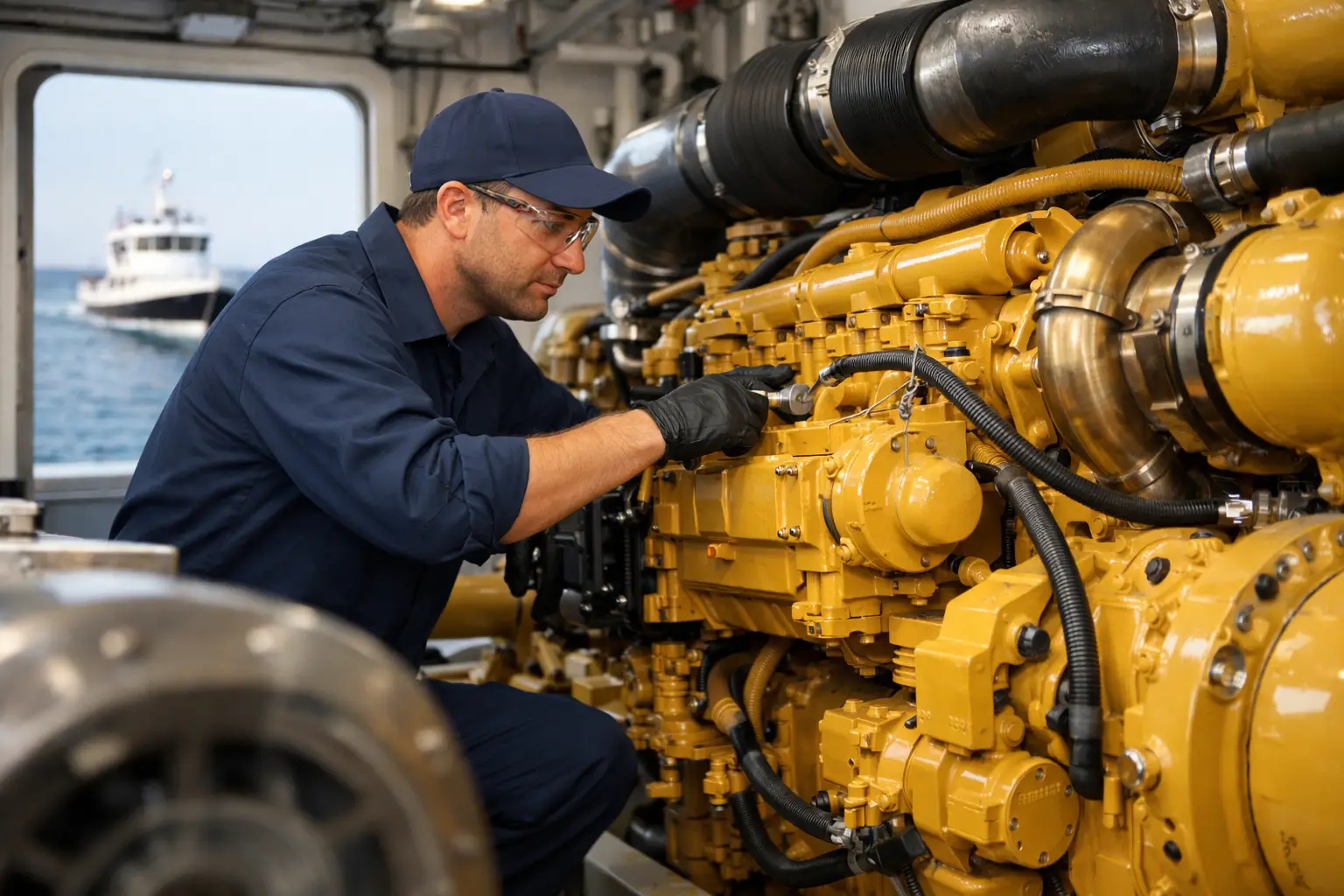
A Caterpillar engine rarely fails without leaving clues. A slight rise in coolant temperature, a new vibration at cruise speed, harder starts, smoke changes, or a generator that suddenly loads differently can all point to a problem worth diagnosing before it becomes a trip-ending repair. For owners and captains, Caterpillar marine engine service is not just an oil change or a response to an alarm. It is the practical care that protects engine life, vessel value, and time on the water.
For yachts and diesel-powered vessels operating between Fort Lauderdale, West Palm Beach, and Fort Pierce, the marine environment is especially demanding. Heat, humidity, salt air, extended idling, and inconsistent use all affect cooling systems, fuel delivery, batteries, electrical connections, and engine components. The right service plan catches developing issues while they are still manageable – often at the dock, before a small concern turns into a costly boatyard delay.
When Caterpillar Marine Engine Service Cannot Wait
A warning light is an obvious reason to call, but it should not be the only one. Experienced marine technicians look at changes in how the vessel behaves, not just dashboard alarms. If your CAT engine is cranking longer than usual, producing excess smoke, losing RPM under load, running warmer than normal, or consuming more fuel, it is time for a professional inspection.
The same applies after a grounding, overheating event, electrical issue, fuel contamination concern, or long period without use. Restarting and hoping for the best can create more damage. A proper diagnostic visit identifies whether the issue is limited to a sensor, connection, filter, impeller, hose, or maintenance item – or whether deeper engine work is needed.
Think of the process the way you would approach a medical concern. The first goal is an accurate diagnosis, not a guess. Replacing parts without testing can waste money and extend downtime. A qualified technician should inspect the full picture: fault codes, fluid condition, temperatures, pressures, charging performance, cooling flow, and the engine’s behavior under the conditions that caused the concern.
What a Proper CAT Engine Visit Should Cover
Caterpillar marine engines are built for serious work, but their reliability depends on the systems around them. An engine may be mechanically sound while a restricted heat exchanger, corroded electrical terminal, tired raw-water pump, contaminated fuel supply, or weak battery creates a performance problem.
A thorough service visit commonly addresses four connected areas:
- Engine oil, filters, belts, hoses, fluid levels, leaks, and overall engine condition.
- Fuel system condition, including filters, water contamination concerns, fuel delivery, and signs of injector or combustion trouble.
- Cooling system performance, from raw-water flow and pump components to heat exchangers, aftercoolers, and coolant condition.
- Electrical and control systems, including batteries, alternators, connections, sensors, alarms, and diagnostic readings.
The exact scope depends on the engine model, operating hours, maintenance history, and how the boat is used. A yacht that runs regularly on longer trips has different needs than a vessel that spends most of its time docked with occasional weekend use. Both can develop problems, but the causes are often different.
For example, low-use engines may suffer from stale fuel, moisture, battery degradation, stuck components, and internal corrosion risks. High-hour engines may need more attention to cooling efficiency, fluid analysis, vibration, fuel performance, and wear-related maintenance. There is no one-size-fits-all interval that replaces a technician’s judgment.
Cooling Service Is Often the Difference Between a Good Day and a Tow
South Florida water, heat, and marine growth put constant pressure on a diesel cooling system. A temperature problem may start with something as simple as limited raw-water flow, but it can also involve a damaged impeller, blocked strainer, worn pump, restricted cooler, or aftercooler issue.
Ignoring high-temperature warnings can lead to warped components, damaged hoses, reduced performance, and major engine repairs. Cooler and heat-exchanger service is preventive work with a direct payoff: it helps the engine hold temperature under load and reduces the chance of an avoidable overheating event offshore.
If an engine has been running hot, the best next step is not to keep testing it at speed. Have the cause diagnosed before the next run. The repair may be straightforward, but the consequences of waiting may not be.
Fuel Quality and Electrical Health Deserve Equal Attention
Many starting, power, and reliability complaints are not caused by a major internal engine failure. Fuel contamination, restricted filters, air entering the fuel system, weak batteries, damaged terminals, charging issues, or poor connections can all create symptoms that feel much more serious than they are.
That is why diagnostics matter. A technician who checks the engine, generator, batteries, and supporting systems together can isolate the source of the problem faster. This approach also prevents owners from paying for unnecessary parts based on assumptions.
Why Mobile Marine Service Makes Sense
Taking a 50- to 500-foot vessel to a repair yard can involve scheduling, fuel, crew coordination, slips, transport decisions, and lost time. For a maintenance visit or many diagnostic repairs, that disruption is not necessary. Mobile service brings trained technicians and the right diagnostic approach directly to the vessel.
That convenience is more than a comfort. It can reduce the total cost of the job by avoiding a haul-out or yard move when one is not required. It also lets the technician inspect the engine in its actual operating environment, alongside the vessel’s generator, electrical system, steering components, and onboard equipment.
GTM International provides mobile marine maintenance and repair throughout the South Florida coastal corridor, helping owners and captains address CAT engine concerns at the dock with licensed, insured, and responsive technical support. When an issue requires immediate attention, a 24-hour response model can make the difference between a short delay and a canceled trip.
Mobile service does have limits. Major internal engine work, extensive corrosion repair, or repairs requiring haul-out access may still need a yard or specialized facility. A trustworthy service provider should be direct about that. The goal is not to force every repair dockside – it is to choose the most efficient, safe, and cost-conscious path for the vessel.
Build Maintenance Around How You Use the Boat
The best time to plan service is before an alarm or lost weekend forces the issue. Preventive maintenance programs help owners track operating hours, seasonal needs, fluid and filter changes, cooler service, generator care, and inspections across the vessel’s critical systems.
A practical maintenance plan should account for how often the boat runs, whether it is stored in the water, the age of the engines, past repairs, and planned trips. Before a long cruise, captain change, hurricane season, or a busy charter period, a focused inspection can provide valuable peace of mind. It is easier to schedule an oil service, cooling inspection, or battery check than to explain a canceled departure caused by a preventable fault.
Keep service records, including engine hours, diagnostic findings, parts replaced, fluid changes, and cooling-system work. Those records help technicians spot patterns over time and support the vessel’s resale value. They also make it easier to decide whether a recurring issue is a minor maintenance matter or a sign that a component needs a more permanent repair.
Choose Diagnosis Before Guesswork
When your Caterpillar engine feels different, do not wait for the problem to become obvious. Note what changed, when it occurs, the engine hours, any alarms, and whether the condition appears at idle, cruise, or under load. That information gives a marine technician a stronger starting point and can shorten the diagnostic process.
A dependable engine is built through attention to the small warnings: a temperature trend, a rough start, a fuel smell, an unusual sound, or a charger that is not keeping up. Addressing those signs early is one of the simplest ways to save time, money, and stress – and keep your next departure focused on the water ahead.
