
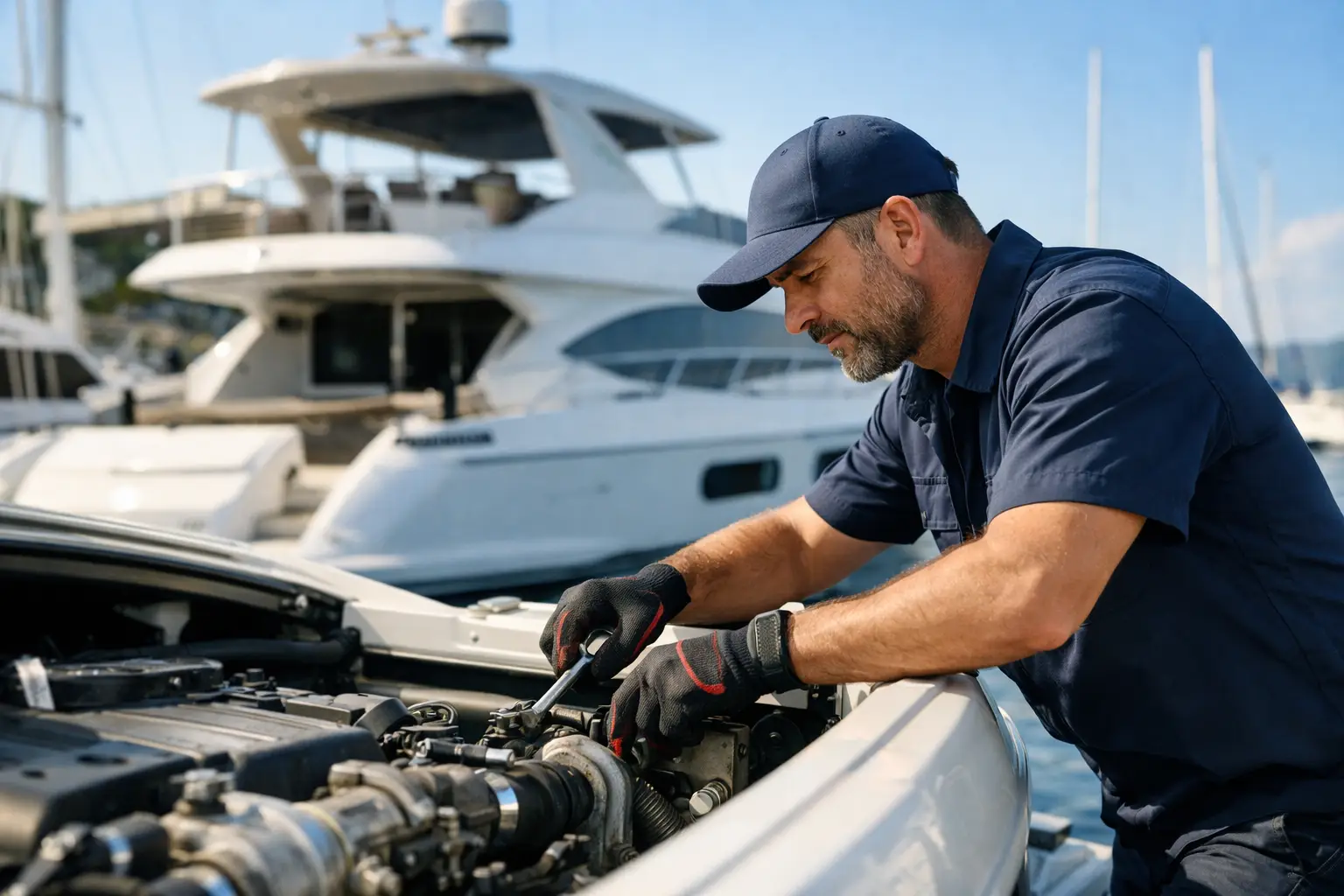
A yacht engine rarely fails at a convenient time. It fails before a crossing, during a busy charter schedule, or when a warning light turns a planned day offshore into a question mark. Knowing how to choose yacht mechanic service before that moment gives you a far better chance of protecting your vessel, your schedule, and your budget.
The right mechanic does more than replace parts. Think of the technician as a doctor for your yacht: they listen to the symptoms, run the right tests, find the underlying issue, and prescribe the repair or maintenance that prevents a larger problem. For owners and captains in South Florida, the decision should come down to proven marine experience, diagnostic skill, responsiveness, and the ability to work on your vessel where it is.
Start With Marine-Specific Experience
Not every skilled mechanic is qualified to work on a yacht. Marine engines operate in a harsh environment of heat, vibration, salt air, and constant exposure to moisture. A technician who knows automotive engines may understand basic mechanics, but yacht propulsion, generators, cooling systems, electrical systems, and steering components require marine-specific knowledge.
Ask what types of vessels the company regularly services. A mechanic who mainly works on small outboards may not be the best fit for a 70-foot sportfish or a motor yacht with complex diesel propulsion and generator systems. The same applies at the other end of the range: a company accustomed only to large commercial equipment may not provide the careful, owner-focused service a private yacht requires.
For larger vessels, look for technicians experienced with the engine platform installed in your boat. MTU, MAN, Caterpillar, and other major marine diesel manufacturers each have distinct service procedures, diagnostic systems, maintenance intervals, and common failure points. Familiarity with the brand is valuable. Factory training, certifications, and a track record with your equipment are even better.
Verify Licensing, Insurance, and Technical Credentials
A yacht is a high-value asset, and a serious repair should never rely on a handshake alone. Ask whether the marine mechanic is licensed and insured, and request confirmation when the scope of work is significant. Proper insurance matters if an accident, damage, or injury occurs while service is being performed aboard your vessel.
Credentials do not replace experience, but they are a useful sign that a company takes its work seriously. Qualified technicians stay current on modern diesel systems, electronic controls, generators, fuel delivery, cooling systems, and onboard electrical troubleshooting. They should also understand the safety requirements that apply when working around batteries, fuel, pressurized systems, and confined engine rooms.
A good mechanic should be comfortable explaining qualifications without becoming defensive or vague. If you receive unclear answers about insurance, engine experience, or who will actually perform the work, consider that a warning sign. Your mechanic should make you more confident, not leave you guessing.
Choose Diagnostic Ability Over Fast Guesses
The most expensive repair is often the one that did not fix the problem. Yacht owners can lose time and money when parts are replaced based on assumptions rather than evidence. A dependable mechanic begins with diagnostics: inspecting the system, reviewing fault codes where applicable, testing components, and connecting symptoms to a probable cause.
For example, an overheating engine can stem from several issues: restricted raw-water flow, a failing impeller, a damaged heat exchanger, a clogged aftercooler, a thermostat problem, a circulation issue, or an engine-related fault. Replacing the first component that looks suspicious may offer a temporary result, but it may not address the source of the problem.
Ask how the company approaches troubleshooting. You do not need a technical lecture, but you deserve a plain-language explanation of what was found, what testing supports the diagnosis, and what repair options are available. The best marine mechanics balance technical depth with clear communication, so owners and captains can make informed decisions without feeling pressured.
Consider Mobile Service and Response Time
Getting a yacht to a repair yard can create its own set of problems. You may need to arrange a captain, pay for fuel, alter a dock schedule, wait for a haul-out, or lose use of the boat while it sits in line. When the issue can be addressed at the dock, a mobile marine mechanic can save considerable time, money, and stress.
Mobile service is especially valuable along the South Florida coast, where vessels may be located at private docks, marinas, yacht clubs, or managed properties from Fort Lauderdale to Fort Pierce. A technician who comes directly to the boat can inspect the conditions where the problem occurred and often begin repairs sooner.
Response time matters, but it should be measured realistically. A 24-hour mobile-response company is useful when you have an urgent problem, but no ethical mechanic should promise a precise repair outcome before inspecting the vessel. The better question is whether the company answers the phone, communicates arrival expectations, carries appropriate diagnostic equipment, and has a practical plan for moving the repair forward.
Ask About the Full Range of Systems They Service
Engines are central to yacht reliability, but they are not the only systems that can keep you at the dock. Before selecting a mechanic, find out whether the company can service related systems that affect performance and safety. Working with one qualified marine service partner can reduce the time spent coordinating separate vendors and helps create a clearer maintenance history.
A capable yacht mechanic should be prepared to evaluate engine and generator issues, preventive maintenance needs, coolers and heat exchangers, electrical concerns, and steering-system repairs. That does not mean every problem should be handled by one person. Specialized work may sometimes require a manufacturer representative or another trade. What matters is that your mechanic recognizes those limits, coordinates intelligently, and does not attempt work outside their competence.
This is also the time to ask whether they can support both emergency repairs and scheduled maintenance. Emergency service gets you moving again. Preventive service helps keep the emergency from happening in the first place.
Compare Estimates the Right Way
Lowest price is not always lowest cost. A quote that seems inexpensive can become expensive if it omits diagnostic time, excludes necessary materials, uses unsuitable parts, or leads to repeat repairs. On the other hand, the highest estimate is not automatically the best one. You are looking for a scope that is clear, justified, and proportionate to the vessel and the issue.
Ask for an estimate that separates labor, parts, and any expected additional work. For complex diagnostics, it is reasonable for a mechanic to quote an initial inspection period rather than promise a fixed repair price immediately. The important point is transparency. You should know the hourly rate, the likely next steps, and when the company will contact you before exceeding an agreed amount.
For critical engine components, ask about the source and suitability of replacement parts. OEM parts can be the right choice for many applications, while quality aftermarket options may make sense in other cases. The correct decision depends on the component, warranty requirements, engine manufacturer guidance, operating demands, and your long-term plans for the boat.
Look for Maintenance Planning, Not Just Repair Work
A technician who only appears after a breakdown is useful, but a technician who helps you avoid breakdowns is more valuable. Diesel engines, generators, cooling systems, and fuel systems reward consistent care. Missed services can lead to poor performance, overheating, fuel contamination, corrosion, reduced reliability, and repairs that cost far more than routine maintenance.
Ask whether the company offers preventive maintenance programs tailored to your engine hours, vessel use, and manufacturer schedule. A yacht used year-round in South Florida has different needs than a boat that sits for months at a time. Usage patterns, age, engine model, and previous service history all affect what should be inspected and when.
Good maintenance records also help when selling a yacht, managing a fleet, satisfying warranty conditions, or briefing a new captain. The right mechanic documents what was done and flags upcoming needs early, giving you time to budget and schedule service around your boating plans.
Evaluate Communication and Professionalism
Technical competence is essential, but communication determines how manageable the service experience feels. You should be able to reach the company, understand what is happening, and receive updates if the job changes. Captains need practical information they can act on. Owners need confidence that their investment is being handled carefully.
Pay attention to the first interaction. Does the company ask useful questions about your vessel, engine make, symptoms, location, and urgency? Do they return calls? Are they direct about availability? These small details often predict the quality of service once work begins.
GTM International brings certified, licensed, and insured mobile marine service directly to yachts throughout the South Florida coastal corridor, with experience across vessels from 50 to 500 feet and major diesel platforms including MTU, MAN, and Caterpillar. That combination of on-site access and system-level expertise can eliminate unnecessary yard logistics while keeping the focus on dependable repairs.
Your yacht deserves more than a quick fix from the first available person with a wrench. Choose a mechanic who can diagnose carefully, communicate clearly, respond when it counts, and help keep your engines ready for the next time the water is calling.
