
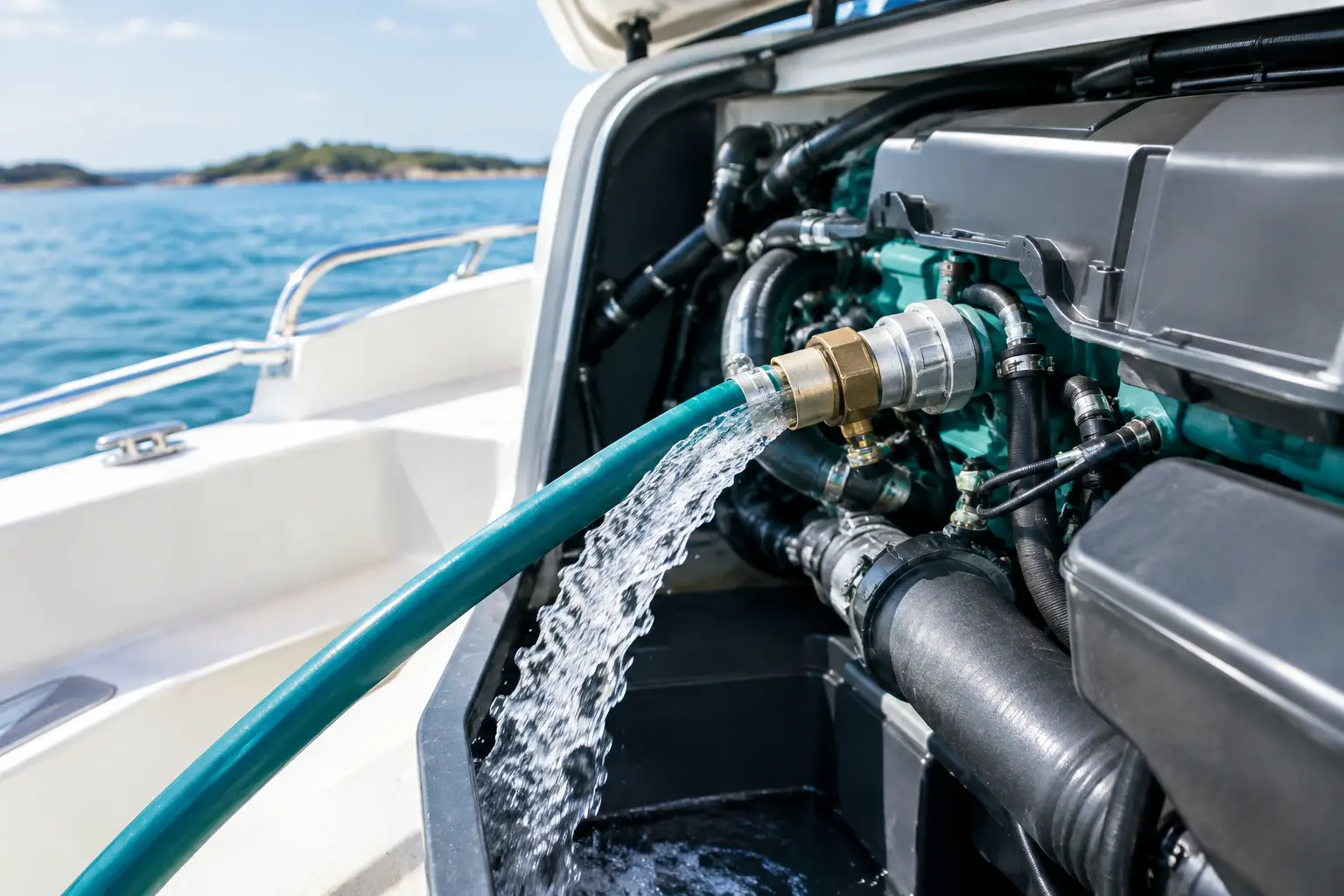
A high-value yacht does not usually give much warning before a cooling problem becomes an expensive one. Rising temperature, weak water discharge, an alarm at cruise speed, or steam near the exhaust can turn a planned day offshore into a service call. A properly performed marine cooling flush helps remove the salt, scale, silt, and biological buildup that restrict water flow long before the engine reaches that point.
For vessels operating between Fort Lauderdale, West Palm Beach, and Fort Pierce, cooling-system contamination is not an abstract concern. Warm saltwater, long idle periods, shallow-water sediment, and year-round use all work against clean, efficient cooling. The right maintenance plan protects engine performance, limits corrosion, and helps keep your boat ready when you are.
What a Marine Cooling Flush Actually Does
Marine diesel engines depend on controlled heat transfer. Raw water is drawn through a seacock and strainer, then routed through components such as heat exchangers, aftercoolers, oil coolers, transmission coolers, exhaust elbows, and, in many cases, generator cooling circuits. These passages are small enough that even moderate mineral scale or debris can reduce flow and heat-transfer efficiency.
A marine cooling flush is not simply running fresh water through the system for a few minutes. Freshwater rinsing is useful after operation, especially for certain raw-water-cooled equipment, but it may not remove hardened deposits inside a cooler or heat exchanger. A professional service evaluates the system, isolates the appropriate circuit, and uses a compatible flushing method or cleaning solution based on the engine manufacturer, component condition, and type of contamination.
The goal is straightforward: restore cooling-water flow without damaging sensitive metals, seals, hoses, or gaskets. That matters on every vessel, but especially on larger yachts with MTU, MAN, Caterpillar, and similar diesel platforms where one restricted cooler can affect performance across a much larger system.
Why Restricted Cooling Systems Cost More Than a Flush
Cooling restrictions rarely stay contained to one small part. When a heat exchanger or aftercooler cannot transfer heat efficiently, the engine must operate at higher temperatures. Oil temperatures may rise, exhaust temperatures can increase, and corrosion can accelerate inside components that are already exposed to saltwater.
At first, the problem may appear only under load. The engines might idle normally at the dock but run warm while cruising, pushing against current, or carrying a full load of fuel, passengers, and gear. That is why a quick check at idle is not always enough to confirm that a cooling system is healthy.
Neglected buildup can lead to damaged hoses, failed impellers, degraded seals, overheating alarms, and premature cooler replacement. In a worst-case scenario, continued overheating can create serious engine damage and extend downtime far beyond a scheduled maintenance visit. A flush and inspection are generally far less disruptive than diagnosing a vessel that cannot leave the dock.
Think of the cooling system the way you would think of circulation in the body. A blockage may start small, but it affects the whole system. Experienced marine technicians act like engine doctors: they look for the cause behind the symptom instead of treating a temperature alarm as the entire problem.
Signs Your Yacht May Need Cooling Service
A temperature alarm deserves immediate attention, but the earlier signs are often more subtle. You may notice reduced raw-water discharge at the exhaust, an engine that runs warmer than its normal baseline, or temperature changes that appear only at higher RPM. A generator that overheats after running for a while can point to similar restrictions in its own cooling circuit.
Other warning signs include frequent impeller failures, visible salt residue around cooling components, leaking cooler end caps, discolored coolant in a closed-cooling system, or an engine history that is incomplete or unknown. Boats that have spent time in silty water, remained idle through a season, or changed ownership are especially good candidates for a thorough cooling-system evaluation.
It depends on the symptom. Weak water flow may come from a blocked strainer, damaged impeller, collapsed hose, restricted intake, or marine growth at the seacock rather than scale in a heat exchanger. A quality diagnosis checks the full path of water before recommending a chemical flush or component removal.
How Professional Marine Cooling Flush Service Works
The service begins with inspection. A technician checks operating temperatures, raw-water flow, strainers, hoses, clamps, belts, impellers, seacocks, and visible signs of leakage or corrosion. On larger diesel installations, the condition of heat exchangers, aftercoolers, and oil or gear coolers also needs to be considered as part of the complete system.
Next comes the decision on method. Some systems benefit from a controlled freshwater flush. Others require a manufacturer-compatible descaling solution circulated through a specific component or section of the raw-water circuit. In cases of heavy buildup, the cooler may need to be removed, opened, cleaned, pressure-tested, and reassembled with the correct seals rather than flushed in place.
That distinction protects your investment. An aggressive chemical that is wrong for the alloy, concentration, or exposure time can create problems of its own. Likewise, flushing through a system without isolating the proper components may fail to clear the restriction or move debris into another area. Professional service is as much about knowing what not to force through the system as it is about cleaning it.
After the work is complete, the system should be tested under appropriate operating conditions. Technicians verify water flow, monitor temperatures, inspect for leaks, and confirm that alarms are no longer present. If a cooling problem remains, the testing process provides useful information for targeted repairs instead of expensive guesswork.
Freshwater Rinsing, Flushing, and Cooler Cleaning Are Different Jobs
Owners sometimes use these terms interchangeably, but they solve different problems. Freshwater rinsing helps reduce salt exposure after operation. It is a valuable habit when the vessel and manufacturer guidance support it, but it is preventive housekeeping rather than a cure for internal scale.
A marine cooling flush targets deposits and contamination within the water path. It may be performed periodically based on operating environment, engine hours, maintenance history, and inspection findings. Cooler cleaning is more involved and may require disassembly, pressure testing, replacement of sacrificial zincs where applicable, and new gaskets or O-rings.
There is no one interval that fits every boat. A lightly used vessel kept in clean water may need a different schedule than a charter vessel, sportfisher, or yacht that runs frequently in warm coastal conditions. Manufacturer service recommendations should guide the plan, with real-world operating conditions used to fine-tune it.
Mobile Service Keeps Maintenance From Becoming a Yard Project
Moving a 50- to 500-foot vessel to a repair yard can introduce scheduling delays, fuel costs, dockage complications, and time away from your normal operation. For many cooling-system inspections and services, the better option is to bring qualified technicians directly to the boat.
GTM International provides mobile marine maintenance and repair throughout the South Florida coastal corridor, bringing certified, licensed, and insured technicians to the vessel. That allows owners, captains, and fleet operators to address cooling concerns where the boat sits, while avoiding the unnecessary stress of hauling or relocating a vessel for routine service.
If your engine temperature is trending upward, your raw-water discharge has changed, or your maintenance records leave questions unanswered, address it before the next long run. A cooling-system check now can protect the engines, generator, and time on the water you planned to enjoy.
