
Imagine bringing a vintage sports car back to life—every shaft, bearing, and piston meticulously returned to factory tolerances. That’s exactly what a rebuilt marine engine offers: almost-new performance without the sticker shock of a full repower.
For many boat owners, it’s the perfect balance of reliability and budget-friendly thinking. You get proven durability on the water and keep capital free for other projects.
Understanding Rebuilt Marine Engine
A rebuilt engine starts with a full teardown. Technicians strip everything down to the bare block and inspect each piece.
Next, all parts—pistons, bearings, seals—are cleaned, measured, and machined to their original dimensions. Hitting those tight tolerances is what gives you confidence when the engine’s under load.
Why Choose A Rebuilt Engine
A rebuild bridges the gap between cost and performance. Owners can save up to 60% compared to buying new.
Reusing core blocks also cuts down on waste. In South Florida’s yachting community, these points really matter.
- Budget Friendly: Reusing major components cuts upfront expenses.
- Environmental Impact: Less scrap and a smaller manufacturing footprint.
- Regulatory Compliance: Engines are updated to meet current emissions standards.
Key Steps In The Rebuild Process
First, shops perform a complete engine strip-down and deep clean.
Then, every component goes through non-destructive testing to catch hidden cracks or wear.
After that, precision machining brings parts back to original specs.
Finally, all wear items—gaskets, seals, bearings—get swapped out with OEM replacements.
Here’s a visual overview of a marine engine structure.
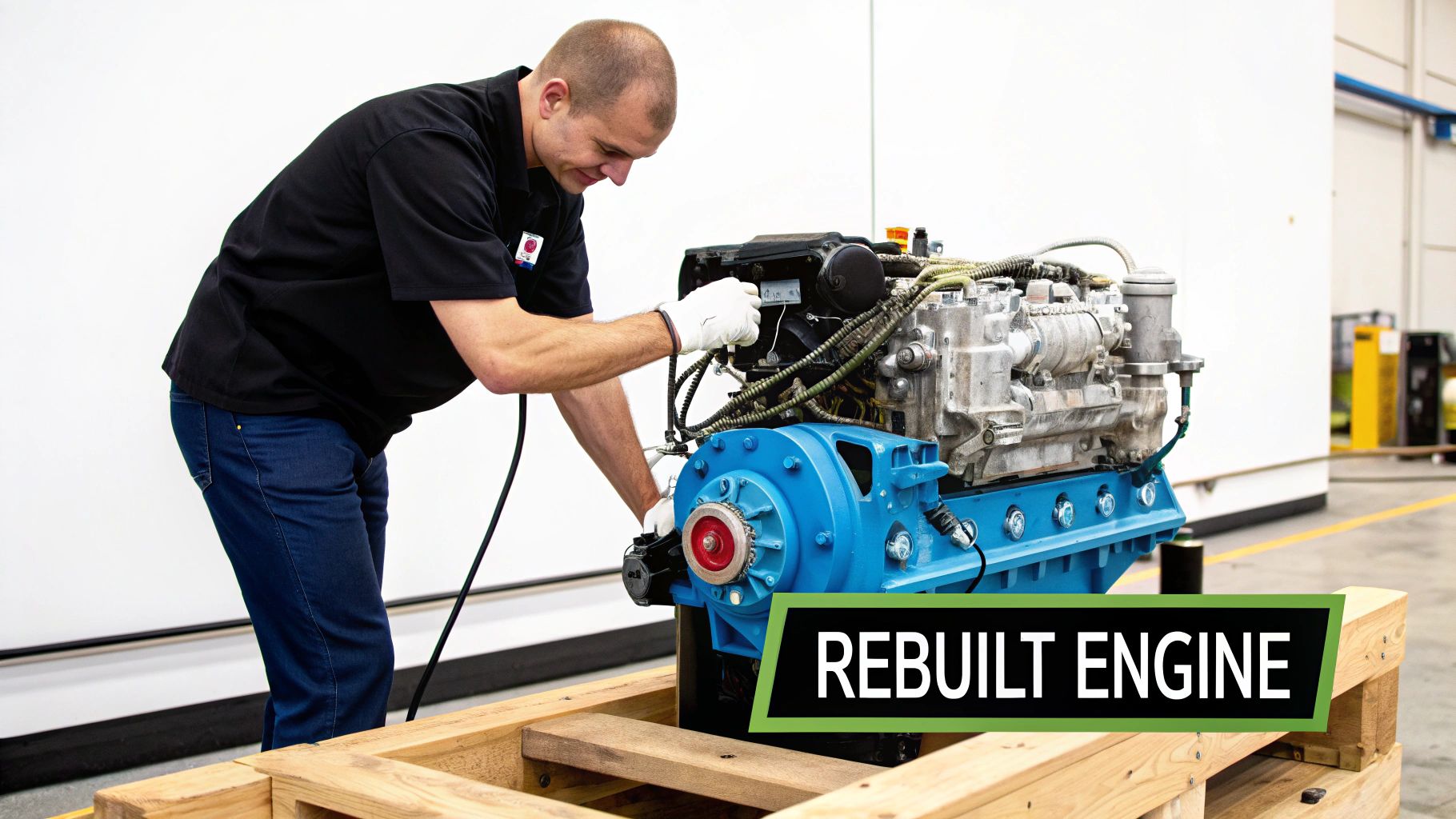
This diagram highlights cylinder layout and accessory systems.
“A rebuilt engine is like a second chance for your vessel: carefully refreshed components deliver performance you can trust.”
Extending Engine Life
A professional overhaul can add 10–20 years to your engine’s service life. Regular inspections and rigorous testing—culminating in a final dyno run—guard against surprises at sea.
At GTM International, we bring mobile diagnostics right to your dock. On-site alignment checks, cooling system verification, and electrical integration all happen before you leave the marina.
Benefits For Yacht Owners
- Cost Savings: Stretch budgets for other refit tasks.
- Reliability: Fresh parts mean fewer breakdowns.
- Sea-Ready: Engines are load-tested before sea trials.
Picking the right shop is critical. Look for OEM certifications, transparent before-and-after data, and robust on-site service. GTM International offers factory-certified repairs without ever hauling your boat out of the water. We even provide 24-hour on-site support across South Florida. Call or email us today for fast, expert advice on your next rebuild.
Rebuild Vs New Engine Trade-Offs
Rebuilds deliver dependable performance but won’t include the very latest design tweaks. New engines pack full features—with price tags often double or triple a rebuild.
Remanufactured units fall somewhere in between on cost and rebuild depth. Think about downtime: a quality rebuild can be back in service in as little as one week, while new-engine orders typically take 4–6 weeks for custom specs.
For many yachts, a rebuilt marine engine represents the sweet spot between value and performance. It extends your vessel’s life and frees up funds for other essential upgrades.
Shop Selection Tips
- Verify OEM certifications and read independent customer reviews.
- Request detailed before-and-after performance reports and dyno data.
- Confirm the shop’s capability for on-site installation and system integration to sidestep surprises.
Comparing Rebuilt Remanufactured And New Marine Engines
Selecting an engine overhaul strategy influences both your yacht’s performance and your budget. It’s a choice that deserves careful thought.
Think of it as three chefs tackling pizza. One starts with fresh dough and premium toppings (that’s a New Engine). The second reuses the crust but adds new sauce and cheese (a Remanufactured Engine). The third simply refreshes the crust before baking (a Rebuilt Marine Engine).
- New Engine: All parts are factory-fresh, straight from the manufacturer.
- Remanufactured Engine: The core block is reconditioned, and critical wear items are replaced.
- Rebuilt Marine Engine: The original block remains, but wear components are overhauled to meet OEM tolerances.
Each route comes with its own blend of cost, downtime, and reliability. A new engine commands a premium price and often 4–8 weeks of lead time but delivers the longest warranties and full manufacturer support.
Engine Option Comparison
Below is a concise overview of how these three options stack up side by side.
Engine Option Comparison
| Option | Upfront Cost | Turnaround Time | Warranty Coverage | Performance Guarantee |
|---|---|---|---|---|
| Rebuilt Marine Engine | Low to Medium | 1–2 weeks | 6–12 months | ~90% of new output |
| Remanufactured Engine | Medium | 2–4 weeks | 12–24 months | Full factory spec |
| New Engine | High | 4–8 weeks | 24–60 months | 100% new performance |
In many cases, choosing a rebuild can trim 30–60% off your initial spend compared to buying new. Discover more insights about marine propulsion engines market
Evaluating Turnaround And Performance
Every day in dry dock hits your schedule and your wallet. A rebuilt unit typically returns in 1–2 weeks, complete with dyno testing. Remanufactured engines might add extra inspection time but still arrive faster than new builds.
New engines often require 4–8 weeks for manufacturing and shipping before installation.
- Rebuilt delivers ~90% of original power at a fraction of the cost.
- Remanufactured guarantees full factory specs and tight tolerances.
- New engines offer 100% fresh parts and the latest design improvements.
“Choosing between rebuild, remanufacture, or new hinges on balancing upfront cost, downtime, and warranty promises.”
Warranty terms reflect the depth of refurbishment. Rebuilt options usually carry 6–12 months limited warranties, whereas remanufactured and new engines may offer coverage up to 60 months. Always verify shop certifications and test data to ensure you’re getting what you pay for.
Deciding Long Term Value
Think beyond the invoice and match your decision to how you use your vessel.
- A Rebuilt Marine Engine extends service life without overcapitalizing on aging assets.
- A Remanufactured Engine strikes a balance between cost savings and factory support.
- A New Engine makes sense if you need maximum warranty coverage and the latest features.
Ask yourself:
- Upfront Budget Impact: How does cost align with your refit priorities?
- Downtime Tolerance: Can you afford longer overhaul timelines?
- Warranty Needs: Do you need multi-year coverage or is a shorter term acceptable?
- Performance Targets: What power output and fuel efficiency do your voyages demand?
Ready to dive into specifics? Contact GTM International for on-site diagnostics, detailed pricing, and expert installation. Let’s keep your yacht sea-ready with the right engine solution.
Rebuilt Marine Engine Benefits, Costs, And Warranty Expectations
A rebuilt marine engine can restore up to 90% of its original power while costing a fraction of a brand-new unit. Yacht owners appreciate spending less without sacrificing dependability on the water.
Benefits Of A Rebuilt Engine
When you opt for a rebuilt powerplant, three advantages stand out:
- Cost Savings: You’ll often pay 30–60% less than the sticker price of a new engine.
- Environmental Impact: Reusing salvageable blocks and cores cuts down on scrap and trims manufacturing emissions.
- Faster Turnaround: A quality shop can finish most rebuilds in 1–2 weeks, so you get back to sea sooner.
For boaters around West Palm Beach, that means more cruising time and fewer wrench-turning headaches.
“A rebuilt engine delivers near-new performance while slashing costs by almost half.”
Drawbacks To Consider
Not every rebuild shop maintains the same standards. Inaccurate inspections or worn parts slipping through can lead to unexpected downtime. You’ll also miss out on the latest factory upgrades found in brand-new models.
- Verify shop certifications and read customer testimonials.
- Request dyno reports and detailed pre-rebuild inspections.
- Compare multiple quotes to ensure pricing and work scope match expectations.
Rebuild Cost Drivers
Understanding what drives the final bill helps you budget with confidence. Labor, parts, machining, and testing all add up.
- Parts Sourcing: Pistons, rings, seals and bearings can make up 30% of your rebuild cost.
- Precision Machining: Cylinder boring, crankshaft grinding and line honing restore factory tolerances.
- Final Testing: Dyno runs and leak-down checks validate performance but add extra shop hours.
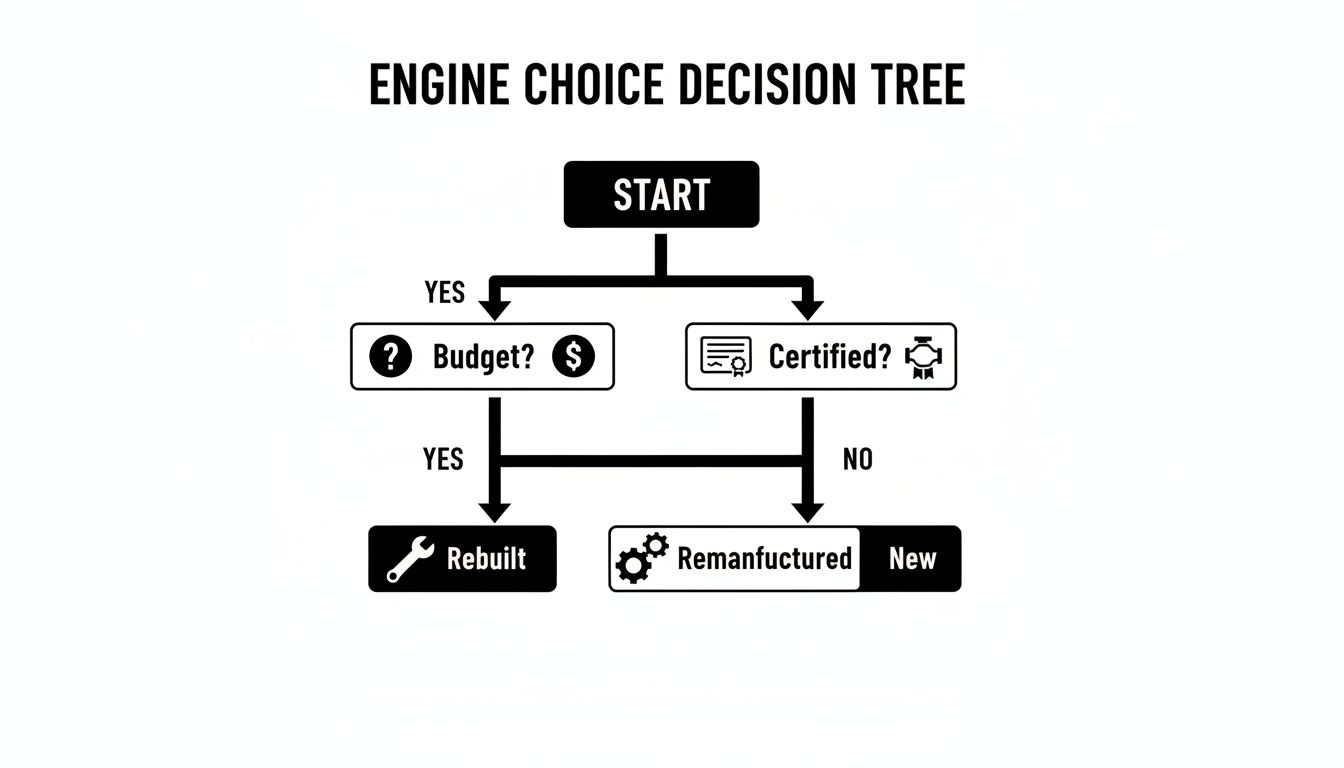
Below is an infographic decision tree that guides engine choice based on budget and certification factors.
Warranty Coverage Details
Warranty terms for a rebuilt marine engine can range widely depending on certification level and shop reputation. Common plans offer 6 to 12 months or 250 to 500 hours of coverage, often excluding wear items.
- Check for exclusions on gaskets, seals and consumables.
- Confirm any deductibles or shop fees tied to warranty claims.
- Ask about OEM certification tiers and related test documentation.
Balancing Benefits, Costs, And Protection
Choosing a rebuilt engine means weighing upfront savings against potential risks and warranty strength. Use your budget estimates, shop credentials and coverage terms to build a decision framework tailored to your vessel.
For on-site diagnostics and installation in South Florida, GTM International offers expert assessments.
- Call GTM at (123) 456-7890 for a free rebuild consultation.
- Schedule an on-site inspection to lock in accurate pricing and lead times.
Typical Rebuild Pricing Breakdown
A mid-range marine diesel (300–600 HP) rebuild usually falls in this range:
| Component | Estimated Cost | Notes |
|---|---|---|
| Labor | $4,000–$8,000 | 40–60 hours at $100–$150/hr |
| Parts | $3,000–$6,000 | Pistons, rings, seals, bearings |
| Machining | $1,500–$3,000 | Boring, grinding, honing |
| Testing | $500–$1,200 | Dyno runs and leak tests |
| Total | $9,000–$18,200 | Typical range for mid-size engines |
Keep in mind shop overhead and rare-parts shipping can push costs higher.
Choosing A Quality Shop
Your engine’s future performance depends on the people doing the rebuild. Look for technicians with factory certifications from MTU, CAT or MAN.
- Validate OEM partnerships to guarantee genuine parts and proper protocols.
- Review before-and-after dyno reports to confirm restoration goals.
- Ensure the shop provides detailed invoices, warranty paperwork and post-installation support.
GTM International ticks all these boxes with mobile service, certified techs and full transparency.
Final Takeaways
A well-executed rebuild can match close to 90% of a new engine’s power for a fraction of the cost. By combining shop credibility, clear pricing and solid warranty terms, you’ll navigate this decision with confidence.
- Reach out to GTM International at (561) 123-4567 or contact us for on-site diagnostics.
- Schedule your rebuild estimate today to minimize downtime and maximize uptime.
Common Questions
How long will the rebuild take?
Most projects wrap up in 1–2 weeks if parts are on hand.What performance can I expect?
Rebuilt engines typically deliver around 90% of their original horsepower.Can I add modern emissions controls?
Yes—many shops offer retrofit kits and ECU upgrades to meet new regulations.How do I verify rebuild quality?
Ask for dyno sheets, leak-down results and signed quality checklists before you leave the yard.
Next Steps Before Rebuild
Gather your engine’s service history, total operating hours and any prior inspection reports. Notify your marina or dock staff to schedule power shutdowns and clear technician access.
- Pre-departure Check: Walk through fluid levels, belt tensions and cooling system pressure.
- Post-Rebuild Sea Trial: Vary engine loads and record performance benchmarks for your logbook.
Smooth sailing awaits.
Inspection And Selection Checklist
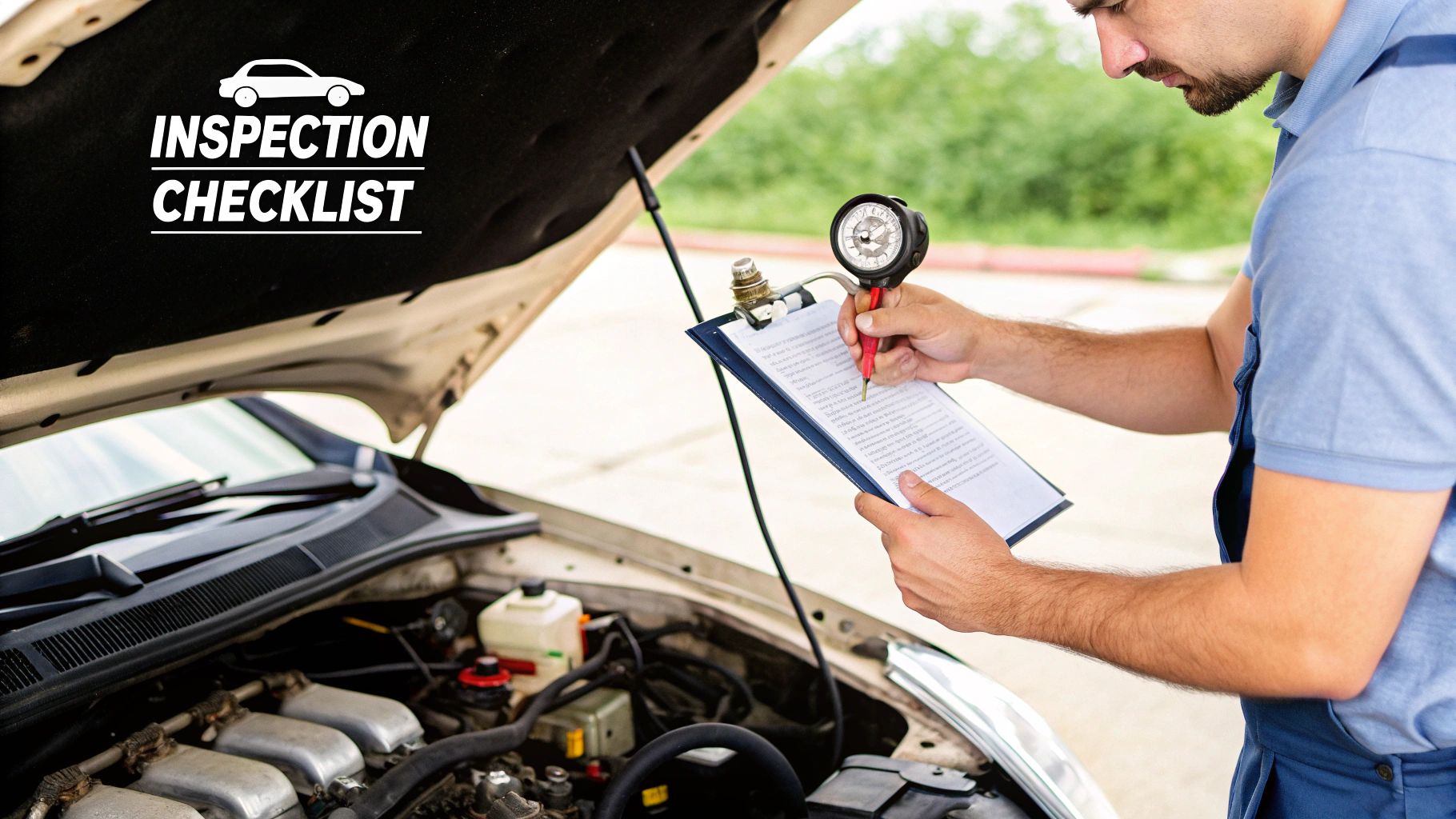
Before you sign off on a rebuilt marine engine, you need a system to catch problems before they sink your plans. This checklist weaves together service history checks, on-site diagnostics, and shop evaluations. Think of it as your pre-departure safety briefing. Skim through each step—no detail is too small when you want reliability at sea.
Key Engine Inspection Steps
Engine History Review
Dig into maintenance logs and past overhaul reports. Well-documented service hints at diligent previous owners.Compression Testing
Measure each cylinder’s pressure. Aim for consistency inside factory tolerance.Leak-Down Testing
Check for blow-by or sealing faults in valves and rings. Look for <15% leakage per cylinder.Oil Sample Analysis
Have a lab flag wear metals—iron, copper, aluminum—and signs of coolant or combustion by-products.Visual Inspection
Scan heads, exhaust manifolds, mounts for cracks, corrosion, or warping. A magnifier uncovers microfractures around valve seats.
“Spotting hairline cracks now saves thousands on the water tomorrow.”
Whether you’re an owner-operator or a marine surveyor, this resource keeps you organized.
Rebuild Selection Checklist
Use the table below to tick off essential items during your walk-through.
| Checklist Item | Importance | Inspector Tip |
|---|---|---|
| Maintenance Log Completeness | High | Cross-reference dates, hours, and service descriptions. |
| Compression Value Consistency | High | ≤10% variance across cylinders is acceptable. |
| Leak-Down Percentages | Medium | Target under 15% per cylinder for reliable sealing. |
| Oil Particle Count | High | Fewer than 100 particles/mL means healthy bearings. |
| Cylinder Head Condition | High | No cracks, coolant weep marks, or warped surfaces. |
| Shop Certification | Medium | Verify OEM or ISO credentials for marine expertise. |
Running through this checklist gives you confidence that nothing falls through the cracks.
Questions To Ask Your Rebuild Shop
- Are core parts machined to OEM tolerances? Show me the micrometer data.
- What warranty coverage applies, and what wear items are excluded?
- May I review before-and-after dyno sheets to confirm power restoration?
- Do you offer on-site installation and alignment to cut dockside downtime?
- How will you handle unexpected findings—change orders and cost approvals?
Print this list or load it on a tablet next to your engine bay. Pair it with an infrared scan to highlight hot spots on exhaust elbows. When every box is ticked, you and your technician will head into sea trials with peace of mind.
Contact GTM International for on-site diagnostics and seamless installation.
Get expert support across South Florida with 24-hour, dockside service.
Visit GTM International to schedule your inspection.
Secure reliable performance and peace of mind before your next voyage.
Ensure your rebuilt marine engine meets safety and quality standard.
Installation And Integration On Yachts
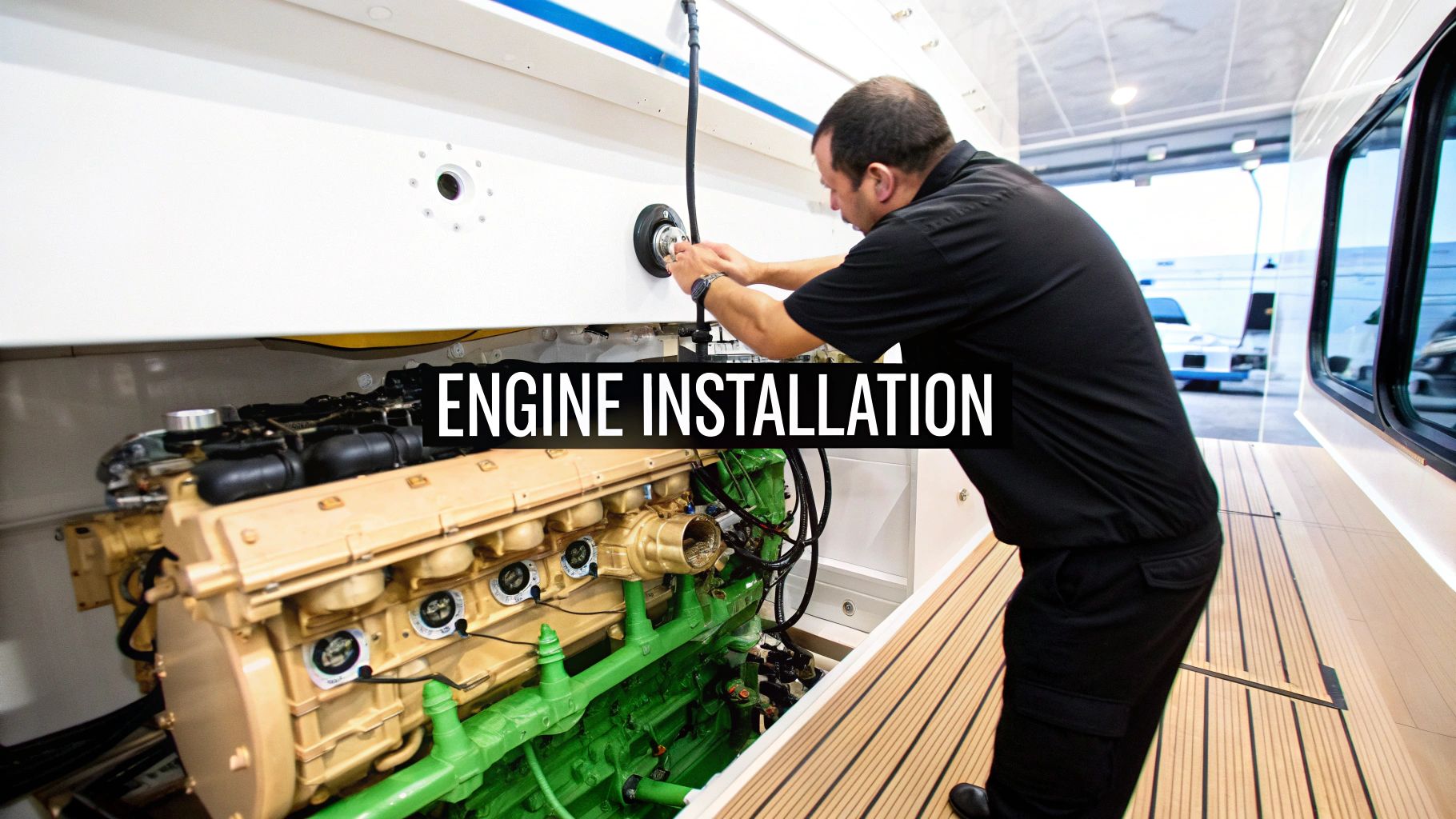
Fitting a rebuilt marine engine into a yacht isn’t just about bolting it in place. It’s a careful dance of precision measurements, structural checks, and teamwork across multiple disciplines. Get this right, and you’ll enjoy smoother sailing, quieter operation, and longer engine life.
Alignment Procedures And Tolerances
Before you lift the engine aboard, verify that the mounting foundation sits perfectly level. Any tilt or unevenness can turn minor vibrations into major headaches at sea.
- Check mount flatness to within 0.5 mm over a 300 mm span
- Use laser alignment tools to keep shaft angles under 0.1° deviation
- Coordinate with naval architects on coupling geometry and support frames
Nail these steps and you’ll see reduced wear, lower vibration levels, and noticeably better fuel efficiency.
Vibration Damping And Noise Control
Even a well-aligned engine will transmit some vibration—so isolation is key. Think of marine vibration pads and flexible couplings as shock absorbers for your propulsion system.
- Select damping materials rated for 20–50 kN operational loads
- Opt for neoprene mounts to cut noise by up to 25% in real-world trials
“Ignoring minor misalignments often leads to major repair costs later at sea.”
– GTM International Lead Technician
Fuel System And ECU Calibration
Tuning the fuel system and ECU is part art, part science. A few degrees off on injector timing can spell poor performance or even damage.
- Inspect flange alignments and piping junctions at each fuel interface
- Adjust ECU parameters to match your injectors and sensors
- Run a diagnostics check to confirm seamless communication between the ECU and vessel network
These checks ensure consistent combustion, crisp throttle response, and reliability under changing loads.
| Component | Specification | Notes |
|---|---|---|
| Mount Flatness | 0.5 mm max | ISO 1940 compliant pads recommended |
| Shaft Angle Deviation | <0.1° | Laser tool readings on installation |
| Vibration Frequency | <2 mm/s at 100 Hz | Measured under no-load conditions |
Load Testing Sea Trials
Once the engine is in place, it’s time for sea trials. You’ll check metrics like torque, temperature, and fuel consumption across a range of RPMs.
- Perform full-throttle runs and steady cruising tests
- Monitor hydraulic controls and fine-tune throttle mapping
- Record data on temperature and fuel burn for post-trial analysis
This hands-on testing phase uncovers any quirks before you’re miles offshore.
Service Coordination And Scheduling
A smooth installation hinges on collaboration between electricians, structural engineers, and shipyard crews. Pre-install surveys are your best insurance policy against surprises.
- Foundation inspection to verify pad levels
- Cable routing maps for ECU, sensors, and controls
- Hose and pipe layout checks for fuel, coolant, and hydraulics
- Ventilation, exhaust, and bilge drainage reviews
Locking down these details early keeps your project on time and on budget.
Parts And Material Handling
Staging parts docksiderather than in a warehouse cuts hauling time and labor costs. Make sure every seal, gasket, and coupling is OEM-approved and torqued to spec.
“Planning logistics is as important as the mechanical integration itself.”
– GTM International Project Manager
GTM International handles all parts procurement and dockside storage so you can focus on the installation. Contact us today for on-site diagnostics and turnkey integration.
Maintenance Tips And Service Options
A well-cared-for rebuilt marine engine isn’t just a stopgap—it can deliver reliable power season after season. By spotting small issues before they snowball, you turn a major repair into long-term peace of mind.
Scheduled Maintenance Milestones
Think of these service points as your engine’s health checkpoints.
- Change oil and filters every 250 operating hours to keep lubrication at its best and trap contaminants early.
- Swap fuel and water separators at 500 hours to shield injectors and the cooling circuit from grit.
- Inspect belts, hoses, and mounts at 1,000 hours for cracks or looseness before they lead to failures.
When a medium-speed engine reaches 40,000–80,000 operating hours, a full overhaul can restore up to 90% of its original performance at a fraction of the cost of new. Learn more about marine engines market findings.
Building Your Service Network
Picking the right technician is a bit like choosing a racecar pit crew: you need speed, accuracy, and the right credentials.
- Rapid Response: Align their availability with your cruising calendar.
- Certified Expertise: Look for MTU, CAT, or MAN accreditation—guaranteed parts and procedures.
- Dockside Diagnostics: Favor teams that bring alignment tools to your berth, avoiding costly haul-outs.
“Quick mobile support keeps vessels ready to sail and prevents small alerts from evolving into major repairs.”
Onboard Diagnostics And Early Detection
Modern sensors are your engine’s first responders, keeping tabs on temperature, pressure, and vibration in real time.
- Check oil pressure weekly to catch slow leaks or seal wear.
- Monitor coolant temperature for unusual spikes—often the first hint of a clogged passage.
- Log vibration bursts alongside RPM and load data to isolate problems before they escalate.
| Service Mode | Dockside Visit | Offshore Mobile Repair |
|---|---|---|
| Response Time | Scheduled windows | On-demand dispatch |
| Cost Estimate | Lower hourly rate | Premium call-out fees |
| Ideal Use Case | Planned servicing days | Unexpected breakdowns |
Proactive Maintenance Best Practices
Turn your service history and real-time data into a proactive plan rather than a reactive scramble.
- Run oil analysis to spot metal particles and trigger focused inspections.
- Keep a shared digital logbook so every technician sees exactly what’s been done and when.
- Schedule shop visits around seasonal peaks—like hurricane prep or summer charters.
- Apply manufacturer bulletins on electronic controls and fuel systems as soon as they’re issued.
For end-to-end support—including on-site diagnostics and pinpoint installation—reach out to GTM International. Call or email us today to schedule dockside service anywhere in South Florida.
- 24-hour dockside support minimizes downtime and locks in competitive rates.
- Phone booking offers real-time availability for emergencies and routine checkups.
- Secure online scheduling lets you plan maintenance and get detailed cost estimates.
Ready to protect your rebuilt marine engine with expert service? Contact GTM International now.
Let’s keep your engine sea-ready, year-round. Contact us today.
Rebuilt Marine Engine FAQ
When you’re weighing the decision to go with a rebuilt marine engine, questions tend to pop up around reliability, costs and future service needs. Here’s a quick guide drawn from years on the water and in the workshop.
What Is The Difference Between A Rebuilt Engine And A Remanufactured Engine?
Think of a rebuilt engine like giving your boat a heart transplant—it keeps the original block but swaps out worn parts to meet OEM specs. A remanufactured unit goes further, replacing or reconditioning more components and carrying a tighter certification process.
How Long Does A Typical Rebuild Warranty Last?
Most shops offer somewhere around 6 to 24 months or a set number of operating hours. It pays to read the fine print—wear items like seals and filters often fall outside standard coverage.
Warranty Insights
- 6–24 Months Typical Coverage
- Hour-Based Limits Set By The Service Provider
- Excludes Wear Items Such As Seals And Filters
Can A Rebuilt Marine Engine Support Modern Emissions Upgrades?
Absolutely. Many overhaul shops now fit retrofit kits for cleaner combustion, add aftertreatment modules, and flash updated ECU software. You’ll meet the latest regulations without buying a brand-new engine.
When Should I Plan The Next Major Overhaul?
Treat your engine like clockwork. The rule of thumb lands around 40,000–80,000 hours, but act sooner if oil analysis or compression tests reveal rising wear or drops in performance.
Planning Your Next Overhaul
Pull your service logs, track running hours and watch oil samples for metal particles. Those clues let you schedule a rebuild before small issues become big headaches.
- Record All Maintenance Events And Operating Hours
- Set Reminders As You Approach Key Hour Milestones
- Work Closely With A Technician To Pin Down Scope And Timing
Our certified team in South Florida comes right to your dock for fast, reliable service and minimal downtime.
Ready for expert on-site diagnostics and seamless installation?
Contact GTM International to book your appointment today.
