
When your generator dies, the first instinct is to panic and immediately start Googling for marine generator repair near me. But hold on. Before you even touch your phone, a few minutes of calm, methodical assessment can be the difference between a quick fix and a serious hazard.
What To Do The Moment Your Yacht Generator Fails
That sudden silence is always jarring. One minute you have full power—AC, navigation, refrigeration—the next, nothing. It’s a stressful moment for any captain or owner. But the absolute worst thing you can do is rush.
Before you start troubleshooting, your first and only priority is safety. A dead generator isn't just an inconvenience; it can be a symptom of a much more dangerous problem lurking in the engine room.
Get down to the generator space and use your senses. Do you smell fuel? See a diesel sheen in the bilge? Is there a haze of smoke or a sharp smell of exhaust? Any of these are red flags. If you find anything that seems off, secure the space immediately. Do not, under any circumstances, try to restart the generator. You could be dealing with a fire risk or a carbon monoxide leak.
Initial Troubleshooting You Can Safely Perform
Once you're confident the area is safe, you can do a little detective work. You’re not trying to be a diesel mechanic here; you're just looking for the simple, common culprits that might have shut you down. This information is gold for the technician you'll eventually call.
Here’s what to check:
- Fuel, Fuel, Fuel: I can't tell you how many emergency calls I've been on where the day tank was simply empty. It sounds almost silly, but it’s the number one reason for a generator shutdown. Always check the fuel level first.
- A Tripped Breaker: Find the main circuit breaker right on the generator unit. Sometimes a momentary power surge is all it takes to trip it. A simple reset might be all you need.
- Clogged Sea Strainer: This is a huge one, especially here in South Florida. Seaweed, grass, and debris get sucked into the raw water intake and clog the sea strainer. If the generator can't get cooling water, it will shut itself down to prevent a catastrophic overheat. Check if the strainer is packed with gunk.
This simple flowchart lays out the thought process perfectly. It’s all about moving from safety to basic checks before calling in the pros.
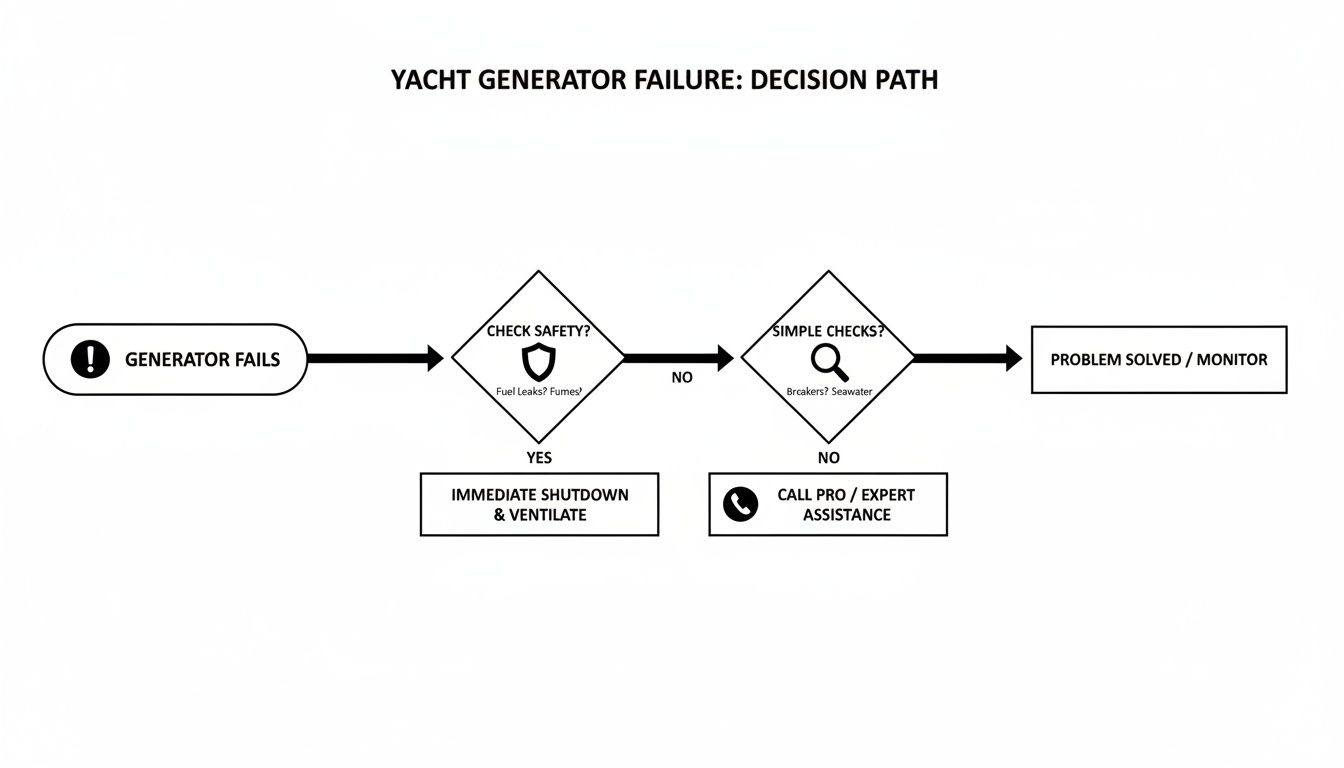
Knowing what not to do is just as critical. If you've run through these basic checks and the generator still won't fire up, your work is done. It's time to stop and call for professional help. Pushing it further without the right tools and knowledge is how small problems become very expensive ones.
Finding A Certified Marine Repair Service In South Florida
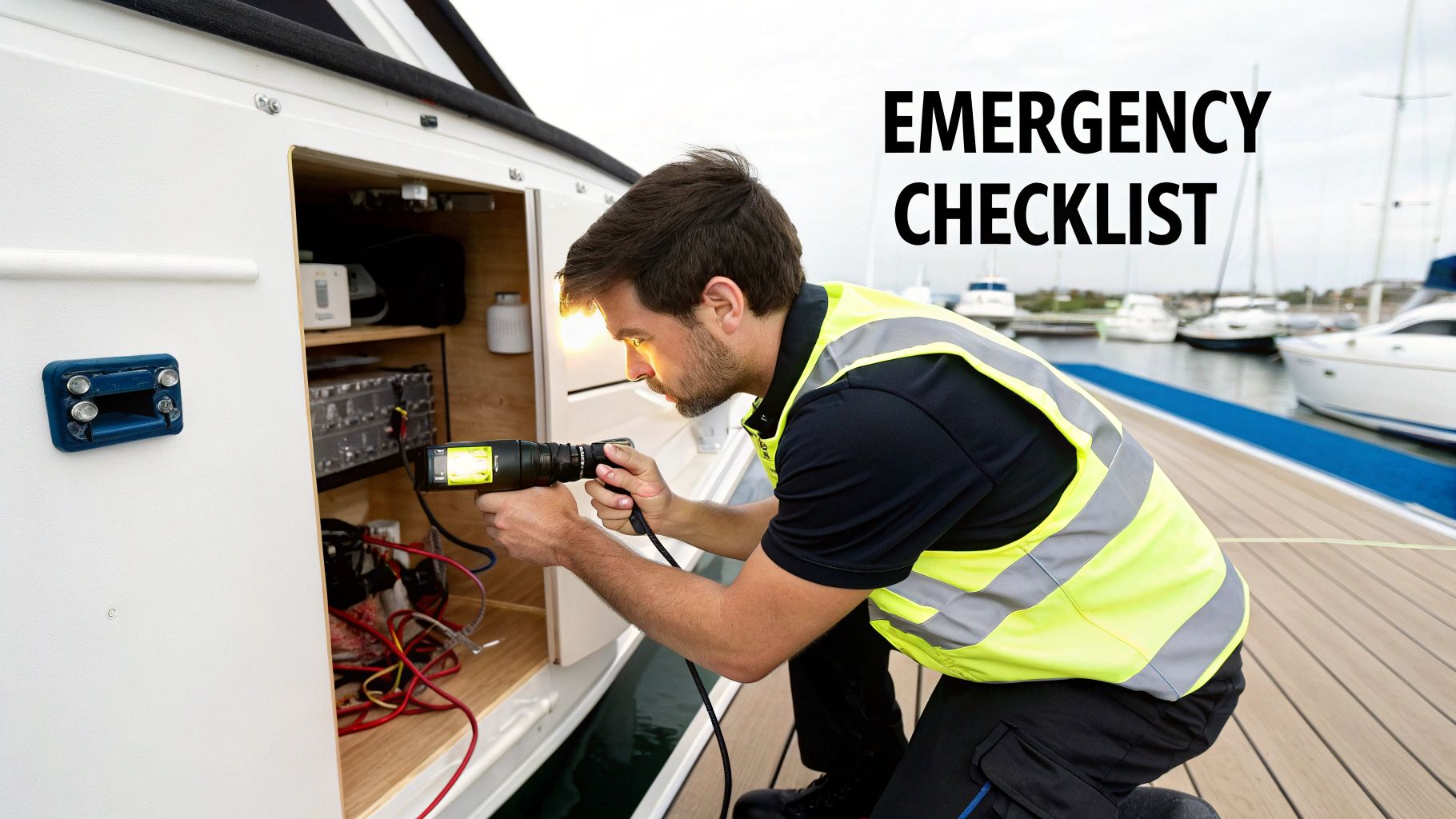
Alright, you've done your initial safety checks and the generator is still down. Now comes the critical part: getting the right professional on board. In South Florida's bustling marine scene, you can find a mechanic on every corner, but not all of them are equipped to handle the sophisticated power systems on modern yachts. You don't just need a wrench-turner; you need a specialist.
When you search for "marine generator repair near me," your first filter should be for factory certifications. For high-end brands like MTU, MAN, and CAT, this is non-negotiable. A factory certification isn't just a piece of paper—it's your guarantee that the technician has been through the wringer with brand-specific training.
These certified pros have the keys to the kingdom: proprietary diagnostic software, a direct line to genuine OEM parts, and access to the latest service bulletins straight from the manufacturer. This level of expertise is essential in a global marine generators market valued at a staggering USD 3.5 billion in 2023. With the market projected to surge to USD 5.4 billion by 2032, these systems are only getting more complex.
Vetting Your Local Options
So you’ve got a short list of certified techs. Now it's time to dig a little deeper. Think of it as interviewing a new captain—you wouldn't hand over the helm to just anyone. Before you let a technician set foot on your vessel, you need to be sure they’re qualified, prepared, and professional.
A great starting point is good old-fashioned word-of-mouth. Chat with your dock master or ask other yacht owners at the marina who they trust. A solid referral from someone who’s been in your shoes is often the most reliable way to find a great service provider.
Once you have a few names, it’s time to pick up the phone and start asking some tough questions. Their answers will tell you everything you need to know about their standards and whether they’re the right fit for you and your boat.
Here's a quick guide to the essential questions you should be asking any potential marine repair service. I've found that a company's readiness to answer these questions directly and confidently speaks volumes about their professionalism.
Essential Questions For Your Potential Marine Repair Tech
| Question Category | Specific Question To Ask | Why It Matters |
|---|---|---|
| Credentials & Insurance | "Can you provide a copy of your commercial liability insurance and show me your factory certifications?" | This is your safety net. It protects your vessel from accidental damage and confirms they have the specialized training required for your generator. |
| Emergency Readiness | "What's your typical response time for an emergency call in the West Palm Beach area?" | When you're dead in the water without power, every minute counts. You need a team that can mobilize quickly, not one that will get to you "sometime next week." |
| Work Guarantee | "Do you offer a warranty on your labor and the parts you install?" | A reputable service will always stand behind their work. A warranty shows they are confident in their skills and the quality of their parts. |
| Diagnostic Approach | "Walk me through your process for diagnosing a complex electrical fault." | This question reveals their technical depth. You want to hear about a systematic, logical approach, not just "we'll take a look." |
| Parts & Sourcing | "Do you use genuine OEM parts, and how do you source them for my specific generator model?" | Using aftermarket parts can void warranties and lead to bigger problems down the line. Confirming they use OEM parts is crucial for long-term reliability. |
A technician who stumbles over these questions or can't provide a clear certificate of insurance is a huge red flag. True professionals have this information ready to go because they understand the high stakes of working on a multi-million-dollar yacht.
Ultimately, finding the right service provider isn't just about a one-time fix. It’s about building a relationship with a team you can trust for emergencies and routine maintenance alike. Having an expert who knows your vessel's systems inside and out is invaluable, especially when you also need a certified marine diesel mechanic near you for other critical engine work. This way, you have a reliable partner for all your yacht's needs.
Mobile Repair vs. A Shipyard Haul-Out
When your generator quits, you've got a big decision to make, and it's one that will hit your wallet and your schedule hard. Do you call a mobile tech to your slip, or do you start the painful process of getting your boat to a shipyard?
Let's be blunt: for most generator problems, the choice is pretty clear. The old way of thinking—that any serious work requires a trip to the yard—is getting more outdated by the day. Top-tier, certified mobile repair services can bring the entire workshop right to your dock, armed with the same high-end diagnostic gear and genuine parts you'd find at any major facility.
The Real Cost Of A Shipyard Visit
A shipyard haul-out is a logistical and financial nightmare. It’s not just one big expense; it’s a whole chain of them. First, you have to get the boat to the yard. Then you wait for an open slot. Once you're there, you're looking at lift charges that can easily rocket past $20,000 for a larger yacht in South Florida—and that's before a single wrench has been turned.
Once your boat is on the hard, the meter is running. You're paying daily yard fees, labor rates that are often jacked up compared to mobile services, and you're dealing with costly downtime. I've seen a simple heat exchanger replacement, a job a mobile tech could knock out in two days at the dock, turn into a week-long saga at a shipyard. That's a week of canceled plans and a bill that's ballooned for no good reason.
Think about this: in South Florida alone, with over 5,000 yachts cycling through annually, a staggering 18% of vessels face generator issues from cooling or electrical faults each year. Experienced mobile crews handle these problems every day, right at the dock. They sidestep those crippling haul-out fees and get your 24-hour power back online fast. We’re talking fully-stocked vans that can be on-site in under two hours.
The Efficiency Of On-Site Service
Opting for a mobile repair isn't just a cost-saving move; it's a smart one. When a technician is working on your boat in its own slip, their focus is 100% on your problem. They aren't juggling three other jobs in a chaotic yard or waiting for a forklift to become available.
Key Takeaway: For the vast majority of generator work—from diagnostics and fuel system purges to complex electrical gremlins—a mobile technician is faster, cheaper, and way less of a headache. You stay in control of your boat and your time.
Picture this common scenario: a coolant pump fails. A mobile service can be there the same day, diagnose the problem, get the right OEM part from their supplier network, and have you up and running in a day or two. That exact same job at a yard means scheduling the haul-out, doing the lift, and then waiting your turn. It turns a simple fix into a major project.
Unless your generator is so far gone that it needs a complete engine-out rebuild, the mobile approach is almost always the right call. It saves you time, money, and a whole lot of frustration. To get a better idea of what's possible dockside, check out the full scope of a professional mobile diesel marine repair service.
Cracking the Code on Generator Repair Costs and Timelines
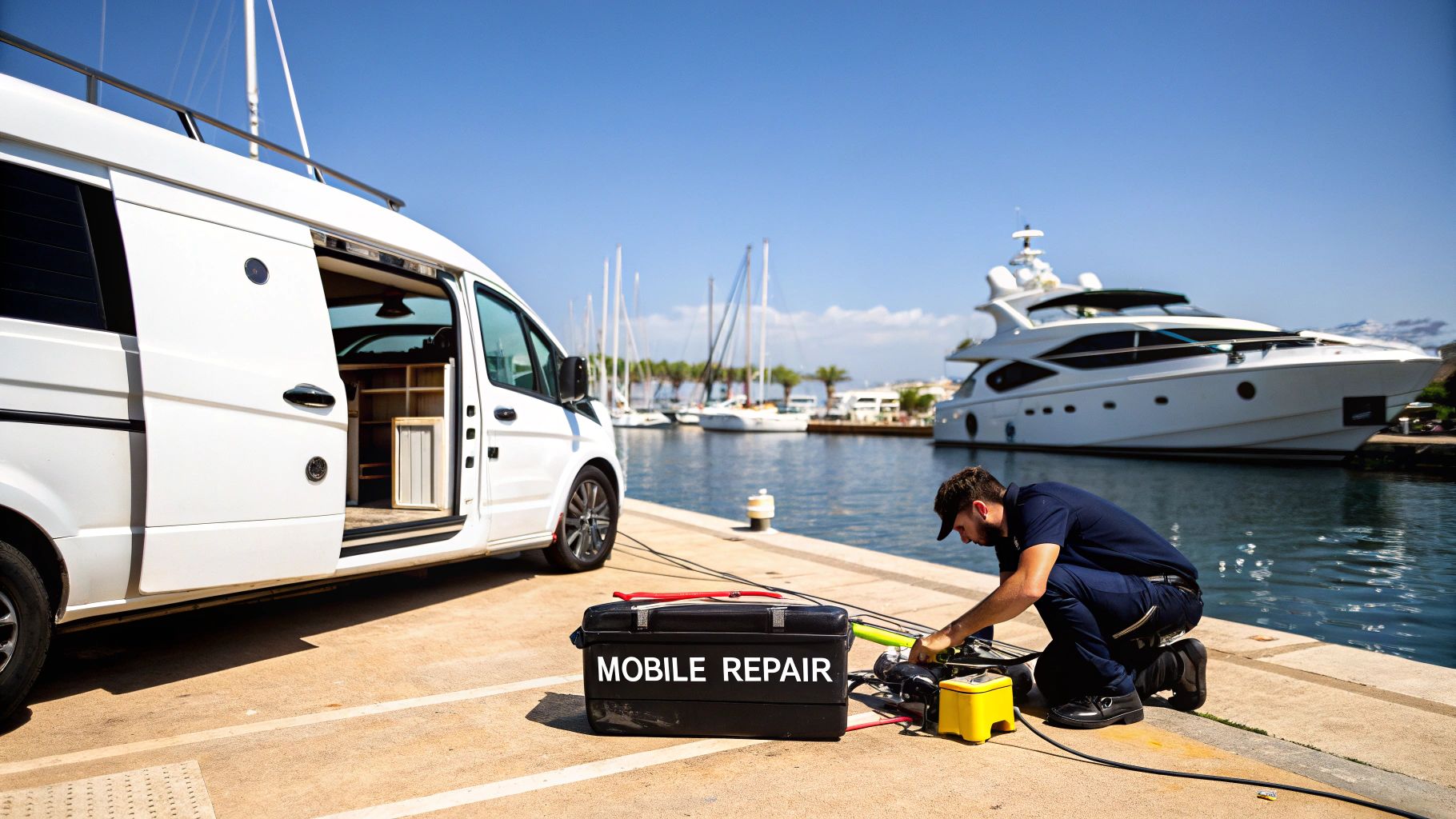
Let's be honest—no boat owner wants to see an unexpected repair bill. When you're frantically searching for "marine generator repair near me," the last thing you need is the added stress of not knowing what the final cost will be or how long you'll be stuck at the dock.
Let's pull back the curtain on the pricing and scheduling so you can know what to expect. A good, honest shop will never surprise you with a vague, lump-sum invoice. You should always get a clear, itemized breakdown of the work.
What Your Invoice Should Tell You
Think of your bill as having three core components: diagnostics, labor, and parts.
It all starts with the diagnostic fee. This isn't just a charge for showing up; it’s for the technician's time and the specialized tools needed to figure out exactly what's wrong. Skimping here is a classic mistake. A bad diagnosis can send you down a rabbit hole of expensive, pointless repairs.
Next up, you have the hourly labor rates. Yes, these can vary, but remember you're paying for expertise. A certified tech who knows their way around a complex MTU or MAN unit commands a higher rate for a reason—they get the job done right and often faster.
Finally, you’ll see the cost of parts. Make sure these are clearly itemized, and for the love of your engine, insist on genuine OEM parts. They're the only way to guarantee long-term reliability.
To give you a real-world idea of how this plays out, here are a few common repairs and how a mobile service can dramatically cut your downtime:
- Fuel Injector Service: If your generator is running rough or losing power, it could be a clogged injector. A mobile tech can usually knock this out in 3-5 hours right at your slip.
- Heat Exchanger Cleaning/Repair: Overheating issues often trace back here. It’s a full day's work (6-8 hours), but it’s almost always a job that can be done without a costly haul-out.
- Electrical Gremlin Hunt: Chasing down a phantom short or a bad sensor can be tricky. Expect this to take anywhere from 2 to 6 hours, depending on how deep the problem is buried.
The real game-changer in minimizing downtime? Parts availability. A mobile service with solid supplier connections can get parts overnight that might otherwise take a week to arrive, turning a major headache into a minor inconvenience.
What Really Drives the Final Cost?
The final bill is more than just hours and parts. A few other key factors come into play. The brand of your generator is a big one. It's no surprise that parts for a high-performance CAT or MTU will carry a higher price tag than those for a more common, smaller unit.
Another huge variable is simply how hard it is to get to the generator. A tech can spend just as much time contorting themselves into a tight engine room as they do turning wrenches. If your generator is tucked away in a cramped space, the labor hours will reflect that.
For a deeper dive into the specifics of repair pricing, we've put together a guide that breaks down diesel engine repair costs, and the same principles apply directly to your generator. Understanding these variables helps you see the real value in hiring a skilled, efficient technician who knows how to navigate these challenges and save you money in the long run.
Proactive Maintenance To Prevent Costly Breakdowns
Let's be honest. If you're frantically searching "marine generator repair near me," the problem has already found you. The most seasoned yacht owners in South Florida will tell you the key to staying on the water isn't just having a great mechanic on speed dial—it's making sure you rarely have to make that call. It's about shifting from reactive panic to smart, proactive maintenance.
It’s easy to look at maintenance as just another line item on the budget, but that’s a dangerous mindset. Think of it instead as an investment in your vessel’s reliability and your own peace of mind. A relatively small, consistent investment in a proper maintenance plan is your best defense against the five-figure invoices that always seem to pop up at the worst possible time.
The reality is, your generator is in a constant battle with the South Florida marine environment. That brutal combination of saltwater, humidity, and intense heat is a recipe for accelerated wear and tear. It makes rubber hoses brittle, eats away at electrical connections, and clogs cooling systems with growth. Ignoring these creeping issues is just asking for a sudden, expensive, and trip-ruining failure down the road.
What A Real Maintenance Plan Looks Like
A proper maintenance plan is so much more than a quick oil and filter swap once a year. It's a comprehensive health check for your power system, designed to catch trouble well before it leaves you dead in the water.
A robust plan from a top-tier service provider will always cover these bases:
- Comprehensive Fluid Analysis: We're talking lab work. Sending out oil and coolant samples can reveal silent killers like fuel dilution, premature bearing wear, or coolant contamination long before they trigger a catastrophic failure.
- Cooling System Service: This isn't just a flush. It’s a full teardown and deep cleaning of heat exchangers, aftercoolers, and gear coolers. This is absolutely critical for preventing the overheating that destroys marine generators.
- Belt and Hose Inspection: A technician should be meticulously checking every belt and hose for cracks, weak spots, and proper tension. Remember, a simple $50 hose that fails can cause a $20,000 engine to overheat and seize in minutes.
- Electrical System Check: This means cleaning and tightening every battery connection, testing alternator output, and inspecting all wiring for the slightest hint of corrosion or chafing that could lead to a short.
You don't wait for a hurricane to start boarding up your windows; you prepare ahead of time. The exact same logic applies to your generator. Proactive care is about controlling your own destiny out on the water.
The Financial Case For Prevention
Still on the fence? Let's talk numbers, because they don't lie. The data on marine breakdowns is pretty eye-opening. Unplanned generator failures are responsible for a shocking 25% of all marine breakdowns, with average repair bills easily climbing into the $15,000 to $30,000 range.
But here's the good news: the data also points to a clear solution. It's been shown that tailored maintenance programs can extend the life of your equipment by 25% and slash failure rates by a massive 35%. That's a powerful return on investment by any measure. You can read more about these generator maintenance findings and see for yourself how prevention pays.
Ultimately, a good maintenance schedule transforms your generator from a constant worry into a dependable asset. It ensures that when you're ready to hit the water, your boat is too. It’s the single best way to avoid that frantic search for an emergency technician and enjoy the uninterrupted time on the water you deserve.
The Right Partner For Your Yacht Repair Needs
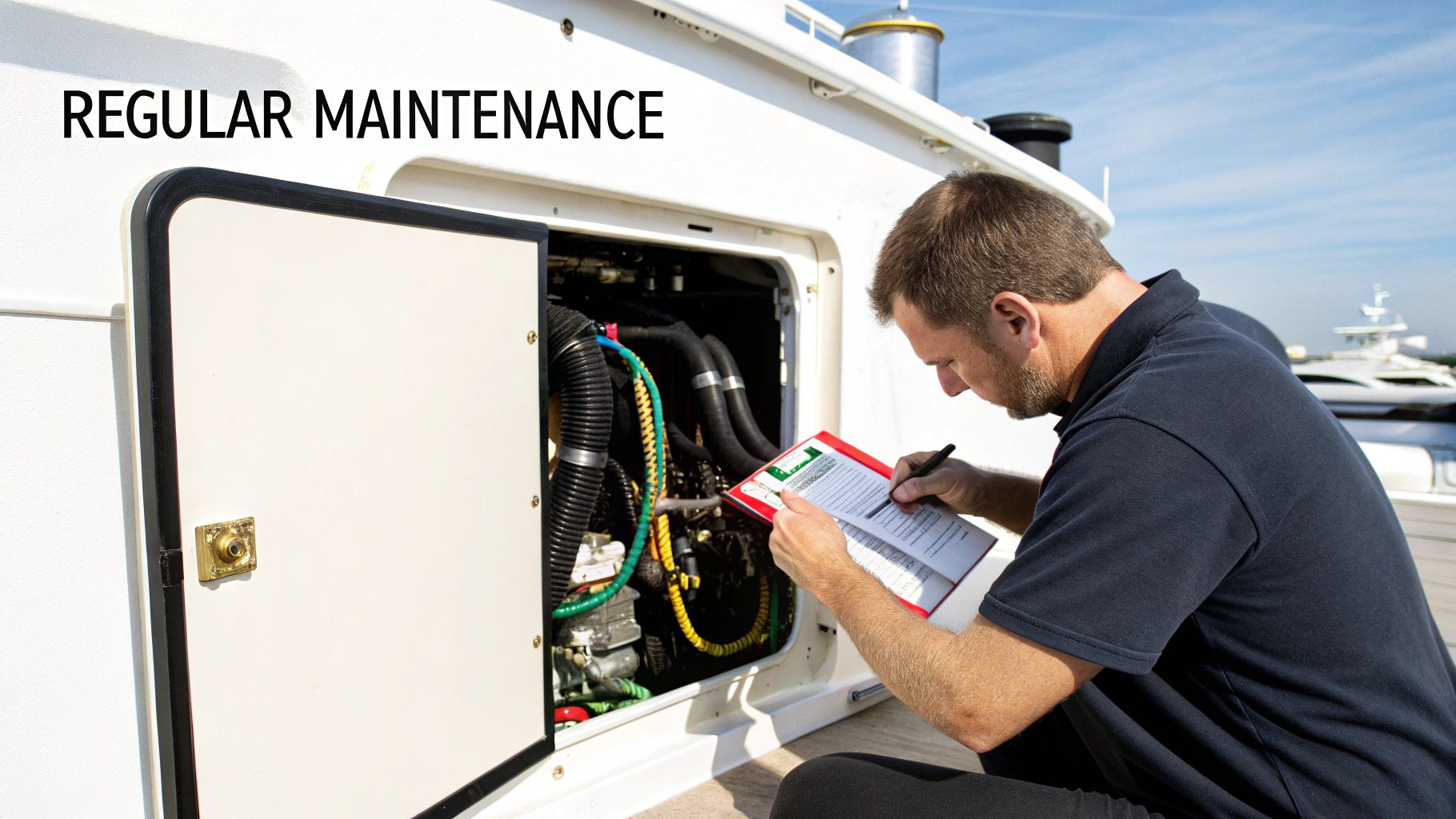
When your generator suddenly dies, you're not just looking for a mechanic. You're looking for a partner—someone who understands the urgency and has the credentials to back up their work. The best choice is always a team that combines deep, hands-on expertise with a rapid-response mindset and total integrity.
This starts with prioritizing technicians who hold factory certifications for top-tier brands like MTU, MAN, and CAT. It's non-negotiable.
Beyond that, look for a service that runs a dedicated mobile fleet. Bringing the workshop straight to your slip saves you the enormous hassle, expense, and downtime of an unnecessary trip to the shipyard. They should also operate with complete transparency, handing you a clear, itemized estimate that breaks down every part and labor cost before the work begins.
Your goal isn't just to solve today's problem. It's to build a lasting relationship with a trusted team that knows your vessel and is committed to its long-term reliability.
Whether you're caught in an emergency breakdown or just want to set up a smart maintenance plan, finding a certified marine generator repair near me is all about protecting your investment and your time on the water.
When you team up with a local, factory-certified pro, you get peace of mind. You can finally stop worrying about unexpected failures and get back to what matters: enjoying your time at sea.
Got Questions? We’ve Got Answers.
When your generator acts up, questions start flying. Here are some of the most common ones we hear from yacht owners around South Florida, with straight-up answers from our experience on the docks.
How Often Should I Really Service My Marine Generator?
In the tough saltwater environment of South Florida, you can't afford to guess. We strongly recommend a full professional service at least annually or every 250 running hours—whichever comes first.
And I'm not talking about just a quick oil change. A proper service involves a deep dive into the entire system: a complete cooling system flush and inspection, comprehensive electrical diagnostics, and even lab analysis of your fluids. This is how you spot a disaster before it happens.
Can A Mobile Mechanic Actually Handle A Major Repair?
You bet. A truly professional mobile service isn't just a guy with a toolbox. Our service vehicles are basically workshops on wheels, packed with everything needed for serious work.
We carry the specific diagnostic laptops for brands like MTU, MAN, and CAT, along with the heavy-duty tools and genuine OEM parts required for complex jobs.
We’re constantly tackling major repairs—think full injector replacements, complete cooling system rebuilds, and chasing down complex electrical gremlins—right at our clients' slips. The truth is, the vast majority of generator problems don't require a costly, time-consuming haul-out.
What Are The Real "Get Help Now" Warning Signs?
Your generator will almost always give you a heads-up before it fails completely. Your job is to listen. If you see, hear, or feel any of these red flags, it's time to make a call, and fast.
- Hard starts or a shaky idle: This often points to problems with fuel delivery or even internal compression.
- Any weird noises like knocking or grinding: Don't just hope it goes away. These are classic signs of serious mechanical trouble brewing inside.
- Smoke that's the wrong color: Whether it’s white, black, or blue, discolored exhaust is your generator telling you exactly what’s wrong with its fuel, oil, or coolant systems.
- Flickering lights or unstable power: This is a huge sign of an issue with the voltage regulator or the electrical end of the generator.
- Overheating alarms: Never, ever ignore these. An overheating alarm is the final cry for help before catastrophic failure.
Jumping on these symptoms right away can be the difference between a simple fix and a full, wallet-draining replacement.
When you need fast, reliable, and factory-certified marine generator repair in South Florida, trust the mobile experts. Contact GTM International today for a consultation or emergency service. Learn more at https://www.marinetechsvcs.com.
