

When your engine cuts out and your day on the water grinds to a halt, the search for a “marine mechanic near me” isn't just a search—it's an emergency. For yacht and boat owners here in South Florida, the stakes are incredibly high. This isn't just about getting a motor running again; it's about safeguarding a significant investment and ensuring you and your family can get back out there with total peace of mind.
Finding a Trusted Marine Mechanic Without the Guesswork
The old days of frustrating yard visits and losing weeks to a haul-out schedule are over. Today, mobile, certified technicians are the smarter choice, bringing the expertise directly to your dock, from Ft. Lauderdale all the way up to Ft. Pierce.
This guide is about more than just finding a quick fix. It's about empowering you with the knowledge to find a mechanic you can truly depend on, especially when time is critical. We'll skip the generic advice and get right into the practical, real-world process of vetting an expert for your vessel. And when it comes to complex jobs, you'll see why partnering with true diesel engine specialists is non-negotiable.
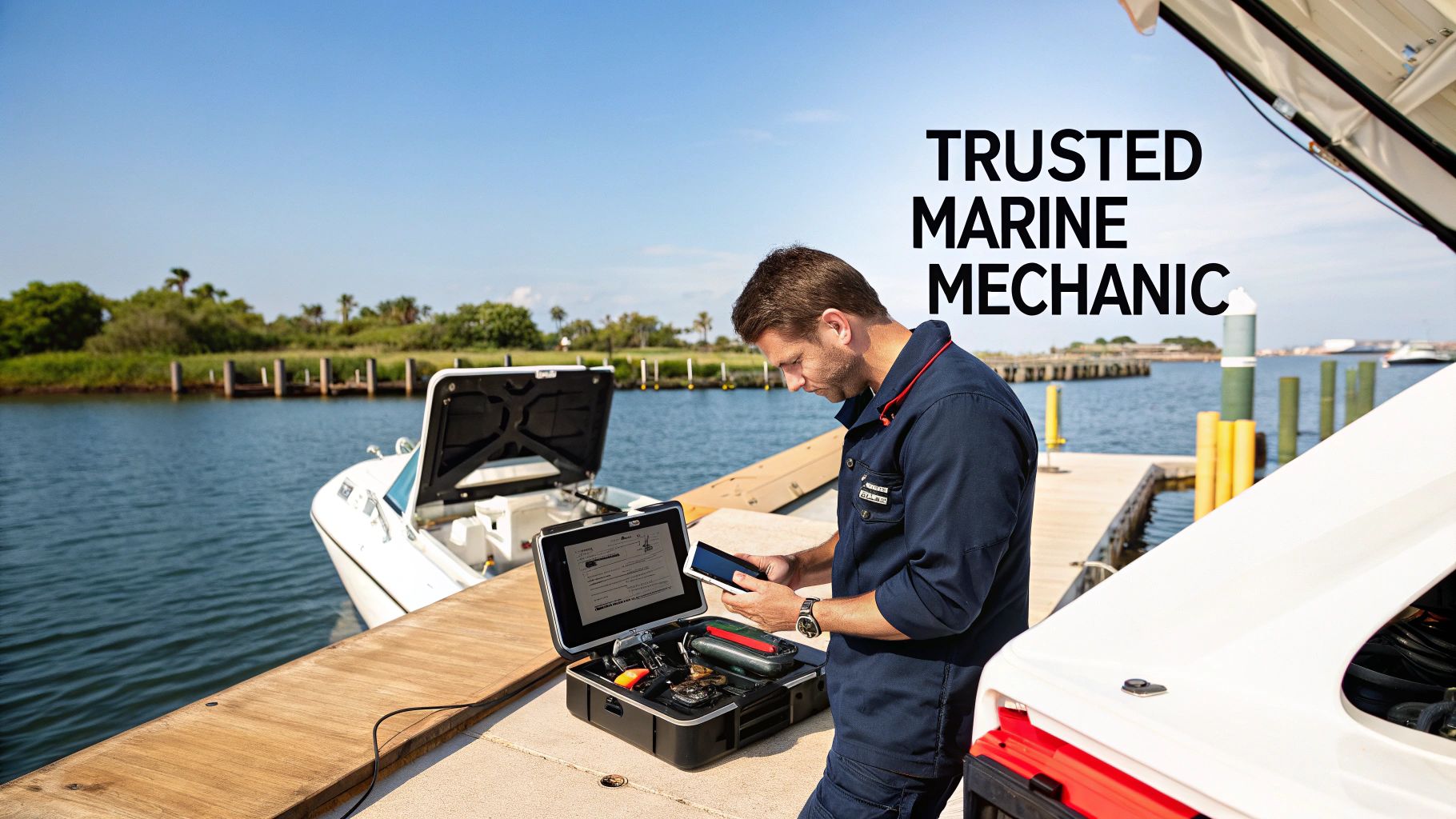
When you need a great marine mechanic in South Florida, a quick Google search is just scratching the surface. The real pros know that the best leads don't come from an algorithm—they come from the docks.
Start by talking to people at your marina. Ask around. Fellow boat owners, dock masters, and yacht managers are your best source for honest, unfiltered recommendations. They'll tell you who shows up on time, who does the job right, and who to avoid. This kind of dockside intelligence is priceless.
Your captain or broker should also be on your call list. These folks have massive networks and have seen it all. They know who the go-to specialists are, especially if you're running high-performance engines like MTU, MAN, or CAT.
Don't forget to tap into local online boating communities. Facebook groups and forums specific to the West Palm Beach area can be a goldmine for candid reviews. You’ll get real-world feedback from boaters who have been in your exact situation.
The smartest way to build your shortlist is by mixing old-school networking with online research. Combine what you hear on the docks with what you read online to get the full picture.
This two-pronged approach ensures you’re not just hiring someone with a good ad, but a technician with a proven track record right here in our local waters.
For a deeper dive into finding technicians who come to you, check out our guide on mobile boat engine repair near me.
What Separates a Pro From a Problem
You’ve got a list of potential mechanics, which is a great start. Now comes the crucial part: separating the seasoned professionals from the potential liabilities. This is where you need to look past a good sales pitch and dig into the credentials that actually matter.
First and foremost, ask about factory certifications. This isn't just a fancy piece of paper; it's proof that a technician has been specifically trained by the manufacturer—be it MAN, MTU, or Caterpillar—to work on your exact engine. For intricate systems, this is non-negotiable. Proper diesel marine repair requires a level of expertise you only get from direct factory training.
Beyond certifications, you absolutely must verify they have proper licensing and, critically, comprehensive insurance. Think of this as your safety net. If an uninsured mechanic makes a mistake on your vessel, that liability could fall squarely on your shoulders. It’s a risk you simply can’t afford to take.
Comparing Marine Mechanic Credentials
Not all mechanics are created equal. The difference between hiring a fully vetted professional and a handyman with a toolbox can be stark, especially when things go wrong. This table breaks down what you're really getting—or risking—with each.
| Qualification | Certified & Insured Pro | Unverified Technician |
|---|---|---|
| Expertise | Factory-trained on specific engine brands; up-to-date knowledge. | General knowledge, often learned on the job; may lack specialized skills. |
| Insurance | Carries comprehensive liability and workers' comp. You are protected. | Often uninsured or underinsured. You assume the liability. |
| Accountability | A professional reputation and business to protect; stands behind their work. | May be hard to track down if issues arise; little to no recourse. |
| Tools & Diagnostics | Invests in manufacturer-specific diagnostic tools and equipment. | Uses generic tools that may not be suitable for modern, complex engines. |
| Warranty | Work is typically warrantied, offering peace of mind. | No warranty on parts or labor, leaving you to pay for any mistakes. |
Ultimately, choosing a certified and insured professional isn't an expense—it's an investment in the safety, reliability, and longevity of your vessel.
The industry is booming for a reason. With the global marine engineering market expected to reach USD 271.40 billion by 2032, the demand for skilled technicians has never been higher. You can see the full breakdown of the expanding marine engineering market on coherentmarketinsights.com. This growth just highlights why it's so important to be selective.
This quick guide shows you the best places to start your search, from walking the docks to checking online forums.
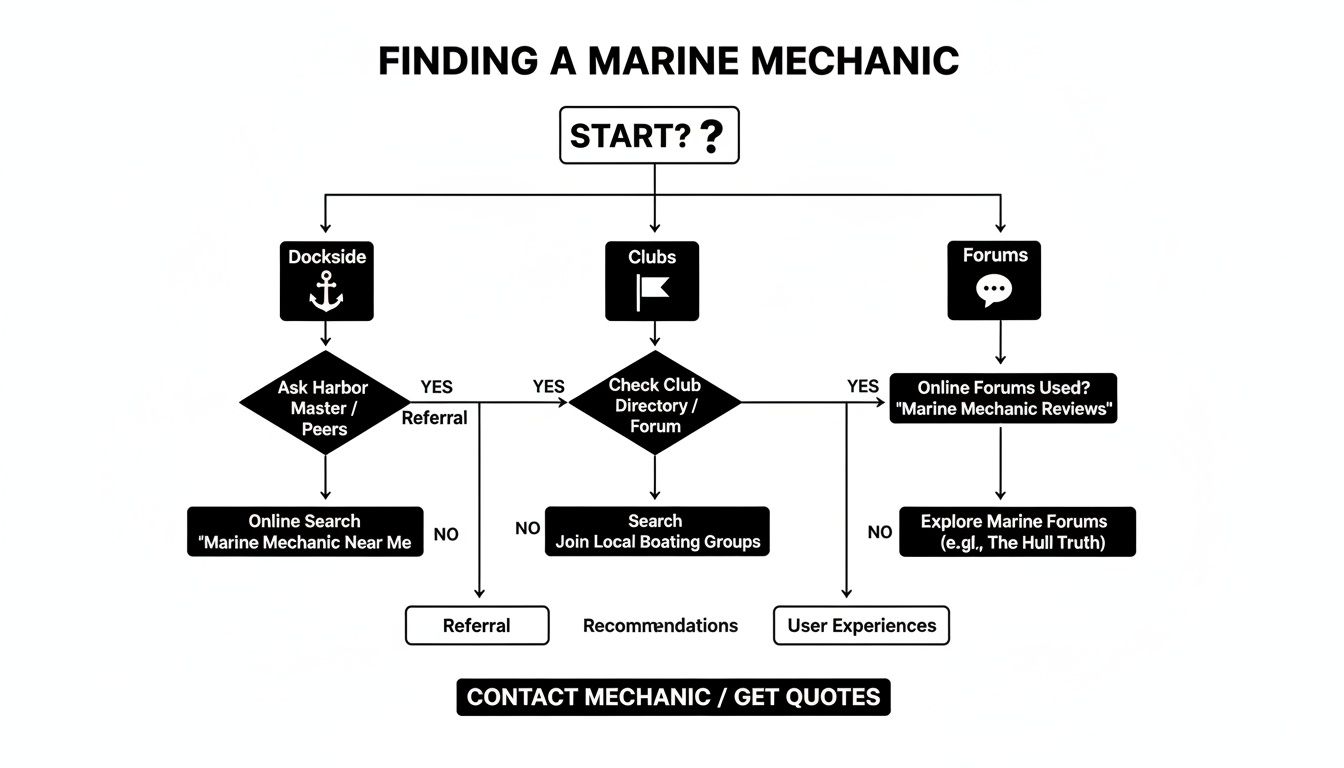
As you can see, the best approach is a mix of old-school networking and smart online research. It gives you the most complete picture and helps ensure you find someone truly reliable.
The Questions You Absolutely Must Ask Before Hiring
Look, finding a good marine mechanic isn't just about calling the first number you find. Knowing what to ask is your single best defense against getting hit with surprise bills, shoddy work, and—worst of all—more time stuck at the dock.
Go deeper than just asking about their hourly rate. You need to ask questions that peel back the curtain on their real-world experience and how they run their business.
For instance, try asking something specific like, “Can you walk me through your diagnostic process for an engine like mine?” A pro will give you a confident, detailed answer. A rookie will stumble. Another great one is, “What’s your game plan for sourcing parts to make sure we don’t get stuck waiting for weeks?” This tells you if they’re organized or just winging it.
Your goal here isn't a simple price check; it's a real interview. You’re looking for a reliable partner, especially if you need someone you can count on for urgent 24/7 mobile support.
This is more important than ever. The global marine engines market hit a massive USD 8.9 billion in 2024, and with more boats on the water, the demand for truly skilled technicians is skyrocketing. You can dig into the full research on the growth of the marine engine market on gminsights.com.
Asking the right questions is how you cut through the noise and find a mechanic who will actually get the job done right.
Talking Dollars and Cents: What to Expect for Marine Service Costs
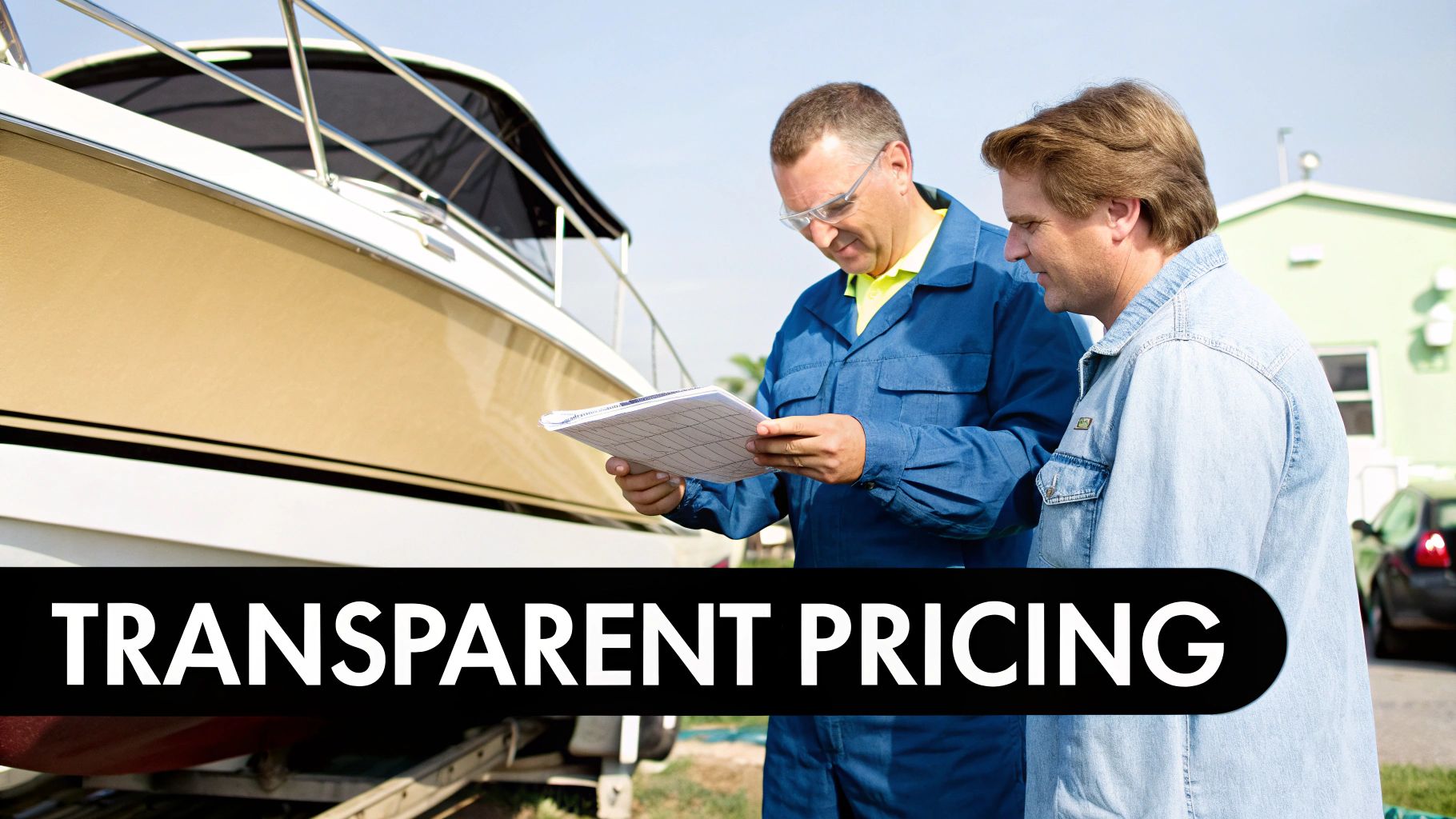
When it's time to talk money, clarity is king. Most marine mechanics work with two main pricing structures: hourly rates for troubleshooting and complex repairs, and flat-rate fees for the routine stuff like an oil change or winterization.
One of the biggest perks of calling a mobile mechanic is the money you save right off the bat. Think about it—no yard fees, no expensive haul-outs, and no transport headaches. Those costs add up fast.
A trustworthy mechanic will always give you a detailed, transparent estimate that breaks down the labor hours and the cost of parts. Don't settle for a vague quote. This is especially important in our world; the global ship repair and maintenance industry was valued at a whopping USD 38 billion in 2024. That's a huge market, and it underscores why finding a dependable local pro is so critical. You can dig deeper into the growth drivers in the marine services industry on marketreportanalytics.com.
So, What's Next?
Ready to get that engine purring again? The first move is always to schedule a diagnostic visit. A true professional will get back to you quickly, show up on time, and lay out a clear plan to get you back on the water.
If you're in West Palm Beach or anywhere in South Florida, give us a call to book your service. Let’s figure out what’s going on with your boat and get it fixed right.
Common Questions We Hear from Boat Owners
When your boat’s giving you trouble, you’ve got questions—and you need straight answers to get back on the water. We get calls every day from boaters around South Florida, and a few key concerns always come up. Let's tackle them head-on.
How Fast Can a Mobile Mechanic Get to My Boat?
In an emergency, every minute counts. The whole point of searching for a mobile "marine mechanic near me" is speed. Here in the West Palm Beach area, a good mobile outfit prioritizes those urgent calls and can often get to your dock within a few hours.
Think about the alternative: trying to get a last-minute slot at a packed repair yard. A mobile mechanic comes to you, drastically cutting down your downtime and getting the diagnostic process started immediately. It’s a huge advantage when you can't afford to wait.
Is a Preventative Maintenance Plan Really Worth It?
One hundred percent, yes. Don't think of it as an expense—it's an investment in your boat's reliability and your own peace of mind. A proper maintenance plan is all about finding the small problems before they become big, expensive, offshore disasters.
We're talking about catching a fraying belt, a partially blocked cooling line, or a loose electrical connection while you're still tied to the dock. This is hands-down the best way to avoid a catastrophic failure that leaves you stranded and facing a massive repair bill.
A well-maintained engine is a reliable engine. Proactive service is always cheaper than a reactive emergency tow and repair. It protects your vessel and, more importantly, ensures the safety of everyone on board.
What Is the Real Difference with a Factory-Certified Technician?
This is a big one, and it's not just a fancy title on a business card. While a general mechanic might know their way around an engine, a factory-certified technician has been formally trained by the manufacturer—whether that's MTU, MAN, or CAT. They live and breathe the specific diagnostic software, tools, and engineering quirks of your engine.
Hiring a certified pro gives you a few critical advantages:
- Pinpoint Accuracy: They use the manufacturer's own diagnostic tools to get the diagnosis right the first time. No guesswork.
- Warranty Protection: Using a certified tech is often required to keep your engine’s warranty valid. Their work meets the manufacturer's strict standards.
- The Right Parts: They know precisely which OEM parts are required for your engine, ensuring peak performance and a longer lifespan.
At the end of the day, certification is about accountability. It’s a guarantee of a higher standard of work from a mechanic who truly specializes in your equipment.
When you need fast, reliable, and certified mobile marine service in South Florida, trust the experts at GTM International. We bring the solutions to your dock. Schedule your on-site diagnostic visit today by visiting https://www.marinetechsvcs.com.
