
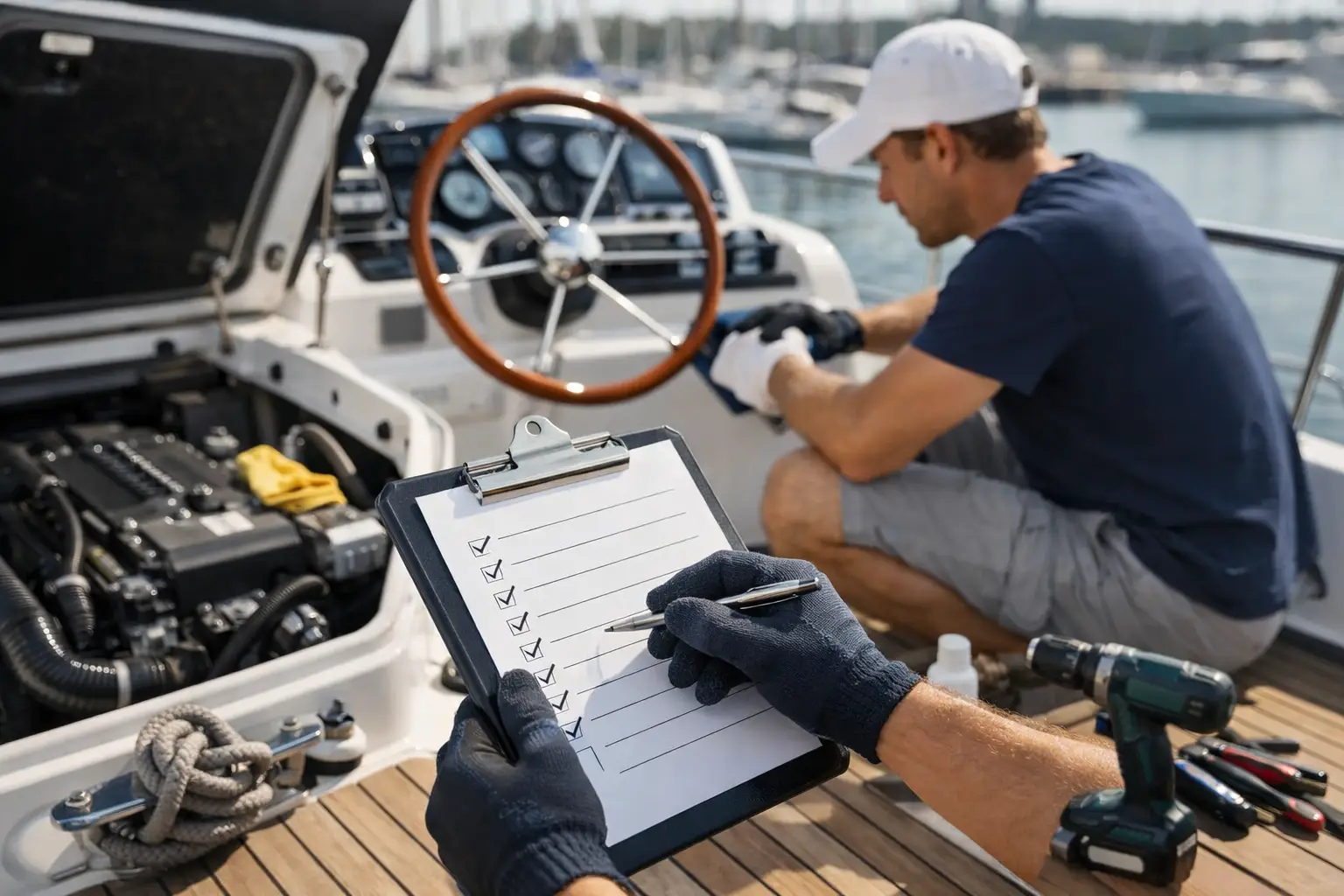
A missed hose clamp, a dirty cooler, or a battery connection beginning to corrode can turn a planned run to the Bahamas into an expensive delay at the dock. A preventive yacht maintenance checklist gives owners and captains a practical way to catch those problems while they are still small, scheduled, and manageable.
For yachts from 50 to 500 feet, preventive care is less about checking boxes and more about protecting uptime. Engines, generators, electrical systems, steering gear, and cooling circuits work together. When one system is neglected, the strain often shows up somewhere else – usually when the vessel is underway and help is farther away.
Why preventive maintenance costs less than repair
Marine equipment operates in heat, vibration, moisture, and salt air. Even a well-built MTU, MAN, or Caterpillar diesel engine needs regular attention because its operating environment is demanding by design. Filters load up, fluids degrade, belts lose tension, and electrical terminals can corrode without obvious warning.
The financial trade-off is straightforward. A planned service visit has a known scope and can often be completed at your marina or dock. An unplanned failure may mean a canceled trip, emergency parts sourcing, towing exposure, a missed charter, or a haul-out that could have been avoided. Routine inspections also create a maintenance record that helps captains, managers, and future buyers understand how the yacht has been cared for.
Preventive yacht maintenance checklist by interval
The right schedule depends on engine hours, vessel age, manufacturer requirements, and how the yacht is used. A boat that runs hard offshore, sits for long periods, or spends the season in warm South Florida water may need closer attention than an occasional weekend cruiser. Use the manufacturer manual as the baseline, then adjust it with a qualified marine technician.
Before every departure
- Walk the engine room before starting. Look and smell for fuel, oil, coolant, or raw-water leaks. Check the bilge for unusual fluid, confirm there are no loose tools or stored items near moving machinery, and make sure ventilation areas are clear. A five-minute visual inspection often catches the first sign of trouble.
- Check engine and generator fluid levels. Verify engine oil, coolant, transmission fluid where applicable, and generator oil before leaving the dock. Do not simply add fluid and move on if a level has dropped. A recurring loss needs diagnosis, because it may point to a leak, consumption issue, or cooling-system problem.
- Inspect strainers and confirm raw-water flow. Clear sea strainers as needed and check that seacocks are in the correct operating position. After startup, verify water discharge from engine and generator exhausts. A restricted raw-water supply can quickly lead to overheating and damage.
- Test critical safety and operating systems. Confirm battery switches, bilge pumps, navigation lights, alarms, horn, VHF, and steering response. On larger yachts, captains should also verify trim systems, thrusters, and any system that is essential to leaving or returning to the dock safely.
Every month or after a busy operating period
- Inspect belts, hoses, clamps, and mounts. Look for belt glazing, cracking, frayed edges, soft hoses, swelling, rusted clamps, and loose engine mounts. These parts are inexpensive compared with the damage they can cause when they fail. Pay particular attention to cooling hoses and connections around heat exchangers and aftercoolers.
- Look closely at batteries and charging equipment. Check battery terminals for corrosion, confirm hold-downs are secure, and inspect cables for heat damage or chafing. Verify that chargers and alternators are charging at normal voltage. Electrical faults can be intermittent at first, which is exactly why regular inspection matters.
- Exercise the generator under load. A generator that starts but never carries a meaningful load has not truly been tested. Run it long enough to stabilize, then operate selected onboard loads while monitoring voltage, frequency, temperature, exhaust, and any alarms. Abnormal smoke, vibration, or hunting should be addressed before the next trip.
- Check steering and control systems. Inspect hydraulic steering fluid, lines, fittings, cylinders, and helm response. Look for seepage around fittings and listen for pumps that run longer than normal. Shift and throttle controls should operate smoothly and predictably. Stiffness, delayed response, or a change in feel is a reason to schedule service, not something to watch indefinitely.
At scheduled engine-hour intervals
- Change oil and filters on schedule. Engine oil, transmission fluid, fuel filters, and generator oil all have service intervals for a reason. The exact interval varies by manufacturer and duty cycle, so follow the specification for your engine model rather than relying on a generic calendar rule. If fuel quality is questionable or the vessel has been sitting, fuel filtration deserves extra attention.
- Service cooling components before they become restrictive. Heat exchangers, oil coolers, charge-air coolers, raw-water pumps, impellers, and zincs need planned inspection and service. Salt, scale, debris, and zinc deterioration reduce cooling efficiency gradually. By the time an engine alarm sounds, the underlying restriction may have been developing for months.
- Review diagnostic data, not just visible conditions. Modern marine diesels can reveal developing issues through fault history, sensor readings, operating temperatures, boost pressure, and load patterns. A professional diagnostic review can identify a problem that a visual walk-through will not catch. This is especially valuable for electronically controlled engines and yachts with multiple engines or generators.
- Document the work and track what is due next. Record dates, engine hours, parts used, fluid types, findings, and recommended follow-up. Good documentation prevents skipped services when a boat changes captains or management companies. It also helps a technician see patterns, such as repeated overheating on one engine or a battery bank that is slowly losing performance.
Do not overlook the systems around the engines
A yacht can have healthy main engines and still be unreliable because of a neglected support system. Shore-power connections, battery banks, bilge pumps, bonding, steering hydraulics, and fuel transfer equipment all deserve attention. Saltwater intrusion and loose electrical connections are particularly common sources of avoidable trouble in coastal service.
Fuel systems deserve a measured approach. Water or microbial growth in diesel fuel can restrict filters and cause loss of power, but treatment is not a substitute for inspecting tanks, filters, vents, and fuel quality. If filters are repeatedly clogging, the cause must be found rather than treated as routine maintenance.
The same principle applies to alarms. An alarm that occasionally sounds and then clears is not necessarily a nuisance. It may be the earliest warning of a cooling, charging, pressure, or sensor issue. A qualified technician can determine whether the condition is a failing component, wiring problem, calibration issue, or a genuine operating concern.
When to call a marine technician
Owner and crew checks are valuable, but they do not replace professional service. Schedule an inspection promptly if you find fluid in the bilge, recurring low coolant or oil, hard starting, excess smoke, overheating, vibration, loss of power, abnormal shifting, weak charging, steering changes, or unexplained alarms. Waiting for a convenient time can turn a focused repair into a larger system failure.
For owners and captains along the South Florida coast, GTM International brings licensed, insured marine service directly to the vessel, reducing the expense and disruption of sending a yacht to a repair yard. Mobile diagnostics and scheduled preventive service are particularly useful when the issue involves major diesel platforms, generators, electrical equipment, or steering systems that need experienced hands.
Keep this checklist with the vessel log, but treat it as a starting point rather than a substitute for the maintenance schedule specified for your yacht. The best time to address a questionable hose, cooler, alarm, or battery connection is while the boat is safely at the dock and your next day on the water is still yours to enjoy.
