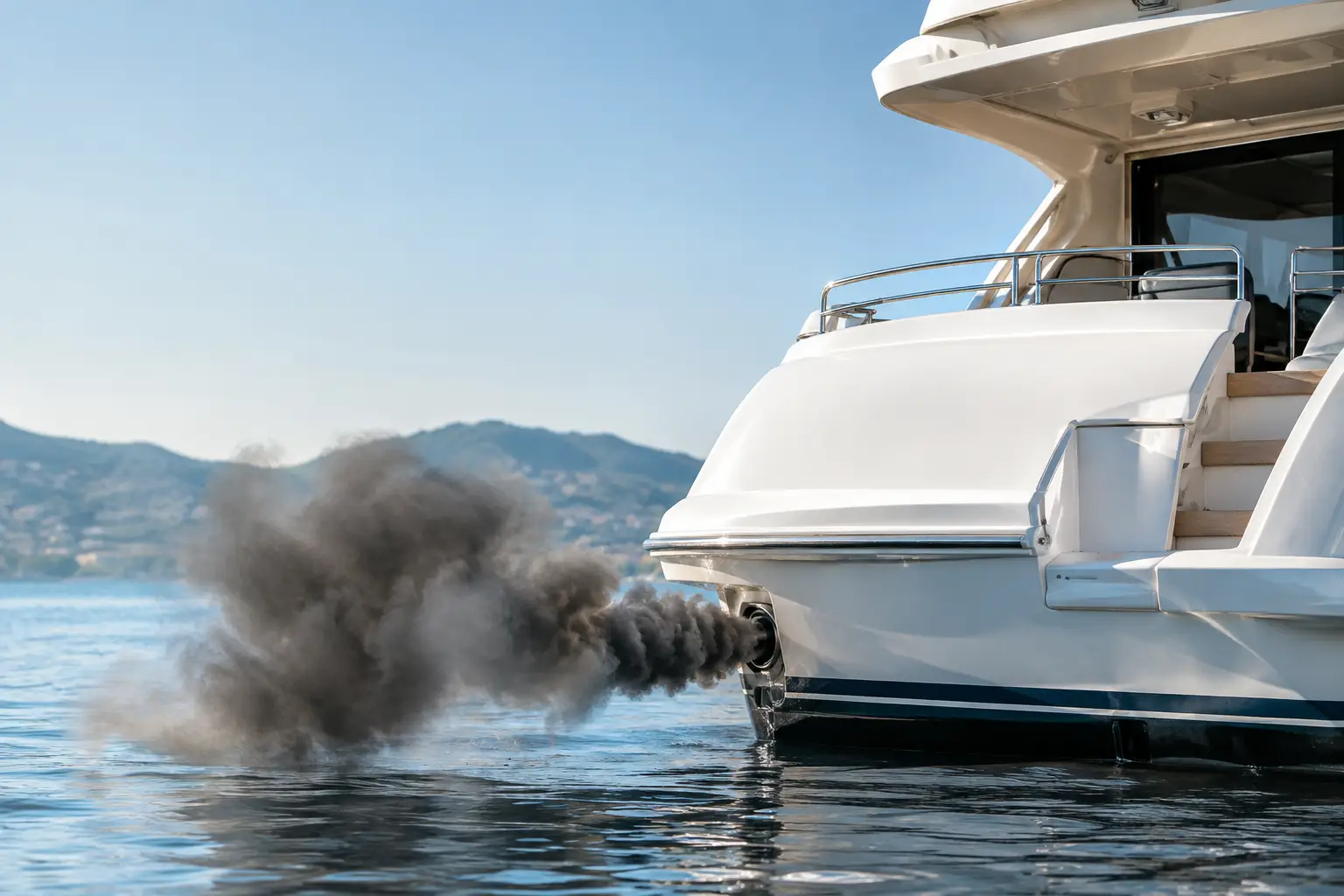
A brief haze at cold start can be normal on some marine diesels. A cloud that hangs around the transom, changes color, smells unusual, or appears under load is different. Diesel smoke causes are often early warnings that combustion, airflow, cooling, or lubrication is not where it should be – and ignoring them can turn a manageable repair into lost cruising time and a much larger invoice.
On a yacht, smoke is not a diagnosis by itself. It is a symptom, much like a fever. The color, timing, engine temperature, load, fuel consumption, and alarm history all matter. A qualified marine technician looks at the whole system before replacing parts, especially on sophisticated MTU, MAN, and Caterpillar engines where a single fault can affect several operating conditions.
What Diesel Smoke Color Can Tell You
Smoke color provides a useful starting point, but marine conditions can make appearances misleading. Exhaust can pick up moisture, lighting can change what you see, and smoke may only appear while accelerating, coming on plane, or running a generator under load. Still, the general pattern is valuable.
Black smoke: too much fuel or not enough air
Black smoke usually means the engine is producing more fuel than the available air can burn efficiently. It may appear as a dark haze during hard acceleration, but it should clear once the engine is operating at a steady load. Persistent black smoke deserves attention.
A restricted air filter, collapsed intake hose, dirty charge-air cooler, turbocharger issue, or exhaust restriction can limit airflow. On marine engines, fouled coolers and saltwater-related corrosion are common concerns because the engine depends on clean airflow and proper cooling to make rated power. Fuel injector problems, incorrect fueling, sensor faults, or an engine being overloaded can also contribute.
An overloaded vessel can be part of the picture. Excess weight, bottom growth, damaged running gear, or an improperly matched propeller increases engine load. The engine may then smoke because it is being asked to do more work than it can efficiently handle. This is why a good inspection considers the boat as well as the engine room.
White smoke: unburned fuel, water vapor, or a cooling concern
White exhaust is often associated with unburned fuel. A cold engine may produce a light white haze until combustion chambers warm up, particularly after sitting. If the smoke continues after normal operating temperature is reached, possibilities include weak compression, injector spray-pattern issues, incorrect injection timing, low fuel quality, air entering the fuel system, or a cylinder that is not firing correctly.
White smoke can also be steam. That distinction matters. Steam tends to dissipate rapidly and may have a sweet or unusual odor if coolant is involved. Cooling-system leaks, failed heat-exchanger components, gasket failures, or water intrusion need prompt professional evaluation. Continuing to run an engine with water where it does not belong can cause severe internal damage.
Do not assume every pale exhaust plume is a major engine failure. Condensation is common around marine exhaust systems, particularly at startup. The key question is whether the condition clears, repeats, worsens under load, or comes with coolant loss, overheating, rough running, or an alarm.
Blue or gray smoke: oil is entering combustion
Blue smoke generally points to lubricating oil being burned. It can result from worn piston rings, valve-guide wear, crankcase ventilation issues, turbocharger seal problems, or an engine oil level that is too high. Gray smoke may overlap with blue smoke and can also be related to incomplete combustion or fuel issues.
Oil consumption is an important clue. If the engine is using oil between service intervals, leaving an oily sheen in the exhaust area, or producing smoke after idling and then accelerating, document those details. They help narrow the diagnosis and can prevent unnecessary parts replacement.
Common Diesel Smoke Causes on Marine Engines
The same engine may smoke for different reasons depending on whether it is cold, idling at the dock, cruising, or pushed to wide-open throttle. That is why the operating pattern matters as much as the smoke color.
Fuel quality is a frequent starting point. Water contamination, microbial growth in diesel fuel, clogged filters, and sediment can interfere with fuel delivery and injector performance. A restricted filter may starve the engine, while contaminated fuel can damage precision components. Fuel that has sat through long periods of limited use deserves particular scrutiny.
Air and exhaust restrictions are equally common. Marine engines work in a corrosive, humid environment, and coolers, hoses, clamps, turbocharger components, and exhaust paths must be inspected rather than assumed to be sound. A charge-air cooler that is internally fouled or leaking can reduce oxygen available for combustion and lead to smoke, power loss, and higher exhaust temperatures.
Injector issues can create smoke even when the engine otherwise starts and runs. A sticking injector, poor spray pattern, or incorrect delivery can cause incomplete combustion in one or more cylinders. Modern electronically controlled engines may store fault information, but diagnostic codes are only part of the story. Fuel pressure, sensor readings, cylinder performance, and mechanical condition still need to be verified.
Cooling-system condition also affects combustion. A diesel that cannot reach proper operating temperature may produce white smoke and run inefficiently. One that overheats can develop far more serious problems. Heat exchangers, aftercoolers, raw-water pumps, thermostats, coolant condition, and sea strainers all play a role in keeping marine engines within their designed temperature range.
Finally, deferred maintenance has a compounding effect. Dirty filters, overdue cooler service, worn belts, aging hoses, neglected fuel tanks, and small seepage issues may seem unrelated. Together, they can create the conditions that lead to smoke, poor performance, and inconvenient failures offshore.
When Smoke Means Stop and Call for Service
A captain should reduce load and arrange service promptly if smoke is heavy, sudden, or accompanied by a loss of power. The same applies when there is overheating, low oil pressure, a coolant alarm, rough operation, fuel odor, unusual turbocharger noise, or visible oil or coolant loss. Continuing at speed in these conditions can make the repair more expensive.
If the smoke is mild and the vessel is operating normally, record what you see before it disappears. Note the engine hours, RPM, load, temperature, smoke color, weather conditions, and whether the issue occurs on one engine or both. If possible, take a short video from a safe location. This information gives the technician a far better starting point than “it smoked once.”
Avoid the temptation to solve a smoke issue with additives or adjustments alone. Additives may occasionally support fuel maintenance, but they do not repair a failing injector, a restricted cooler, contaminated tank, turbocharger problem, or internal engine wear. Changing filters without identifying why they became restricted can also leave the root cause untouched.
A Diagnostic Process That Protects Uptime
The best approach is methodical. A marine diesel technician should begin with the vessel’s service history and the exact operating conditions that produce smoke. From there, the inspection may include visual checks for leaks and hose failures, air-intake and exhaust examination, fuel sampling, filter inspection, electronic diagnostics, temperature readings, boost-pressure checks, and cooling-system evaluation.
The next step depends on the evidence. A black-smoke complaint under load may point toward air handling, bottom condition, or propeller loading. White smoke at idle after warm-up may require fuel-system and cylinder evaluation. Blue smoke with rising oil consumption may call for crankcase, turbocharger, and internal-condition checks. Good diagnosis is not guessing at the most expensive component first.
For owners in the South Florida coastal corridor, mobile service can avoid the time, hauling expense, and disruption of sending a vessel to a repair yard for every concern. GTM International brings certified, licensed, and insured marine technicians directly to vessels from Fort Lauderdale to Fort Pierce, helping owners address diesel concerns where the engine lives and operates.
A small change in exhaust is often the engine asking for attention before it demands a major repair. Treat it like you would an unexpected symptom in your own health: observe it carefully, do not dismiss it, and get the right specialist involved before the next trip becomes the costly one.
