
When the Detroit 60 Series engine first roared to life in 1987, it wasn't just another diesel. It was a game-changer. This inline-six powerhouse became an absolute legend, celebrated for its then-revolutionary electronic controls and incredible fuel efficiency. It didn’t just meet the standard for reliability in trucking; it set the standard.
That same bulletproof reputation is what makes it a trusted workhorse in demanding marine applications even today. Its entire legacy is built on a foundation of toughness and performance that has stood the test of time.
The Enduring Legacy of the Detroit 60 Series Engine
Detroit Diesel didn’t just launch an engine with the Series 60; they kicked off a fundamental shift in diesel technology. It was the first heavy-duty diesel engine off the production line with fully integrated electronic controls—the now-famous Detroit Diesel Electronic Control (DDEC) system. This electronic "brain" managed everything from the precise timing of fuel injection to onboard diagnostics, giving it a massive lead over its purely mechanical competitors.
It’s like comparing a vintage muscle car with a carburetor to a modern, fuel-injected supercar. The old-school method gets the job done, but the electronic system offers a level of precision that delivers better fuel economy, cleaner emissions, and far superior performance. This is exactly why the Detroit 60 Series so quickly took over the Class 8 truck market, earning a reputation for being both a brute and a brain.
From the Highway to the High Seas
It was only natural for this legacy of power and smarts to find its way into the marine world. For yacht owners, the very things that made the engine a trucking icon are even more critical when you're offshore. Reliability isn't just about saving fuel; it's about safety when the nearest port is miles away. The rugged design and advanced diagnostics of the Series 60 gave captains and owners a peace of mind they could literally bet their lives on.
Understanding where this engine came from is the key to appreciating what it can do for you today. Its core design principles have proven themselves over and over, and with the right care, it remains one of the most formidable power plants you can have in your vessel. This guide is all about giving you the practical, hands-on knowledge to keep it that way, from routine oil changes to tackling common headaches.
The real magic of the Series 60 was how it blended raw, brute-force power with intelligent, fine-tuned control. It proved that an engine could be a workhorse without being dumb, setting a benchmark that influenced diesel engine design for decades to come.
Our goal here is to help you translate that proven, decades-long legacy into modern, real-world dependability for your boat. Whether you’re an old salt or a new owner, you’ll find the insights you need to protect your investment and keep your Detroit 60 Series running at its absolute best.
Understanding the Three Key Engine Variants
The Detroit 60 Series family isn't a one-size-fits-all engine; it’s a strategic lineup of power plants, each built with a specific job in mind. To really get a feel for what this engine can do, you have to know the personalities of its three main players: the 11.1L, the 12.7L, and the later 14.0L models.
Don't think of them as identical triplets. It's better to see them as specialized athletes, each trained for a different event—from long-haul endurance runs to pure, heavy-lifting strength. This smart design is exactly why the Series 60 became such a dominant force in so many different industries, both on the highway and out on the water.
The Brains Behind The Brawn: DDEC Technology
Before we get into the specifics of each model, we have to talk about the technology that made them all legends: the Detroit Diesel Electronic Controls (DDEC) system. This was the engine’s central nervous system, and when it first came out, it was a total game-changer. It gave mechanics precise control over fuel injection, constantly monitored engine vitals, and offered self-diagnostic tools that were light-years ahead of anything else on the market.
Every single Series 60 engine relied on this electronic brain. The DDEC system got better over the years, moving through several generations (DDEC I, II, III, IV, and V), with each update bringing more sophisticated control and sharper diagnostic feedback. This is what gave the engine its signature mix of raw power and incredible fuel efficiency, allowing it to adapt to just about any demand you could throw at it.
This chart really puts into perspective just how wide the Series 60's impact was.
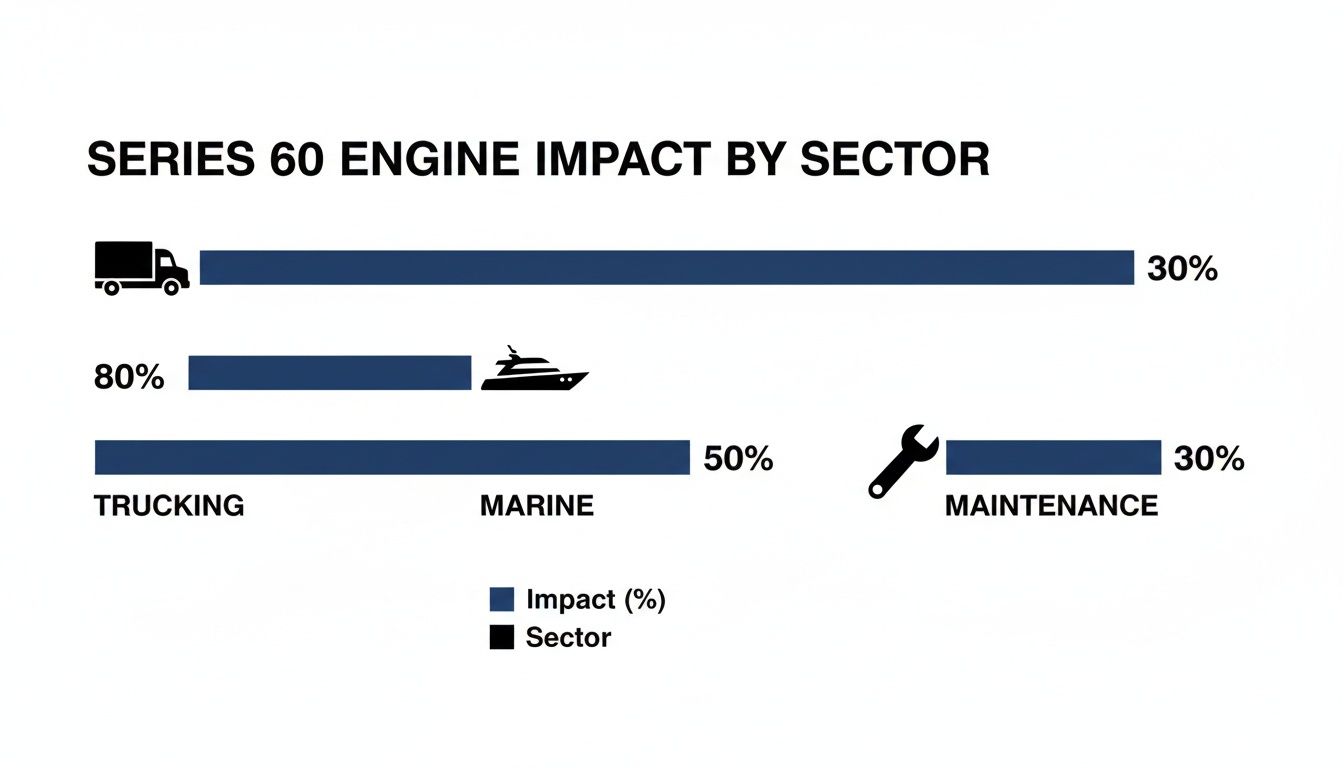
You can see how the engine's brilliant design directly benefited owners across trucking, marine, and even in long-term maintenance costs.
To help you see the differences at a glance, here’s a quick breakdown of how the three main variants stack up against each other.
Detroit 60 Series Engine Variant Comparison
| Specification | 11.1L Model | 12.7L Model | 14.0L Model |
|---|---|---|---|
| Production Years | 1987 – 1998 | 1987 – 2007 | 2001 – 2011 |
| Typical Horsepower | 300 – 365 hp | 380 – 515 hp | 455 – 575 hp |
| Peak Torque | 1250 – 1450 lb-ft | 1450 – 1850 lb-ft | 1650 – 1850 lb-ft |
| Best For | Regional Hauling, Buses | Long-Haul Trucking, Marine | Heavy Haul, High-Performance |
| Key Trait | Efficiency & Simplicity | Longevity & Balance | Raw Power & Torque |
This table shows the clear evolution of the engine, from the efficient 11.1L to the powerhouse 14.0L, with the legendary 12.7L sitting right in that sweet spot of performance and reliability.
The 12.7L: The Marathon Runner
If one model truly defined the Series 60, it was the 12.7-liter. This engine is the undisputed marathon runner of the group. It's famous for hitting that perfect balance of strong power, incredible longevity, and genuinely impressive fuel economy. There's a good reason it became the gold standard for over-the-road trucking.
The 12.7L was the true workhorse, making up the bulk of production from the late '80s all the way to 2007. Its secret was that ideal blend of power, economy, and rock-solid reliability. Often rated around 430 hp, it consistently sipped less fuel than its rivals. Its design (a bore and stroke of 5.12 in x 6.30 in) created a platform for massive torque—up to 1,850 lb-ft—and the DDEC upgrades kept it modern and versatile enough for everything from Freightliner sleepers to city buses.
For boat owners, that balance is even more crucial. The 12.7L delivers the steady, dependable power you need for long trips without draining your fuel budget.
The 14.0L: The Heavyweight Champion
Introduced later in the game, the 14.0-liter model was Detroit's answer to the growing demand for more raw grunt. This is the heavyweight champion, built specifically for jobs that require maximum torque and pulling power. It's essentially a "stroked" version of the 12.7L, engineered to muscle through heavier loads and tougher conditions.
Sure, it gives up a tiny bit of fuel economy compared to the 12.7L, but it pays you back with sheer force. In the marine world, the 14.0L is perfect for heavier vessels or for situations where you need to get on plane quickly and hold your speed under a heavy load. It's the engine you want when muscle matters most. That extra torque also gives the turbocharger a workout, which is a vital part of its performance. To keep that power on tap, you need to know the warning signs of a failing turbocharger; you can learn more in our dedicated guide to the Detroit Series 60 turbo.
It's never about which engine is "better," but which one is better for you. The 12.7L is your go-to for sustainable, efficient power on the long haul, while the 14.0L brings the on-demand muscle for serious heavy-duty work.
Troubleshooting Common Engine Problems
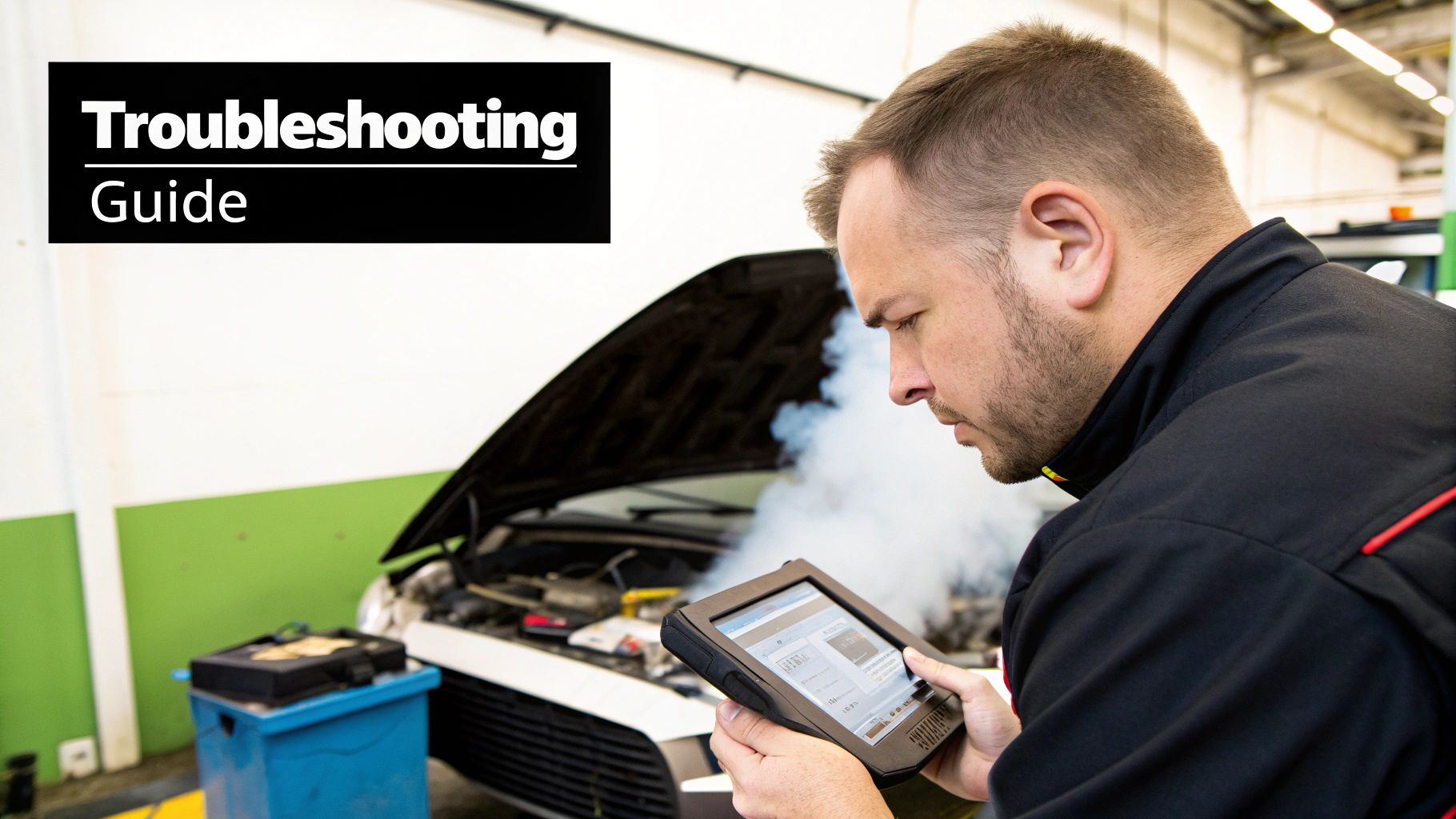
Even an engine as tough as the Detroit 60 Series will have its off days. The key is knowing what to look for. Being able to spot the early warning signs can mean the difference between a quick, easy fix at the dock and a trip-ending breakdown that leaves you stranded offshore.
This guide is all about translating what your engine is telling you. We'll skip the jargon and get straight to the real-world symptoms you're likely to see, from strange noises to a noticeable dip in performance, so you can make smart decisions before a small problem becomes a huge one.
Decoding Excessive Engine Smoke
Excessive exhaust smoke is one of the most obvious red flags, and lucky for us, it's also one of the most informative. The color of the smoke is the engine's way of telling you exactly where to start looking.
Here’s what those smoke signals mean out on the water:
- Black Smoke: This is almost always about fuel. The engine is getting too much of it, or not enough air to burn it all cleanly. You'll want to check for things like failing injectors, a clogged-up air filter, or a turbocharger that isn't spooling up like it should.
- White Smoke: Don't mistake this for steam. Thick, white smoke typically means coolant is getting into the combustion chamber. This is a serious one. It could point to a failed EGR cooler, a cracked cylinder head, or a blown head gasket, all of which need immediate attention.
- Blue or Gray Smoke: If you see a bluish-gray haze, your engine is burning oil. The cause can range from worn-out piston rings and valve seals to a bad turbo seal. The first thing you should do is check your dipstick and keep a very close eye on oil consumption.
An engine that suddenly starts smoking is sending a clear distress signal. Ignoring it is like ignoring a fire alarm—the problem will only get worse and more expensive to fix. Acting quickly is key.
Tackling Power Loss and Poor Performance
A healthy 60 Series engine delivers smooth, predictable power. So, when you feel a sudden drop in performance, sluggish acceleration, or find the engine struggling under load, it's time to play detective. The DDEC system is a fantastic diagnostic partner, but many power-loss issues have simple mechanical roots.
When it was launched back in 1987, the Detroit Diesel Series 60 was the first production engine with fully integrated electronic controls. This DDEC system was a game-changer, boosting fuel economy by up to 10% and pushing overhaul intervals from 500,000 to an incredible 750,000 miles. Knowing how reliable this platform is makes any performance issue stand out. You can learn more about its Series 60's market-defining history on highwayandheavyparts.com.
Start your diagnosis with the basics. Clogged fuel filters are a common culprit, effectively starving the engine. Another thing to check is for air leaks in the intake system, anywhere between the turbo and the intake manifold. Any unmetered air throws off the crucial fuel-to-air ratio and will absolutely kill performance.
When To Call a Certified Technician
Knowing how to diagnose a problem is one thing, but knowing your own limits is just as important. Some jobs just aren't suited for a DIY fix and require specialized tools and years of experience. Making the right call saves you time, money, and the headache of potentially making things worse.
Here are a few signs that it's time to pick up the phone and call in a pro:
- Internal Engine Noises: If you hear deep knocking, sharp tapping, or grinding sounds, shut the engine down immediately. Those are the sounds of serious internal trouble—think bearing failure or piston issues—that demand an expert teardown.
- Persistent Overheating: You've cleaned the heat exchangers, checked the coolant, and verified the raw water intake is clear, but the engine is still running hot. This points to a deeper issue, like a failing water pump or an internal blockage a professional will need to track down.
- Complex DDEC Fault Codes: The DDEC system is brilliant, but interpreting its fault codes and pinpointing the exact bad sensor or wiring fault takes specialized software and a technician who’s seen it all before. Throwing parts at a code is a great way to waste money.
A Proactive Maintenance Schedule for Your Engine
Reliability isn't something you hope for; it's something you build with every single hour of operation and every scheduled service. For a powerhouse like the Detroit 60 Series, a proactive maintenance schedule is the most important thing you can do for its long-term health and performance. This isn't just about ticking boxes on a checklist. It's about understanding why each task is so critical, especially in the unforgiving marine environment where salt, humidity, and constant load take a heavy toll.
Think of your engine's maintenance plan as a long-term investment. Small, consistent deposits of time and attention pay huge dividends by preventing those catastrophic "market crashes"—the sudden, costly failures that always seem to happen miles from shore. By staying ahead of wear and tear, you're not just maintaining an engine; you're safeguarding your peace of mind.
The Cornerstone of Engine Longevity
The foundation of any solid maintenance plan rests on three simple pillars: clean fluids, clean air, and consistent cooling. Drop the ball on any one of these, and you can trigger a domino effect of expensive, frustrating problems.
- Engine Oil and Filters: Your engine's oil is its lifeblood. It lubricates hundreds of moving parts, cleans away contaminants, and helps manage incredible heat. Regular oil and filter changes are absolutely non-negotiable.
- Fuel Filters: Bad fuel is a fast track to injector failure, and that's a repair nobody wants to pay for. Your primary and secondary fuel filters are the gatekeepers, and keeping them fresh ensures your engine gets a clean, steady supply of diesel.
- Air Filter: An engine needs to breathe just as much as it needs fuel. A clogged air filter chokes the engine, killing performance, increasing smoke, and driving up your fuel bill.
These aren't just chores; they are the fundamental practices that keep your Detroit 60 Series running with the power and efficiency it was designed for.
Why Your Cooling System Is Your Top Priority
If there's one system that demands your utmost attention on a marine Series 60, it's the cooling system. It's the engine's number one defense against its own immense heat, and in saltwater, it's constantly under assault. Mark my words: a neglected cooling system is the leading cause of the most catastrophic engine failures, including cracked cylinder heads and liner damage.
Later models of the Series 60 feature a brilliant design called Top Liner Cooling, where coolant passages are drilled right into the block to circulate fluid around the hottest part of the cylinder liner. This helps reduce thermal expansion and lowers cylinder temperatures, but it only works if the coolant is clean and flowing freely.
Overheating isn't a minor inconvenience; it's a code-red emergency for your engine. Consistent, professional servicing of your heat exchanger, aftercooler, and the entire coolant circuit is the single best preventative measure you can take to avoid a five-figure repair bill.
Here’s a practical, marine-specific schedule to get you started. This is a great baseline, but keep in mind that heavy use or operating in especially harsh conditions might mean you need to shorten these intervals.
Recommended Marine Service Intervals for the Detroit 60 Series
| Maintenance Task | Service Interval (Hours/Time) | Importance/Notes |
|---|---|---|
| Engine Oil & Filter Change | Every 250 hours or annually | Essential for lubrication and removing contaminants. Use a high-quality, diesel-rated oil. |
| Fuel Filter Replacement | Every 250-300 hours or as needed | Critical for protecting sensitive fuel injectors from water and debris. Don't skip this. |
| Cooling System Service | Annually | Includes flushing coolant and professionally cleaning the heat exchanger and aftercooler. |
| Raw Water Impeller | Every 300 hours or annually | A failed impeller means immediate overheating. It's a cheap part that prevents costly damage. |
| Oil Analysis | With every oil change | This is like a blood test for your engine, revealing internal wear metals long before failure. |
| Valve Lash Adjustment | Every 1,500-2,000 hours | Ensures proper valve seating for optimal compression, power, and fuel economy. |
A well-maintained engine is a reliable engine. Following a consistent schedule like this is the key to getting years of dependable service from your Detroit.
Predictive Maintenance with Oil Analysis
If you really want to stay ahead of the game, routine oil analysis is one of the most powerful tools in your arsenal. It’s simple: you send a small sample of used engine oil to a lab, and they send back an in-depth report on the health of your engine's internal components.
For example, elevated levels of copper might indicate bearing wear, while a spike in silicon could point to a leak in the air intake system. This data lets you spot a developing problem and fix it proactively—long before it leads to a catastrophic breakdown on the water. It’s an inexpensive way to get a live look at your engine's health without ever turning a wrench.
Making Smart Overhaul and Repower Decisions
If you've run a high-hour Detroit 60 Series for any length of time, you know the day is coming. The engine just feels… tired. Oil consumption is creeping up, she’s not as crisp as she used to be, and you're at a crossroads: do you overhaul the trusted workhorse or is it time to repower the whole vessel?
This is a big decision, and it’s not just about turning wrenches. It’s a major financial and strategic choice. Get it right, and you’re set for years. A rushed decision, on the other hand, can cost you a fortune in both cash and time on the water.
Evaluating the Cost of Overhaul vs. Repower
On the surface, the math seems simple. A complete, professional overhaul on a Series 60 is almost always significantly cheaper than dropping in a brand new engine. We're often talking a fraction of the cost, which makes it a very compelling option for owners who just want to get their engine back to its prime.
But the sticker price is just the beginning of the story. You have to look at the total cost of ownership over the next few thousand hours.
- Overhaul: You're restoring your engine to factory spec, often reusing the incredibly durable core components that made it a legend in the first place. It's a known quantity—the same block and crank that have served you well for years.
- Repower: This means a new engine, plus all the "extras." You'll likely need new engine mounts, a modified exhaust system, and new electronic controls to make it all talk to each other. It’s a far more complex and expensive undertaking.
A professionally executed overhaul breathes new life into a proven workhorse, restoring its power, efficiency, and reliability for years to come. It leverages the original robust engineering of the Series 60, making it a powerful financial and operational choice.
When a diesel engine rebuild is done right, it pushes the reset button on your vessel's most important asset. To see what a top-tier rebuild really involves, you can get the full rundown on the process and benefits of a comprehensive diesel engine rebuild. This route protects your original investment while locking in dependability for the future.
Upgrades During an Overhaul
Here’s where an overhaul gets really interesting. It’s the perfect opportunity to make smart, targeted upgrades. We’re not talking about turning your workboat into a racer; we're talking about bolting on modern efficiency and reliability. It's your chance to fix any known weak points and improve on the engine's strengths.
Think about it. Dropping in a newer, more efficient turbo can really wake up the throttle response and improve fuel burn. A modern set of injectors can provide a cleaner, more powerful combustion, cutting down on smoke. These aren't just fixes—they're investments that pay dividends every time you fire it up.
Consider these common-sense upgrades:
- New Turbocharger: A modern turbo can spool up faster and help the engine breathe easier across the RPM range.
- High-Performance Injectors: Better fuel atomization means a more complete, powerful burn.
- Updated Cooling System Components: Swapping an old heat exchanger for a more efficient modern unit can do wonders for temperature stability under load.
At the end of the day, deciding between an overhaul and a repower comes down to a hard look at your budget, your tolerance for downtime, and your long-term plans for the vessel. For most owners, a meticulous overhaul with a few smart upgrades strikes the perfect balance—it brings back that legendary Series 60 performance without the massive cost and headache of a full repower.
Why You Should Always Call a Certified Mobile Technician
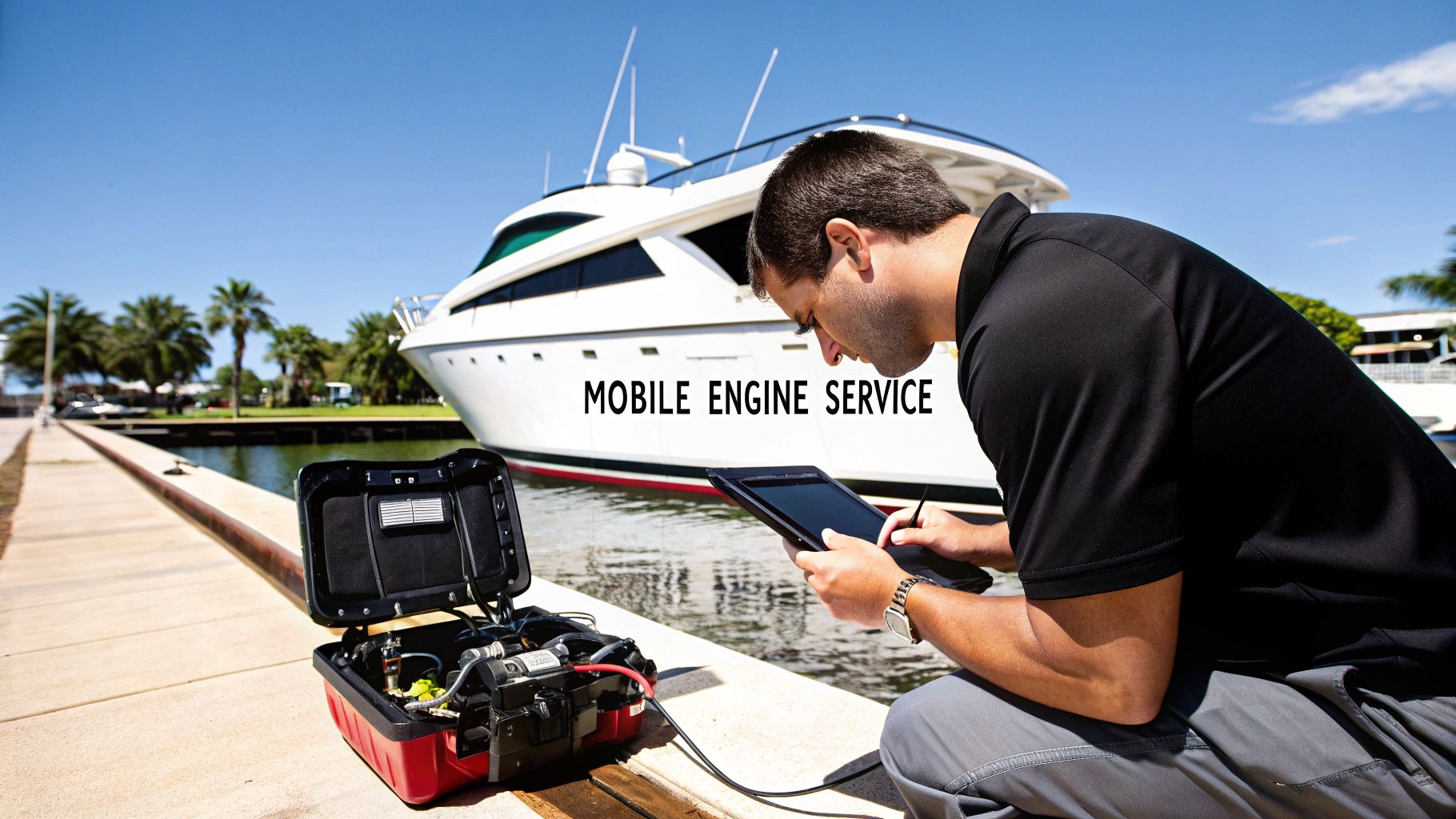
Picture this: you're miles from shore—or even just tied up at your private dock—when a critical engine fault brings your day to a halt. The old way of dealing with this involved a long, frustrating call to a boatyard, scheduling an expensive haul-out, and then waiting weeks for your turn. Thankfully, there’s a much smarter solution: a certified technician who comes right to your vessel.
This shift to on-site mobile service completely changes the game. It saves you an incredible amount of time, money, and stress, turning what used to be a logistical nightmare into a straightforward fix that gets you back on the water fast.
The Power of Certification
When it comes to a sophisticated powerhouse like a Detroit 60 Series, not all technicians are created equal. In fact, choosing someone with factory certifications is probably the single most important decision you can make for your engine's health. That certificate isn't just a piece of paper; it’s your guarantee of quality.
A truly certified professional shows up with everything they need to do the job right the first time:
- The Right Diagnostic Software: They’ll have the proprietary DDEC software essential for pulling accurate fault codes. No guesswork, just data-driven diagnostics.
- Specialized Tools: They carry the specific, purpose-built tools for the Series 60, which prevents the kind of damage that comes from using the wrong equipment.
- Genuine Parts Access: Certification means a direct line to OEM parts. This ensures a perfect fit and protects your engine's performance—and your warranty.
This level of preparedness is non-negotiable. Detroit Diesel had already built one million Series 60 engines by 2008, a testament to its legendary engineering. An engine with that kind of legacy demands expert care, and only a factory-certified mobile technician can deliver it.
Hiring a non-certified mechanic to work on your high-performance diesel is like asking a family doctor to perform open-heart surgery. They might grasp the general idea, but they lack the specialized skills and tools to ensure a successful outcome.
More Than Just a Quick Fix
Top-tier mobile service is about more than just solving a single problem. It’s about building a relationship with a trusted partner who knows your vessel inside and out. A certified technician can perform comprehensive on-site inspections, spotting potential trouble with your electrical systems, steering, or generators long before they turn into trip-ending disasters.
This proactive approach is the best way to protect your investment and maximize your time on the water. When you need help now, a dedicated mobile team provides the fast, expert diesel marine repair that ensures your vessel is always ready for the sea. Bringing the expertise to your dock isn't just a convenience—it's the smartest way to manage and maintain your marine assets.
Frequently Asked Questions
Let's dive into some of the most common questions we hear from owners and captains about the Detroit 60 Series. Think of this as a quick-reference guide to help you make smarter decisions and keep your engine running strong.
How Can I Tell if My Engine Needs an Overhaul or Just a Repair?
This is the big one. Key symptoms like consistently high oil consumption, a noticeable loss of power, or heavy, persistent smoke are your engine's way of telling you something is wrong. But don't jump straight to assuming the worst. These red flags are a call for diagnostics, not an automatic overhaul sentence.
The only way to know for sure is to get a certified technician involved. They'll run crucial tests, like a compression check to see how well the cylinders are sealing and an oil analysis to hunt for internal wear metals. This data takes all the guesswork out of the equation. It will tell you definitively if a targeted repair will get you back on the water or if a complete overhaul is the right long-term move to restore factory performance.
Is It Worth Upgrading an Older DDEC II or III System?
Honestly, probably not. While the newer DDEC systems have more bells and whistles, swapping out an entire system is a massive, expensive undertaking. For the vast majority of owners, a well-maintained DDEC II or III system is incredibly reliable and does its job perfectly well.
Before you even think about a system-wide upgrade, have a tech run a full diagnostic scan on what you've got. More often than not, the best bang for your buck comes from making sure your current system is working flawlessly. Simply ensuring all your sensors, connectors, and wiring harnesses are in top shape can solve a world of problems and bring back that crisp performance you're looking for.
The most common and costly maintenance mistake is neglecting the cooling system. In a marine setting, the heat exchanger and coolers are under constant attack. When they get clogged, the engine overheats, which can lead to catastrophic failures like a cracked cylinder head.
What Is the Biggest Maintenance Mistake With These Engines?
Without a doubt, it's overlooking the cooling system. This is a critical mistake on any engine, but in a marine environment, it’s a recipe for disaster. Saltwater and constant heat are a brutal combination, and a clogged heat exchanger or aftercooler will force your engine to run hot, putting incredible stress on its most important parts.
This is the number one cause of serious, five-figure repairs like cracked cylinder heads and damaged cylinder liners. Later Series 60 models even feature Top Liner Cooling—a brilliant design where coolant flows through passages drilled right into the block to cool the hottest part of the cylinder. It's a fantastic system, but it's completely useless without clean, freely flowing coolant. Regular, professional cleaning of the entire cooling circuit isn't just a good idea; it's the single most important preventative maintenance you can do.
How Much Can Mobile Repair Save Me Compared to a Boatyard?
The savings are huge, and they come from a few different places. First, you completely sidestep the direct cost of hauling the vessel out, which can easily run into the thousands all by itself. Second, you get your time back—no more waiting weeks for an open spot in a crowded boatyard schedule.
On top of that, mobile service providers often have lower overhead, which can mean more competitive labor rates. By getting the problem fixed right at your dock, mobile repair is almost always the faster, smarter, and more cost-effective way to get back to enjoying your boat.
When your Detroit 60 Series engine needs professional attention, don't lose time and money waiting at a boatyard. GTM International brings factory-certified technicians directly to you, anywhere in South Florida. Get fast, reliable, and cost-effective service by visiting us at https://www.marinetechsvcs.com to schedule your on-site repair.
