

When your engine sputters to a halt, the last thing you want is the headache of hauling your boat out of the water. For any boat owner in South Florida, that used to be the only option. Now, searching for "mobile boat engine repair near me" connects you with a much smarter alternative: certified technicians who come directly to your dock. This isn't just a small convenience—it's a complete game-changer that saves you time, cuts out the fat from your repair bill, and gets you back on the water fast.
Why Mobile Repair Beats Hauling Out Your Boat
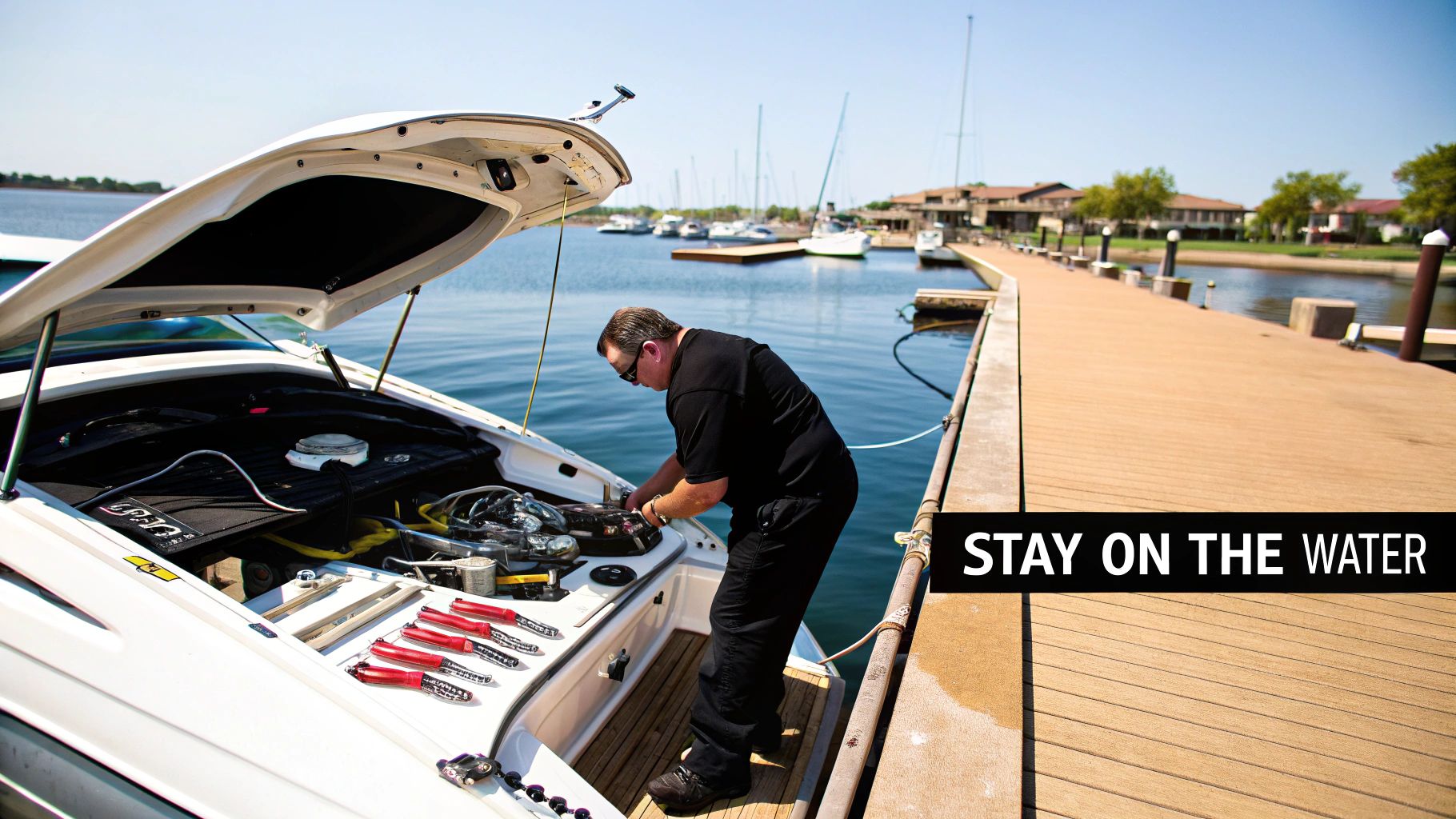
Let's be honest, the old way of getting your boat fixed is a pain. You have to schedule a haul-out, wait for an opening at an overbooked boatyard, and then surrender your vessel for days, sometimes even weeks. It’s a frustrating and inefficient process. For charter captains and serious boaters, that downtime isn't just an annoyance; it’s lost income and missed opportunities.
Mobile marine service completely flips that script. We bring the workshop to you. The advantages are immediate and obvious, directly solving the biggest frustrations of traditional yard repairs.
The Immediate Benefits of On-Site Service
The most powerful benefit is pure, simple convenience. Whether your boat is at a private dock in Ft. Lauderdale or a marina slip in West Palm Beach, a technician shows up ready to work. This is absolutely critical when an unexpected issue leaves you stuck at the dock.
But it goes way beyond just showing up. The on-site model delivers:
- Real Time Savings: Forget the "waiting game." We can start diagnosing and repairing almost immediately, turning a week-long ordeal into a focused service call.
- Serious Cost Efficiency: You completely sidestep the hefty haul-out and launch fees. Depending on your boat's size, that’s hundreds, if not thousands, of dollars saved right off the top.
- Direct, Clear Communication: You get to talk one-on-one with the person actually turning the wrenches on your engine. You can ask questions, see the problem for yourself, and get straight answers without playing phone tag with a front desk.
The real value here is getting you back on the water. Mobile repair turns a lengthy, frustrating process into an efficient, on-site solution that respects your time and your boat.
The table below breaks down the clear differences. When you see it side-by-side, the choice becomes obvious.
On-Site Repair vs Traditional Boatyard Service
| Factor | Mobile Repair (GTM International) | Traditional Boatyard |
|---|---|---|
| Location | We come to your dock, marina, or home. | You must bring your boat to their facility. |
| Downtime | Minimal. Work starts quickly. | Significant. Days or weeks of waiting. |
| Cost | No haul-out, launch, or transport fees. | Includes expensive haul-out and launch fees. |
| Convenience | Maximum. No need to move your vessel. | Low. Requires complex scheduling & logistics. |
| Communication | Direct access to your technician. | Often through a service manager; can be delayed. |
The advantages are clear. Mobile service isn't just about convenience; it's about a more efficient, transparent, and cost-effective way to maintain your investment.
A Smarter Financial and Operational Decision
This shift toward mobile service is happening for a reason. The global market for marine engine repair is set to grow at a compound annual growth rate (CAGR) near 6% into the early 2030s, according to data from Future Market Insights. This growth is fueled by an aging fleet and, more importantly, by owners who refuse to accept costly downtime. In a yachting hub like South Florida, that demand is even stronger.
Ultimately, choosing a mobile boat engine repair near me is a strategic move. It gives you back control over your time and your vessel. For owners of more complex vessels, having access to specialized mobile diesel marine engine services is essential. GTM International delivers that certified, factory-trained expertise right to your transom, making us the clear choice for any discerning boat owner.
What to Do Before You Pick Up the Phone
A good service call starts way before you dial. When you've got the right information ready, you're helping the technician show up prepared. That means a faster diagnosis and a quicker fix. Think of yourself as the first responder for your engine—the details you can give us are often the difference between a simple repair and a much bigger headache.
When you call for a mobile boat engine repair, knowing how to describe the problem is everything. Don’t just say, “it’s making a weird noise.” Get specific. Is it a high-pitched whine that gets louder as you throttle up? A heavy, rhythmic clunking at idle? Or maybe a new vibration you can feel through the deck? Those details are like a roadmap for a mechanic.
Gather Your Engine's Vitals
Before you call, take five minutes to pull together some basic info. Any good technician is going to ask for these three things right off the bat because they immediately help narrow down what could be wrong and what parts might be needed.
- Engine Make, Model, and Serial Number: This is non-negotiable. For high-performance engines like MAN, MTU, or CAT, the model and serial number are the only way to pinpoint the exact specs and pull the right service manuals.
- Engine Hours: The total hours on your engine tell a story. It gives us context for its service life and often points directly to common issues that pop up at certain milestones.
- A Clear Description of the Problem: Jot down what happened, when it started, and what you were doing at the time. For example: "After running at 3000 RPM for an hour, we noticed black smoke coming from the starboard exhaust and felt about a 10% loss of power."
Having this ready makes that first conversation incredibly productive. It helps us send the right expert with the right gear, which saves you both time and money. Simple as that.
Being prepared isn't just about making things go faster; it's about taking control of the situation. When you provide detailed information, you empower the technician to solve your problem on the first visit, which lowers your labor bill and gets you back on the water where you belong.
Learning to Read the Warning Signs
Certain symptoms are classic tells for specific problems. If you can recognize them, you can communicate the issue that much better. An experienced marine diesel mechanic has seen it all, but your initial report is our starting point.
Here are a few common scenarios and what they might mean:
- Black Smoke: This almost always points to an improper fuel-to-air ratio. It could be caused by something as simple as clogged air filters, or it could be a sign of injector problems or even a turbocharger issue.
- Sudden Vibration: A new or worsening vibration often means you have a misfiring cylinder, a fouled prop, or problems with your engine mounts. It's something you want to get checked out immediately.
- Loss of Power: If your engine feels sluggish and just isn't putting out the performance it used to, the cause could be anything from a clogged fuel filter to more serious compression problems inside the engine.
Mentioning these observations when you call for service gives a technician a massive head start. It allows them to form a working theory, grab the right diagnostic tools, and bring the parts needed for the most likely fixes, making that on-site visit as efficient as humanly possible.
How To Choose The Right Marine Mechanic
When your engine sputters to a stop, the first instinct is to frantically Google "mobile boat engine repair near me" and call the first number that pops up. I get it. The pressure is on. But take a deep breath—that’s one of the biggest mistakes you can make.
In a place like South Florida, the waters are crowded with both boats and mechanics. A rushed decision can easily lead you to a technician who does more harm than good, leaving you with shoddy work, a voided warranty, and an even bigger bill. Finding the right expert isn't about speed; it's about protecting your investment.
Think of it this way: you wouldn't hire a general handyman to perform heart surgery. You'd want a specialist. Your boat's engine deserves that same level of scrutiny.
Before you even pick up the phone, get your facts straight. Knowing what’s wrong is half the battle and helps you have a much more productive conversation with a potential mechanic.
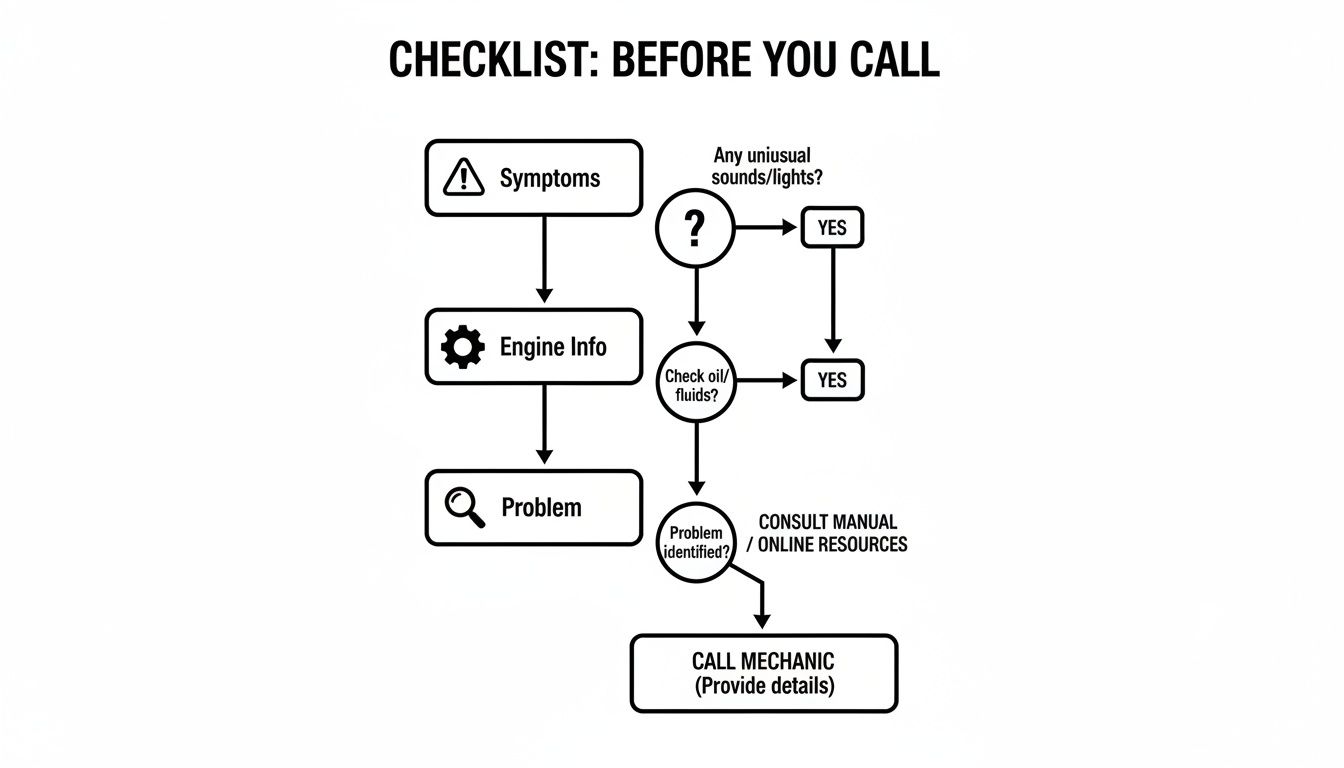
Having this information ready—your engine’s symptoms, the model number, and a clear description of the problem—will instantly show a pro that you know what you’re talking about.
Certifications And Specialization Are Non-Negotiable
Here’s the absolute deal-breaker: factory certification. If you have an MTU, MAN, or Caterpillar engine, you simply cannot afford to have an uncertified technician touching it. Period.
Certified pros have been trained directly by the manufacturer. They have the proprietary diagnostic software, the specialized tools, and the latest service bulletins that a generalist mechanic will never see. Anyone else is just guessing, and a guess can cost you thousands.
Modern marine diesels are incredibly complex. They aren't the simple engines of 20 years ago. An uncertified mechanic might mean well, but without the right credentials, they could easily misdiagnose the problem or use a workaround that doesn't meet factory standards.
This is especially true here in South Florida, where high-performance yachts are everywhere. Most of these vessels run on a handful of top-tier brands like MTU, MAN, and CAT, which makes finding a specialist absolutely critical. Research from industry analysts confirms this, showing just how much owners rely on OEM-level expertise to avoid costly, time-consuming haul-outs.
Key Questions To Ask Any Potential Technician
Once you’ve confirmed a mechanic is certified, it’s time to vet them properly. A true professional will have no problem answering these questions. If they get defensive or their answers are vague, that’s your cue to hang up and move on.
- "What's your hands-on experience with my specific engine model?" Don't settle for "I work on MAN engines all the time." You want to hear that they know your exact series inside and out.
- "Do you use OEM parts or will you be using aftermarket?" For anything critical, you must insist on Original Equipment Manufacturer (OEM) parts. It’s the only way to guarantee a perfect fit and keep your warranty intact.
- "Are you fully licensed and insured for mobile work at my marina?" Ask to see the paperwork. This is your protection against liability if something goes wrong on your vessel.
- "Can I get a few references from captains or owners you've recently worked for?" A good mechanic will have a long list of happy clients who are more than willing to vouch for their skills.
Choosing a technician is the single most important decision in the entire repair process. The right expert, like the team here at GTM International, doesn't just bring a toolbox—they bring factory-backed knowledge that gets the job done right the first time.
By asking these tough questions upfront, you can cut through the noise and find a real professional you can trust. If you want to dig a bit deeper, check out our guide on what it takes to find a truly reliable marine diesel mechanic near you. A little homework now will save you a world of headache later.
Getting Your Boat Ready for a Service Call
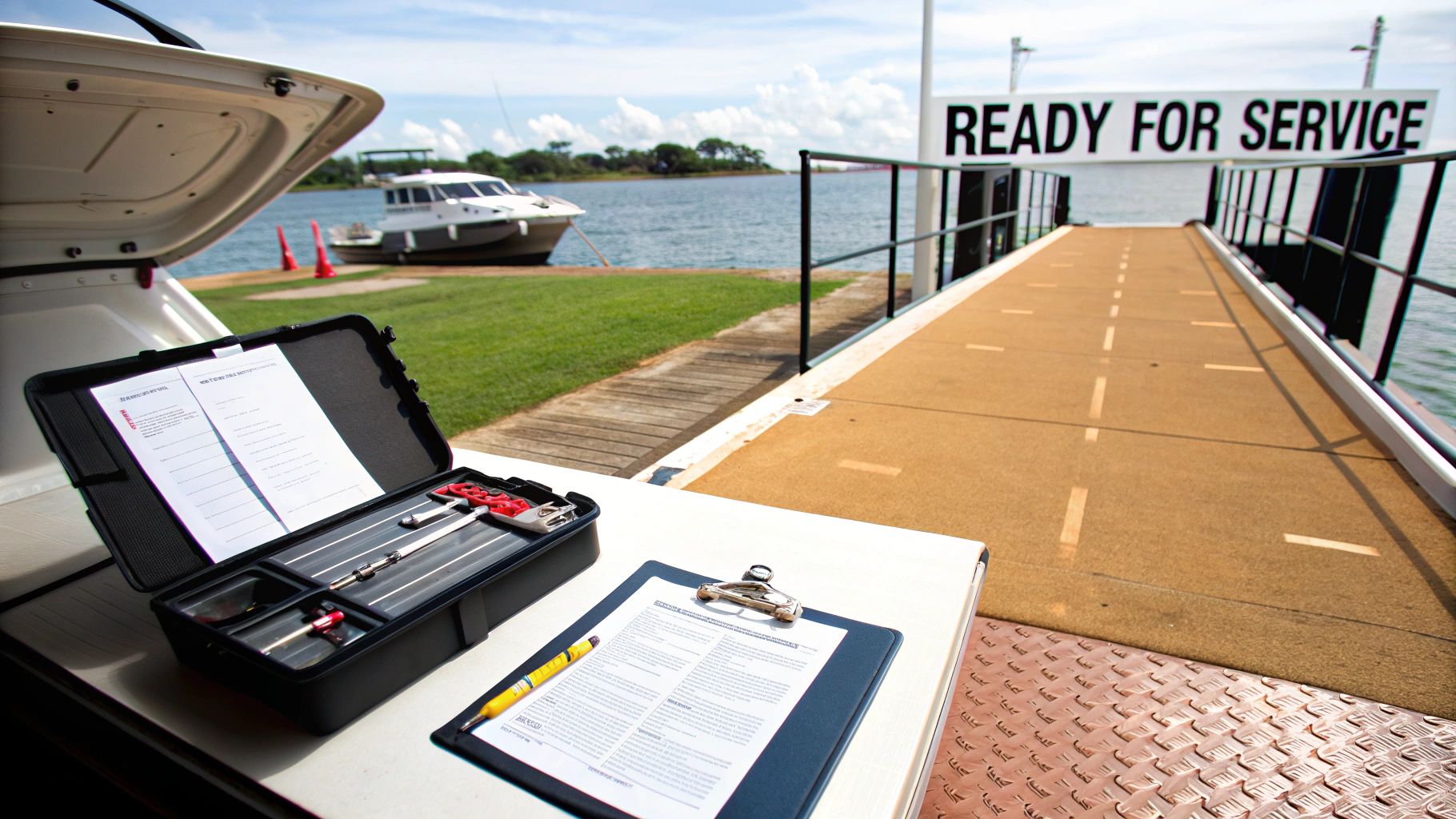
A great repair visit is a team effort. When our technician shows up, we want to hit the ground running—diagnosing the issue, not spending the first half-hour moving your gear around or waiting for paperwork. A little prep work on your end can make a massive difference.
Think of it like this: every minute our tech spends clearing a path to the engine is a minute you're paying for. This isn't just about making our lives easier; it's about being efficient with your time and money. When you prepare the boat, you're ensuring our attention is 100% focused on the fix.
Create a Clear and Safe Workspace
The single most important thing you can do is guarantee unobstructed access to the engine compartment. Our techs need a safe, clear area to lay out tools, run diagnostics, and get to work. Before we arrive, please take a few minutes to clear the deck.
This includes moving stuff like:
- Fishing rods, coolers, and tackle boxes
- Seat cushions, fenders, and life jackets
- Any personal bags or items stored near the engine hatch
A clutter-free engine room isn't just faster; it's safer. It helps prevent accidental damage to your belongings and lets the technician maneuver without contorting themselves, leading to a much better and more thorough repair.
Time is money on a service call. A 15-minute delay to clear out gear is 15 minutes of labor that could've gone toward the actual repair. Helping us get straight to the engine is the quickest way back to a working boat.
Have Your Paperwork on Deck
Rounding up your boat's documents ahead of time is another pro move that saves more time than you'd think. Instead of digging through cabinets while the meter is running, just have them ready in a folder.
Your Quick Document Checklist:
- Vessel Registration: This confirms ownership and the boat's specs.
- Engine Logbook: A good logbook is gold. It gives us the history of service, oil changes, and any past issues, which can provide critical clues.
- Recent Service Invoices: These tell us what work was done recently and who did it.
While you're at it, scribble down a quick list of any other little quirks you've noticed. Maybe the generator has started making a weird noise, or the throttle feels a bit sticky. These details might seem unrelated, but they help our technician build a complete picture of your vessel’s health. Being prepared is the key to getting the most effective mobile boat engine repair near me and getting you back on the water fast.
What to Expect: Repair Costs and Emergency Response
When you’re in a tight spot and searching for "mobile boat engine repair near me," the first question on your mind is almost always about cost. But a simple hourly rate never tells the full story. To really understand what you're paying for—and the value you're getting—you need to look at how a professional service call is structured, especially when you're dealing with an emergency.
A reputable mobile service should be completely transparent about their pricing. You should never have to guess. We believe in laying everything out on the table before we even turn a wrench.
Breaking Down the Bill
Any professional estimate or invoice you get will typically have a few core components. Here’s what you should expect to see:
- The Call-Out Fee: This is simply what it costs for us to get a certified technician and a fully-equipped service vehicle to your location. It covers the travel time and expenses, whether you're docked at a busy marina in Ft. Lauderdale or a private slip up in Jupiter.
- The Hourly Labor Rate: This is the rate for our technician's hands-on time—diagnosing the problem, performing the repair, and testing the work. At GTM International, that rate reflects years of factory-certified expertise on brands like MAN, MTU, and Kohler.
- Parts and Materials: This line item covers all the genuine OEM parts, specialized fluids, and other materials required to get the job done right and keep your engine’s warranty intact.
We make it a point to walk you through these costs from the very beginning. No surprises, no hidden fees. If you want to dig deeper into what goes into pricing a job, check out our guide on understanding the costs of diesel engine repairs.
Why a 24-Hour Emergency Response Is Worth Every Penny
Let's play out a common scenario. It’s 8 p.m., and your engine just died. You have a high-stakes charter leaving at dawn. This is exactly where the value of a true 24/7 emergency service becomes obvious.
Yes, there's a premium for an after-hours call. But that fee isn't just an expense; it's an investment that can save you thousands in lost charter revenue and, just as importantly, protect your hard-earned reputation.
An emergency call isn't just about fixing a broken part. It's about saving your trip, protecting your income, and delivering peace of mind when the pressure is on. That's a service that pays for itself immediately.
The data backs this up. Industry reports from sources like 360iResearch.com consistently show that on-site, rapid-response repairs drastically cut downtime and operational losses for commercial and private operators alike. Think about it: preventing just one canceled trip or avoiding an expensive, time-consuming haul-out can easily save you thousands of dollars. That’s why there's such a high premium on certified mobile technicians who can actually deliver.
Our emergency service at GTM International is designed for these exact high-stress moments. We’re not just showing up to fix an engine; we’re there to salvage your voyage. When you need us most, our team is ready to go, bringing the right tools and deep expertise to get you back up and running.
Your Questions, Answered
When you're looking for someone to trust with your vessel's engine, having a few questions is more than just normal—it's smart. Getting straight answers is the only way to find a mobile repair partner who really knows their stuff. We get calls every day from captains and yacht owners across South Florida, so we’ve put together the questions we hear most often to give you the clarity you're looking for.
These are the real-world concerns we address daily, and you’ll get straightforward answers from us—no fluff, no runaround.
What’s Your Service Area in South Florida?
This is usually the first thing people ask, and for good reason. GTM International is on the road and on the docks throughout the entire South Florida yachting corridor. Our mobile technicians bring expert, on-site service from the marinas in Ft. Pierce all the way down to the heart of the action in Ft. Lauderdale.
We've got you covered in all the key hubs, including:
- West Palm Beach
- Jupiter
- Boca Raton
- Palm Beach Gardens
We bring our factory-certified expertise directly to your vessel, whether it's tied up at a private dock, sitting in a commercial marina, or even parked at your residence. The whole point is that you don't have to worry about getting your boat to a yard—we handle the logistics.
Are Your Techs Actually Certified for MTU, MAN, and CAT Engines?
Yes, and this is non-negotiable. It’s probably the single most important factor that separates a true professional from a generalist mechanic, and it’s the bedrock of our business. Our technicians aren’t just "experienced"—they are factory-certified with deep, hands-on knowledge of the big marine diesel brands, including MTU, MAN, and Caterpillar.
This certification is your peace of mind. It guarantees we’re using the right diagnostic tools, genuine OEM parts, and the exact procedures the manufacturer demands. It’s the only way to protect your engine’s warranty, ensure it runs at peak performance, and get a repair that actually lasts. Anything less is a high-stakes gamble with a very expensive piece of machinery.
Hiring a certified technician means you're getting someone who has been specifically trained on the intricacies of your engine. They have access to the latest technical bulletins and software updates from the factory—inside information a general mechanic simply won’t have.
How Quickly Can You Respond to an Emergency?
We know engine failures don’t stick to a 9-to-5 schedule. A breakdown the night before a big charter or in the middle of a weekend trip is a crisis, and that's exactly why we offer 24-hour emergency support.
Naturally, our exact response time depends on your location and our current call volume, but urgent calls always jump to the front of the line. Our dispatch system is built to get a qualified technician to your vessel as quickly and safely as possible. When you’re in a bind, our only goal is to slash your downtime and get you running again, fast.
What Else Can You Fix On-Site Besides the Main Engines?
Our expertise goes well beyond the engine room. We offer a full suite of on-site services to keep every critical system on your vessel in top-notch condition. After all, a perfectly running engine doesn't mean much if your generator quits or your steering goes out.
Our comprehensive mobile services include:
- Generator and Cooler Service: We diagnose, repair, and maintain marine generators (like Kohler) and their cooling systems to ensure you have reliable power and your engines run at optimal temps.
- Electrical System Diagnostics: From chasing down that one phantom short to troubleshooting complex electronic controls, we can sort out any electrical issue your boat throws at us.
- Steering System Maintenance: We service and repair both hydraulic and electronic steering systems to make sure you always have safe, responsive control at the helm.
On top of that, we design custom preventative maintenance programs. These are proactive, scheduled plans designed to catch small issues before they snowball into the kind of major failures that ruin a trip and drain your wallet.
When you need certified, reliable, and responsive mobile marine service in South Florida, trust the experts who come to you. GTM International has the factory training and on-the-ground experience to handle any issue your vessel faces.
Ready for a better service experience? Visit us at https://www.marinetechsvcs.com to schedule a call and get your boat back in prime condition.
